
4D Motion Analysis Uncovers New Predictors for Heart Disease – EMJ
4D motion analysis identifies new predictors for heart disease by tracking the movement of the heart muscle in three dimensions over time, according to reports in the European Medical Journal (EMJ). This technology detects subtle mechanical dysfunctions—specifically in myocardial strain and deformation—that often precede the structural changes visible on standard 2D echocardiograms or MRIs, allowing for earlier intervention in cardiovascular care.
How 4D Motion Analysis Redefines Heart Disease Prediction
Traditional cardiac imaging has long relied on a snapshot of the heart’s structure or a two-dimensional view of its pumping action. However, the research highlighted by the European Medical Journal (EMJ) indicates that these methods often miss the earliest signs of decay. 4D motion analysis adds the element of time to three-dimensional imaging, creating a high-resolution movie of the heart’s mechanical behavior.
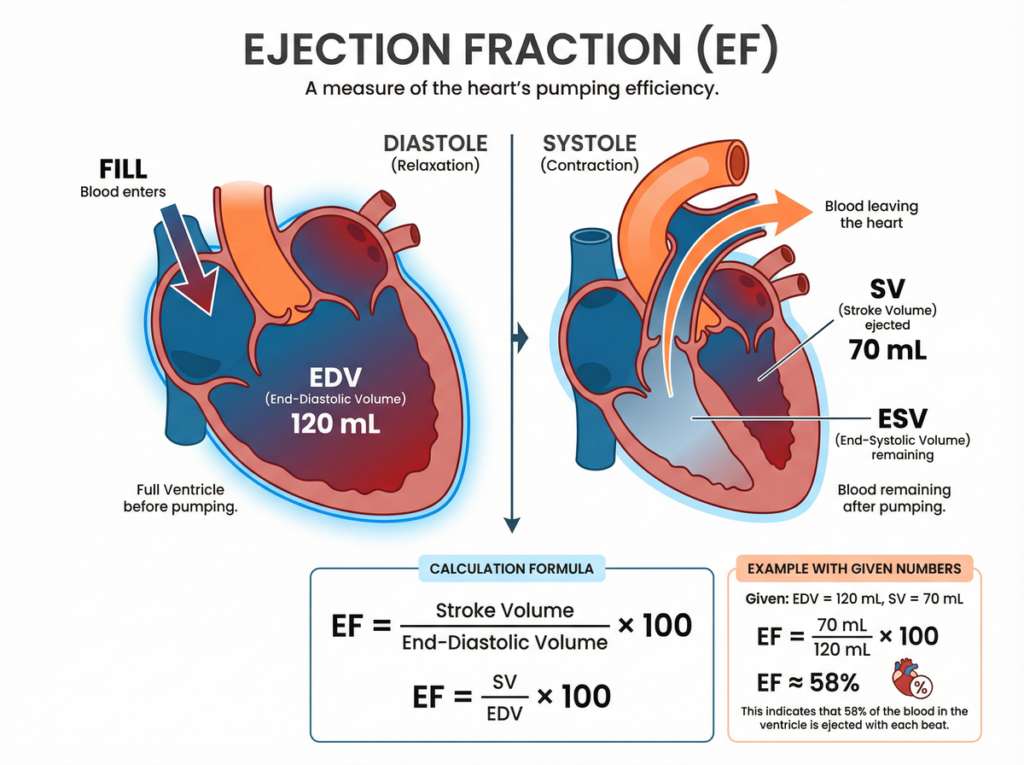
According to the EMJ, the primary breakthrough lies in the ability to measure “strain” and “deformation.” While a traditional test might show that the heart is still pumping enough blood (a metric known as Ejection Fraction), 4D analysis can reveal that the muscle fibers are not contracting efficiently. This discrepancy suggests that the heart is working harder to maintain a normal output, a state that often precedes clinical heart failure.
The process involves advanced computational algorithms that track specific points on the myocardial wall throughout the entire cardiac cycle. By analyzing how these points move relative to one another, clinicians can identify regional wall motion abnormalities that are invisible to the naked eye or to 2D imaging tools. These mechanical signatures serve as the “new predictors” for heart disease, signaling the onset of pathology long before the heart chamber enlarges or the walls thicken.
- Temporal Resolution: The “4th dimension” allows for the analysis of the heart’s movement in real-time.
- Myocardial Strain: Measures the deformation of the heart muscle during contraction and relaxation.
- Early Detection: Identifies dysfunction in patients who still exhibit a “normal” ejection fraction.
The Technical Shift: From Structure to Mechanics
For decades, cardiology has focused on structural markers. If a heart valve was leaking or a ventricle was dilated, the diagnosis was clear. But as the EMJ report notes, structural changes are often the result of disease, not the earliest warning sign. 4D motion analysis shifts the focus toward the mechanics of the muscle itself.
Myocardial deformation occurs in three primary directions: longitudinal, circumferential, and radial. According to the findings, a decrease in longitudinal strain—the shortening of the heart muscle from the base to the apex—is one of the most sensitive predictors of early heart disease. When the 4D analysis shows a drop in this specific motion, it often correlates with early-stage fibrosis or ischemia, even when the patient is asymptomatic.
“The shift from observing what the heart looks like to how the heart actually moves represents a fundamental change in predictive cardiology,” according to the analysis provided by the EMJ.
This mechanical data is processed using “feature tracking” or “tagging” techniques. In tagging MRI, for example, the heart muscle is marked with a grid of magnetic lines. As the heart beats, the grid distorts. The 4D software calculates the exact degree of this distortion, providing a quantitative map of the heart’s health. This removes the subjectivity often associated with a technician’s visual interpretation of an ultrasound.
Comparing 4D Analysis with Traditional Diagnostic Tools
To understand why 4D motion analysis is viewed as a superior predictor, it is necessary to compare it against the current gold standards of cardiac care. The following table outlines the primary differences in diagnostic capabilities as suggested by the data in the EMJ report.
| Feature | Standard 2D Echocardiogram | Traditional Cardiac MRI | 4D Motion Analysis |
|---|---|---|---|
| Primary Metric | Ejection Fraction (EF) | Structural Volume/Mass | Myocardial Strain & Deformation |
| Detection Timing | Late-stage dysfunction | Moderate-stage changes | Early-stage mechanical failure |
| Perspective | Flat, 2D slices | Static 3D reconstructions | Dynamic 4D temporal mapping |
| Precision | Subjective/Visual | High (Structural) | Ultra-High (Mechanical) |
The most critical distinction is the “Ejection Fraction (EF) Trap.” Many patients with early-stage heart disease maintain an EF of 50% to 60%, which is considered normal. However, 4D motion analysis can reveal that this “normal” EF is being achieved through compensatory mechanisms—where healthy parts of the heart overwork to make up for failing sections. By the time the EF actually drops, the disease has often progressed to a point where it is harder to reverse.
Why These New Predictors Matter for Patient Outcomes
The ability to uncover predictors for heart disease before they manifest as structural failure has immediate implications for patient survival and quality of life. According to the EMJ, early detection allows for the implementation of pharmacological interventions—such as ACE inhibitors or beta-blockers—much sooner than previously possible.
Prevention of Heart Failure
Heart failure is often the end stage of a long, silent process. When 4D motion analysis detects a decline in radial or longitudinal strain, doctors can intervene while the heart is still structurally sound. This “pre-failure” window is where the most significant gains in patient longevity are made.
Personalized Treatment Pathways
Not all heart disease progresses the same way. Some patients exhibit circumferential strain failure, while others show longitudinal deficits. By mapping the exact area of mechanical failure, surgeons and cardiologists can tailor their approach. For instance, identifying a specific region of low motion can guide a cardiologist toward a targeted revascularization procedure rather than a general treatment plan.
Reducing Unnecessary Procedures
Conversely, 4D analysis can provide a “rule-out” mechanism. If a patient presents with symptoms but 4D motion analysis shows perfect myocardial deformation, clinicians may look for non-cardiac causes of the symptoms, reducing the number of invasive angiograms or biopsies performed on healthy hearts.
For more information on how these technologies integrate into broader care, see a related explainer on predictive cardiology.
Challenges in the Widespread Adoption of 4D Imaging
Despite the advantages cited by the EMJ, the transition to 4D motion analysis is not instantaneous. Several systemic hurdles remain that prevent this from becoming the universal first-line screening tool.
Computational Requirements
Processing 4D data requires immense computing power. A single cardiac cycle captured in 4D generates gigabytes of data that must be analyzed by complex algorithms to produce a strain map. Many community hospitals lack the high-end workstations and software licenses required to perform this analysis in-house.
Specialized Training
Interpreting a 4D strain map is different from reading a standard ultrasound. It requires a new set of competencies for radiologists and cardiologists. There is currently a gap in medical education regarding the interpretation of myocardial deformation indices, meaning the technology is currently concentrated in academic medical centers and top-tier research hospitals.
Cost and Accessibility
The hardware required for high-fidelity 4D imaging—specifically advanced MRI and CT scanners—is expensive. While the cost of software is decreasing, the initial capital investment for the hardware remains a barrier for smaller clinics. Furthermore, insurance reimbursement models are often built around traditional tests like the echocardiogram, and updating these codes to include 4D motion analysis takes time.
Addressing Common Misconceptions About 4D Analysis
As this technology enters the public discourse, several misconceptions have emerged regarding what 4D motion analysis actually does and who it is for.
Misconception: 4D analysis is just a “better” 3D image.
In reality, the difference is not just about resolution or “depth.” 3D imaging provides a static map. 4D analysis provides a kinetic map. It is the difference between looking at a photo of a car and analyzing the engine’s timing while the car is driving at 60 mph. The value is in the movement, not the image.
Misconception: This replaces the need for stress tests.
4D motion analysis is a complementary tool, not a total replacement. While it can detect mechanical failure, a stress test is still valuable for seeing how the heart responds to physical exertion in real-time. The two tools provide different types of data: one focuses on the inherent mechanical efficiency of the muscle, and the other focuses on the heart’s response to demand.
Misconception: Only people with existing heart symptoms need this.
The EMJ report emphasizes that the true power of 4D analysis is in predicting disease. This means it is most valuable for high-risk asymptomatic patients—such as those with genetic predispositions, chronic hypertension, or diabetes—who appear healthy on traditional tests but may have underlying mechanical decay.
The Future of Cardiovascular Diagnostics
The integration of 4D motion analysis into routine care is likely to be accelerated by the rise of Artificial Intelligence (AI). According to industry trends, AI is being trained to recognize the patterns of myocardial strain that lead to heart failure, potentially automating the detection process and removing the need for highly specialized human interpretation.
We are moving toward a model of “digital twins,” where a patient’s 4D heart motion data is used to create a virtual replica of their heart. Doctors could then simulate how a specific medication or surgical procedure would affect that individual’s unique mechanical strain patterns before ever touching the patient. This would represent the pinnacle of precision medicine in cardiology.
As the evidence presented in the EMJ continues to grow, the medical community is expected to move toward standardized “strain thresholds.” Much like how blood pressure has a defined “normal” range, the industry is working toward a universal set of 4D motion metrics that can definitively categorize a heart as healthy, at-risk, or diseased.
Frequently Asked Questions
What exactly is 4D motion analysis in the context of the heart?
4D motion analysis is a medical imaging technique that captures the heart’s movement in three-dimensional space over a period of time (the fourth dimension). Unlike static images, it creates a dynamic map of how the heart muscle contracts and relaxes, allowing doctors to see the actual mechanics of the heartbeat.
How does this differ from a standard echocardiogram?
A standard echocardiogram usually provides 2D images and measures the Ejection Fraction (how much blood is pumped out). 4D motion analysis measures “strain” and “deformation,” which can reveal heart muscle dysfunction even when the Ejection Fraction still appears normal.
Can 4D motion analysis predict heart disease in healthy people?
Yes. According to the EMJ, this technology can identify subtle mechanical failures in the heart muscle that occur before any structural damage (like heart enlargement) is visible. This makes it a powerful tool for screening high-risk patients who do not yet have symptoms.
Is 4D motion analysis available in all hospitals?
Currently, it is more common in major academic medical centers and specialized cardiac clinics due to the high cost of the equipment and the need for specialized software and training to interpret the data.
Does a “normal” 4D scan mean I will never get heart disease?
No scan can guarantee a future outcome. While 4D motion analysis is a highly sensitive predictor of mechanical failure, heart disease can be caused by many factors, including sudden arterial blockages (heart attacks). It is one tool in a comprehensive cardiovascular health strategy.
