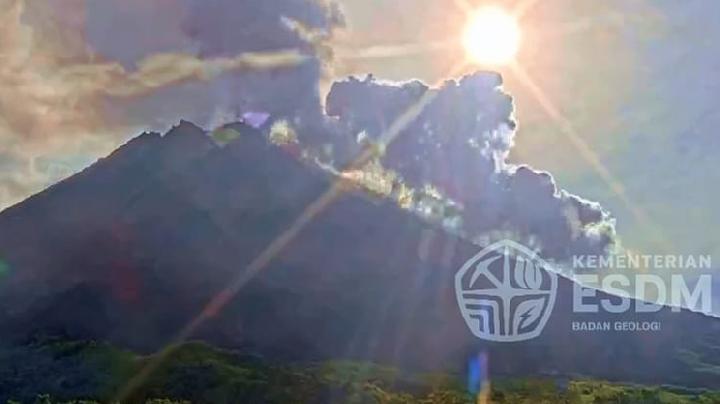
Mount Merapi Sees Surge in Activity With Fresh Pyroclastic Flows: Analysis of the Current Volcanic Crisis
The geological landscape of Central Java and Yogyakarta has once again been thrust into a state of high alert as Mount Merapi, one of the world’s most volatile stratovolcanoes, exhibits a significant intensification in its eruptive behavior. Recent reports indicating that Mount Merapi sees surge in activity with fresh pyroclastic flows – Tempo.co English have sparked urgent concerns among volcanologists and local authorities alike. This sudden escalation, characterized by the rapid descent of superheated gas and volcanic matter, underscores the persistent danger posed by this peak and the precarious nature of the communities residing within its shadow.
For those living in the danger zones, the sight of awan panas—the local term for pyroclastic flows—is a terrifyingly familiar occurrence. However, the current surge in activity suggests a shift in the volcano’s internal pressure and dome stability, necessitating a rigorous re-evaluation of evacuation protocols and hazard mapping. As the mountain continues to vent its internal fury, the intersection of geological instability and human settlement creates a high-stakes environment where seconds can mean the difference between survival and catastrophe.
Understanding the Current Surge: What is Happening at Mount Merapi?
The recent escalation at Mount Merapi is not a singular event but a series of interconnected geological processes. The volcano has been experiencing an increase in volcanic earthquakes and deformation, signaling that magma is migrating toward the surface. This movement has led to the growth of a lava dome at the summit, which, upon reaching a critical mass or experiencing internal instability, collapses under its own weight.
When these collapses occur, they trigger pyroclastic flows—avalanches of hot gas, ash, and rock that can travel down the mountain slopes at speeds exceeding 100 kilometers per hour. These flows are far more lethal than slow-moving lava because they incinerate everything in their path and move too quickly for residents to escape if they are caught within the flow’s trajectory.
Key Indicators of the Recent Activity Spike
- Increased Seismic Tremors: A rise in deep volcanic earthquakes suggests magma replenishment from the deeper reservoir.
- Lava Dome Instability: Visual monitoring via CCTV and drones has shown the dome becoming increasingly unstable, leading to frequent collapses.
- Ash Plumes: Heightened emissions of volcanic ash reaching several kilometers into the atmosphere, affecting air quality and visibility in surrounding districts.
- Pyroclastic Flow Frequency: A marked increase in the number of awan panas events occurring daily, particularly along the southwestern and southeastern flanks.
“The dynamics of Mount Merapi are characterized by the constant struggle between magma accumulation and dome collapse. The current surge is a reminder that the volcano is in a phase of active degassing and material expulsion, which requires constant vigilance.”
The Science of Destruction: Pyroclastic Flows vs. Lava Flows
To the casual observer, all volcanic eruptions may seem similar, but the distinction between a lava flow and a pyroclastic flow is critical for safety and disaster management. While lava flows are visually spectacular and destructive to property, they are generally slow enough for humans to walk away from. Pyroclastic flows, however, are the primary killers in Merapi’s history.
| Feature | Lava Flow | Pyroclastic Flow (Awan Panas) |
|---|---|---|
| Composition | Molten rock (magma) | Hot gas, ash, and volcanic fragments |
| Speed | Slow to moderate | Extremely fast (up to 700 km/h) |
| Temperature | Very high (700°C to 1,200°C) | Extremely high (up to 1,000°C) |
| Primary Danger | Property destruction | Immediate fatality via thermal shock/asphyxiation |
| Movement | Follows topography slowly | Hugs the ground but can leap valleys |
The current activity, where Mount Merapi sees surge in activity with fresh pyroclastic flows – Tempo.co English, is particularly dangerous because these flows can travel several kilometers from the summit, penetrating deep into residential areas and agricultural lands before dissipating.
Geographic Impact: Who is at Risk?
Mount Merapi is situated on the border between the Special Region of Yogyakarta and Central Java. The risk is not distributed evenly; rather, it follows the river valleys and ravines that act as natural conduits for the pyroclastic flows.
Affected Regions and Vulnerabilities
The southwestern slope is historically the most vulnerable. Villages located along the river basins are at high risk of both pyroclastic flows and lahars—volcanic mudflows that occur when heavy rain mixes with loose volcanic ash on the slopes. These mudflows can occur even when the volcano is not actively erupting, provided there is enough accumulated debris.
The socio-economic impact is profound. Thousands of farmers rely on the fertile volcanic soil for crops, creating a “risk-reward” paradox. The very minerals that make the land productive also make it a death trap during a surge in activity. This creates a complex challenge for government agencies attempting to enforce exclusion zones.
For a deeper dive into regional safety, you may find a related explainer on volcanic hazard zoning useful to understand how “red zones” are determined.
The Role of BPPTKG and Volcanic Monitoring
The Center for Volcanology and Geological Hazard Mitigation (BPPTKG) is the primary body responsible for monitoring Merapi. Their work is a blend of high-tech surveillance and boots-on-the-ground observation. To manage the risk when Mount Merapi sees surge in activity with fresh pyroclastic flows – Tempo.co English, they employ several critical tools:
Monitoring Technologies
- Seismometers: These detect the “heartbeat” of the volcano, distinguishing between tectonic shifts and magma movement.
- Tiltmeters: These measure the slight swelling or deflating of the mountain’s flanks, indicating whether the magma chamber is filling.
- CCTV and Thermal Imaging: Real-time visual data allows experts to see dome collapses as they happen and track the direction of pyroclastic flows.
- Gas Analysis: Changes in the ratio of sulfur dioxide to carbon dioxide can signal that new magma is rising from the mantle.
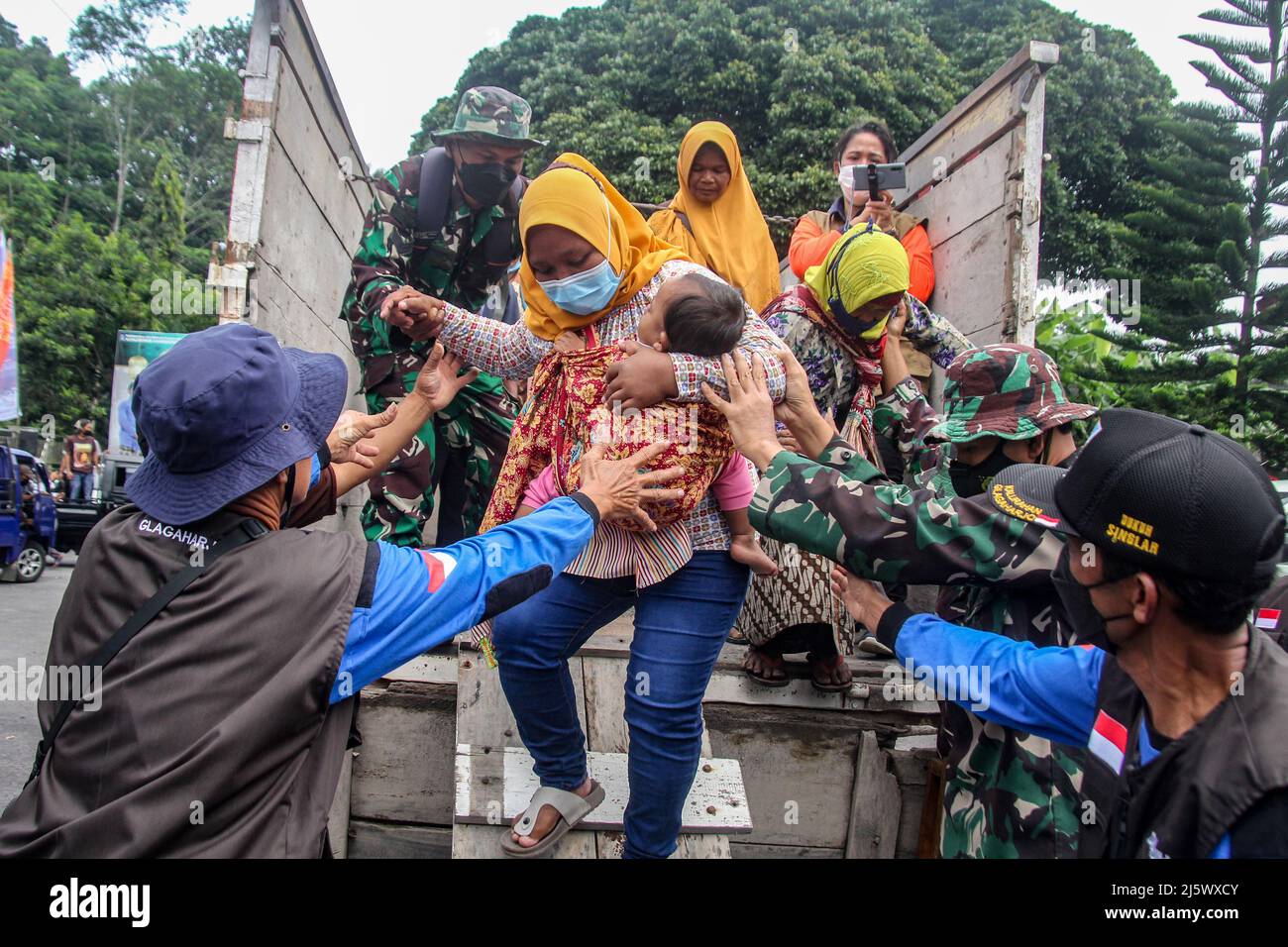
The data collected by BPPTKG is used to set the alert level, which ranges from Level I (Normal) to Level IV (Danger). When the alert level rises, the government mandates the expansion of the exclusion zone, forcing residents to move to temporary shelters.
Historical Context: Comparing Current Activity to Past Eruptions
To understand the gravity of the current surge, one must look at Merapi’s history. The volcano follows a roughly 100-year cycle of massive eruptions, interspersed with decades of smaller, more frequent events.
The 2010 Catastrophe
The 2010 eruption remains the benchmark for modern disaster management in the region. It was an explosive event that killed over 350 people and forced the evacuation of hundreds of thousands. Unlike the current dome-collapse style of activity, the 2010 event involved a massive explosive column that collapsed into devastating pyroclastic flows.
The Current Pattern
The current activity is more characteristic of “dome growth and collapse.” While less explosive than 2010, it is a relentless process of attrition. The danger lies in the unpredictability of the collapse. A single large collapse can send a flow further than previous ones, catching unprepared residents or livestock in the path of destruction.
Comparing these events reveals a critical lesson: the volume of material expelled is not the only metric of danger; the velocity and direction of the flows are what determine the casualty count.
Socio-Economic Consequences of Volcanic Surges
The impact of Merapi’s activity extends far beyond the immediate danger of the flows. The regional economy is deeply intertwined with the volcano’s behavior.
Agriculture and Livestock
Agriculture is the backbone of the local economy. Ashfall, while beneficial for soil in the long run, can destroy current harvests of vegetables and fruits in a matter of hours. Livestock—particularly dairy cows—are often the most challenging assets to evacuate, leading some farmers to risk their lives to save their animals during a surge.
Tourism and Infrastructure
Yogyakarta is a major tourism hub. The sight of a smoking Merapi is a draw for “volcano tourists,” but heightened activity often leads to the closure of hiking trails and the restriction of access to the slopes. This results in a loss of revenue for local guides and hospitality businesses.
Aviation Disruptions
Volcanic ash is a nightmare for jet engines, as the glass-like particles can melt and clog turbines. When ash plumes reach high altitudes, flights to and from Yogyakarta International Airport may be diverted or cancelled, disrupting trade and travel across Java.
Common Misconceptions About Merapi’s Activity
In the wake of news that Mount Merapi sees surge in activity with fresh pyroclastic flows – Tempo.co English, several myths often circulate among the public and international observers. It is critical to clarify these to ensure public safety.
- Myth: “If there is no loud explosion, it is safe.”
Reality: Pyroclastic flows can be relatively quiet compared to a massive blast, yet they are just as lethal. A silent dome collapse can send a flow rushing down a valley without a preceding “big bang.” - Myth: “Rain will stop the pyroclastic flows.”
Reality: While rain might cool the ash, it does not stop a pyroclastic flow. In fact, heavy rain creates a second danger: lahars (mudflows), which can be just as destructive as the eruption itself. - Myth: “The activity is ‘normal’ because it happens every year.”
Reality: While Merapi is chronically active, the intensity and direction of surges vary. Treating every surge as “normal” leads to complacency, which is the leading cause of casualties in volcanic zones.
Safety Protocols and Evacuation Strategies
For those residing in the danger zones, adherence to official guidelines is the only reliable way to survive a pyroclastic event. The Indonesian government and local disaster agencies (BPBD) have implemented a tiered response system.
Immediate Actions for Residents
- Monitor Official Channels: Ignore rumors on social media and follow the BPPTKG and BPBD official updates.
- Prepare “Tas Siaga Bencana” (Emergency Bags): These should contain essential documents, medication, clothing, and food for at least three days.
- Identify Evacuation Routes: Residents must know the fastest path to the designated “Titik Kumpul” (Assembly Points) and shelters.
- Avoid River Valleys: During surges, riverbeds are the most dangerous places to be due to the channeling effect of pyroclastic flows and lahars.
The effectiveness of these measures depends heavily on the community’s trust in the scientific data. In some cases, spiritual beliefs regarding the “will of the mountain” conflict with scientific warnings, making the role of community leaders essential in bridging the gap between tradition and safety.
Frequently Asked Questions
What exactly is a pyroclastic flow?
A pyroclastic flow is a fast-moving current of hot gas and volcanic matter (tephra) that moves away from a volcano. They are characterized by their extreme heat and high speeds, making them one of the most dangerous phenomena of a volcanic eruption.
Why is Mount Merapi so active?
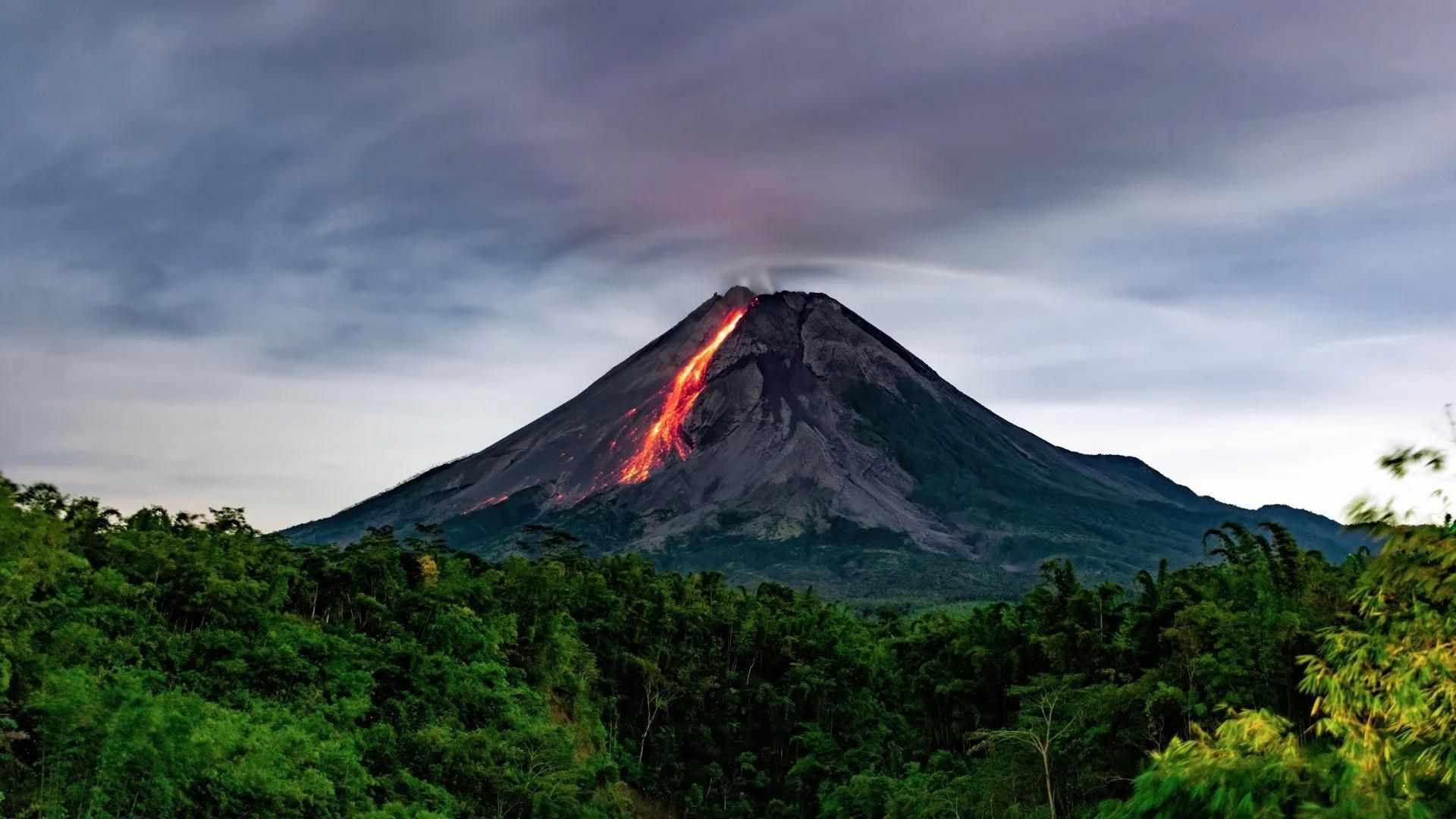
Merapi is located on the “Ring of Fire,” where the Indo-Australian Plate subducts beneath the Eurasian Plate. This tectonic activity forces magma to the surface, creating a constant cycle of pressure build-up and release.
Is it safe to visit Yogyakarta during a surge in Merapi’s activity?
Generally, the city of Yogyakarta is far enough from the summit to be safe from pyroclastic flows. However, ashfall can occur, and travel to the slopes of the mountain is strictly prohibited during high alert levels. Always check current alert levels before traveling.
How can I tell if a pyroclastic flow is coming?
For residents in the danger zone, warnings are issued via sirens and official mobile alerts. Visually, a large, billowing cloud of grey or black ash rushing down the slope is the primary sign. If you see this, move perpendicular to the flow’s path immediately.
What is the difference between a volcanic eruption and a dome collapse?
A volcanic eruption is a general term for any magma/gas release. A dome collapse is a specific type of event where the hardened lava at the top of the vent breaks apart, creating a pyroclastic flow without necessarily needing a massive explosive blast.
As the situation evolves and Mount Merapi sees surge in activity with fresh pyroclastic flows – Tempo.co English, the focus remains on the precision of monitoring and the speed of evacuation. The mountain continues to reshape the landscape, reminding us of the raw power of the Earth’s interior and the necessity of scientific vigilance in the face of natural volatility.
