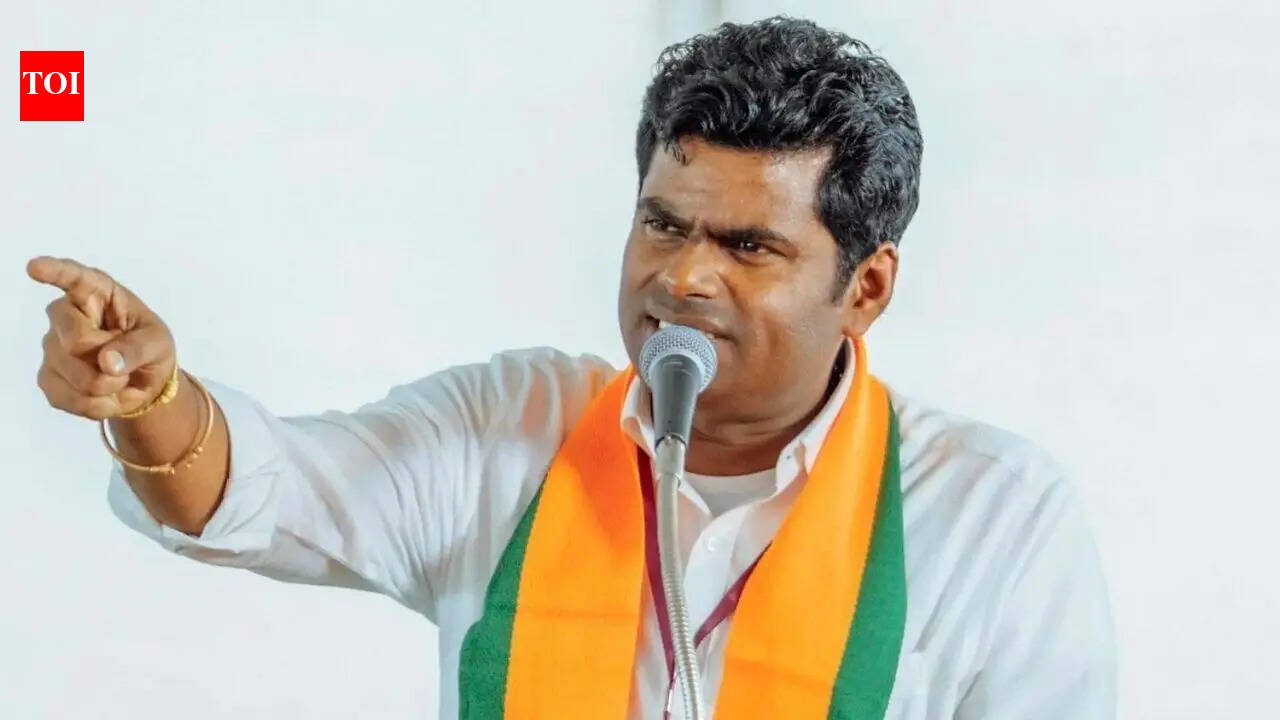
Former BJP Leader Annamalai Tenders Resignation in Delhi, Signals Launch of New Political Party Amid Growing Internal Fractures
In a dramatic turn of events that has sent ripples through India’s political landscape, former Bharatiya Janata Party (BJP) Tamil Nadu president Annamalai formally submitted his resignation letter to national party chief Nitin Nadda during a closed-door meeting in New Delhi on Tuesday. The move, confirmed by sources close to the leadership, comes as Annamalai prepares to launch a new political formation, marking a significant defection from the ruling party just months before the state’s crucial assembly elections.
The resignation, which follows weeks of speculation and internal discussions, underscores deepening divisions within the BJP’s Tamil Nadu unit. Annamalai, a former Indian Police Service (IPS) officer turned politician, has been a prominent figure in the party’s southern operations since joining in 2020. His decision to step down—just one year after his tenure as state president concluded—signals a broader realignment of political forces ahead of Tamil Nadu’s high-stakes electoral battleground.
While Annamalai has not yet disclosed the name or ideological framework of his new party, political analysts suggest his move could reshape the state’s political calculus, potentially siphoning off support from both the BJP and the ruling DMK alliance. The timing of his resignation, coming amid reports of internal dissatisfaction with the party’s Tamil Nadu leadership, adds to the speculation that his departure is not merely personal but strategically calculated.
— ### The Resignation: What Happened and Why It Matters #### A Formal Exit with Strategic Implications Annamalai’s resignation letter, handed over to Nadda in the presence of senior BJP leaders, reportedly cited “differences in political strategy” and a desire to “pursue an alternative path” for Tamil Nadu’s development. Sources indicate that the meeting in Delhi was brief but cordial, with Nadda acknowledging Annamalai’s contributions while expressing regret over his departure. Key details of the resignation: – Date and Location: Submitted on June 2, 2026, during a private meeting at BJP headquarters in New Delhi. – Mode of Resignation: Formal written letter, as per party protocols, with no public statement issued immediately. – Next Steps: Annamalai is expected to announce his new political venture within the next 48 hours, according to party insiders. #### The Backdrop: Why Now? Annamalai’s decision comes at a pivotal moment for Tamil Nadu’s political ecosystem. Several factors appear to have precipitated his exit: 1. Internal Party Discontent: Reports suggest growing frustration within the BJP’s Tamil Nadu unit over perceived neglect by the national leadership, particularly regarding resource allocation and policy priorities. 2. Electoral Realities: With assembly elections looming, Annamalai’s move could be an attempt to consolidate a separate voter base, particularly among younger and urban constituencies where the BJP has struggled to gain traction. 3. Ideological Divergence: Annamalai has publicly advocated for a more inclusive approach to Tamil nationalism, a stance that has occasionally clashed with the BJP’s centralized Hindutva-driven agenda. 4. Personal Ambitions: As a former IPS officer with a strong administrative background, Annamalai has long been viewed as a potential kingmaker in Tamil Nadu politics. His new venture could position him as an independent force capable of influencing election outcomes. — ### Who Is Annamalai? A Political Trajectory from IPS to BJP Leadership Annamalai’s political journey is as unconventional as his recent move. Born on June 4, 1984, in Thottampatti, Karur, Tamil Nadu, he began his career in the Indian Police Service (IPS) in 2011, serving in the Karnataka State Police. His tenure included roles as Assistant Superintendent of Police (ASP) and Superintendent of Police (SP), where he gained a reputation for efficiency and integrity. #### Key Milestones in His Career | Year | Role/Event | 2011–2019 | Indian Police Service (Karnataka State Police) | | 2019 | Voluntary retirement from IPS to pursue politics | | 2020 | Joined Bharatiya Janata Party (BJP) | | 2020–2021 | Vice President, BJP Tamil Nadu | | 2021–2025 | President, BJP Tamil Nadu | | 2021 | Contested Tamil Nadu Legislative Assembly election (lost from Aravakurichi) | | 2024 | Contested Lok Sabha election (lost from Coimbatore) | | 2026 | Resigns from BJP, announces plans for new political party | #### Why His Defection Stings the BJP Annamalai’s exit is particularly significant because: – Tamil Nadu Stronghold: The BJP has historically struggled in Tamil Nadu, where the DMK and AIADMK dominate. Annamalai was one of the few leaders capable of expanding the party’s footprint in the state. – Youth and Urban Appeal: His background as a former IPS officer and entrepreneur resonated with younger, tech-savvy voters—a demographic the BJP has been courting aggressively. – Administrative Credibility: His police experience lent him a unique authority, which he leveraged to position the BJP as a party of “strong governance” in contrast to the DMK’s populist rhetoric. — ### The Political Landscape: What Changes with Annamalai’s Exit? #### Immediate Impact on the BJP Annamalai’s resignation leaves a void in the BJP’s Tamil Nadu leadership. Key consequences include: – Leadership Shuffle: The party is likely to appoint an interim leader to fill the vacuum, possibly someone with a more hardline Hindutva stance to counterbalance Annamalai’s moderate approach. – Electoral Strategy Adjustments: The BJP may need to recalibrate its campaign focus, potentially doubling down on Hindu nationalist themes or shifting resources to other southern states like Kerala and Andhra Pradesh. – Internal Investigations: Rumors of internal dissent could prompt the party to review its Tamil Nadu operations, potentially leading to purges or policy overhauls. #### Opportunities for Opposition Parties Annamalai’s new party could disrupt the existing political duopoly in Tamil Nadu: – DMK and AIADMK: Both parties will be watching closely to see if Annamalai’s defection siphons off BJP supporters or if his new formation becomes a spoiler, splitting the anti-establishment vote. – Amma Makkal Munnetra Kazhagam (AMMK): The emerging third force led by former AIADMK leader O. Panneerselvam may see Annamalai as a potential ally or rival, depending on his ideological alignment. – Regional Alliances: His move could also encourage other disaffected BJP leaders in Tamil Nadu to explore independent or third-party options, further fragmenting the political map. #### Broader National Implications While Tamil Nadu’s elections are state-specific, Annamalai’s defection sends a message to the BJP’s national leadership: – Decentralization Challenges: The party’s top-down approach has increasingly alienated regional leaders, raising questions about its long-term sustainability. – Youth and Meritocracy: Annamalai’s background highlights a generational shift—younger, professionally qualified leaders are increasingly seeking autonomy from party hierarchies. – Coalition Politics: His exit could embolden other regional satraps within the BJP to negotiate harder for greater autonomy or even consider similar moves. — ### Reactions: What Are Leaders and Analysts Saying? #### From the BJP While official responses have been muted, sources indicate that Nadda’s team is privately concerned about the fallout. One senior leader told reporters, *“Annamalai’s decision is a setback, but we will regroup and focus on our core strengths. Tamil Nadu’s political dynamics are complex, and we will adapt accordingly.”* #### From Opposition Parties – DMK: Party spokesperson X. Yogieswaran stated, *“We welcome any move that challenges the BJP’s dominance. Annamalai’s exit is a reminder that no party is invincible. We will study his new formation closely.”* – AIADMK: A party insider remarked, *“If Annamalai’s new party can attract BJP voters, it could weaken both the BJP and the DMK. We will be ready to engage if it benefits our electoral strategy.”* – AMMK: Leader O. Panneerselvam’s camp has not yet commented, but analysts suggest they may attempt to poach Annamalai’s supporters if his ideology aligns with theirs. #### From Political Analysts Dr. R. Srinivasan, a political scientist at Madras University, noted, *“Annamalai’s move is a classic case of a leader pivoting when they feel their influence is waning. The BJP’s struggle in Tamil Nadu is not just about ideology—it’s about relevance. If Annamalai can position himself as a viable alternative, he could force the BJP to rethink its southern strategy.”* — ### What’s Next? Annamalai’s New Venture and the Road Ahead Annamalai has indicated that he will clarify the details of his new political party within the next two days. While specifics remain unclear, several scenarios are possible: 1. A Regional Party Focused on Governance: Given his administrative background, Annamalai may position his new formation as a “development-first” alternative, appealing to voters frustrated with both the BJP’s ideological rigidity and the DMK’s populist promises. 2. A Coalition with Existing Third Parties: He could explore alliances with smaller regional outfits like the AMMK or even the Congress, depending on policy alignments. 3. A National Ambition: Some analysts speculate that Annamalai may aim to create a pan-Indian party with a strong regional base, though this would require significant resources and political capital. 4. A Protest Vote Vehicle: His party could emerge as a “nota” (none of the above) option for anti-establishment voters, particularly those disillusioned with both major parties. #### Key Questions to Watch – Will Annamalai’s party attract BJP defectors or remain a solo venture? – How will the DMK and AIADMK respond to his electoral challenge? – Will the BJP’s national leadership take steps to retain other Tamil Nadu leaders, or will this become a trend? – Could Annamalai’s move inspire similar defections in other states where the BJP faces regional resistance? — ### FAQ: What You Need to Know About Annamalai’s Resignation and New Party #### 1. Why did Annamalai resign from the BJP? Annamalai’s resignation appears to stem from a combination of ideological differences, internal party dissatisfaction, and strategic calculations ahead of Tamil Nadu’s upcoming elections. While he has not publicly disclosed specific grievances, sources suggest frustration over the BJP’s centralized decision-making and a desire to pursue a more inclusive political agenda in Tamil Nadu. #### 2. What is Annamalai’s political background? Annamalai is a former Indian Police Service (IPS) officer who served in the Karnataka State Police before voluntarily retiring in 2019 to enter politics. He joined the BJP in 2020 and quickly rose to become the party’s vice president and later president for Tamil Nadu, where he played a key role in expanding its presence in the state. #### 3. Will Annamalai’s new party affect the 2026 Tamil Nadu elections? Yes, his new formation could significantly alter the electoral landscape. If it attracts BJP supporters or becomes a viable third option, it could split the anti-DMK vote, potentially benefiting either the AIADMK or the DMK. The exact impact will depend on his party’s ideological positioning and ability to mobilize voters. #### 4. Has Annamalai announced the name of his new party? As of June 2, 2026, Annamalai has not publicly disclosed the name or full details of his new political party. He is expected to make an official announcement within the next 48 hours, according to party insiders. #### 5. Could Annamalai’s move lead to more BJP defections in Tamil Nadu? It’s possible. Annamalai’s exit could embolden other disaffected BJP leaders in Tamil Nadu to explore independent paths, particularly if they feel the party is not adequately addressing regional concerns. However, such defections would depend on individual motivations and the broader political climate. #### 6. How does this resignation compare to past BJP defections? Annamalai’s resignation is notable for its timing and the prominence of the individual involved. Past defections, such as those by leaders like Ram Jethmalani (who called for Nitin Gadkari’s resignation in 2012 over corruption allegations), were often tied to specific scandals or leadership failures. Annamalai’s move, however, appears more strategic and less reactive, suggesting a calculated shift rather than a protest. —
The political fallout from Annamalai’s resignation will unfold over the coming weeks, but one thing is clear: Tamil Nadu’s political map is about to change. For now, all eyes are on Delhi—and on Annamalai’s next move. Whether his new party becomes a force to reckon with or fades into obscurity will depend on his ability to rally supporters, define a clear agenda, and navigate the treacherous waters of Tamil Nadu’s electoral politics.
As the state gears up for its next electoral battle, Annamalai’s defection serves as a stark reminder that in Indian politics, loyalty is often temporary—and ambition, eternal.
