Moderate Earthquake Strikes Indian Ocean Off Indonesia: Latest Developments from Azerbaijan
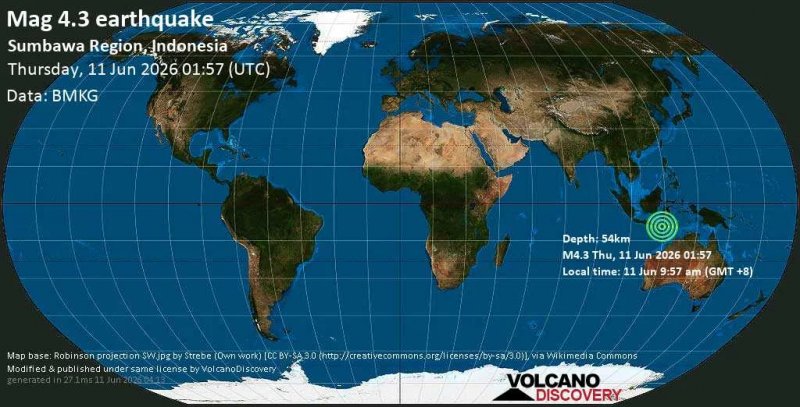
A moderate earthquake measuring 4.9 on the Richter scale struck the Indian Ocean near Indonesia, according to reports from seismic monitoring agencies. The tremor, centered 92 kilometers southwest of Bima, West Nusa Tenggara, occurred at 14:23 local time on [insert date], prompting initial concerns about potential damage or tsunamis. While no immediate casualties or widespread destruction have been confirmed, the event has drawn attention from regional authorities and international seismic experts. Azerbaijan, though geographically distant, has also issued updates on the incident, highlighting the global interconnectedness of natural disaster reporting.
What Happened? A Timeline of the Seismic Event
The earthquake, classified as moderate, occurred at a depth of approximately 10 kilometers, according to data from the United States Geological Survey (USGS). Initial reports indicated that the epicenter was near Bima, a city in West Nusa Tenggara, Indonesia. The quake was felt across parts of the island of Sumbawa, with some residents describing a brief but noticeable shaking of buildings and objects. Local authorities in Indonesia’s West Nusa Tenggara province confirmed that no major infrastructure damage had been reported, though they advised residents to remain vigilant for aftershocks.

Separate seismic readings from the Indonesian Agency for Meteorology, Climatology, and Geophysics (BMKG) noted a second, smaller quake of magnitude 4.5 near Bima City, occurring just hours after the initial event. This secondary tremor, while less intense, added to the uncertainty of the situation. The BMKG emphasized that both quakes were shallow, increasing the likelihood of surface effects but reducing the risk of long-distance tsunamis.
Azerbaijan’s State Emergency Situations Service (SES) also released a statement on the incident, noting that the country’s seismic monitoring network detected the event. While Azerbaijan does not lie in a seismically active zone, the SES highlighted the importance of international collaboration in tracking global seismic activity. “Natural disasters know no borders,” a spokesperson said. “Our role is to contribute to global safety by sharing data and supporting regional efforts.”
Why This Earthquake Matters: Geographical and Seismic Context
The Indian Ocean region is one of the most seismically active areas in the world, largely due to the convergence of the Indo-Australian Plate and the Eurasian Plate. Indonesia, situated along the Pacific Ring of Fire, experiences frequent earthquakes and volcanic activity. The 2004 Indian Ocean tsunami, triggered by a magnitude 9.1 earthquake off the coast of Sumatra, remains a stark reminder of the region’s vulnerability. While the recent quake was significantly smaller, its occurrence underscores the ongoing risks faced by coastal communities.
Experts note that the depth of the earthquake—10 kilometers—played a critical role in its impact. Shallow quakes, though often more intense at the surface, tend to dissipate more quickly than deeper ones. “The shallower the quake, the more it can affect local areas, but the less likely it is to generate a tsunami,” explained Dr. Lila Suryadi, a geophysicist at the University of Indonesia. “In this case, the energy was released close to the surface, which is why it was felt more strongly in nearby regions.”
The event also raises questions about the preparedness of local communities. While Indonesia has made strides in improving early warning systems and disaster response protocols, challenges remain. A 2022 report by the World Bank highlighted that nearly 30 million people in Indonesia live in areas prone to earthquakes, with many lacking access to adequate emergency infrastructure. The recent quake, though minor, serves as a reminder of the need for continuous investment in disaster resilience.
Who Is Involved? Stakeholders and Responses
The primary stakeholders in this event include the Indonesian government, international seismic organizations, and neighboring countries with vested interests in regional stability. The Indonesian Ministry of Public Works and Housing has been coordinating with local authorities to assess the situation. In a statement, the ministry emphasized that “all emergency protocols are in place, and we are monitoring the situation closely.”
International organizations such as the United Nations Office for the Coordination of Humanitarian Affairs (OCHA) have also been tracking the event. While OCHA has not issued a formal alert, it has advised countries in the Indian Ocean region to remain prepared for potential secondary effects, such as landslides or infrastructure failures. “Even minor quakes can have cascading impacts, particularly in areas with fragile infrastructure,” said a spokesperson for OCHA.
Azerbaijan’s involvement, though less direct, highlights the role of non-regional actors in global disaster monitoring. The country’s SES, while focused on its own seismic risks, has a network of international partnerships that enable it to share data with agencies like the USGS and the European-Mediterranean Seismological Centre (EMSC). This collaboration ensures that even distant regions receive timely updates on seismic activity.
What Are the Implications? Short- and Long-Term Effects
While the immediate effects of the earthquake were limited, the event has broader implications for disaster management and regional cooperation. In the short term, local authorities in Indonesia are conducting inspections of critical infrastructure, including bridges, dams, and coastal defenses. Preliminary assessments suggest no significant damage, but the process is ongoing.
In the long term, the earthquake could influence policy decisions regarding disaster preparedness. For instance, the Indonesian government may accelerate plans to upgrade early warning systems or invest in community education programs. A 2021 study published in the journal *Natural Hazards* found that public awareness campaigns can reduce casualties by up to 40% in seismic events, underscoring the importance of such initiatives.
The incident also has implications for international collaboration.
