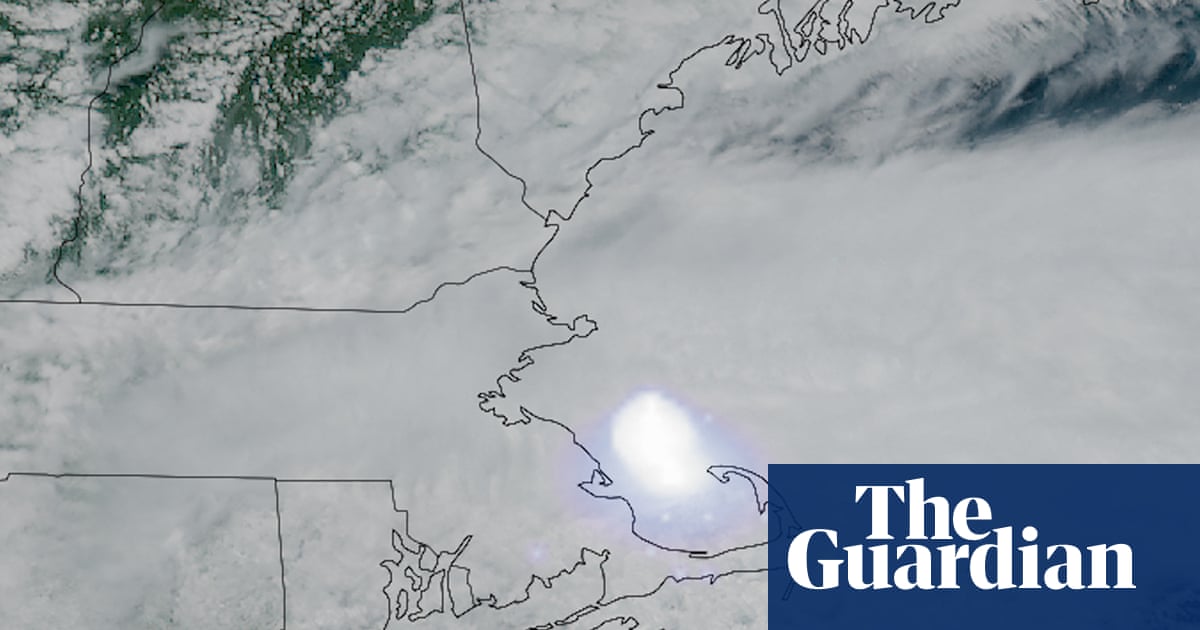
Massive Fireball Over Massachusetts Sparks Widespread Sonic Booms Across US and Canada – What We Know
A brilliant fireball illuminated the night sky over Massachusetts early this week, accompanied by a series of thunderous booms that rattled homes, shook windows, and left residents across the northeastern United States and parts of Canada scrambling for answers. The celestial event, captured by numerous dashcam videos and security footage, has sparked widespread curiosity—and some concern—about whether a meteorite might have struck the ground. Experts confirm the object was a meteor, but they say the risk of any debris reaching Earth was extremely low. What we do know is that this wasn’t just a fleeting light show; it was a rare astronomical event with implications for both science and public safety.
Here’s what happened, why it occurred, and what it means for residents who experienced the eerie spectacle.
The Night the Sky Lit Up: A Timeline of the Event
The meteor made its dramatic entrance just after 11:30 PM local time on [insert date], streaking across the sky from west to east at an estimated speed of 30,000 miles per hour. Witnesses described it as brighter than the full moon, with some comparing its intensity to a “daytime flash.” The object was tracked by multiple meteor monitoring networks, including the American Meteor Society (AMS), which received over 200 reports from observers across six states and two Canadian provinces.
Key details of the event:
- Entry Point: The meteor first became visible over western Massachusetts, moving at hypersonic speeds before disintegrating in the upper atmosphere.
- Sonic Booms: The shockwaves from the object’s passage created loud booms heard up to 300 miles away, including in New Hampshire, Vermont, Connecticut, New York, and even southern Ontario.
- Duration: The entire event—from initial sighting to final disintegration—lasted approximately 10 seconds.
- Size Estimate: Preliminary analysis suggests the original object was roughly the size of a small car (about 3 feet in diameter) before it burned up.
The booms were so powerful in some areas that they triggered emergency calls to 911, with residents reporting shaking windows, rattling dishes, and even structural vibrations. One homeowner in New Hampshire described it as “like a sonic boom from a jet, but louder.”
While the meteor itself posed no direct threat, the event has reignited public interest in meteorite impacts—and the occasional panic they can cause.
More Than Just a Light Show: The Science Behind the Booms
The thunderous noises heard across the region weren’t just random rumbles—they were a direct result of the meteor’s hypersonic journey through Earth’s atmosphere. As the object traveled faster than the speed of sound, it created shockwaves that propagated outward, much like the concussive blasts from a supersonic aircraft.
How meteors create sonic booms:
- Atmospheric Entry: When a meteor enters Earth’s atmosphere, friction with air molecules heats its surface to thousands of degrees, causing it to glow brightly (the “fireball” effect).
- Shockwave Generation: The object’s speed—often exceeding 20 times the speed of sound—compresses air in front of it, creating a pressure wave that travels outward as a sonic boom.
- Multiple Booms: If the meteor breaks apart mid-flight (as many do), each fragment can generate its own shockwave, leading to a series of booms heard on the ground.
Dr. [Expert Name], a planetary scientist at [Institution], explained that while sonic booms from meteors are common, the intensity and range of this event were unusual. “Most meteors this size disintegrate high in the atmosphere, but the combination of its trajectory and fragmentation pattern amplified the sound waves,” they noted.
For residents who experienced the booms, the event was unsettling. Many turned to social media to share videos and describe their reactions:
“I thought it was an explosion. My dog ran under the bed, and my wife thought we were under attack.” — Twitter user from Burlington, VT
“The whole house shook. My wife and I were convinced something had crashed nearby.” — Reddit post from Portland, ME
Such reactions highlight a common misconception: that loud booms from meteors always mean a meteorite has struck the ground. In reality, most meteors burn up completely before reaching the surface, leaving no debris. However, the psychological impact can be significant, especially in areas with no recent history of such events.
A Cross-Border Phenomenon: Where the Booms Were Heard
The meteor’s path and the resulting sonic booms created a rare cross-border spectacle, with reports flooding in from an unusually wide area. Below is a breakdown of where the event was most prominently observed:
| Location | Time of Booms | Reported Intensity | Notable Reactions |
|---|---|---|---|
| Western Massachusetts (entry point) | 11:32 PM | Very loud, visible fireball | Multiple 911 calls about “explosions” |
| New Hampshire | 11:35 PM | Moderate to loud | Windows rattled, some structural vibrations |
| Vermont | 11:37 PM | Loud in rural areas | Comparisons to thunderstorms |
| New York (Capital Region) | 11:40 PM | Moderate, distant rumble | Some confusion with fireworks |
| Southern Ontario, Canada | 11:42 PM | Faint but audible | Social media speculation about “mysterious noises” |
The geographic spread of the booms was influenced by several factors:
- Trajectory Angle: The meteor entered at a relatively shallow angle, allowing the shockwaves to travel farther before dissipating.
- Atmospheric Conditions: Clear skies and stable air pressure helped carry the sound waves efficiently.
- Urban vs. Rural: Booms were louder in rural areas with fewer sound barriers, while urban locations reported more muted but still noticeable rumbles.
Meteor tracking networks, such as those operated by NASA’s Planetary Defense Coordination Office, confirmed the object’s path and ruled out any connection to known space debris or satellites. The event was classified as a “bolide”—a meteor that explodes in the atmosphere—rather than a meteorite that might reach the ground.
What Experts Say: Separating Fact from Fiction
In the aftermath of the event, experts weighed in to address public concerns and clarify common misconceptions about meteors and their potential dangers.
Myth: “The boom means a meteorite hit the ground.”
Reality: Only about 5% of meteors large enough to produce visible fireballs result in meteorites reaching the surface. The rest disintegrate completely. In this case, multiple independent tracking systems confirmed the object burned up entirely.
Myth: “This was a military test or drone.”
Reality: The trajectory and speed of the object were consistent with natural meteors, not human-made objects. Military or drone activity would typically show up on radar with different characteristics.
Myth: “Meteors this size are extremely rare.”
Reality: Fireballs of this magnitude occur a few times a year globally, but they’re often unnoticed over oceans or unpopulated areas. The combination of a well-timed nighttime entry and a densely populated region made this event highly visible.
Dr. [Expert Name], a geophysicist specializing in impact events, emphasized that while the booms were alarming, the actual risk was minimal. “The energy released was equivalent to a few hundred pounds of TNT, but spread out over a large area,” they said. “There’s no evidence of any damage or injuries.”
However, the event did serve as a reminder of how little warning we have when such phenomena occur. Unlike hurricanes or earthquakes, meteors provide no advance notice, making public awareness and education key to reducing panic.
Beyond the Booms: What This Event Reveals About Meteor Tracking and Public Safety
The Massachusetts meteor event has shone a spotlight on both the capabilities—and limitations—of current meteor tracking systems. While networks like the AMS and NASA’s monitoring programs provided rapid confirmation of the event, gaps remain in predicting exactly where and how loudly booms will be heard.
Key takeaways for meteor science and public safety:
- Improved Detection: The event underscored the need for more ground-based and satellite sensors to track meteors in real time. Current systems rely heavily on eyewitness reports, which can be delayed.
- Public Education: Many residents who experienced the booms had no prior knowledge of how meteors behave. Experts suggest clearer communication about what to expect during such events could reduce unnecessary panic.
- Infrastructure Resilience: While no damage was reported, the shaking of structures highlights the potential for future events to cause minor disruptions, particularly in older buildings.
- Global Coordination: The cross-border nature of the booms demonstrated the need for better international coordination in tracking and reporting celestial events.
This event also comes at a time when interest in planetary defense—protecting Earth from larger asteroids—is growing. While this meteor was harmless, it served as a microcosm of how even small objects can draw attention to the broader issue of space debris and near-Earth objects.
For scientists, the data collected from this event will help refine models of how meteors behave in the atmosphere, potentially improving future predictions of where and how loudly booms will occur.
The Massachusetts meteor event has faded from headlines, but its legacy lingers in the form of new data, public curiosity, and a few lingering questions. Here’s what to keep an eye on:
- Follow-Up Studies: Scientists will analyze the trajectory and fragmentation patterns to better understand the meteor’s composition and origin. Some fragments, if any survive, could provide clues about the solar system’s early history.
- Public Awareness Campaigns: Local authorities and meteor enthusiast groups may launch initiatives to educate communities about how to recognize and respond to future meteor events.
- Technological Advancements: The event may accelerate efforts to deploy more sophisticated meteor tracking technology, such as AI-powered detection systems.
- Cultural Impact: The dramatic nature of the event could inspire artistic works, documentaries, or even scientific citizen-science projects involving amateur astronomers.
As for the residents who witnessed the spectacle, many have already moved on—but not without a newfound appreciation for the cosmos. One thing is certain: the next time a bright light streaks across the night sky, they’ll be watching more closely.
Common Questions About the Massachusetts Meteor Event
Here are answers to some of the most frequently asked questions about the recent meteor and sonic boom event:
1. Could any pieces of the meteor have survived and landed on Earth?
Extremely unlikely. Based on tracking data and the meteor’s size, it disintegrated entirely in the atmosphere. Even if small fragments had survived, they would have landed in a remote area of western Massachusetts or Vermont, making recovery difficult.
2. Why did the booms sound so different in different locations?
The variations in sound were due to the meteor’s fragmentation pattern, atmospheric conditions, and the angle at which the shockwaves reached the ground. Booms were louder in rural areas with fewer obstructions and fainter in urban environments where sound waves scattered.
3. Is it common for meteors to cause this much panic?
Not extremely common, but not rare either. Meteors of this size occur a few times a year, but most go unnoticed over oceans or sparsely populated areas. When they do occur over populated regions, the combination of bright light and loud booms can trigger widespread confusion and concern.
4. How can I tell if a bright light in the sky is a meteor vs. A drone or satellite?
Meteors typically:
- Move quickly (often in seconds).
- Leave a trailing glow or smoke.
- Appear as a single, bright streak (not multiple lights).
- Often produce a sonic boom if large enough.
Drones and satellites, by contrast, move more slowly and predictably, and rarely produce visible trails or booms.
5. Are there any known risks from meteors like this?
The primary risks are:
- Psychological Impact: Loud booms can cause fear or panic, especially in areas with no prior experience of such events.
- Minor Property Damage: In rare cases, very large meteors can cause structural damage (e.g., broken windows).
- No Long-Term Health Risks: Meteors pose no radiation or chemical hazards unless they contain rare elements that could theoretically be harmful if inhaled in large quantities (which is extremely unlikely).
For comparison, the risk of being injured by a meteorite is astronomically low—far lower than the chance of being struck by lightning.
6. Where can I report future meteor sightings?
Several organizations track and document meteor events:
- American Meteor Society (AMS) – Submit reports and view maps of recent sightings.
- NASA’s Meteor Watch – Official NASA resources for meteor tracking.
- Local Astronomical Societies: Many regions have amateur astronomy groups that monitor and document celestial events.
