Moon Meteorite Reveals Three Ancient Impacts in a Single Rock: A Rare Glimpse into Lunar History
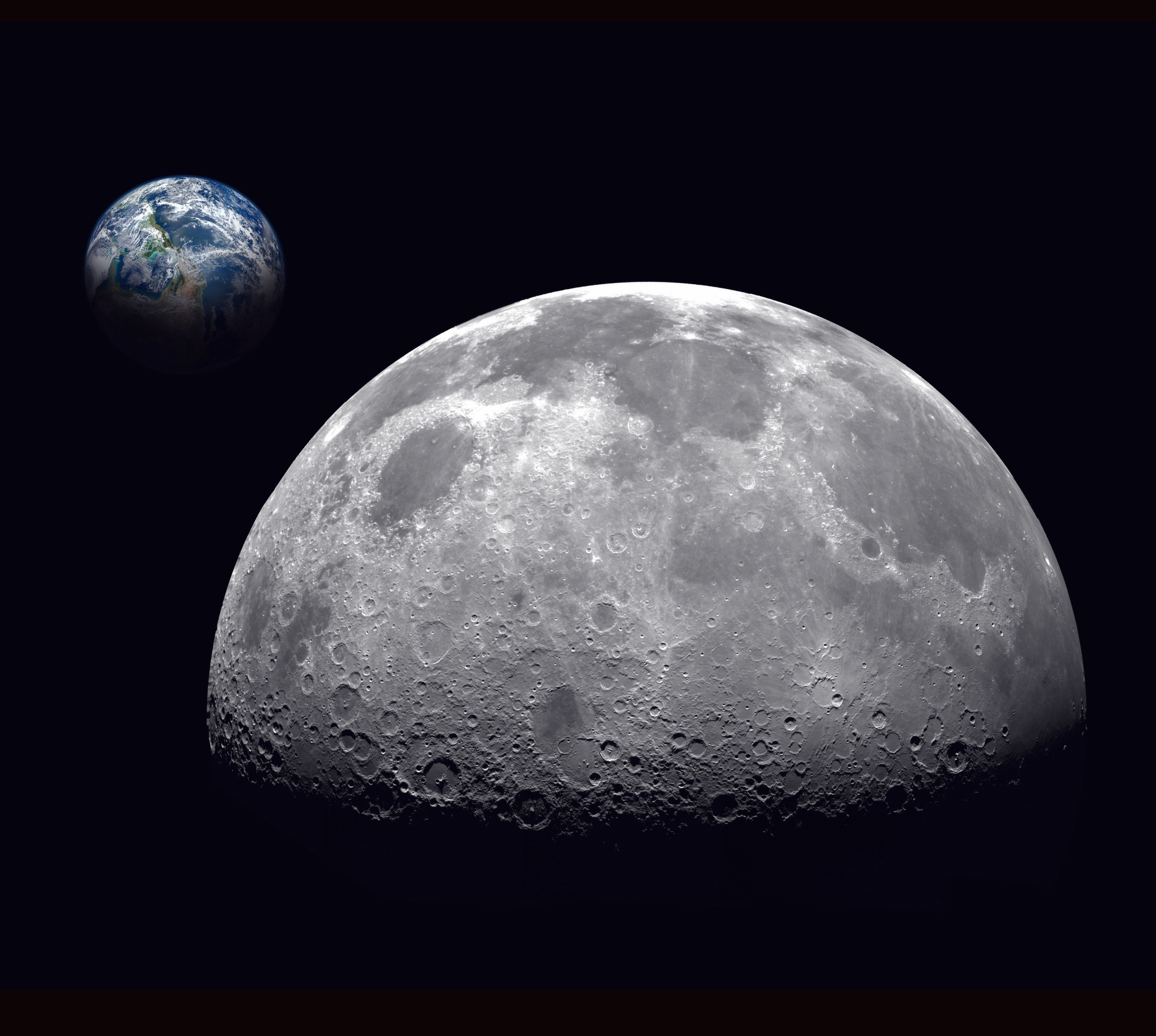
A rare lunar meteorite found on Earth contains evidence of three separate, ancient asteroid impacts, according to reports from Earth.com and Sci.News. The rock’s mineral structure preserves a chronological record of these colossal strikes, offering researchers a unique window into the Moon’s violent early history and the scale of impacts that shaped the lunar surface.
How a Single Rock Recorded Three Separate Asteroid Strikes
The discovery centers on a lunar meteorite that didn’t just survive the vacuum of space, but survived three distinct, high-energy impact events before it ever left the Moon. According to Popular Science, the rock acted as a geological ledger, recording the pressure and temperature of each strike through changes in its mineral composition. This is a rare occurrence; most rocks are either destroyed or completely reset by a single massive impact.
Researchers identified these events by examining “shock features” within the rock. When an asteroid hits the lunar surface at hypersonic speeds, it creates a shock wave that compresses minerals. According to Sci.News, these pressures are so intense they can fundamentally alter the crystal structure of minerals without necessarily melting the entire rock. By analyzing these alterations, scientists can distinguish between different impact events that occurred millions of years apart.
The process of identifying these strikes involves looking at minerals like plagioclase feldspar. Under extreme pressure, plagioclase transforms into a glass called maskelynite. Because different impacts produce different levels of shock, the presence of multiple stages of mineral transformation indicates that the rock was “smacked” multiple times, as Popular Science describes it.
- First Impact: The earliest event that established the initial shock baseline for the rock.
- Second Impact: A subsequent strike that added further layers of mineral deformation.
- Third Impact: The final colossal strike that likely ejected the rock from the Moon’s surface and sent it on a trajectory toward Earth.
Why the Discovery That a Moon Meteorite Reveals Three Ancient Impacts in a Single Rock Matters
This find is significant because it provides a “time-lapse” of lunar violence. Most lunar samples provide a snapshot of a single moment—the moment they were created or the moment they were ejected. A rock that preserves three distinct events allows geologists to study the frequency and intensity of impacts over a longer period.
According to Earth.com, the evidence of a “colossal” asteroid strike is particularly valuable. Large impacts don’t just leave craters; they can trigger global volcanic activity on the Moon, shift the lunar crust, and redistribute heat. Having a physical sample that survived such an event allows scientists to measure the exact pressure peaks of these ancient collisions.
The ability to trace multiple impact events in one specimen transforms the rock from a simple sample into a historical archive of the Moon’s orbital environment.
This data helps refine models of the “Late Heavy Bombardment,” a hypothesized period early in the solar system’s history when the inner planets were pummeled by a surge of asteroids. By dating the impacts found in this meteorite, researchers can better understand if these strikes were random occurrences or part of a larger, systemic period of instability in the early solar system.
The Science of Shock Metamorphism
To understand how scientists “read” this rock, one must understand shock metamorphism. This is the process where minerals change their physical state due to sudden, extreme pressure rather than slow heat. According to Sci.News, this is the primary tool used to verify if a rock is truly a meteorite or just a terrestrial rock that looks strange.
When a massive asteroid hits, it creates a shock wave that travels through the target rock at speeds faster than sound. This wave compresses the crystal lattices of the minerals. If the pressure is high enough, the atoms are shoved into new positions, creating “planar deformation features” (PDFs). These are microscopic lines that act as fingerprints for the impact’s intensity.
In the case of this specific lunar meteorite, the researchers found overlapping sets of these features. A single impact would produce one consistent set of PDF orientations. Three different impacts, however, produce three different sets of structural damage, effectively layering the history of the rock.
Comparison of Impact Evidence
| Feature | Single Impact Rock | Three-Impact Meteorite |
|---|---|---|
| Mineral State | Uniform shock level | Varied, overlapping shock zones |
| Crystalline Structure | One set of PDFs | Multiple sets of PDFs |
| Geologic Record | Snapshot of one event | Chronological sequence of events |
| Rarity | Common for meteorites | Extremely rare |
The Journey from the Moon to Earth
The final impact mentioned in the reports was not just another scar on the rock; it was the catalyst for its journey. For a piece of the Moon to reach Earth, it must be hit by an asteroid with enough force to accelerate the rock to “escape velocity”—the speed required to break free from the Moon’s gravitational pull.
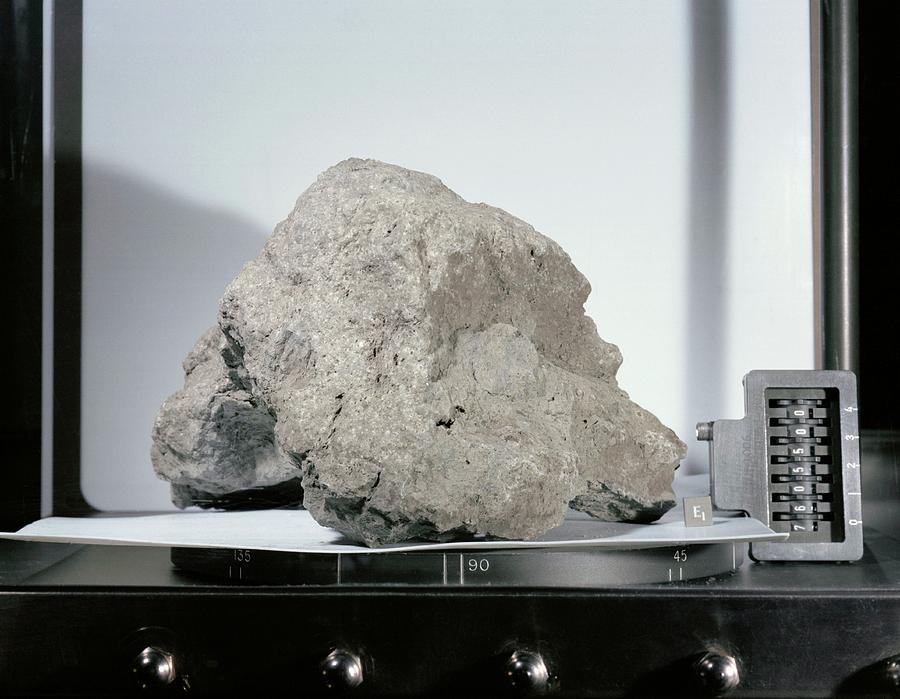
According to Popular Science, this ejection process is violent. The rock is blasted into space, where it orbits the Sun for millions of years as a meteoroid. Eventually, if its orbit intersects with Earth’s, it enters the atmosphere. The heat of reentry creates a fusion crust—a thin, melted outer layer—which protects the internal shock features from being destroyed.
This means the rock survived four distinct high-energy events: three ancient strikes on the Moon and one fiery descent through Earth’s atmosphere. The fact that the internal mineral records remained intact is a testament to the rock’s durability and the specific physics of the impacts.
For those interested in how these objects are tracked, a related explainer on meteorite classification can provide more detail on how scientists differentiate between lunar, Martian, and asteroidal rocks.
Lunar Meteorites vs. Apollo Samples
While the Apollo missions brought back 382 kilograms of lunar material, lunar meteorites offer a different kind of value. Apollo samples were collected from very specific, small areas of the lunar surface. In contrast, meteorites are “random samples” delivered to Earth by nature.
According to Sci.News, lunar meteorites often come from parts of the Moon that humans have never visited, including the far side or the deep poles. This makes the discovery of a multi-impact rock even more critical, as it may represent a region of the Moon with a different impact history than the landing sites of the 1960s and 70s.
However, meteorites have a downside: terrestrial contamination. Once a rock lands on Earth, it is exposed to water, oxygen, and biological organisms. Scientists must use rigorous cleaning and vacuum-sealed analysis to ensure the “shock” they are seeing is from an ancient asteroid and not from the rock’s fall to Earth.
Key Differences in Sample Acquisition
- Apollo Samples: Controlled collection, known exact location, minimal contamination, limited geographic range.
- Lunar Meteorites: Random collection, unknown origin point, potential terrestrial contamination, global geographic representation.
Correcting Common Misconceptions
A common misconception is that any rock found on Earth that looks “space-like” is a meteorite. In reality, most “meteorites” are actually “meteor-wrongs”—terrestrial rocks like slag or volcanic basalt. According to Earth.com, the definitive proof of a meteorite’s origin is the shock metamorphism described earlier. Terrestrial volcanic activity does not produce the same high-pressure mineral phases as a hypersonic asteroid impact.
Another misunderstanding is that the “three impacts” happened in quick succession. Geologic evidence suggests these events were likely separated by millions, or even billions, of years. The rock didn’t experience a “triple hit” in one afternoon; it survived as a piece of the lunar crust through different eras of the solar system’s evolution.
Finally, some assume that the “colossal” impact mentioned in the news would have vaporized the rock. While the center of a large impact crater is often vaporized, the “ejecta blanket”—the material thrown out from the sides of the crater—can survive. This rock was likely part of that ejecta, feeling the massive pressure of the strike without being at the absolute ground zero of the explosion.
Implications for Planetary Defense
Studying these impacts isn’t just about history; it has implications for the future. By analyzing the size and energy of the asteroids that hit the Moon, scientists can better estimate the frequency of “planet-killer” asteroids in our neighborhood. The Moon acts as a shield and a record-keeper for Earth.
According to Sci.News, understanding the “shock” signatures of colossal strikes helps researchers identify similar signatures in Earth’s own geologic record. If we can match the mineral signatures in lunar meteorites to those found in ancient Earth impact sites, we can build a more accurate map of how the entire Earth-Moon system has been affected by debris over eons.
This research supports the broader goals of planetary defense agencies, which seek to identify and deflect potentially hazardous objects. Knowing the typical scale of “colossal” strikes helps in calculating the probability of such events occurring in the modern era.
Frequently Asked Questions
How can scientists tell a rock came from the Moon and not Mars?
According to Sci.News, scientists use oxygen isotope analysis. Each planetary body has a unique “isotopic signature” based on its formation. The ratio of oxygen isotopes in lunar meteorites matches the samples brought back by Apollo missions, distinguishing them from Martian or asteroidal rocks.
What is maskelynite, and why is it important?
Maskelynite is a glass formed when plagioclase feldspar is subjected to extreme shock pressures. As noted in reports from Popular Science, it is a primary indicator of a high-velocity impact, as it cannot be formed by standard volcanic heat or tectonic pressure.

Why is this meteorite more valuable than others?
Most meteorites record a single major event. According to Earth.com, this specific rock is valuable because it preserves a sequence of three separate impacts, providing a chronological record of the Moon’s history in a single specimen.
Do these impacts happen often on the Moon today?
While the Moon is still hit by small meteoroids daily, “colossal” impacts are much rarer now than they were billions of years ago. The evidence in this rock likely dates back to a more violent epoch of the solar system.
Can these rocks be found by amateur collectors?
Yes, lunar meteorites are occasionally found in deserts or ice fields (like Antarctica), but they are extremely rare. Professional verification through mineralogical analysis is required to confirm their lunar origin.
The study of this multi-impact rock continues to provide data on the early solar system. As researchers apply more advanced dating techniques to the shock features, the timeline of these three ancient strikes will become clearer, further refining our understanding of the Moon’s evolution. For more on how space debris affects our system, see a related report on asteroid tracking technology.
