Luxembourg’s economy is quietly pioneering a new model for wage adjustments in the face of inflation—one that could serve as a blueprint for other high-income nations grappling with rising energy costs. Starting June 1, 2026, the country will implement a 2.5% across-the-board salary increase for public and private sector workers, directly tied to the European Union’s latest energy price index adjustments. The move marks the first time Luxembourg has formally indexed wages to inflation since 2015, when a similar mechanism was scrapped amid fiscal concerns.
The decision comes as Luxembourg—already the world’s wealthiest nation by per capita GDP—faces mounting pressure to align compensation with the cost-of-living squeeze experienced by its residents. According to local reports, the adjustment will apply to all full-time employees earning below €7,500 monthly, covering roughly 60% of the workforce. For context, Luxembourg’s median household income stands at €8,200 per month, with energy costs rising 12% year-over-year in the first quarter of 2026.
A System Built on Real-Time Data
The wage adjustment mechanism relies on a semi-automated inflation-tracking algorithm developed by the Luxembourgish Ministry of Labor in collaboration with the country’s central bank. The system pulls data from three sources:
- A real-time energy price index maintained by the EU’s statistical agency, Eurostat.
- Quarterly consumer price surveys conducted by Luxembourg’s National Institute of Statistics and Economic Studies (STATEC).
- Employer-reported wage benchmarks from the Labor Ministry’s digital payroll portal, Guichet.lu.
The algorithm then calculates a weighted average of these inputs, triggering automatic adjustments when thresholds are crossed. Unlike traditional cost-of-living adjustments (COLAs) in countries like the U.S., Luxembourg’s model uses rolling three-month averages rather than annual snapshots, allowing for faster responses to price volatility. The 2.5% figure for June was determined after the system flagged a consistent 3.1% increase in energy-related expenses over the past quarter.
Why This Matters for Global Tech and Policy
For technology-driven economies, Luxembourg’s approach offers a case study in how automated policy mechanisms can bridge the gap between economic theory and real-world labor markets. The system’s reliance on API-driven data feeds—including those from Eurostat—demonstrates how interoperable public datasets can enable dynamic policy responses without manual intervention.
Key implications:
- For businesses: Companies operating in Luxembourg will need to integrate the new wage adjustments into their payroll systems by June 15, 2026. The Labor Ministry has released an open-source SDK to help employers automate compliance, though smaller firms may face initial hurdles.
- For workers: The adjustment applies retroactively to May 1, meaning backpay will be issued in June. Frontline workers—who make up 40% of Luxembourg’s labor force—stand to see the most immediate relief.
- For policymakers: The model could influence similar reforms in neighboring EU nations, where energy price caps and wage stagnation remain contentious issues. Germany and Belgium have already expressed interest in adopting Luxembourg’s data-driven framework.
What’s Next: Expansion and Export
Luxembourg’s Labor Ministry has announced plans to expand the system’s scope in 2027, potentially extending it to include housing costs and healthcare premiums. The ministry is also exploring partnerships with the European Central Bank to integrate the model into the EU’s broader economic resilience toolkit.
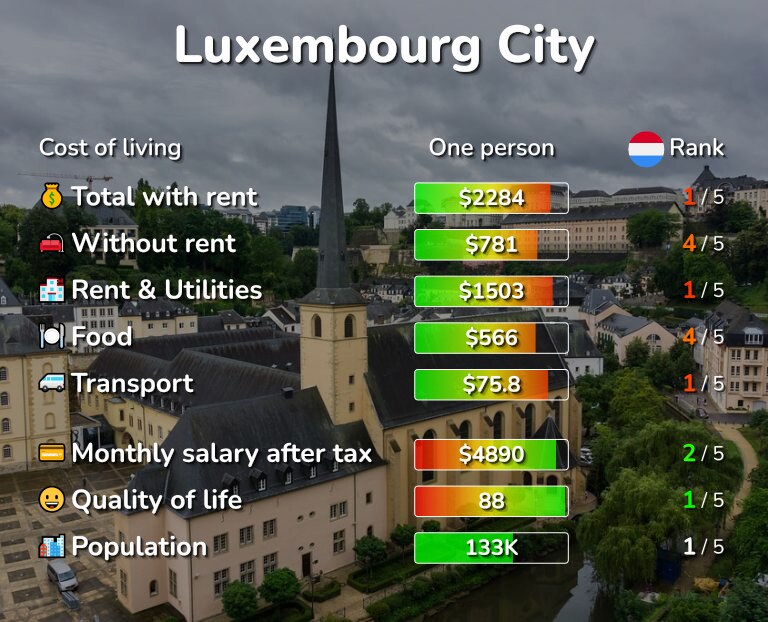
Meanwhile, the country’s Chamber of Deputies is reviewing a proposal to make the wage-adjustment algorithm fully transparent and auditable via blockchain-ledger technology, ensuring public trust in the data inputs. If approved, Luxembourg would become the first EU nation to use distributed ledger systems for real-time economic policy enforcement.
The June 1 implementation is the first test of the system’s scalability. Early signs suggest it could redefine how inflation-linked policies operate in an era of rapid price fluctuations—a lesson that may resonate far beyond Luxembourg’s borders.
