How Myanmar’s Border Conflicts Are Fueling a Shadow War: Cybercrime, Sanctions Evasion, and the Undermining of ASEAN Stability
The conflict in Myanmar has long been a regional security headache, but its spillover effects are now reshaping threats in ways few anticipated. Beyond the familiar risks of refugee flows and arms trafficking, a more insidious battle is unfolding—one fought in dark web marketplaces, through corrupted maritime supply chains, and across digital networks where sanctions evasion has become a lucrative cottage industry. As the military junta’s grip tightens and resistance factions consolidate along porous borders, the region’s security architecture is being tested in three critical but often overlooked domains: cybercrime, sanctions circumvention, and the exploitation of maritime networks. These interconnected challenges are not just collateral damage of Myanmar’s civil war—they are becoming its defining export.
For ASEAN, already struggling to maintain unity in the face of Myanmar’s political crisis, these emerging threats pose a dilemma. The bloc’s traditional approach—diplomatic restraint and non-interference—is ill-equipped to address issues that operate beyond national borders and legal jurisdictions. Meanwhile, neighboring countries like Thailand, Malaysia, and India are finding themselves on the front lines of a conflict that increasingly plays out in the digital realm and on the high seas. The question now is whether ASEAN can adapt its strategies before these shadow networks become too entrenched to dismantle.
This report examines how Myanmar’s border conflicts are catalyzing a new era of transnational security risks, the mechanisms through which these threats are spreading, and the implications for regional stability. It also explores why ASEAN’s current response—marked by hesitation and internal divisions—may be insufficient to contain the fallout.
—
From Civil War to Cyber War: How Myanmar’s Conflict Is Becoming a Digital Battleground
The Myanmar military’s crackdown on dissent since the 2021 coup has not only displaced hundreds of thousands but also created a fertile environment for cybercriminal activity. With internet penetration rising even amid chaos, the country has become a hub for illicit digital economies, including ransomware operations, cryptocurrency fraud, and the sale of stolen data. Unlike traditional conflict zones where physical destruction is visible, Myanmar’s cyber threats are invisible yet deeply disruptive.
Key mechanisms linking Myanmar’s conflict to cybercrime:
- Displaced tech talent: As skilled IT workers flee the junta’s repression, many end up in neighboring countries where they contribute to cybercrime syndicates. Thailand, for example, has seen a surge in dark web activity linked to Myanmar nationals, according to regional cybersecurity firms.
- State-backed hacking: The Myanmar military’s use of digital surveillance tools—such as facial recognition and AI-powered monitoring—has created a pool of expertise that is now being repurposed for criminal activities. Reports suggest some former military-affiliated hackers have transitioned to freelance cybercrime.
- Cryptocurrency as a sanctions evasion tool: With traditional banking channels restricted due to international sanctions, cryptocurrencies have become a lifeline for the junta and its allies. Myanmar’s underground crypto markets are now a primary route for laundering funds tied to illegal timber, gem, and drug trades.
Case Study: The Rise of Myanmar’s Dark Web Marketplaces
In early 2023, cybersecurity researchers identified a surge in dark web listings for stolen data—including personal records, corporate secrets, and even government documents—originating from Myanmar. One notable incident involved the leak of sensitive information from a Southeast Asian government, allegedly brokered by a network of hackers with ties to ethnic armed organizations (EAOs) operating along the Thai-Myanmar border. While the junta has denied involvement, the lack of accountability in Myanmar’s digital landscape makes attribution challenging.
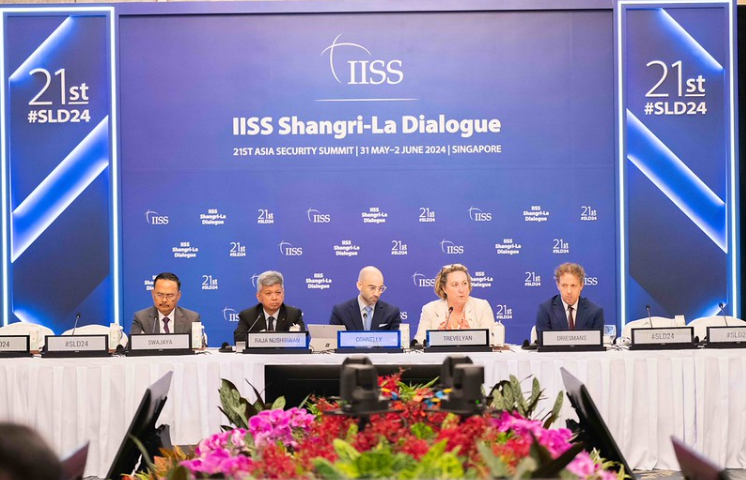
Experts warn that without coordinated action, these cyber threats could metastasize. “Myanmar is becoming a testing ground for hybrid warfare tactics that blend physical conflict with digital sabotage,” said a senior analyst with the International Institute for Strategic Studies (IISS). “The risk is that these methods will spill over into other ASEAN countries, creating a ripple effect of instability.”
—
Sanctions Evasion: How Myanmar’s Junta Is Outsmarting the World
International sanctions—imposed by the U.S., EU, and others—were designed to cripple the Myanmar military’s revenue streams. Yet the junta has proven remarkably adaptable, leveraging a patchwork of smuggling routes, shell companies, and digital payment systems to keep its war machine funded. The result is a sanctions evasion industry that has turned Myanmar into a case study in financial resilience.
Three primary channels for sanctions circumvention:
- Maritime smuggling: Myanmar’s coastlines, particularly in Rakhine and Mon states, have become transit points for sanctioned goods—from oil and weapons to luxury items. Vessels often fly flags of convenience (e.g., Cambodia or Panama) to obscure their origins.
- Cryptocurrency and trade-based money laundering: The junta has embraced digital currencies to bypass SWIFT restrictions. For example, Myanmar’s Myanmar Kyat Futures Exchange (MKFX) was reportedly used to funnel funds into offshore accounts before its shutdown in 2022.
- Human trafficking and forced labor: The military’s use of forced labor in industries like jade mining and fishing has created a black-market labor force that generates revenue while evading sanctions on direct military spending.
Data Point: The Jade Trade’s Role in Sanctions Evasion
A 2023 report by Global Witness estimated that the junta earns $300–500 million annually from illegal jade mining, much of which is smuggled through Thailand and China. The trade operates with near impunity due to corruption in neighboring governments and the lack of regional cooperation on financial intelligence sharing.
ASEAN’s struggle to address this issue highlights a broader failure: the bloc’s ASEAN Convention on Counter-Terrorism and ASEAN Smart Cities Framework have yet to incorporate robust mechanisms for tracking cross-border financial flows linked to conflict zones. “Sanctions only work if there’s a united front,” said a diplomat familiar with the matter. “Right now, ASEAN’s response is fragmented, and that’s exactly what the junta is counting on.”
—
Maritime Networks: The Invisible Front in Myanmar’s Conflict
While land-based fighting dominates headlines, the real action in Myanmar’s conflict is increasingly taking place at sea. The country’s extensive coastline and river systems have become critical arteries for arms trafficking, drug smuggling, and the movement of foreign fighters. The situation is exacerbated by weak maritime governance, with pirates, traffickers, and state actors all exploiting the same routes.
Key maritime threats emerging from Myanmar:
- Arms smuggling to insurgent groups: Vessels registered in Myanmar have been intercepted carrying weapons destined for ethnic armed organizations (EAOs) in Thailand and India. The Karen National Union (KNU) and Arakan Army (AA) are among groups reportedly receiving arms via maritime routes.
- Drug trafficking corridors: Methamphetamine production in Myanmar’s Shan State is now linked to global cartels, with shipments moving through the Andaman Sea to markets in India and Africa. The United Nations Office on Drugs and Crime (UNODC) has warned of a “dramatic increase” in maritime drug routes.
- Foreign fighter networks: Reports indicate that jihadist groups with ties to Southeast Asia are using Myanmar’s porous borders to move fighters and funds. The Islamic State’s Khorasan Province has allegedly exploited the chaos to establish training camps near the Thai border.
Case Study: The Andaman Sea’s New Smuggling Hub
In 2023, Thai naval forces seized a vessel off the coast of Satun Province carrying 10 tons of methamphetamine with documentation linking it to a Myanmar-based syndicate. The ship’s logbooks revealed a route that extended from Myanmar’s Irrawaddy Delta to ports in Malaysia and Indonesia, bypassing traditional trafficking hotspots. “This isn’t just about drugs—it’s about how conflict economies are being globalized,” said a maritime security expert.
The lack of a unified ASEAN maritime security strategy is leaving gaps that criminals are quick to exploit. While countries like Singapore and Malaysia have strengthened port security, others—such as Cambodia and the Philippines—remain vulnerable due to corruption and underfunded coast guards.
—
ASEAN’s Dilemma: Can the Bloc Adapt Before It’s Too Late?
ASEAN’s approach to Myanmar has long been defined by consensus-based diplomacy and a reluctance to intervene in member states’ internal affairs. But as cybercrime, sanctions evasion, and maritime smuggling blur the lines between domestic and regional security, the bloc’s traditional playbook is looking outdated. The question is whether ASEAN can evolve without abandoning its core principles.
Three major challenges facing ASEAN:
- Lack of unified cybersecurity standards: While Singapore and Malaysia have advanced cyber laws, other members—such as Laos and Cambodia—lag far behind, creating loopholes for cybercriminals.
- Financial intelligence gaps: ASEAN’s Anti-Money Laundering (AML) task forces lack real-time data-sharing capabilities, making it difficult to track funds linked to Myanmar’s conflict.
- Maritime sovereignty disputes: China’s growing influence in the South China Sea complicates efforts to monitor illegal activity near Myanmar’s coasts, as some ASEAN members are hesitant to challenge Beijing.
Potential Solutions on the Table
Some analysts argue that ASEAN could take a page from the EU’s sanctions enforcement model, which combines financial tracking, asset freezes, and public naming-and-shaming of violators. Others propose a regional cybersecurity task force to counter the growing threat of Myanmar-linked hacking groups. However, political will remains the biggest hurdle.
“ASEAN’s biggest weakness isn’t capability—it’s coordination,” said a former ASEAN diplomat. “If the bloc can’t even agree on a joint statement about Myanmar, how can it tackle issues that require rapid, coordinated action?”
—
What’s Next? Three Scenarios for Myanmar’s Shadow War
The trajectory of these emerging threats depends on three key factors: ASEAN’s response, the junta’s ability to adapt, and the resilience of Myanmar’s resistance factions. Here are three possible outcomes:
- The Spillover Scenario: If ASEAN fails to act, cybercrime and sanctions evasion networks will deepen, with neighboring countries becoming collateral damage. Thailand could see a surge in dark web activity, while Malaysia’s financial sector may face increased money-laundering risks.
- The Containment Scenario: A unified ASEAN response—combining cybersecurity reforms, stricter maritime patrols, and financial intelligence sharing—could limit the spread of these threats. However, this would require overcoming internal divisions and securing external support.
- The Escalation Scenario: If the junta successfully integrates cyber and maritime smuggling into its war economy, Myanmar could become a permanent hub for transnational crime, drawing in global syndicates and further destabilizing the region.
One thing is clear: the longer ASEAN hesitates, the harder it will be to reverse the damage. The conflict in Myanmar is no longer just a domestic crisis—it’s a regional security experiment with global implications.
—
Key Questions and Answers
How is Myanmar’s conflict fueling cybercrime in neighboring countries?
Displaced IT workers and former military hackers are contributing to dark web markets, while the junta’s repression has forced skilled professionals into illicit digital economies. Thailand and Malaysia have seen rises in ransomware and data theft linked to Myanmar nationals.
Can sanctions really stop the Myanmar military if it’s using cryptocurrency and smuggling?
Sanctions alone are unlikely to succeed without coordinated enforcement. The junta has already adapted by using shell companies, cryptocurrencies, and maritime routes to bypass restrictions. ASEAN’s lack of financial intelligence sharing makes tracking these flows even harder.
Why is maritime smuggling from Myanmar such a big problem?
Myanmar’s long coastline and weak border controls make it an ideal transit point for arms, drugs, and illegal migrants. The Andaman Sea, in particular, has become a key route for methamphetamine and weapons destined for global markets.
What role does ASEAN play in addressing these threats?
ASEAN’s current approach—diplomatic restraint and non-interference—is insufficient for transnational cyber and maritime threats. A more unified strategy, including cybersecurity cooperation and financial intelligence sharing, would be needed to contain the fallout.
Could Myanmar’s cyber threats spread to other ASEAN countries?
Yes. If unchecked, Myanmar’s dark web networks could expand into Thailand, Malaysia, and Indonesia, while sanctions evasion tactics could inspire similar schemes in other conflict zones, such as the Philippines or Papua New Guinea.
What’s the biggest obstacle to solving these issues?
The lack of political will within ASEAN. Member states prioritize sovereignty and consensus over rapid, coordinated action, leaving gaps that criminals exploit. Without a shift in approach, these threats will likely worsen.
