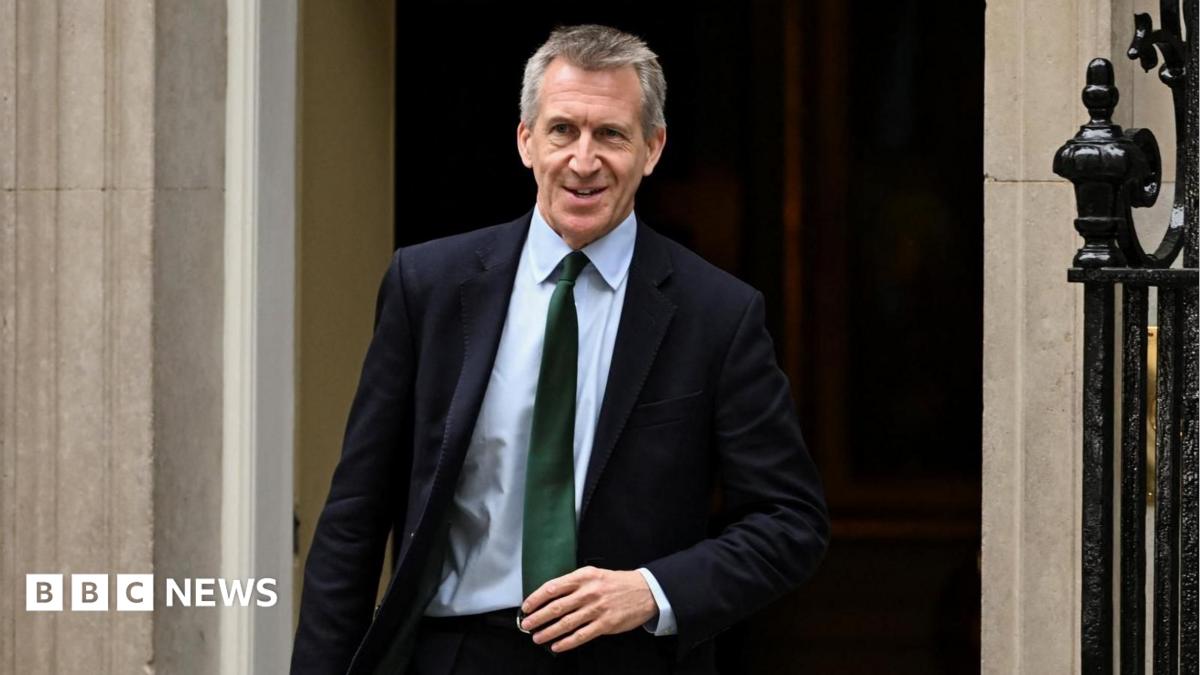
Jarvis says Labour must ‘meet the moment’ on defence spending – BBC: Analysis of UK Security Funding
Jarvis says Labour must ‘meet the moment’ on defence spending, according to reports from the BBC, as the UK government faces mounting pressure to align military budgets with escalating global security threats. This call for increased investment comes amid reports that Defence Secretary John Healey previously explored joining a global investment bank to secure additional funding for the armed forces.
Why Jarvis says Labour must ‘meet the moment’ on defence spending – BBC
The demand for a strategic shift in military funding stems from a perceived gap between the UK’s current defence capabilities and the volatility of the modern geopolitical landscape. According to the BBC, Jarvis argues that the Labour government cannot afford a cautious approach to spending if it intends to maintain its standing as a leading security power. The phrase “meet the moment” suggests that existing budgetary frameworks are insufficient for the immediate risks facing the North Atlantic Treaty Organization (NATO) and the UK’s sovereign interests.
This pressure coincides with a broader debate within the government regarding fiscal discipline versus national security. While the Treasury emphasizes the need to stabilize the economy, security analysts and political figures argue that underfunding the Ministry of Defence (MoD) creates systemic vulnerabilities. The BBC reporting highlights a tension between the government’s desire to adhere to strict spending rules and the operational requirements of the military.
Key drivers behind this urgent call for funding include:
- Increased State Aggression: Rising tensions in Eastern Europe and the Indo-Pacific.
- Capability Gaps: The need to modernize legacy systems and invest in emerging technologies like AI and drone warfare.
- Alliance Obligations: The ongoing requirement to meet or exceed the NATO target of spending 2% of GDP on defence.
How John Healey explored a global investment bank for defence funds
In an effort to find alternative revenue streams, Defence Secretary John Healey considered a non-traditional approach to military financing. According to the BBC, Healey looked into the possibility of the UK joining a global investment bank to raise the necessary funds for defence procurement and infrastructure.
This strategy would represent a departure from traditional government spending, where the Treasury allocates funds through annual budgets. By leveraging an investment bank, the government could potentially access private capital or international loans to fund long-term military projects without immediately impacting the public deficit. This approach seeks to treat defence investment as a strategic asset that can generate economic growth through industrial partnerships.

However, this proposal has raised questions about the long-term cost of borrowing and the influence of external financial entities over national security priorities. Critics argue that relying on investment banks could introduce market volatility into the defence budget, whereas proponents suggest it is the only viable way to achieve rapid modernization without triggering a fiscal crisis.
| Funding Method | Primary Source | Potential Advantage | Potential Risk |
|---|---|---|---|
| Traditional Treasury Allocation | Taxpayer Revenue | Direct Government Control | Strict Fiscal Constraints |
| Global Investment Bank | Private/International Capital | Rapid Scaling of Funds | Debt Servicing & External Influence |
Is the current defence strategy a ‘debacle’ for Keir Starmer?
The handling of defence spending has become a focal point for critics of Prime Minister Keir Starmer. Reports from The Times characterize the current situation as a “defence debacle,” suggesting that the government is struggling to articulate a clear, funded strategy for national security. This perceived instability is framed not just as a budgetary issue, but as a symptom of wider leadership challenges.
The narrative emerging from some political commentators is that Starmer’s administration is caught between contradictory goals: the need to present a “tough” stance on global security and the need to avoid the political fallout of tax hikes or spending cuts elsewhere. The Times suggests that this indecision may be viewed as a prelude to further political struggles for the Prime Minister.
Adding to this perception, The Guardian has described the government’s current trajectory as a “slow-motion car crash,” implying that the administration is losing control of its own narrative. These descriptions highlight a growing disconnect between the government’s public commitments to security and the practical reality of its financial planning.
The core of the “debacle” argument rests on three points:
- Communication Failure: The government has failed to provide a transparent roadmap for how it will fund its defence ambitions.
- Internal Friction: Apparent disagreements between the Ministry of Defence and the Treasury over spending priorities.
- Timing: The delay in confirming spending increases during a period of high global instability.
For a deeper dive into the political ramifications, see our related explainer on UK fiscal policy and national security.
The geopolitical implications of failing to ‘meet the moment’
The insistence that Labour “meet the moment” is not merely a domestic political demand; it is rooted in the shifting dynamics of global power. The UK’s role in the “Special Relationship” with the US and its leadership within Europe depend heavily on its perceived capability to project power and provide security guarantees.
If the UK fails to increase spending, several strategic risks emerge. First, there is the risk of “capability atrophy,” where the military possesses equipment that is outmatched by adversaries. Second, there is the risk of diminished diplomatic leverage; allies are less likely to follow the lead of a nation that cannot financially sustain its security commitments.
“The gap between ambition and resource is the most dangerous place for a government to reside in terms of national security.”
The BBC reporting indicates that the urgency is driven by the reality that modern warfare is evolving faster than traditional procurement cycles. The shift toward autonomous systems and cyber warfare requires immediate, front-loaded investment rather than the incremental increases typically seen in government budgets.
Contrasting perspectives on Labour’s defence funding
The discourse surrounding the “Jarvis says Labour must ‘meet the moment’ on defence spending – BBC” story reveals a sharp divide in how different outlets and political actors frame the issue.
The BBC focuses on the operational and strategic necessity, framing the story as a matter of national security and the search for innovative funding solutions, such as the global investment bank proposed by John Healey. The focus here is on the “how” of the funding.
In contrast, The Times and The Guardian frame the story through a political and leadership lens. They treat the defence spending struggle as a proxy for Keir Starmer’s overall grip on power. Where the BBC sees a budgetary challenge, these outlets see a leadership crisis, using terms like “debacle” and “car crash” to describe the administration’s performance.
This contrast illustrates the two-track nature of the problem: one track is the technical challenge of funding a 21st-century military, and the other is the political challenge of managing a government’s image during a period of economic austerity.
Common misconceptions about UK defence spending
There are several frequent oversimplifications regarding the current debate over Labour’s defence budget that require clarification based on the reported facts.
Misconception: The UK is not meeting NATO targets
While there is a push for more spending, the UK has generally remained above the 2% GDP threshold. The current debate is not about meeting a minimum requirement, but about whether that 2% is sufficient for the current threat level. The “meet the moment” argument suggests that the 2% target may now be an outdated benchmark.
Misconception: A global investment bank is a standard way to fund armies
The proposal mentioned by the BBC regarding John Healey is highly unconventional. Most nations fund their militaries through direct taxation and sovereign debt. Using an investment bank to raise defence funds is an experimental approach that seeks to blend private finance with public security, which is why it has drawn significant scrutiny.
Misconception: Defence spending is the only cause of the government’s political friction
While The Times and The Guardian highlight the “defence debacle,” this is one of several pressure points. The friction is a result of the broader conflict between the government’s ideological commitment to public services and the pragmatic necessity of military spending.
Strategic priorities for the Ministry of Defence
To effectively “meet the moment,” the Ministry of Defence must prioritize specific areas of investment. Based on the current security climate, these priorities likely include:
- Integrated Review Updates: Revising the strategic goals of the UK military to reflect the current threat from state actors.
- Industrial Base Strengthening: Ensuring that the UK has the domestic manufacturing capacity to produce munitions and hardware without relying solely on foreign imports.
- Cyber and Electronic Warfare: Shifting funds toward non-kinetic capabilities that can disrupt adversary operations without escalating to full-scale conflict.
- Personnel Retention: Addressing the crisis in recruitment and retention within the armed forces, which cannot be solved by equipment spending alone.
The success of these priorities depends entirely on the resolution of the funding debate. If the government opts for the “investment bank” route, the speed of procurement could increase, but the cost of capital would need to be carefully managed to avoid long-term financial instability.
For more on how these priorities align with international standards, refer to our related analysis of NATO’s 2024 strategic concept.
Frequently Asked Questions
What does “meeting the moment” mean in the context of defence spending?
In the context of the BBC reports, “meeting the moment” refers to the need for the Labour government to increase military spending beyond standard targets to address urgent, contemporary security threats. It implies that current budgets are insufficient for the actual risks posed by global adversaries.
Who is John Healey and what was his proposal?
John Healey is the UK’s Defence Secretary. He reportedly explored the possibility of the UK joining a global investment bank to raise additional funds for defence, seeking a way to modernize the military without relying solely on traditional Treasury allocations.
Why are some outlets calling the defence situation a “debacle”?
Outlets like The Times use this term because they perceive a lack of clear strategy and a failure of leadership from Prime Minister Keir Starmer. They argue that the government’s inability to resolve the funding gap reflects a wider struggle to manage the administration effectively.
How does a global investment bank differ from normal government spending?
Normal spending is funded by taxes and government bonds managed by the Treasury. A global investment bank would involve leveraging private capital and international investment to fund projects, potentially allowing for larger upfront investments but introducing different financial risks and obligations.
Is the UK currently meeting its NATO spending obligations?
Yes, the UK generally meets the 2% of GDP spending target required by NATO. However, the current debate focuses on whether this percentage is still adequate given the increased aggression from state actors and the rising cost of advanced military technology.
The trajectory of the UK’s defence policy will likely be determined by the government’s ability to reconcile its fiscal rules with the strategic demands outlined by figures like Jarvis. Whether the administration chooses traditional funding, innovative financial instruments, or a middle path, the outcome will define the UK’s security posture for the next decade.
