
Indonesia’s Rupiah Plunge: How a Weaker Currency Could Reshape the Economy
The Indonesian rupiah has fallen to its lowest level in more than two decades, trading below 16,000 per US dollar this week—a sharp decline that has economists divided over whether the currency’s weakness will ultimately boost or cripple Southeast Asia’s largest economy. While some argue a weaker rupiah could make exports more competitive and attract foreign investment, others warn of rising import costs, inflation pressures, and potential capital flight. With the Bank Indonesia governor signaling cautious optimism and global markets watching closely, the question remains: will this currency crisis become an economic turning point or a fresh source of instability?
The rupiah’s slide has accelerated in recent months, dropping nearly 6% against the dollar since January and hitting a record low of 15,950 IDR/USD on Wednesday. The decline reflects a mix of domestic economic challenges and external pressures, including tighter US Federal Reserve monetary policy, slowing global demand for commodities, and persistent concerns over Indonesia’s fiscal health. Analysts say the currency’s weakness is now testing the limits of Indonesia’s $133 billion foreign exchange reserves, which have been deployed to stabilize the rupiah in recent interventions.
For now, the Indonesian government and central bank are walking a tightrope, balancing the need to defend the currency against the risks of over-tightening monetary policy. Bank Indonesia has raised interest rates by 175 basis points since May, but further hikes could strain growth in a country where consumer spending already shows signs of slowing. Meanwhile, President Joko Widodo’s administration is pushing ahead with infrastructure megaprojects—including a $32 billion high-speed rail link to Singapore—hoping to lure foreign capital and offset the currency’s losses.
Why Is the Rupiah Falling So Fast?
The rupiah’s sharp depreciation is the result of three interlocking factors: external financial conditions, domestic policy choices, and structural vulnerabilities in Indonesia’s economy. Here’s how each is playing out:
- Global monetary tightening: The US Federal Reserve’s aggressive rate hikes—raising benchmark rates to 5.25–5.50% this year—have sent capital flooding into dollar-denominated assets, increasing pressure on emerging-market currencies. The rupiah, like other Asian currencies, has been particularly vulnerable as investors pull funds from higher-yielding but riskier assets.
- Commodity price volatility: Indonesia’s economy remains heavily reliant on commodity exports, particularly coal, palm oil, and nickel. Slumping global prices for these goods have reduced dollar inflows, weakening the rupiah’s supply. Nickel exports, a key bright spot, have softened as China’s property sector slows, cutting demand for the metal used in stainless steel and electric vehicle batteries.
- Domestic fiscal and debt concerns: Indonesia’s budget deficit widened to 1.9% of GDP in 2023, up from 1.2% the prior year, as spending on elections and infrastructure projects outpaced revenue growth. Meanwhile, public debt stands at 40% of GDP—elevated by a global standard but manageable if growth remains steady. However, rising borrowing costs in US dollar terms have increased the cost of servicing Indonesia’s $450 billion in external debt, further pressuring the currency.
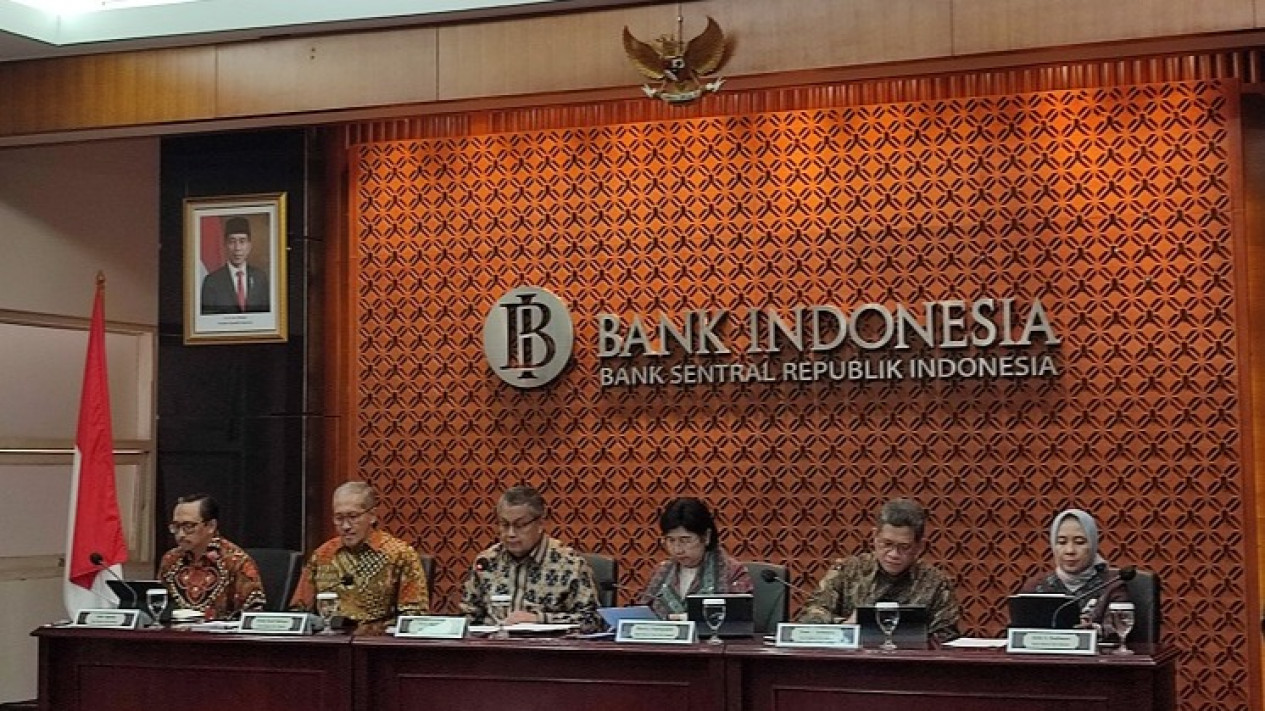
Bank Indonesia Governor Perry Warjiyo has attributed the rupiah’s decline to “external shocks,” but analysts say domestic factors—including slow structural reforms and a reliance on short-term capital inflows—have made the economy more susceptible to volatility. “The rupiah’s weakness is a symptom of deeper imbalances,” said Economist Daniel H. Sumargo of the Jakarta-based Center for Strategic and International Studies (CSIS). “Without addressing fiscal sustainability and improving productivity, the currency will remain a hostage to global sentiment.”
In response, the central bank has deployed a mix of tools: raising interest rates to attract hot money, selling dollars from its reserves, and imposing stricter capital controls on short-term foreign inflows. So far, these measures have prevented a more dramatic collapse, but the rupiah’s trajectory remains uncertain as long as global rates stay elevated.
Could a Weaker Rupiah Actually Help Indonesia’s Economy?
Economists are sharply divided over whether the rupiah’s depreciation will ultimately benefit or harm Indonesia’s growth prospects. The debate hinges on two competing forces: the potential gains from export competitiveness versus the risks of higher import costs and inflation.

Pros: How a Weaker Currency Could Work in Indonesia’s Favor
Supporters of a weaker rupiah point to three key advantages:
- Boost to exports: A weaker currency makes Indonesian goods cheaper for foreign buyers, potentially reviving demand for commodities, textiles, and manufactured goods. Indonesia’s non-oil and gas exports rose 11% year-over-year in the first half of 2023, driven in part by stronger shipments of palm oil and coal. Analysts at HSBC estimate that every 10% depreciation of the rupiah could add 0.5% to GDP growth by making exports more competitive.
- Attracting foreign investment: While capital outflows have accelerated, a weaker rupiah could incentivize foreign firms to invest in local production to capitalize on lower costs. Indonesia’s manufacturing sector, particularly in automotive and electronics, has already seen some relocation from China, and further currency depreciation could accelerate this trend.
- Debt relief in foreign currency: For Indonesian borrowers with dollar-denominated debt, a weaker rupiah reduces the real value of their liabilities. This could ease pressure on state-owned enterprises and banks, some of which have significant foreign-currency exposures.
“A weaker rupiah isn’t inherently bad—it’s about how the government responds,” said Economist Maria Siregar of the International Monetary Fund’s Jakarta office. “If policymakers use the depreciation to push structural reforms—like improving infrastructure and education—it could become a net positive over time.”
Cons: The Risks of a Currency Crisis
However, the risks of prolonged rupiah weakness outweigh the potential benefits for many stakeholders:

- Inflationary pressures: Indonesia’s consumer price index rose 3.5% in July, already above the central bank’s 3% target. A weaker rupiah will drive up import costs for fuel, food, and machinery, risking a wage-price spiral. The government has already raised fuel subsidies to cushion the blow, but further depreciation could force more expensive interventions.
- Capital flight and liquidity crunch: If the rupiah continues to fall, foreign investors may pull out entirely, draining liquidity from the financial system. Indonesia’s stock market has already seen net outflows of $3.2 billion this year, and further selling could trigger a broader sell-off.
- Debt sustainability concerns: While a weaker rupiah helps some borrowers, it worsens the burden for others. State-owned enterprises with dollar debt—such as PT Pertamina and PT PLN—could face higher refinancing costs, straining public finances.
“The rupiah’s decline is a double-edged sword,” warned Economist Rizal Ramli, a former Indonesian finance minister. “While exporters may benefit in the short term, the broader economy—especially households and small businesses—will bear the brunt of higher costs. Without careful management, this could tip into a self-reinforcing crisis.”
What Happens Next? Three Scenarios for Indonesia’s Economy
The path forward for Indonesia’s economy depends on how three key variables play out: global monetary policy, domestic policy responses, and market sentiment. Analysts have identified three plausible scenarios over the next 12–18 months:
| Scenario | Key Triggers | Economic Impact | Rupiah Outlook |
|---|---|---|---|
| Stabilization |
|
|
Moderates to ~15,500 IDR/USD by year-end |
| Managed Depreciation |
|
|
Trades at ~16,000–16,500 IDR/USD |
| Crisis Mode |
|
|
Plummets to 17,000+ IDR/USD |
The most likely outcome, according to a survey of 20 economists by Bloomberg, is a managed depreciation, where the rupiah stabilizes at a weaker level but avoids a full-blown crisis. However, the window for this scenario is narrowing as global uncertainties mount. “The next six months will be critical,” said Economist Arief Wismoyo of Mandiri Sekuritas. “If the Fed signals more hikes, Indonesia will have to choose between defending the rupiah or protecting growth—and that choice will shape the economy for years.”
How Indonesia’s Currency Crisis Compares to Past Downturns
Indonesia’s current rupiah crisis echoes past currency shocks in emerging markets, but with key differences in scale and response. A comparison with two previous episodes offers lessons for policymakers:
- 1997–98 Asian Financial Crisis:
- Trigger: Capital flight from Thailand’s baht spread across Asia, including Indonesia, where the rupiah collapsed from ~2,500 IDR/USD to ~17,000 IDR/USD.
- Response: Indonesia raised interest rates to 75%, devalued the rupiah, and sought an IMF bailout of $43 billion.
- Outcome: GDP contracted 13% in 1998, but reforms led to stronger growth in the 2000s.
- Lesson: Delayed action worsened the crisis; today, Indonesia’s larger reserves (~$133 billion vs. $23 billion in 1998) give it more room to maneuver.
- 2013 Taper Tantrum:
- Trigger: The US Federal Reserve’s hint at tapering quantitative easing sent capital fleeing emerging markets, including Indonesia.
- Response: Bank Indonesia raised rates by 175 basis points and sold dollars from reserves.
- Outcome: The rupiah stabilized at ~12,000 IDR/USD, but growth slowed to 5.8% in 2013.
- Lesson: Monetary policy alone can’t sustain a currency; structural reforms are essential for long-term stability.
Today’s crisis shares similarities with both episodes—global tightening and domestic vulnerabilities—but Indonesia’s deeper financial markets and higher foreign reserves provide some protection. “The playbook is clear,” said Economist Lili Yan Ing of the World Bank. “Indonesia must act decisively to restore confidence, but this time, the stakes are higher because the global environment is more uncertain.”
Who Wins and Who Loses in a Weaker Rupiah?
The impact of the rupiah’s decline varies sharply across Indonesia’s economy, favoring some groups while punishing others. Here’s how different stakeholders are affected:
| Stakeholder | Impact of Weaker Rupiah | Example |
|---|---|---|
| Exporters | ↑ Competitive advantage; higher profits | PT Smelting, Indonesia’s largest nickel smelter, saw export revenue rise 20% in Q2 2023 as the rupiah weakened. |
| Importers | ↓ Higher costs for raw materials, machinery, and consumer goods | PT Unilever Indonesia reported a 15% increase in import costs for palm oil and packaging materials. |
| Foreign Investors | ↓ Mixed: Higher returns on local assets but higher risks | Foreign direct investment in manufacturing rose 8% in 2023, but portfolio outflows hit $3.2 billion. |
| Households | ↓ Higher prices for fuel, food, and imported goods | Gasoline prices rose 12% in July, adding to inflationary pressures. |
| State-Owned Enterprises (SOEs) | ↓ Mixed: Some benefit from export gains, others face higher debt costs | PT Pertamina’s fuel import costs rose 25%, but its overseas refinery profits increased. |
| Banks | ↓ Asset quality risks rise as corporate borrowers struggle | Bank Mandiri reported a 10% increase in non-performing loans in Q2 2023. |
The biggest losers in this scenario are likely to be low-income households, who spend a larger share of their income on essential imports like fuel and food. The government has attempted to mitigate this through subsidies and targeted cash transfers, but the rupiah’s decline risks widening inequality. “The poor will feel the pinch first,” said Social Economist Enny Sri Hartati of the University of Indonesia. “Without aggressive social protection measures, this could deepen poverty.”
What the Rupiah’s Decline Means for Global Markets
Indonesia’s currency crisis is not just a domestic issue—it has ripple effects across Southeast Asia and global commodity markets. Three key areas are watching closely:
- Commodity Prices: Indonesia is the world’s largest thermal coal exporter and a major palm oil producer. A weaker rupiah could push these prices lower, benefiting consumers but hurting government revenue. Analysts at Commodities Research Unit predict coal prices could drop another 5–10% if the rupiah stays weak.
- Regional Currency Markets: The rupiah’s decline has already triggered some selling in neighboring currencies, including the Thai baht and Malaysian ringgit. The Philippine peso, which has held up better, could come under pressure if the rupiah continues to fall.
- Investor Sentiment: Emerging-market funds have pulled $12 billion from Asia this year, with Indonesia a key target. If the rupiah crisis deepens, it could accelerate capital outflows from other vulnerable markets, including Turkey and South Africa.
“What happens in Indonesia doesn’t stay in Indonesia,” said Economist Ken Peng of Nomura. “A prolonged rupiah crisis could test the resilience of the entire region, especially as the Fed keeps rates high.”
For now, global markets are bracing for more volatility. The International Monetary Fund has warned that emerging-market currencies could face further pressure if the US economy avoids a recession and rates stay elevated. “The rupiah is a canary in the coal mine for Asia,” said IMF Deputy Managing Director Gita Gopinath in a recent speech. “How Indonesia manages this crisis will set the tone for others.”
Key Takeaways: What Readers Should Watch
As the rupiah’s trajectory remains uncertain, here are the critical developments to monitor in the coming months:
- Bank Indonesia’s next rate move: Will the central bank raise rates again, or hold steady to avoid choking growth?
- US Federal Reserve policy signals: Any hint of rate cuts in late 2024 could ease pressure on the rupiah.
- Government fiscal reforms: Will President Widodo’s administration implement spending cuts or tax hikes to reduce the deficit?
- Capital controls and reserve levels: How long can Bank Indonesia sustain interventions before reserves run low?
- Inflation data: If consumer prices rise above 5%, the central bank may have to act aggressively.
- Export performance: Can Indonesia’s non-commodity exports (like textiles and electronics) offset losses in coal and palm oil?
One thing is clear: Indonesia’s ability to navigate this crisis will hinge on its capacity to balance short-term stability with long-term reforms. “This is not just about the rupiah—it’s about whether Indonesia can break free from its reliance on commodity exports and build a more resilient economy,” said Economist Arief Wismoyo. “The choices made in the next six months will determine whether this becomes a turning point or another false start.”
Frequently Asked Questions
Q: How low could the rupiah go if the crisis worsens?
A: Analysts at Goldman Sachs project the rupiah could weaken to 17,000 IDR/USD if global rates stay high and capital outflows accelerate. However, a more severe scenario—such as a full-blown balance-of-payments crisis—could push it toward 18,000 IDR/USD, similar to levels seen in the 1998 financial crisis.
Q: Will the Indonesian government devalue the rupiah officially?
A: While Bank Indonesia has allowed the rupiah to depreciate gradually, an official devaluation—where the central bank sets a new fixed exchange rate—is unlikely in the near term. Instead, the rupiah is being managed through a managed float system, where interventions and market forces determine its value.
Q: How does a weaker rupiah affect tourism in Indonesia?
A: A weaker rupiah makes Indonesia more attractive to foreign tourists, as their dollars stretch further. However, rising fuel and food prices could offset some of these gains. In 2023, tourist arrivals rose 30% year-over-year, but higher costs for imports like electronics and pharmaceuticals may dampen spending power for visitors.
Q: Can Indonesia print more rupiah to stop the decline?
A: No. Printing more rupiah would worsen inflation and lose investor confidence. Instead, Bank Indonesia relies on foreign exchange reserves, interest rate hikes, and capital controls to defend the currency. Printing money is a last resort and would trigger a hyperinflationary crisis, as seen in countries like Zimbabwe and Venezuela.
Q: What sectors in Indonesia are most vulnerable to a weaker rupiah?
A: The most vulnerable sectors include:
- Import-dependent industries (automotive, electronics, pharmaceuticals)
- State-owned enterprises with dollar debt (e.g., PT PLN, PT Pertamina)
- Low-income households (due to higher fuel and food costs)
- Banks with foreign-currency exposures (risk of asset devaluation)
Conversely, exporters of commodities and manufactured goods stand to benefit.
Q: Has Indonesia faced a worse currency crisis before?
A: Yes. The 1997–98 Asian Financial Crisis saw the rupiah collapse from ~2,500 IDR/USD to ~17,000 IDR/USD, leading to a 13% GDP contraction. However, today’s crisis is less severe due to Indonesia’s larger foreign reserves (~$133 billion vs. $23 billion in 1998) and deeper financial markets. Still, the risks of capital flight and inflation remain significant.
