Astronomers Discover a Sun That Swallowed a Planet: What This Means for Earth’s Future
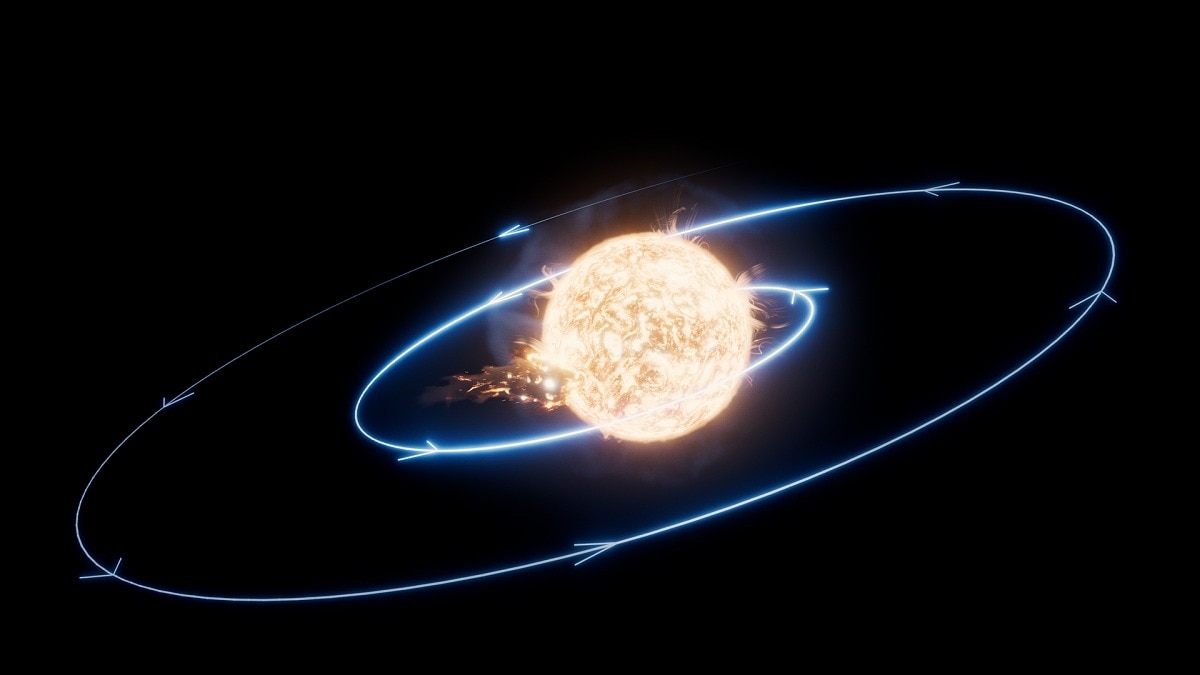
Astronomers have identified a sun-like star that likely consumed one of its own planets, evidenced by an unusual spike in lithium levels within the star’s atmosphere. According to reports from Phys.org and Scientific Frontline, this discovery provides a direct look at planetary engulfment, a process that scientists suggest will eventually occur within our own solar system as the Sun evolves.
The discovery centers on the chemical signature of a star that mirrors the composition of our own Sun. While most stars deplete their lithium over time, this specific star exhibits a “lithium spike,” which researchers cited in reports by India Today and Phys.org as a primary indicator that the star absorbed a rocky planet. This event transforms the star’s chemical makeup, leaving a detectable trail of planetary debris in the stellar photosphere.
How a Lithium Spike Reveals a Swallowed Planet
Lithium is a fragile element in the context of stellar physics. In most sun-like stars, lithium is transported from the surface to the hotter interior, where it is destroyed by nuclear reactions. Consequently, as a star ages, its lithium levels typically drop. According to data highlighted by Phys.org, the presence of an unexpectedly high concentration of lithium in an older star suggests the addition of “fresh” material from an external source.
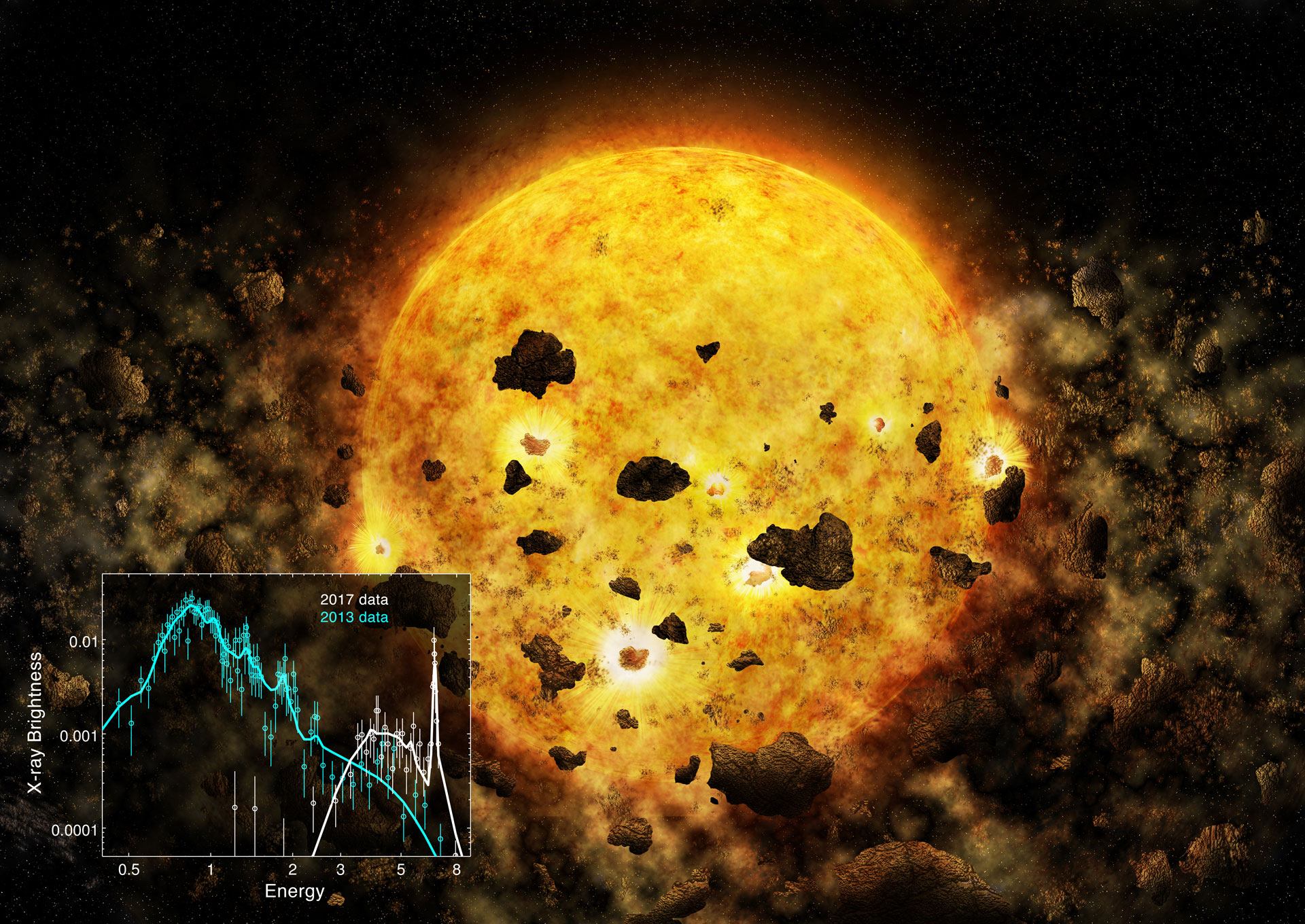
Planets, unlike stars, do not undergo the internal nuclear fusion that destroys lithium. When a star expands and engulfs a nearby planet, the planet’s lithium is dumped directly into the star’s outer layers. This creates a chemical anomaly that astronomers can detect through spectroscopy—the study of light broken down into its component colors.
“The lithium spike serves as a cosmic fingerprint, indicating that the star has recently ‘fed’ on a planetary body,” according to analysis of the findings reported by Scientific Frontline.
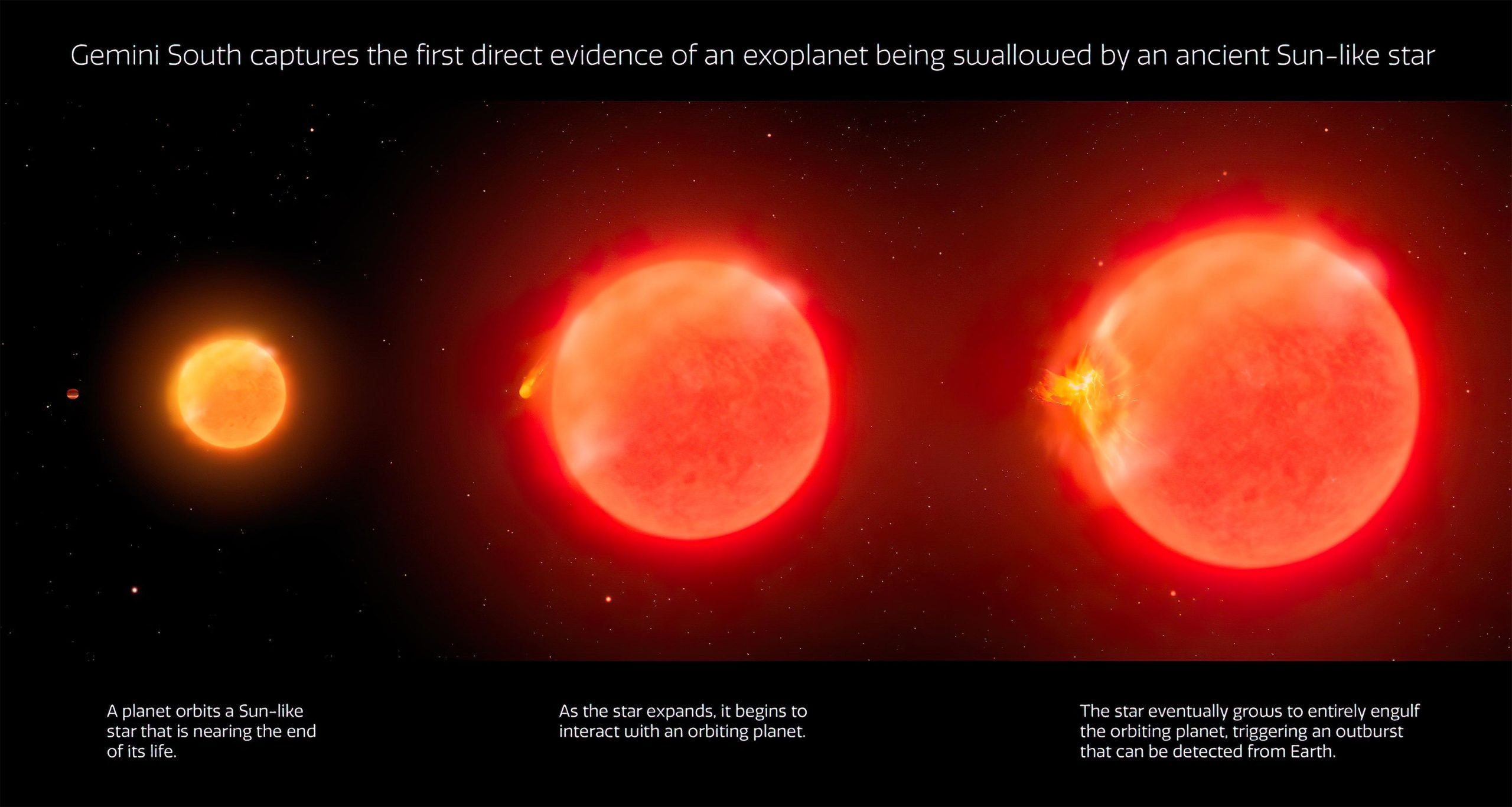
The process of engulfment is not instantaneous. It begins with the star’s expansion, which increases the gravitational drag on the planet. This drag causes the planet’s orbit to decay, spiraling it inward until it crosses the star’s outer boundary and is vaporized by the intense heat.
The Mechanics of Planetary Engulfment
Planetary engulfment typically occurs during a star’s transition into a red giant. As a star exhausts the hydrogen fuel in its core, it begins burning hydrogen in a shell surrounding the core. This process generates immense pressure, causing the star’s outer envelope to expand outward by millions of miles.
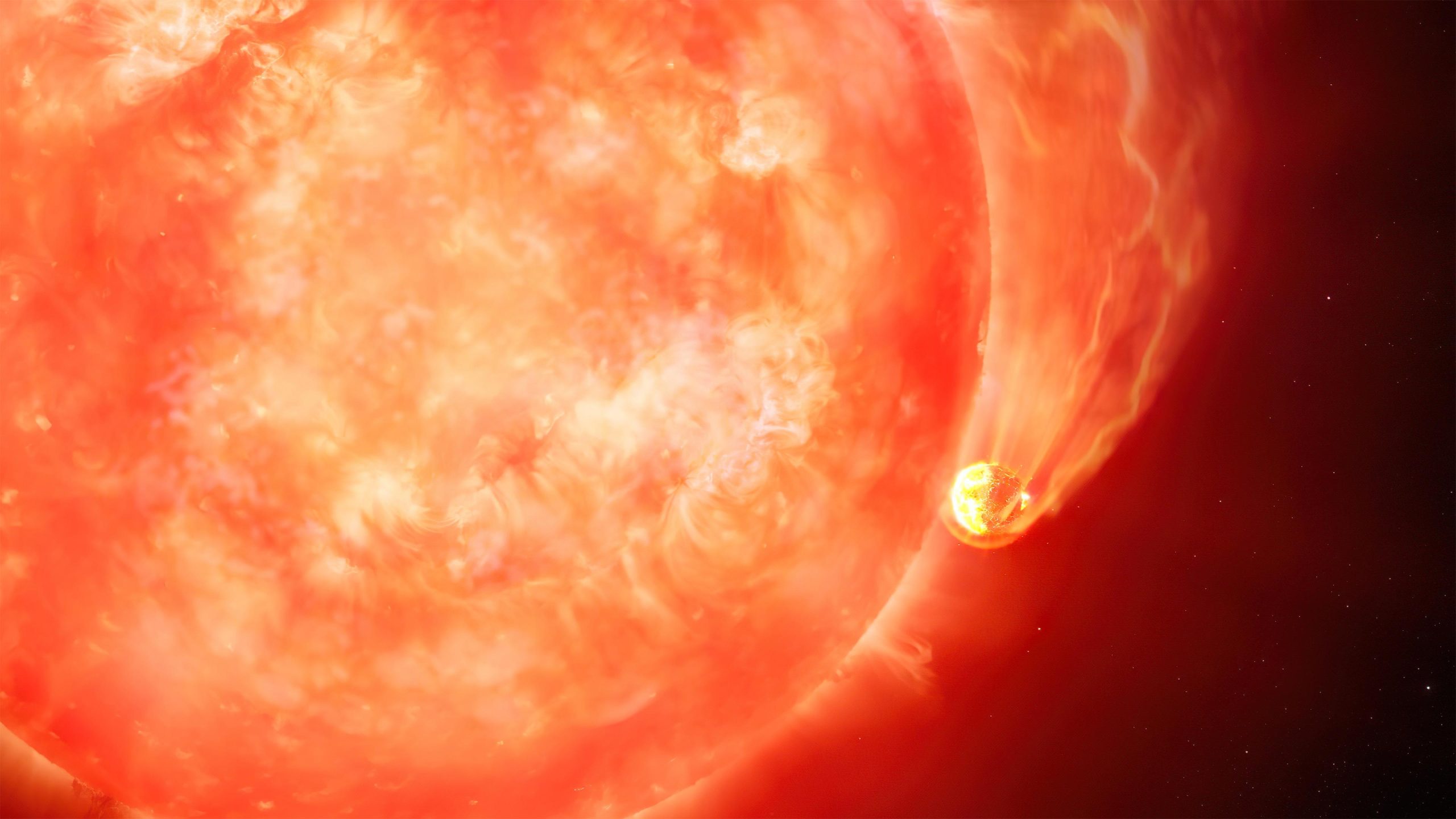
According to astrophysical models discussed in reports from India Today, the engulfment process follows a specific sequence:
- Stellar Expansion: The star grows in size, encroaching on the orbits of its closest planets.
- Tidal Interaction: The expanded stellar atmosphere creates friction (gas drag) against the planet.
- Orbital Decay: The planet loses orbital velocity, causing it to spiral closer to the star.
- Atmospheric Entry: The planet enters the star’s photosphere, where extreme temperatures strip away its atmosphere and eventually melt its core.
- Chemical Contamination: Elements from the planet, such as lithium and other metals, mix with the star’s surface gas.
This sequence explains why the “lithium spike” is such a critical piece of evidence. Because the lithium remains in the outer layers of the star for a period before being mixed deeper, it provides a window of time for astronomers to observe the aftermath of the consumption.
Could it Happen to Earth? The Fate of Our Solar System
The question of whether “astronomers discover a sun that swallowed an entire planet. Could it happen to Earth? – India Today” is a central theme in stellar evolution studies. The short answer is yes, though the timeline is measured in billions of years. Our Sun is currently a main-sequence star, but in approximately 5 billion years, it will enter its own red giant phase.
As the Sun expands, it will certainly consume Mercury and Venus. Whether Earth is swallowed depends on a delicate balance between the Sun’s increasing mass-loss and the tidal forces acting on Earth’s orbit. According to current scientific consensus reported by Phys.org, the Sun’s expansion will likely push its outer edge beyond Earth’s current orbit of 93 million miles.
Even if Earth is not physically swallowed, the heat from the expanding Sun will strip away the oceans and atmosphere long before the star’s surface reaches the planet. The “habitable zone”—the region where liquid water can exist—will shift outward toward the moons of Jupiter and Saturn.
| Stage of Sun’s Life | Approximate Timeline | Impact on Earth |
|---|---|---|
| Main Sequence (Current) | Now – 1 Billion Years | Stable, though gradual warming increases. |
| Sub-Giant Phase | 1 – 5 Billion Years | Oceans evaporate; surface becomes uninhabitable. |
| Red Giant Phase | ~5 Billion Years | High probability of physical engulfment. |
| White Dwarf Phase | Post-Red Giant | Remaining planetary remnants orbit a cold core. |
Comparing the Discovered Star to Our Sun
The star identified in the recent discovery serves as a “future mirror” for our own solar system. By studying this star, astronomers can refine their models of how planetary orbits react to stellar expansion. According to reports from Scientific Frontline, the discovered star is remarkably similar to the Sun in terms of mass and spectral type, making the comparison highly relevant.
One key difference is the timing. The star in question has already undergone the engulfment process, whereas our Sun is still in its stable prime. This allows researchers to see the “end state” of a planetary system. The lithium spike proves that the consumption of a planet leaves a permanent, albeit temporary, mark on the host star.
Researchers are now looking for other stars with similar lithium anomalies to determine how common this event is. If many sun-like stars show these spikes, it suggests that planetary engulfment is a standard part of stellar evolution rather than a rare accident.
The Role of Spectroscopy in Detecting Cosmic Events
The discovery was made possible through high-resolution spectroscopy. This technique involves splitting the light from a star into a spectrum, which reveals dark lines called absorption lines. Each element absorbs light at a specific wavelength.
According to the technical details reported by Phys.org, astronomers looked specifically for the 670.8 nanometer line, which corresponds to lithium. In a typical aging star, this line is faint or absent. In the star that swallowed a planet, the line was prominently deep, indicating a high concentration of lithium in the photosphere.
This method of “stellar archaeology” allows astronomers to reconstruct the history of a star without needing to see the planet itself. Since the planet is vaporized during engulfment, it is impossible to image the planet directly; the star’s own chemistry becomes the only record of the planet’s existence.
Misconceptions About Stellar Expansion
There are several common misunderstandings regarding the process of a star swallowing a planet. Clarifying these points helps put the discovery into perspective:
- Misconception: The planet is “sucked in” by a black hole.
Correction: Red giants are not black holes. The planet is pulled in by a combination of gravitational tidal forces and atmospheric drag, not a singularity. - Misconception: The process happens quickly.
Correction: While the final plunge may be relatively fast in cosmic terms, the orbital decay takes millions of years. - Misconception: All planets in a system are swallowed.
Correction: Outer planets (like Neptune or Pluto in our system) may actually migrate further away as the star loses mass via stellar winds, potentially escaping engulfment.
For those interested in how other celestial bodies react to stellar death, a related explainer on white dwarfs provides context on what happens after the red giant phase ends.
Implications for Exoplanet Research
This discovery changes how astronomers search for exoplanets. Previously, the focus was on finding planets currently orbiting stars. Now, there is a growing interest in finding “ghost planets”—planets that are no longer there but have left a chemical signature behind.
According to analysis from Scientific Frontline, identifying lithium-rich stars could help astronomers map the “survival rate” of planets in different types of solar systems. This data is crucial for understanding the long-term stability of planetary systems and the likelihood of life persisting over billions of years.
If planetary engulfment is frequent, it suggests that many of the stars we see in the night sky may have already consumed their inner planets, leaving only the distant gas giants behind. This would imply that the “architecture” of solar systems changes drastically as they age.
Frequently Asked Questions
What is a lithium spike in a star?
A lithium spike is an unexpectedly high concentration of the element lithium in a star’s outer atmosphere. Since sun-like stars usually destroy lithium over time, a spike suggests the star recently absorbed a planet or brown dwarf that contained its own supply of lithium.
When will the Sun swallow the Earth?
According to astrophysical models, the Sun will expand into a red giant in approximately 5 billion years. While it is highly likely to engulf Mercury and Venus, the fate of Earth is still debated, though most evidence suggests it will either be swallowed or rendered a scorched, lifeless rock.
Can we stop a planet from being swallowed by its star?
No. The forces involved—stellar expansion and gravitational tidal drag—operate on a scale that far exceeds any possible technological intervention. Once a star begins its red giant phase, the inner planets are inevitably drawn inward.
How do astronomers know the star swallowed a planet and not another star?
The chemical signature provides the clue. Swallowing another star would result in a much more massive increase in overall stellar mass and a different chemical profile. The specific “spike” in lithium without a corresponding massive shift in other heavy elements is characteristic of planetary material.
Are there any planets that survive the red giant phase?
Yes. Planets in wide orbits, such as those similar to Jupiter or Saturn, may survive. As the star expands, it also loses a significant amount of its mass through stellar winds, which weakens its gravitational pull and can cause outer planets to migrate further away from the star.
The discovery of a star that has consumed its planet serves as a stark reminder of the lifecycle of the universe. While the threat to Earth is billions of years away, the chemical evidence found in distant stars provides a roadmap for the inevitable conclusion of our own solar system. Astronomers continue to monitor lithium-rich stars to better understand the dynamics of orbital decay and the ultimate fate of rocky worlds.
