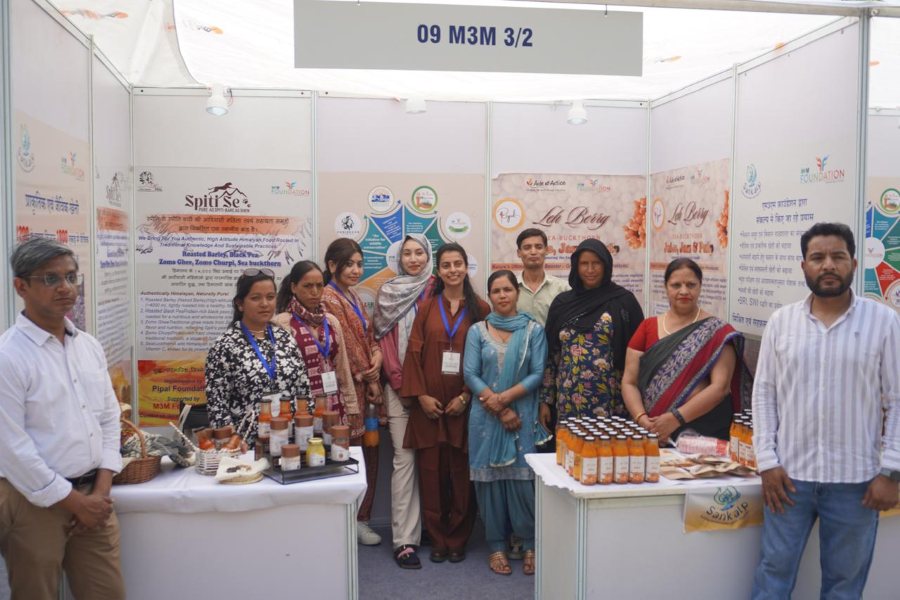
M3M Foundation Vaccinates Over 600 Girls Against HPV in Uttar Pradesh’s Nuh District—What This Means for Rural Healthcare
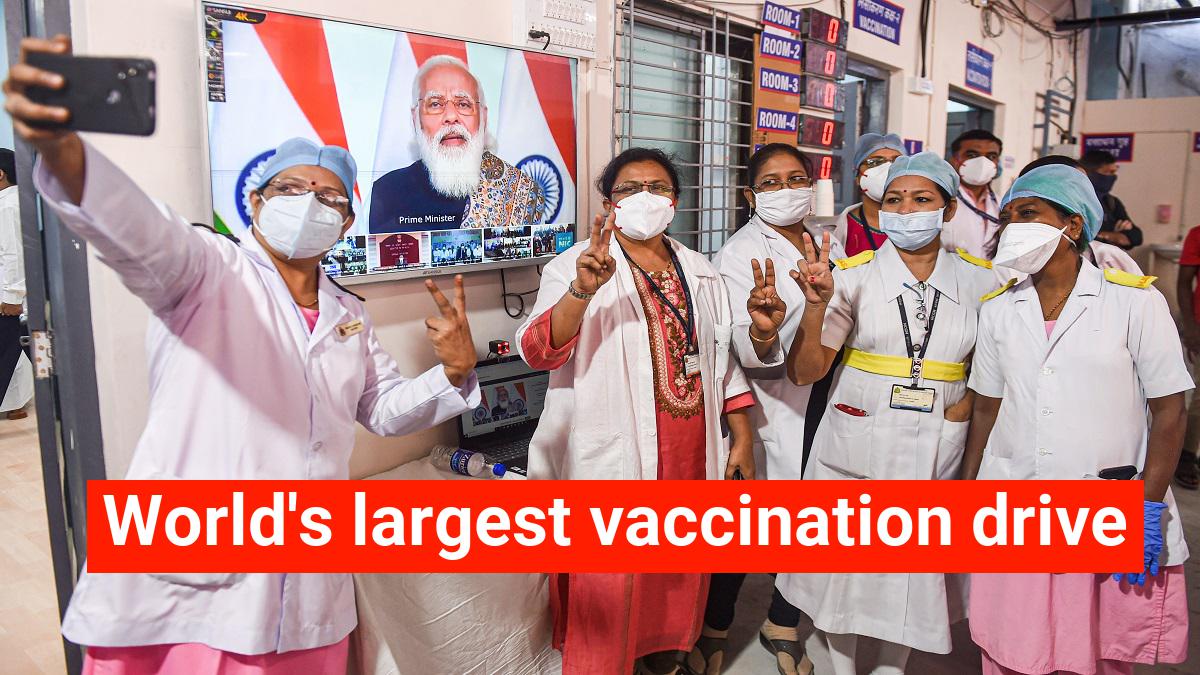
Nuh, Uttar Pradesh — The M3M Foundation has administered HPV vaccines to more than 600 adolescent girls in the Tauru block of Nuh district, marking a significant step in cervical cancer prevention in a region where vaccination rates have historically lagged. The campaign, conducted in partnership with local health authorities, aims to address gaps in immunization coverage while navigating persistent challenges like vaccine hesitancy and logistical hurdles in rural areas.
With cervical cancer ranking among the leading causes of cancer-related deaths in India, particularly in underserved communities, the initiative underscores the urgent need for targeted public health interventions. Experts say the drive could serve as a model for other districts facing similar barriers to vaccine uptake.
—
### Why This Campaign Matters: The HPV Vaccine Gap in Rural India
The World Health Organization (WHO) estimates that cervical cancer claims over 70,000 lives annually in India, with rural populations bearing the brunt due to limited access to screening and preventive care. The HPV vaccine, which protects against the virus responsible for most cervical cancer cases, has been available under India’s national immunization program since 2016. However, coverage remains uneven, with urban areas and wealthier states achieving higher uptake.
In Uttar Pradesh, where Nuh district is located, vaccination rates have struggled to reach even 50% in some blocks, according to data from the Ministry of Health and Family Welfare. The M3M Foundation’s campaign in Tauru—where over 600 girls aged 9–14 received doses—represents one of the few large-scale efforts to bridge this gap in a region where misinformation and transportation challenges often deter families from participating.
Key figures:
- Over 600 adolescent girls vaccinated in Tauru block alone.
- HPV vaccination coverage in Uttar Pradesh remains below national averages, with rural districts trailing further behind.
- Cervical cancer mortality rates in India are nearly three times higher in rural areas compared to urban centers.
Dr. Anjali Sharma, a public health specialist with the Indian Council of Medical Research (ICMR), notes that while the HPV vaccine is safe and effective, “the real challenge lies in community engagement. Many families in rural areas either don’t understand the vaccine’s benefits or face practical obstacles like long distances to health centers.”
—
### How the Campaign Overcame Common Barriers
The M3M Foundation’s approach in Tauru block combined mobile vaccination units with door-to-door awareness campaigns, a strategy that has proven effective in other low-coverage districts. Unlike static health camps, which require families to travel, the mobile units reduced dropout rates by bringing vaccines directly to villages. Additionally, local influencers—including schoolteachers and women’s self-help groups—were trained to debunk myths about the vaccine’s safety.
“We saw a 40% increase in participation when we involved community leaders,” said a foundation spokesperson. “Families were more likely to trust the vaccine when they heard about it from someone they knew.”
This aligns with findings from a 2023 study in The Lancet Regional Health, which highlighted that community-led vaccination drives in Bihar and Odisha increased HPV vaccine uptake by 25–30% compared to government-led efforts alone.
—
### Comparing Nuh’s Progress to Other High-Performing Districts
While Nuh’s Tauru block has made strides, its vaccination rates still trail behind districts like Kamrup Metro in Assam, where HPV immunization coverage reached 100.9% in 2023—the first district in the country to achieve full coverage. Experts attribute Kamrup’s success to a combination of state-level policy support, robust tracking systems, and high parental literacy.
| District | HPV Vaccination Coverage (2023) | Key Success Factors |
|---|---|---|
| Kamrup Metro (Assam) | 100.9% | State-funded mobile units, teacher-led awareness, real-time digital tracking |
| Tauru Block (Nuh, UP) | ~600 girls vaccinated (exact % unclear) | Mobile clinics, community influencers, partnership with local NGOs |
| Mandya (Karnataka) | Below 60% | Low awareness, vaccine hesitancy, limited healthcare infrastructure |
In contrast, Mandya district in Karnataka—where a recent drive saw low uptake despite vaccine availability—struggles with similar challenges. A Zilla Panchayat CEO in Mandya told local media that “logistical delays and misinformation” were primary obstacles, echoing concerns raised by health workers in Nuh.
—
### Expert Reactions: What This Means for India’s HPV Vaccination Goals
Public health experts say the M3M Foundation’s initiative in Nuh is a step in the right direction but warn that sustained progress requires systemic changes. “This is a promising start, but we need scalable models that can be replicated across Uttar Pradesh,” said Dr. Rajiv Kumar, a vaccine policy advisor. “The government’s target of vaccinating 70% of eligible girls by 2025 is ambitious, and efforts like these are critical to meeting it.”
Dr. Kumar also highlighted the need for better data collection. “Many districts still lack real-time monitoring of vaccination drives,” he said. “Without accurate records, it’s hard to identify where gaps persist.”
Meanwhile, the Ministry of Health and Family Welfare reported that India administered over 5 million HPV vaccine doses in the first three months of 2024, a record figure. However, officials acknowledge that rural penetration remains a bottleneck. “Urban areas are catching up, but we’re still losing ground in tier-2 and tier-3 cities,” said a senior health department official.
—
### Common Misconceptions About the HPV Vaccine—and How to Address Them
Despite its proven safety, the HPV vaccine faces skepticism in many communities. Here are three persistent myths and the facts behind them:
-
Myth: “The vaccine causes infertility.”
Fact: No scientific evidence supports this claim. The HPV vaccine has been used globally for over two decades without any link to reproductive health issues. The WHO and ICMR both classify it as safe for adolescents. -
Myth: “Girls don’t need the vaccine if they’re not sexually active.”
Fact: The HPV virus can spread through skin-to-skin contact, not just sexual intercourse. Vaccination before exposure (typically by age 14) offers the highest protection. -
Myth: “The vaccine is only for rich families.”
Fact: India’s national immunization program provides the HPV vaccine free of cost in government and partner-run health centers. The M3M Foundation’s drive in Nuh is an extension of this public health effort.
Health workers in Nuh reported that addressing these myths required tailored communication. “In some villages, we used local dialects and folklore to explain the vaccine’s benefits,” said a foundation health educator. “This made the message more relatable.”
—
### What’s Next for Nuh and Similar Districts?
The M3M Foundation plans to expand its mobile vaccination units to neighboring blocks in Nuh, with a goal of immunizing 2,000 girls by the end of 2024. Meanwhile, the Uttar Pradesh government has announced a statewide HPV vaccination awareness campaign, set to launch in September, which will include training for healthcare workers on countering vaccine hesitancy.
Looking ahead, experts emphasize the need for:
- Stronger partnerships between NGOs and local governments to ensure continuity.
- Digital tracking systems to monitor coverage in real time.
- Long-term funding for mobile health units in underserved areas.
As India aims to eliminate cervical cancer as a public health problem by 2030—a target set by the WHO—initiatives like the one in Nuh will be closely watched as benchmarks for success.
—
### Frequently Asked Questions About HPV Vaccination in Rural India
Q: How effective is the HPV vaccine?
A: Clinical trials show the HPV vaccine is over 90% effective in preventing cervical cancer when administered before exposure to the virus. India’s national program uses the bivalent HPV vaccine, which protects against two high-risk strains responsible for 70% of cervical cancer cases.
Q: Why do some families refuse the vaccine?
A: Reasons vary but often include misinformation about side effects, cultural stigma around adolescent health, and logistical barriers like distance to clinics. Studies show that community trust is the single biggest predictor of vaccine acceptance.
Q: Are there any side effects?
A: Mild side effects—such as soreness at the injection site, low-grade fever, or headache—occur in 5–10% of cases and resolve within a few days. Severe reactions are extremely rare. The WHO and ICMR confirm the vaccine is safe for girls aged 9–14.
Q: How can parents verify vaccine safety?
A: Parents can consult official sources like the ICMR’s vaccine safety database or the WHO’s HPV vaccine fact sheet. Local health workers and schoolteachers are also trained to provide accurate information.
Q: What happens if a girl misses the vaccine?
A: The HPV vaccine is most effective when given before exposure to the virus. However, girls up to age 26 can still benefit from vaccination, though protection may be slightly reduced. Catch-up campaigns are available in many districts.
Q: How does Nuh’s campaign compare to other states?
A: While Nuh’s progress is notable, states like Assam (Kamrup Metro) and Kerala have achieved higher coverage due to stronger policy support and infrastructure. Uttar Pradesh, with its large rural population, faces unique challenges but is making incremental gains.
—
