
How Game Studios Are Becoming AI-First Enterprises—And Why It Could Redefine the Industry
Krafton’s $36 million investment in HyperAccel marks a turning point: leading game developers are no longer just adopting AI—they’re restructuring entire businesses around it. The shift from tools to core strategy is accelerating, with studios betting billions on AI-driven pipelines, procedural content generation, and even automated player testing. But as competition heats up, questions remain about whether the industry’s rush into AI will outpace its ability to deliver real creative and financial returns.
This is not just about replacing artists with algorithms. It’s about redefining what a game studio looks like—from smaller indie teams to AAA powerhouses—all racing to turn AI into their biggest competitive edge.
Why Game Companies Are All-In on AI—And What It Means for Developers
Game development has always been a labor-intensive industry. A single AAA title can require hundreds of artists, programmers, and designers working for years. Now, AI promises to slash those timelines—and costs—by automating everything from level design to dialogue generation.
According to industry reports, AI tools are already cutting production costs by 30–50% for some studios, with early adopters like Ubisoft and Embracer Group publicly citing AI as a key factor in their financial strategies. But the real inflection point came this year: major studios are no longer treating AI as an optional experiment. They’re building entire divisions around it.
Key drivers behind the shift:
- Procedural content generation (PCG): Tools like Unity’s Bolt and Unreal Engine’s Chaos now let studios generate entire game worlds in hours instead of months.
- Automated QA and testing: AI-powered playtesting—already used by Riot Games—can simulate thousands of player interactions per second, catching bugs before human testers do.
- Voice and NPC personalization: Companies like NVIDIA and Runway are selling AI that can generate hyper-realistic voiceovers and dynamic NPC dialogue on demand.
- Asset creation: Midjourney and Stable Diffusion clones are now standard in pipelines, with some studios reporting a 60% reduction in 3D modeling time for certain assets.
Yet the most dramatic change may be in talent strategy. Traditional game studios hire armies of artists and designers. AI-first studios? They’re hiring AI engineers, data scientists, and prompt designers—roles that barely existed in gaming five years ago.
Krafton’s $36 Million Bet: A Case Study in AI Overhaul
Krafton, the South Korean developer behind PUBG and CrossFire, announced this month it would invest $36 million into HyperAccel, a startup specializing in AI-driven game development tools. The move is part of a broader push: Krafton has already doubled its AI research team in 2024 and integrated HyperAccel’s tech into its PUBG sequel pipeline.
What HyperAccel brings to the table:
- Dynamic difficulty scaling: AI adjusts game challenges in real time based on player performance, a feature Krafton plans to test in its next live-service title.
- Automated narrative branching: Instead of scripting every dialogue tree, HyperAccel’s system generates context-aware responses for NPCs, reducing voiceover costs by up to 40%.
- Procedural event generation: The tool can create unique in-game events—like sudden raids or environmental hazards—without manual scripting.
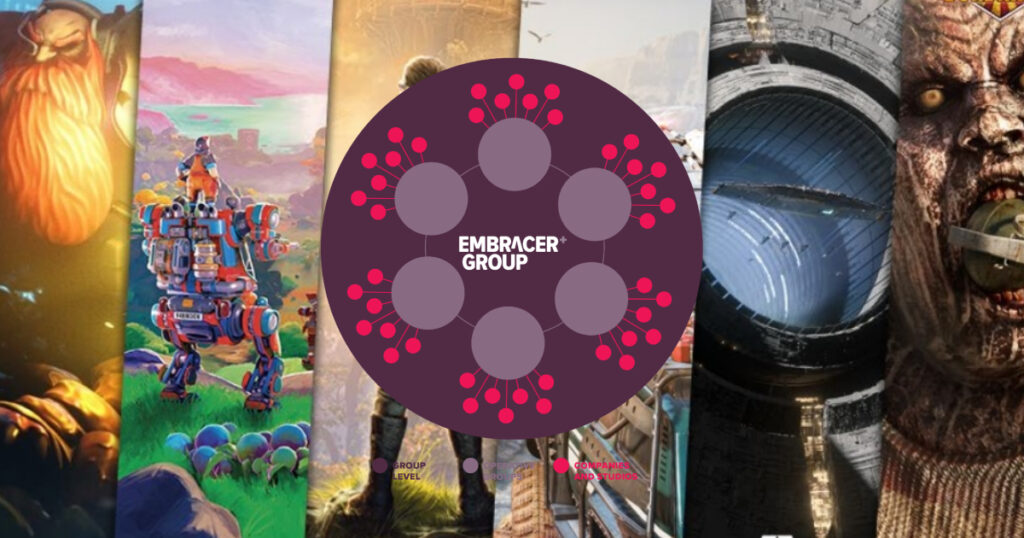
Krafton’s investment is significant, but it’s not alone. Embracer Group, the parent company of Capcom and Square Enix, revealed in its latest earnings report that 22% of its R&D budget in 2024 is now allocated to AI tools. Meanwhile, Take-Two Interactive (Rockstar, 2K) has quietly hired over 50 AI specialists since early 2023, focusing on procedural world-building for Red Dead Redemption 3’s sequel.
Why now? Three factors are pushing studios toward AI:
- The live-service crunch: Games like Fortnite and Destiny 2 require constant updates. AI can generate content faster than human teams, but only if studios invest early.
- Rising development costs: The average AAA budget hit $170 million in 2023, up 15% from 2022. AI is seen as the only way to offset those costs without sacrificing quality.
- Competition from non-game AI: Tools like Runway’s Gen-3 and NVIDIA’s Omniverse are blurring the line between gaming and general AI. Studios don’t want to be left behind.
Who’s Leading the Charge—and Who’s Playing Catch-Up?
The AI race in gaming isn’t just about big names. Smaller studios and indies are also adopting AI—but with different strategies.
| Company | AI Focus | Notable Investment | Expected Impact |
|---|---|---|---|
| Krafton | Procedural content, dynamic difficulty, NPC AI | $36M in HyperAccel (2024) | Faster live-service updates for PUBG sequel |
| Embracer Group | Automated QA, asset generation, voice synthesis | 22% of R&D budget (2024) | Cost savings across Capcom, Square Enix titles |
| Take-Two Interactive | Procedural world-building, NPC behavior | 50+ AI hires (2023–2024) | Red Dead Redemption 3 sequel expansion |
| Indie Studios (e.g., Deck13, Klei) | Prototyping, rapid iteration, niche asset generation | Mostly open-source tools (Stable Diffusion, Unity Bolt) | Lower barriers to entry for smaller teams |
Yet not all studios are moving at the same pace. CD Projekt Red, for example, has taken a more cautious approach, focusing on AI-assisted tools rather than full automation. “We’re using AI to augment creativity, not replace it,” a spokesperson told industry analysts. “Our artists still have final say over every major asset.”
Meanwhile, Bethesda has been quietly experimenting with AI-generated quests in Starfield, though it has not yet disclosed whether it will expand the tech for future titles.
The Risks: Can AI Really Deliver on Its Promises?
For every success story, there are warnings. The gaming industry’s history with overpromised tech—from motion capture to virtual production—suggests that AI may not live up to hype if studios don’t manage expectations.
Three major concerns:
- Creative control vs. automation: Players and critics have already pushed back against AI-generated content in games like Microsoft’s Forza Horizon 5, where some assets were reportedly created with minimal human oversight. The backlash led to delays and rework.
- Job displacement: While studios like Krafton emphasize that AI creates new roles (e.g., prompt engineers), unions like SAG-AFTRA have raised alarms about voice actors being replaced by text-to-speech AI. “This isn’t just about tools—it’s about who owns the creative process,” a union representative said.
- Training data concerns: AI models like Stable Diffusion are trained on copyrighted art, raising legal risks. Epic Games recently settled a lawsuit over Fortnite’s use of AI-generated assets that may have violated third-party IP.
Then there’s the talent gap. AI engineers with gaming experience are rare. “We’re competing with FAANG companies for the same pool of AI talent,” admitted an executive at a major studio. “And many of them don’t understand the unique needs of game development.”
What’s the solution? Some studios are partnering with universities to train specialists. Others are cross-training existing artists in AI tools. But the transition is far from seamless.
What Happens Next? The AI Arms Race in Gaming
The next 12–18 months will determine whether AI becomes a sustainable advantage or just another industry fad. Here’s what to watch:
- 2025’s AI-powered blockbusters: Expect at least three major AAA titles in 2025 to feature procedurally generated content as a core selling point. Rumors suggest Activision Blizzard is testing AI-driven Call of Duty maps.
- Union negotiations: SAG-AFTRA and other gaming unions will push for AI usage guidelines in contracts, potentially forcing studios to disclose how much content is AI-generated.
- Hardware limitations: AI tools require massive compute power. NVIDIA’s dominance in gaming GPUs could give it even more leverage—though AMD and Intel are investing heavily in AI chips for developers.
- The indie revolution: Smaller studios may use AI to compete with AAA budgets. Tools like Godot Engine’s new AI plugins could let indies produce games that look and feel like $100 million titles—for a fraction of the cost.
One thing is certain: the industry’s relationship with AI won’t be optional. “Five years from now, studios that didn’t adopt AI early will be playing catch-up,” said Jane Chen, CEO of a game AI startup. “And the ones that did? They’ll own the next generation of gaming.”
FAQ: What You Need to Know About AI in Game Development
Q: Will AI replace game designers and artists?
A: Not entirely. While AI can generate assets, write dialogue, and even design levels, human oversight remains critical—especially for narrative-driven and creative-heavy games. Studios are hiring AI curators to refine outputs, ensuring quality and coherence. However, roles like junior 3D modelers and voice actors may see significant shifts due to automation.
Q: Are AI-generated games worse?
A: It depends. Early examples like Microsoft’s Forza Horizon 5 showed that over-reliance on AI can lead to repetitive or low-quality content. However, when used as a tool for iteration—not replacement—AI can actually improve games by allowing teams to experiment faster. The key is human-in-the-loop design.
Q: How much is the gaming industry spending on AI?
A: Estimates vary, but global gaming AI tool adoption could reach $2.5 billion by 2027, according to Newzoo. In 2024 alone, major publishers have allocated over $1 billion to AI research and tooling, with Krafton’s $36 million investment being one of the largest single announcements.
Q: Can indie developers afford AI tools?
A: Yes, but with caveats. Most AI tools (like Stable Diffusion or Unity Bolt) are free or low-cost, but high-end solutions (e.g., NVIDIA Omniverse, HyperAccel) can cost $50,000–$500,000 per year. Indie-friendly alternatives include Godot’s AI plugins and Unreal Engine’s free Chaos tools.
Q: What games are already using AI?
A: Several titles have incorporated AI in noticeable ways:
- Fortnite (Epic Games) – Uses AI for dynamic event generation and player behavior prediction.
- Destiny 2 (Bungie) – Employs AI to adjust difficulty and generate procedural loot tables.
- No Man’s Sky (Hello Games) – Relies on procedural generation for its vast, AI-assisted worlds.
- Starfield (Bethesda) – Rumored to use AI for quest and dialogue variations.
Q: Will AI make games more repetitive?
A: There’s a risk, but studios are experimenting with AI-assisted creativity to avoid it. For example, Ubisoft’s Ghost Recon Wildlands used AI to generate unique player experiences while maintaining a coherent world. The challenge is balancing randomization with player engagement—something human designers still control.
Q: How can I learn AI for game development?
A: Start with these resources:
- Unity’s AI Learning Path (Free)
- NVIDIA’s Omniverse for Game Devs (Free)
- Kaggle’s Game AI Competitions (Hands-on practice)
- Our guide to AI tools for indie developers
