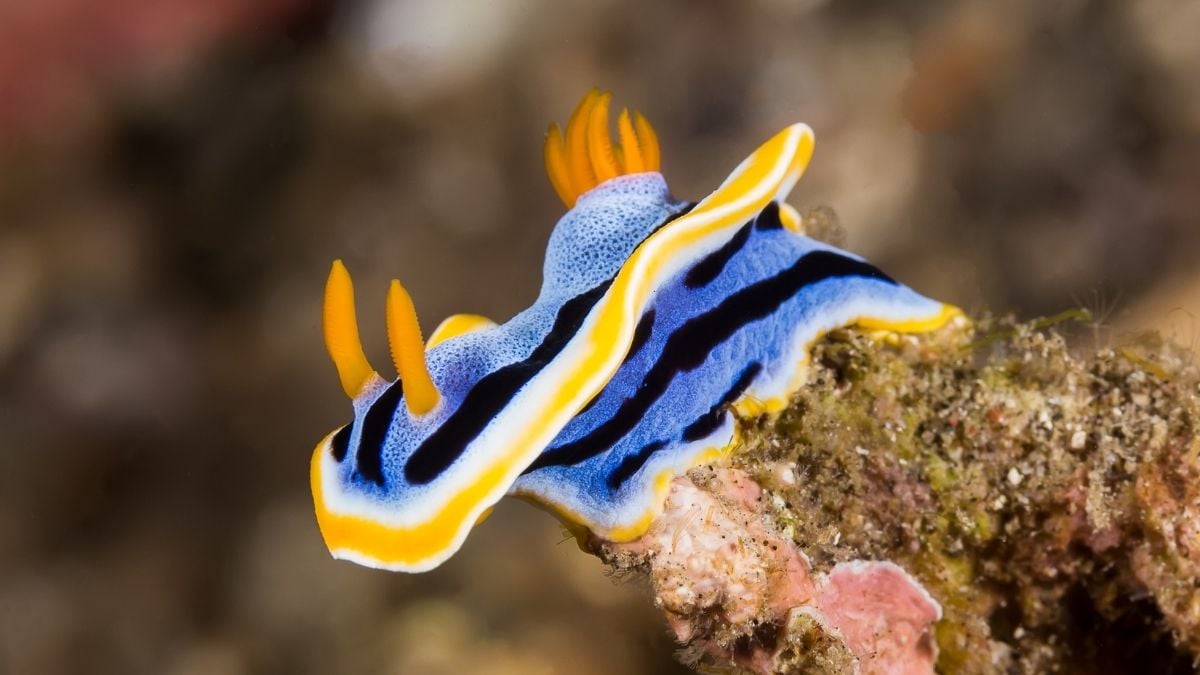
The Prettiest Sea Slugs Leverage Crystals in Their Skin as ‘Pixels’ of Color: A Breakthrough in Marine Biology
The ocean’s most vibrant inhabitants are hiding a sophisticated secret within their skin. For years, the dazzling hues of nudibranchs—often described as the jewels of the underwater world—were attributed primarily to biological pigments. Although, latest research has revealed that these marine gastropods utilize a far more complex mechanism: thousands of microscopic crystals that act like “pixels” to generate a stunning array of structural colors.
This discovery, which highlights the intersection of materials science and marine biology, fundamentally changes our understanding of how some of the most colorful creatures on Earth produce their appearance. By shifting the focus from chemical pigments to physical structures, scientists have uncovered an elegant biological engineering feat that allows a single material to produce a vast spectrum of visual effects.
Decoding the Visual Magic of Nudibranchs
Nudibranchs, a group of soft-bodied marine molluscs in the order Nudibranchia, are renowned for their extraordinary forms and striking colors. With approximately 3,000 known species inhabiting every ocean from the Arctic to the Southern Ocean, they have earned nicknames such as “dragon,” “dancer,” and “sea rabbit.”
While it was long assumed that their vivid colors functioned like those of a toucan’s beak—relying on pigments that absorb specific wavelengths of light—research conducted by Samuel Humphrey of the Max Planck Institute of Colloids and Interfaces suggests otherwise. By examining six different species, including Chromodoris annae and Hypselodoris bullockii, the research team confirmed that these animals employ structural color.
Pigment vs. Structural Color: What is the Difference?
To understand why this discovery is significant, This proves necessary to distinguish between the two primary ways nature creates color:
- Pigment-based Color: This occurs when a chemical compound absorbs certain wavelengths of light and reflects others. The color is determined by the chemical composition of the material.
- Structural Color: This is a physical effect caused by light reflecting off microscopic structures. Rather than relying on chemistry, it relies on the geometry and arrangement of a material. This phenomenon is also observed in bubbles, oil slicks, chameleons, and certain plants.
The discovery that nudibranchs use structural colors means they are not simply “painting” themselves with chemicals; they are manipulating light using crystalline architecture embedded in their skin.
| Feature | Pigment Color | Structural Color |
|---|---|---|
| Mechanism | Chemical absorption/reflection | Physical light reflection/interference |
| Source | Chemical compounds | Microscopic physical structures |
| Versatility | Limited by chemical variety | High; can generate many colors from one material |
The Science of ‘Biological Pixels’
The term “pixels” is used here as a metaphor for the thousands of tiny crystals embedded in the nudibranch’s skin. Much like a digital screen uses small dots of color to create a complex image, these sea slugs use microscopic crystals to create their vibrant patterns.
“Using this elegant color generation mechanism, these elegant animals are able to generate an astounding array of colors from a single material.”
This mechanism allows the nudibranch to achieve a level of visual complexity that would be chemically expensive or biologically difficult to maintain using pigments alone. By varying the structure or arrangement of these crystals, the organism can produce different colors without needing a different chemical pigment for every hue.
Key Findings from the Research
- Material Efficiency: Nudibranchs can produce a wide spectrum of colors using a single type of material through structural manipulation.
- Hybrid Systems: The research indicates that many of these colorful effects are actually achieved by combining traditional pigments with structural color.
- Cross-Disciplinary Approach: The breakthrough was driven by applying materials science perspectives to biological specimens, proving that the “how” of animal coloration often requires more than just a biological lens.
Contextualizing the Nudibranch in the Marine Ecosystem
To appreciate the impact of this discovery, it is helpful to understand the nature of the animals involved. Nudibranchs are gastropod molluscs that shed their shells after their larval stage, leaving them “naked” (hence the name, derived from the Latin nudus and Greek bránkhia for gills).
Because they lack the protection of a shell, their striking colors often serve as a warning to predators (aposematism) or as a form of camouflage within their specific environments. They are found at virtually all ocean depths, from the intertidal zone to depths exceeding 700 meters, including rare bathypelagic species like Bathydevius.
While nudibranchs are often casually called “sea slugs,” they are a specific family of opisthobranchs. It is a common misconception that all sea slugs are nudibranchs; in reality, many sea slugs belong to taxonomic groups that are not closely related to them, such as the photosynthetic Sacoglossa or the colorful Aglajidae.
The Role of Sea Slugs in Scientific Research
Beyond their aesthetic appeal, sea slugs have long been vital to scientific progress. For instance, the species Aplysia californica has been instrumental in neuroscience research, helping scientists uncover the molecular mechanisms of learning and memory through the study of synapses and long-term potentiation. The current discovery regarding structural color adds another layer to the scientific utility of these molluscs, potentially influencing the field of biomimetic materials.
For those interested in how nature inspires technology, you may find a related explainer on biomimicry in materials science useful.
Implications for Future Technology and Science
The discovery that nudibranchs use crystalline “pixels” for color has implications that extend far beyond marine biology. When scientists understand how nature creates vibrant, durable colors without heavy pigments, it opens the door for innovations in several sectors:
1. Sustainable Pigments and Dyes
Traditional industrial dyes often rely on harsh chemicals. If humans can replicate structural color—creating hue through geometry rather than chemistry—it could lead to the development of “permanent” colors that do not fade and do not require toxic pigments.
2. Advanced Optical Materials
The ability of a single material to produce an “astounding array of colors” by changing its structure could inform the creation of new types of sensors, displays, or reflective surfaces in optics.

3. Enhanced Biological Mapping
Understanding the specific crystals used by species like Chromodoris annae allows biologists to better categorize species and understand the evolutionary pressures that led to such complex visual systems.
Common Misconceptions About Marine Coloration
The study of nudibranchs helps correct several common misunderstandings about how animals appear in the wild:
- Misconception: All bright colors in nature come from pigments.
Correction: Many of the most vivid colors (including those in chameleons and some sea slugs) are structural, created by the physical manipulation of light. - Misconception: Nudibranchs are just “colorful sea slugs.”
Correction: While they are a type of sea slug, they are a distinct order (Nudibranchia) with unique biological traits, such as the loss of their shell after the larval stage. - Misconception: Structural color is only found in insects.
Correction: Structural color is widespread across the animal kingdom, appearing in plants, seaweeds, and marine molluscs.
Frequently Asked Questions
What is structural color in sea slugs?
Structural color is a visual effect where light reflects off microscopic physical structures—in the case of certain nudibranchs, tiny crystals in their skin—rather than being produced by chemical pigments. This allows them to create vibrant colors by manipulating light wavelengths.
Which species of nudibranchs use these crystals?
The research highlighted several species, including Chromodoris annae and Hypselodoris bullockii, among six different species studied to confirm the presence of structural color.
Are nudibranchs the only sea slugs with these “pixels” of color?
While the research focused on nudibranchs, structural color is found in various other organisms. However, the specific use of crystalline “pixels” to generate a wide array of colors from a single material is a defining feature of the species studied in this research.
Why do nudibranchs have such bright colors?
While the research focuses on how they produce color, biologically, these striking forms and colors often serve as warnings to predators or facilitate the animals blend into their specific marine habitats.
How does this differ from how a toucan gets its color?
A toucan’s beak relies on pigments—chemical compounds that absorb and reflect specific colors. Nudibranchs, conversely, use a combination of pigments and structural colors (crystals) to achieve their appearance.
The revelation that nudibranchs employ a crystalline architecture to “pixelate” their skin underscores the complexity of marine life. By blending materials science with biology, researchers have uncovered a mechanism that is as efficient as it is beautiful, proving that the most striking visuals in the ocean are often the result of sophisticated physical engineering.
