Pigeons Navigate With ‘Gut Feeling’ Powered by Paramagnetic Liver Cells, Study Suggests – Chemistry World
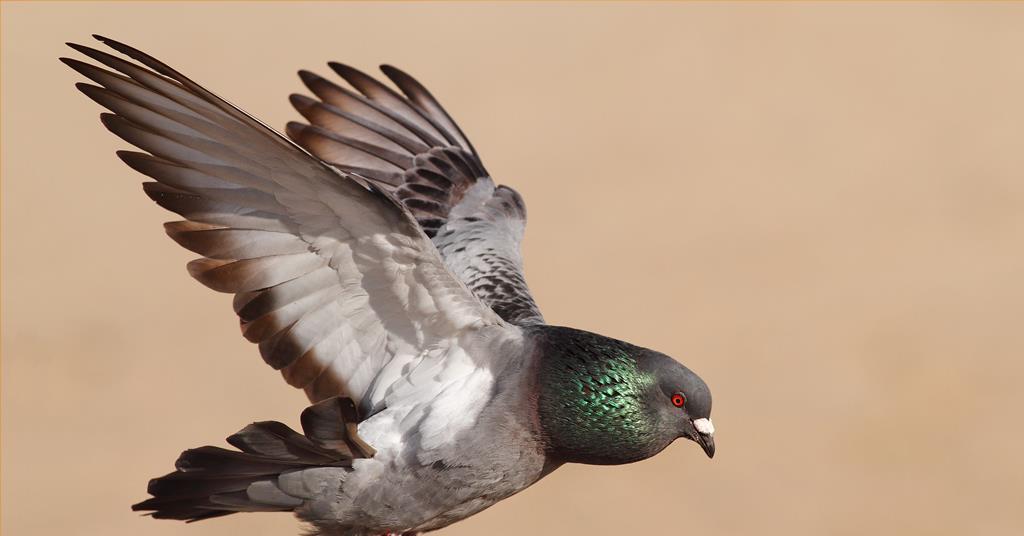
For over a century, one of nature’s most enduring mysteries has been the unerring ability of the homing pigeon to find its way back to its loft from hundreds of miles away, often in unfamiliar territory. While various theories have pointed toward the eyes or the beak as the source of this internal GPS, new research suggests the secret may actually lie in the bird’s abdomen. Recent findings indicate that pigeons navigate with a “gut feeling” powered by paramagnetic liver cells, suggesting a biological compass hidden within the liver that allows these birds to sense the Earth’s magnetic field.
This discovery shifts the scientific gaze away from the head and toward the internal organs, proposing that superparamagnetic immune cells in the liver act as the primary mechanism for magnetoreception. By interacting with the invisible magnetic lines of the planet, these cells may provide the spatial data necessary for pigeons to follow complex routes across vast distances, effectively solving a puzzle that has baffled biologists and physicists for generations.
The Discovery of a Biological Compass in the Liver
The concept of magnetoreception—the ability of an organism to detect a magnetic field to perceive direction, altitude, or location—is not new. However, the location of the sensory apparatus in pigeons has been a subject of intense debate. For years, the prevailing theories focused on cryptochromes (light-sensitive proteins in the eye) or magnetite crystals in the upper beak. While these may play a role, the suggestion that the liver is a central hub for navigation is a groundbreaking pivot in avian biology.
Researchers have identified the presence of superparamagnetic immune cells within the pigeon’s liver. Unlike standard magnetism, superparamagnetism occurs in slight ferromagnetic or ferrimagnetic nanoparticles. These particles respond strongly to external magnetic fields but do not retain any residual magnetism once the field is removed. In the context of a pigeon’s liver, these cells may act as microscopic needles on a compass, shifting or reacting in response to the Earth’s magnetic pull.
The identification of paramagnetic properties within liver cells suggests that the “gut feeling” often attributed to intuition may, in pigeons, be a literal physical sensation driven by the interaction between immune cells and the planet’s magnetic field.
How Superparamagnetic Cells Function
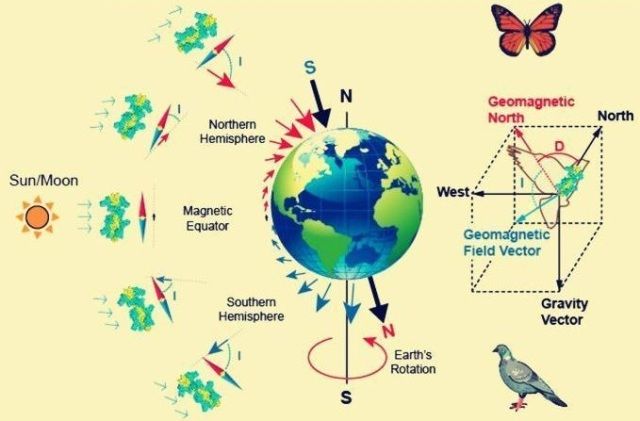
To understand how a liver can function as a GPS, it is necessary to understand the chemistry of superparamagnetism. In these specialized immune cells, iron-rich nanoparticles are organized in a way that makes them highly sensitive to the magnetic flux of the Earth. As the pigeon moves, the orientation of these particles changes relative to the magnetic North and South poles.
This physical shift likely triggers a biological signal—a chemical or electrical impulse—that the bird’s nervous system interprets as directional data. Because the liver is a large organ with a significant blood supply and a high density of these cells, it provides a substantial “sensor array” for the bird to calibrate its position.
| Feature | Traditional Theory (Beak/Eye) | New Liver Theory |
|---|---|---|
| Primary Sensor | Magnetite crystals / Cryptochromes | Superparamagnetic immune cells |
| Mechanism | Visual patterns or nerve triggers in the head | Magnetic response in abdominal organs |
| Biological Role | Sensory perception | Immune system integration with navigation |
| Key Attribute | Light-dependent (in some cases) | Paramagnetic sensitivity |
Solving a 100-Year-Old Mystery: The Evolution of Navigation Theories
The quest to understand pigeon navigation has spanned more than a century, moving through several distinct scientific eras. Early observers noted that pigeons could be displaced by hundreds of miles and still return home, leading to a series of hypotheses that have evolved alongside our understanding of physics and biology.
- The Olfactory Hypothesis: Some scientists proposed that pigeons “smell” their way home by detecting chemical gradients in the atmosphere. While scent plays a role in local navigation, it cannot explain long-distance accuracy across different climates.
- The Visual/Solar Hypothesis: It was long believed that pigeons used the position of the sun and landmarks to navigate. However, this fails to explain how they navigate on cloudy days or in total darkness.
- The Magnetite Theory: The discovery of iron-oxide crystals (magnetite) in the beaks of some birds led to the belief that these crystals acted as a mechanical compass. While plausible, the link between these crystals and the brain’s processing centers remained elusive.
- The Quantum Compass Theory: More recent theories suggested that quantum entanglement within the eye allows birds to “see” magnetic fields. While chemically possible, the liver discovery provides a complementary—or perhaps primary—physical mechanism.
By introducing the liver as a site of magnetoreception, scientists are bridging the gap between the “quantum” and the “mechanical.” The liver’s superparamagnetic cells provide a tangible, physical response to the magnetic field that can be measured and observed, offering a more comprehensive explanation of the “built-in GPS” that guides these birds.
The Role of the ‘Quantum Compass’ and Paramagnetism
The term “quantum compass” is often used to describe the highly sensitive nature of biological magnetic sensing. In the case of the pigeon’s liver, the intersection of quantum chemistry and biology is where the magic happens. Superparamagnetism is essentially a quantum phenomenon occurring at the nanoscale.
In these liver cells, the magnetic moments of the nanoparticles can flip directions rapidly due to thermal energy, but they align almost instantly when exposed to the Earth’s magnetic field. This allows the bird to detect incredibly subtle variations in the magnetic field’s intensity and inclination. This sensitivity is what allows a pigeon to distinguish between two slightly different locations on a map, effectively creating a high-resolution biological coordinate system.
Why the Liver?
One might wonder why such a critical navigation tool would be located in the liver rather than the brain. Notice several biological advantages to this arrangement:
- Surface Area: The liver is one of the largest organs in the body, providing a massive area for the distribution of paramagnetic cells, which increases the signal-to-noise ratio of the magnetic sensing.
- Immune Integration: Since the paramagnetic cells are immune cells, the bird may be utilizing a pre-existing biological system (the immune system’s ability to detect and respond to foreign particles) and adapting it for environmental sensing.
- Stability: An internal organ is shielded from the external environmental fluctuations that might interfere with sensors located on the skin or in the beak.
For those interested in how other animals sense the world, a related explainer on animal magnetoreception may provide further context on how sea turtles and migratory butterflies use similar tools.
Implications for Science and Technology
The revelation that pigeons navigate with ‘gut feeling’ powered by paramagnetic liver cells has implications that extend far beyond ornithology. Understanding how nature has evolved a superparamagnetic sensor could lead to breakthroughs in several human-made technologies.
Biomimetic Sensors
Engineers are constantly searching for ways to create more sensitive magnetic sensors for use in drones, autonomous vehicles, and medical imaging. By studying the structure of superparamagnetic immune cells, researchers may be able to develop synthetic sensors that are more energy-efficient and sensitive than current silicon-based technology.
Medical Insights into Iron Storage
The discovery also sheds light on how the body manages iron. Since the liver is the primary site for iron storage in vertebrates, the existence of superparamagnetic cells suggests that the way we store minerals may have evolved not just for nutrition, but for environmental interaction. This could open new avenues in understanding iron-related metabolic disorders.
Quantum Biology
This study adds a significant piece to the puzzle of quantum biology—the study of quantum effects in living organisms. If the liver’s navigation system relies on superparamagnetic flipping, it proves that biological systems can maintain and utilize quantum states to perform complex tasks, such as global navigation, in “warm and wet” environments where quantum effects are usually thought to disappear.
Common Misconceptions About Pigeon Navigation
As this news spreads, several oversimplifications often emerge. It is important to clarify what this discovery does and does not mean.
Misconception 1: Pigeons only use their livers to navigate.
It is highly unlikely that pigeons rely on a single sensor. Most biologists believe in a “multi-modal” navigation system. Pigeons likely use a combination of the liver’s magnetic sense, the eyes’ visual cues, and the beak’s potential sensors to create a redundant and fail-safe navigation system.
Misconception 2: This is a “magic” power.
While it feels like magic, this is pure chemistry and physics. Paramagnetism is a well-documented property of certain materials. The “magic” is simply the evolution of a bird that can utilize these properties for survival.
Misconception 3: Any “gut feeling” in humans is magnetic.
While humans have iron in their systems and a complex “gut-brain axis,” there is currently no scientific evidence that humans possess superparamagnetic liver cells capable of sensing the Earth’s magnetic field for navigation.
Key Takeaways from the Study
- New Sensor Location: The liver, specifically superparamagnetic immune cells, is a likely candidate for the pigeon’s biological compass.
- Mechanism: These cells respond to the Earth’s magnetic field through superparamagnetism, providing directional data.
- Scientific Shift: This adds a physical, organ-based mechanism to the existing theories of quantum-based eye sensors.
- Technological Potential: The discovery could inspire new biomimetic magnetic sensors and deepen our understanding of quantum biology.
Frequently Asked Questions
How do paramagnetic liver cells actually help a pigeon find home?
These cells contain nanoparticles that align themselves with the Earth’s magnetic field. As the pigeon flies, the orientation of these cells changes. The bird’s nervous system detects these changes, allowing it to determine its heading and position relative to its home loft.
Does this mean the “quantum compass” theory was wrong?
Not necessarily. Science often finds that animals use multiple systems. The “quantum compass” in the eyes may provide a visual map of the magnetic field, while the liver’s paramagnetic cells provide a physical “anchor” or a secondary confirmation of direction.
Why is it called a “gut feeling” in this context?
The term is a play on words. While “gut feeling” usually refers to intuition, in this case, the “gut” (the liver/abdomen) is literally providing the “feeling” (the magnetic sensation) that guides the bird.
Can other birds use their livers to navigate?
While this specific study focused on pigeons, it is highly probable that other migratory birds with similar liver structures and iron-storage mechanisms use a similar system. Further research is needed to confirm this across other species.
Is this the same as having a piece of metal in the liver?
No. It is not a solid piece of metal, but rather superparamagnetic nanoparticles integrated into immune cells. These are biological structures that happen to have magnetic properties, rather than foreign metallic objects.
