Scientists Develop Innovative Artificial Placentas to Support Premature Infants
New artificial womb and placenta technologies seek to provide a transitional bridge for extremely premature infants to mature organs before entering traditional NICU care.

Researchers are developing artificial placenta and womb technologies to create a transitional bridge for infants born at the "border of viability," typically between 21 and 24 weeks of gestation. By mimicking the intrauterine environment, these systems aim to allow extremely premature babies to mature their fragile lungs and organs before transitioning to traditional neonatal intensive care unit (NICU) support.
Current medical interventions for infants born at 22 or 23 weeks often involve endotracheal tubes and high-pressure oxygen. According to George Mychaliska, a professor of surgery and obstetrics and gynaecology at Michigan University's C S Mott Children's Hospital, forcing air and oxygen into lungs that should still be filled with fluid is well documented to cause injury. Such iatrogenic effects can lead to bronchopulmonary dysplasia—a chronic lung disease—and retinal blindness caused by abnormal blood vessel growth. The proposed artificial systems would remove the lungs from the equation entirely during the critical early weeks of development.
Related media
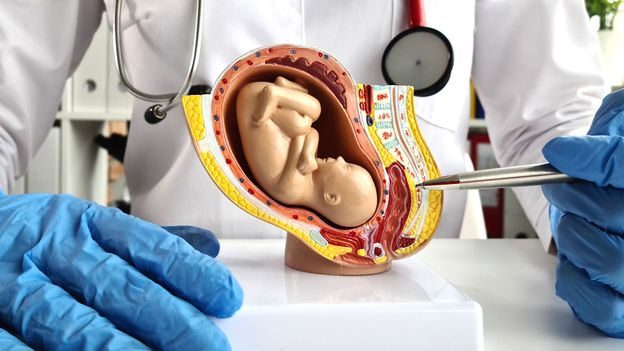


Competing Technological Approaches
Three primary research groups are pursuing different methods to achieve this goal, all drawing inspiration from extracorporeal membrane oxygenation (Ecmo), a life-support system that removes carbon dioxide and adds oxygen to blood outside the body.
- The "Extend" System: Developed by fetal surgeon Alan Flake and colleagues at the Children's Hospital of Philadelphia (CHOP), the EXTra-uterine Environment for Neonatal Development (Extend) submerges babies in fluid-filled pods mimicking amniotic fluid. The umbilical cord is connected to an Ecmo-like device, with the baby's own heart driving the blood flow.
- The Artificial Placenta: Professor George Mychaliska’s team at the University of Michigan focuses on a system that fills the infant's lungs with a specialized fluid via breathing tubes. Unlike the Extend system, it drains blood from the jugular vein and returns oxygenated blood via the umbilical vein. Mychaliska stated this platform is intended to be readily available for use in existing NICUs.
- EVE Therapy: The ex vivo uterine environment (Eve) therapy is a collaboration involving the Women and Infants Research Foundation (WIRF) in Perth, and Tohoku University Hospital in Japan. This system uses a membranous oxygenator connected to the umbilical cord.
Research Milestones and Animal Trials
Because human trials carry significant risks, researchers have relied on lamb models. In 2017, the CHOP team kept eight premature lambs, equivalent to 23-to-24-week-old humans, alive for four weeks, during which they grew wool and developed normally. The EVE team has successfully maintained a 500g lamb fetus in a broadly normal physiological state for two weeks, though Professor Matt Kemp, chief scientist at Wirf, noted that growth in these fetuses can be abnormal.
WIRF has reported a specific timeline of achievements with their platform:
| Year | Milestone |
|---|---|
| 2016 | Maintained physiological parameters in preterm lambs for one week; successful transfer to pulmonary ventilation. |
| 2017 | Extended healthy survival period to two weeks. |
| 2018 | Supported extremely premature lambs (600g, 23-24 weeks human equivalent) for 120 hours. |
| 2019 | Treated extremely preterm fetuses with chorioamnionitis (infection) for 120 hours. |
| 2022-2023 | Maintained extremely preterm fetuses for two weeks without cardiac failure. |
Ethical and Clinical Hurdles
The path to human clinical use is complicated by ethical concerns and biological unknowns. Neonatologist Stephanie Kukora highlighted that systems requiring immediate umbilical cord cannulation, such as Extend and EVE, would necessitate an early Caesarean section. This differs from a term C-section and could impact a mother's future pregnancies or ability to deliver vaginally.
There is also the issue of informed consent. Kukora suggested that parents facing the tragedy of a 22-week gestation may be inclined to agree to untested technology regardless of the risks. Additionally, Mychaliska noted that immediate transfer to an artificial womb prevents doctors from assessing how a baby would have fared under conventional therapy.
Biologically, the technology must account for the difference between healthy lab animals and sick premature infants. Professor Kemp observed that compromised fetuses are much more difficult to manage, exhibiting worse growth and unstable blood pressure. He also noted that the discovery of necessary growth factors produced by the natural placenta remains a challenge.
What to Watch Next
The timeline for clinical implementation varies by institution. The CHOP team has applied to the Federal Drug Administration (FDA) for permission to begin human trials of Extend. Professor Mychaliska hopes to move to human clinical trials in approximately three to four years after further miniaturizing the system. However, Professor Kemp estimates it may take 10 to 15 years before these technologies are ready for clinical use in NICUs, as fundamental gaps in the understanding of fetal growth must first be filled.
Archypedia is dedicated to independent, evidence-backed reporting. This briefing was synthesized from primary source reporting, corroborated across independent newsrooms, and verified against our Editorial Standards.
Transparency record
Evidence behind this report
This report synthesizes 8 distinct sources. Open the source ledger below to compare the underlying coverage.
- bbc.com
- newsdive.net
- wirf.com.au
- pmc.ncbi.nlm.nih.gov
- businessnews.com.au
- thewest.com.au
- eurekalert.org
- ogmagazine.org.au
Prepared under the Archypedia Editorial Policy by the Lina Park editorial desk profile. AI-assisted tools may support drafting and verification; public accountability remains with Archypedia. Report an error.