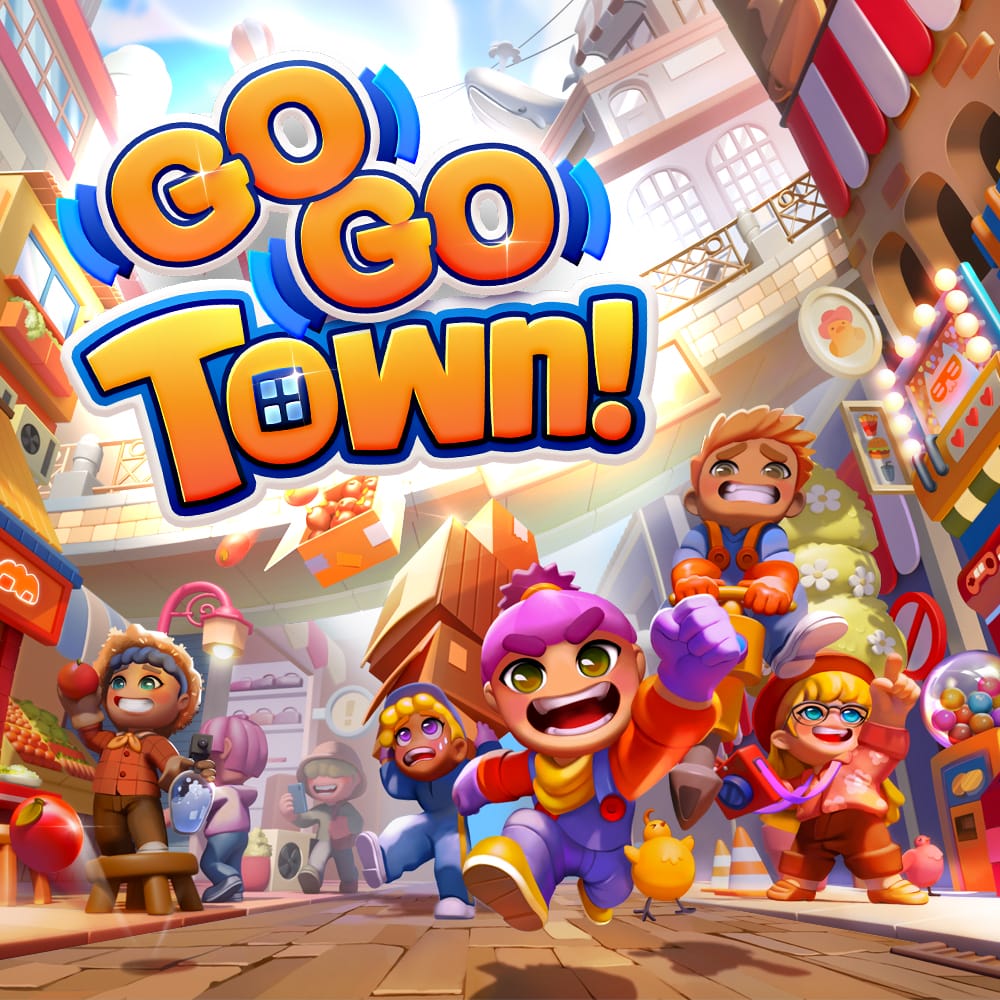
Go-Go Town! Launches 1.0 on Steam and Arrives on Nintendo Switch and Nintendo Switch 2 on 16th July
The gaming landscape is bracing for a significant milestone as Go-Go Town! Launches 1.0 on Steam and Arrives on Nintendo Switch and Nintendo Switch 2 on 16th July. This announcement marks a pivotal transition for the title, moving from its developmental phases into a full-scale commercial release across multiple platforms. While the jump to version 1.0 on Steam is a standard progression for many modern indie titles, the simultaneous announcement of a launch on both the current Nintendo Switch and the highly anticipated Nintendo Switch 2 has sent ripples through the industry, signaling a strategic move to capture both current and next-generation audiences.
For players who have followed the project’s trajectory, the arrival of version 1.0 represents the culmination of iterative development, bug fixing, and feature expansion. However, the broader implications of the July 16th release date extend beyond a single game. By targeting a dual-platform launch on Nintendo’s hardware, the developers are positioning the title at the center of a hardware transition period, a move that is often fraught with risk but offers immense rewards in terms of market penetration and visibility.
The Evolution to Version 1.0 on Steam
The transition to a “1.0” release is more than just a numerical update; it is a statement of stability and completeness. In the current era of game development, many titles utilize Steam’s Early Access program to refine mechanics based on real-time player feedback. The launch of Go-Go Town! 1.0 suggests that the core loop of the game has reached its intended maturity, and the developers are confident in the experience they are delivering to the general public.
Moving to 1.0 typically involves several key upgrades that distinguish the final product from its predecessor:
- Feature Completion: The implementation of all planned systems, narrative arcs, and gameplay mechanics that were outlined during the initial development phase.
- Optimization: A rigorous focus on performance, ensuring the game runs smoothly across a wider variety of PC hardware configurations.
- Polish and QA: An intensive period of quality assurance to eliminate game-breaking bugs and refine the user interface for a seamless first-time user experience.
- Content Expansion: Often, the 1.0 launch includes “launch-day” content that provides a substantial amount of gameplay to justify the full retail price.
By establishing a firm foundation on Steam, the developers ensure that the PC community—often the most vocal and critical—has a stable version of the game to evaluate before the title expands to console ecosystems.
Expanding the Horizon: The Nintendo Ecosystem
The most striking element of the announcement is the confirmation that Go-Go Town! will be available on Nintendo platforms starting July 16th. The decision to launch on the Nintendo Switch is a logical step, as the console’s portable nature and demographic alignment often mirror the target audience of independent titles. However, the explicit mention of the Nintendo Switch 2 elevates this release from a standard port to a significant industry event.
The July 16th Milestone
July 16th serves as the definitive date for the game’s expansion. For the consumer, this creates a synchronized window of availability. Whether a player prefers the high-fidelity environment of a PC or the versatility of a handheld, the ability to access the full 1.0 version of the game simultaneously across these platforms is a major draw.
This synchronized launch strategy is designed to maximize “day-one” momentum. By concentrating the marketing push and the release across Steam and Nintendo platforms, the developers can generate a concentrated burst of social media conversation and review activity, which is critical for the visibility of indie games in crowded digital storefronts.
Analyzing the “Nintendo Switch 2” Mention
The inclusion of the Nintendo Switch 2 in the release schedule is perhaps the most discussed aspect of the news. In the gaming industry, mentions of unreleased hardware are rare and usually strictly controlled by non-disclosure agreements (NDAs). The fact that Go-Go Town! is explicitly targeting this next-generation hardware suggests a high level of coordination between the developers and Nintendo.
The implications of a “cross-gen” launch—supporting both the current Switch and its successor—are manifold:
- Hardware Transition Support: It allows players to migrate their experience from the older hardware to the new system without feeling they have missed out on a “next-gen only” title.
- Technical Showcase: While the game must remain compatible with the original Switch, the version for the Switch 2 likely leverages improved processing power, higher resolution, and faster load times.
- Market Validation: For Nintendo, having a pipeline of titles ready for the Switch 2 at launch (or shortly thereafter) is essential to drive hardware adoption.
This dual-support strategy ensures that the game does not alienate the massive existing install base of the original Switch while simultaneously appealing to the “early adopters” who will be purchasing the new hardware.
The Strategic Importance of Multi-Platform Launches
For an independent studio, the decision of where and when to launch is a critical business calculation. The path chosen for Go-Go Town!—a simultaneous PC and dual-console rollout—reflects a modern approach to software distribution.

Below is a comparison of the different platform strategies and why the chosen path for Go-Go Town! is particularly aggressive.
| Strategy | Primary Advantage | Primary Risk | Go-Go Town! Approach |
|---|---|---|---|
| PC Exclusive | Lower overhead, direct feedback. | Limited market reach. | Moved past this with 1.0 launch. |
| Staggered Porting | Can fix bugs on PC before console. | Loss of marketing momentum. | Avoided in favor of July 16th sync. |
| Cross-Gen Launch | Captures two hardware generations. | Complex optimization requirements. | Active (Switch & Switch 2). |
By opting for the cross-gen approach, the developers are essentially hedging their bets. They are not relying solely on the aging hardware of the current Switch, nor are they gambling entirely on the adoption rate of the Switch 2. Instead, they are casting the widest possible net.
Understanding the 1.0 Lifecycle in Modern Gaming
To the average consumer, “1.0” simply means the game is finished. However, from a technical and industry perspective, the 1.0 launch is the beginning of a new lifecycle. The shift from a developmental state to a commercial state changes how a game is managed and supported.
“The transition to 1.0 is a psychological shift for both the developer and the player. It moves the conversation from ‘what will the game be’ to ‘how will the game evolve’.”
Once Go-Go Town! hits version 1.0 on July 16th, the development focus will likely shift from core implementation to live service maintenance. This typically includes:
- Post-Launch Patches: Addressing edge-case bugs that only appear when thousands of players interact with the game simultaneously.
- DLC and Expansions: Adding new content to keep the player base engaged over the long term.
- Community-Driven Updates: Implementing quality-of-life improvements based on the feedback from the 1.0 user base.
This lifecycle is particularly essential for titles launching on Nintendo hardware, where the “evergreen” nature of the platform often allows games to find new audiences years after their initial release.
Industry Implications and Next-Gen Expectations
The announcement regarding the Nintendo Switch 2 is not just a win for the developers of Go-Go Town!; it is a signal to the wider industry. When a title confirms support for next-generation hardware, it provides a glimpse into the technical capabilities and the release window of that hardware.
Industry analysts often look at these “leak-adjacent” announcements to determine the readiness of a new console. The fact that a game is ready for a July 16th launch on the Switch 2 suggests that development kits have been in the hands of studios for some time, and the hardware is stable enough for final optimization.
this sets a precedent for other indie developers. The “dual-launch” model—supporting both the legacy and the successor system—is likely to become the standard for the next two to three years as the gaming community transitions between hardware cycles. This minimizes the “dip” in sales that often occurs when a new console is released and players stop buying games for the old one.
Common Misconceptions About Version 1.0 Launches
There is often a misconception that a 1.0 release means a game will never be updated again. In reality, the opposite is true. The 1.0 mark is the “baseline.” Any updates following this date are generally additions rather than corrections. For Go-Go Town!, the 1.0 launch on Steam and the subsequent console releases provide a clean slate from which all future content can be built.
Another common misunderstanding is that the version on the Nintendo Switch 2 will be a completely different game. While it will likely feature superior graphical fidelity and performance, the core experience—the “1.0” vision—remains consistent across all platforms. This ensures that the game’s design integrity is maintained regardless of the device used to play it.
Key Takeaways for Players and Investors
As the July 16th date approaches, several key points stand out for those tracking the release of Go-Go Town!:
- Platform Flexibility: Players can choose between the stability of Steam, the portability of the Switch, or the enhanced power of the Switch 2.
- Unified Experience: The 1.0 version ensures that all players, regardless of platform, are starting from the same feature-complete baseline.
- Hardware Confirmation: The explicit mention of the Switch 2 serves as a tangible indicator of the upcoming console’s ecosystem and developer readiness.
For those interested in the broader trends of the gaming market, this release is a case study in strategic timing. By aligning a major version update with a multi-platform expansion and a next-gen hardware launch, the developers are maximizing their visibility in an increasingly competitive market.
For more information on how indie developers are navigating the current console landscape, you may find a related explainer on cross-platform development useful for understanding the technical hurdles involved in these launches.
Frequently Asked Questions
When is Go-Go Town! releasing on consoles?
Go-Go Town! is scheduled to arrive on both the Nintendo Switch and the Nintendo Switch 2 on July 16th.
What does “Version 1.0” mean for Steam players?
Version 1.0 signifies the full commercial launch of the game. It indicates that the title has moved out of its early development or access phases and is now a complete, polished product with all primary features implemented.
Will the game be different on the Nintendo Switch 2 compared to the original Switch?
While the core gameplay and content of the 1.0 release will be the same, the version for the Nintendo Switch 2 is expected to leverage the newer hardware for improved performance, better graphics, and faster loading times.
Can I play Go-Go Town! on PC before July 16th?
The game is launching 1.0 on Steam, and depending on the specific rollout, PC players may have access to the title as it transitions to its full release version. Check the Steam store page for the most current availability.
Why is the mention of the Nintendo Switch 2 significant?
It is significant because it provides a rare, explicit confirmation of support for Nintendo’s next-generation hardware, suggesting that the console is nearing a stage where developers are finalizing games for its launch window.
