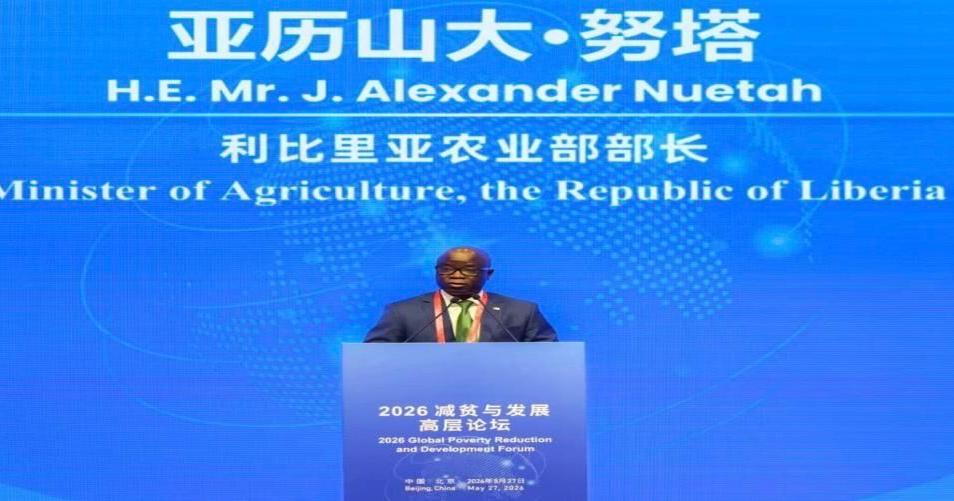
Liberia Advocates for a Revised Global Approach to Ending Poverty—Why the West African Nation’s Push Could Reshape Development Aid
Monrovia, June 1, 2026 — In a bold diplomatic move, Liberia’s government has called for the creation of a new global framework on poverty reduction, arguing that existing international strategies have failed to address the root causes of persistent inequality in low-income nations. The push comes as Liberia—one of the world’s poorest countries, with a per capita GDP of just $907 and a Human Development Index ranking of 177th—seeks to leverage its unique historical and economic context to redefine how the world tackles poverty. Speaking at a high-level forum in the capital, Monrovia, President Joseph Boakai emphasized that traditional aid models, often tied to conditional lending and short-term interventions, have not delivered sustainable progress. Instead, he proposed a shift toward locally driven, long-term solutions that prioritize infrastructure, education, and climate resilience—areas where Liberia has identified critical gaps. The call aligns with growing skepticism among African leaders about the effectiveness of Western-led development programs, particularly those that fail to account for post-colonial economic structures and climate vulnerability.
This article explores Liberia’s proposal, its historical context, and why this moment could mark a turning point in global poverty alleviation efforts. It also examines the challenges ahead, including resistance from traditional donors and the need for concrete alternatives to replace outdated aid paradigms.
— ###
The Core Proposal: What Liberia Is Demanding
Liberia’s push for a new framework centers on three key demands: 1. Aid Without Strings Attached The government has criticized the conditionalities imposed by international financial institutions (such as the IMF and World Bank) as counterproductive. For example, structural adjustment programs in the 1990s—meant to stabilize Liberia’s economy after decades of conflict—often required cuts to social spending, worsening poverty in the long run. President Boakai’s administration argues that future aid should focus on unconditional support for basic services, such as healthcare and education, rather than macroeconomic reforms that disproportionately harm the poor. 2. Climate-Adaptive Development Liberia’s geography—low-lying coastal regions, dense forests, and frequent extreme weather events—makes it particularly vulnerable to climate change. The government’s proposal includes mandatory climate resilience clauses in all development projects**, ensuring that infrastructure investments (e.g., roads, ports) are designed to withstand rising sea levels and stronger storms. This contrasts with past aid efforts, where climate considerations were often an afterthought. 3. Local Ownership of Solutions Liberia’s plan rejects the notion that poverty reduction should be dictated by external actors. Instead, it advocates for nationally led strategies** with technical assistance from global partners. The government points to successful models from other African nations, such as Rwanda’s post-genocide recovery or Ethiopia’s agricultural transformation, where homegrown policies—supported by targeted international funding—yielded measurable progress.
Key Point: Liberia’s framework is not just about more money—it’s about redistributing power in the development process, shifting from donor-driven agendas to recipient-led priorities.
— ###
Why Now? Liberia’s Poverty Crisis and the Failures of Past Efforts
Liberia’s call for reform is rooted in decades of economic stagnation and repeated setbacks: – Post-War Recovery Stalled After two brutal civil wars (1989–1996 and 1999–2003), Liberia received billions in reconstruction aid. Yet, by 2024, nearly 40% of the population still lived below the national poverty line**, according to the World Bank. Critics argue that much of the aid was misallocated, siphoned off by corruption, or failed to address systemic issues like land tenure insecurity and weak institutions. – Debt Traps and Austerity Liberia’s reliance on foreign loans—particularly from China—has led to a debt-to-GDP ratio exceeding 70%, according to recent estimates. While infrastructure projects (e.g., the Monrovia Container Terminal) have improved trade capacity, they often came with onerous repayment terms that forced the government to cut social spending. The new framework seeks to renegotiate debt terms** and prioritize poverty reduction over debt servicing. – Climate Vulnerability Ignored Liberia’s agricultural sector—employing over 70% of the workforce—is increasingly threatened by erratic rainfall and deforestation. Yet, past aid packages rarely included climate-adaptation measures. The government’s proposal aims to integrate climate resilience into all development planning**, a shift that could serve as a model for other vulnerable nations.
Historical Context: Liberia’s unique history as a former American colony (founded in 1822 by freed Black Americans) has left it with a dual legacy of democratic traditions and economic marginalization**. While it was one of Africa’s first republics, its post-independence trajectory was derailed by exploitation, conflict, and neglect. Today, its push for a new poverty framework reflects a broader African demand for agency in shaping their own futures**.
— ###
Who’s Behind the Push? Stakeholders and Their Interests
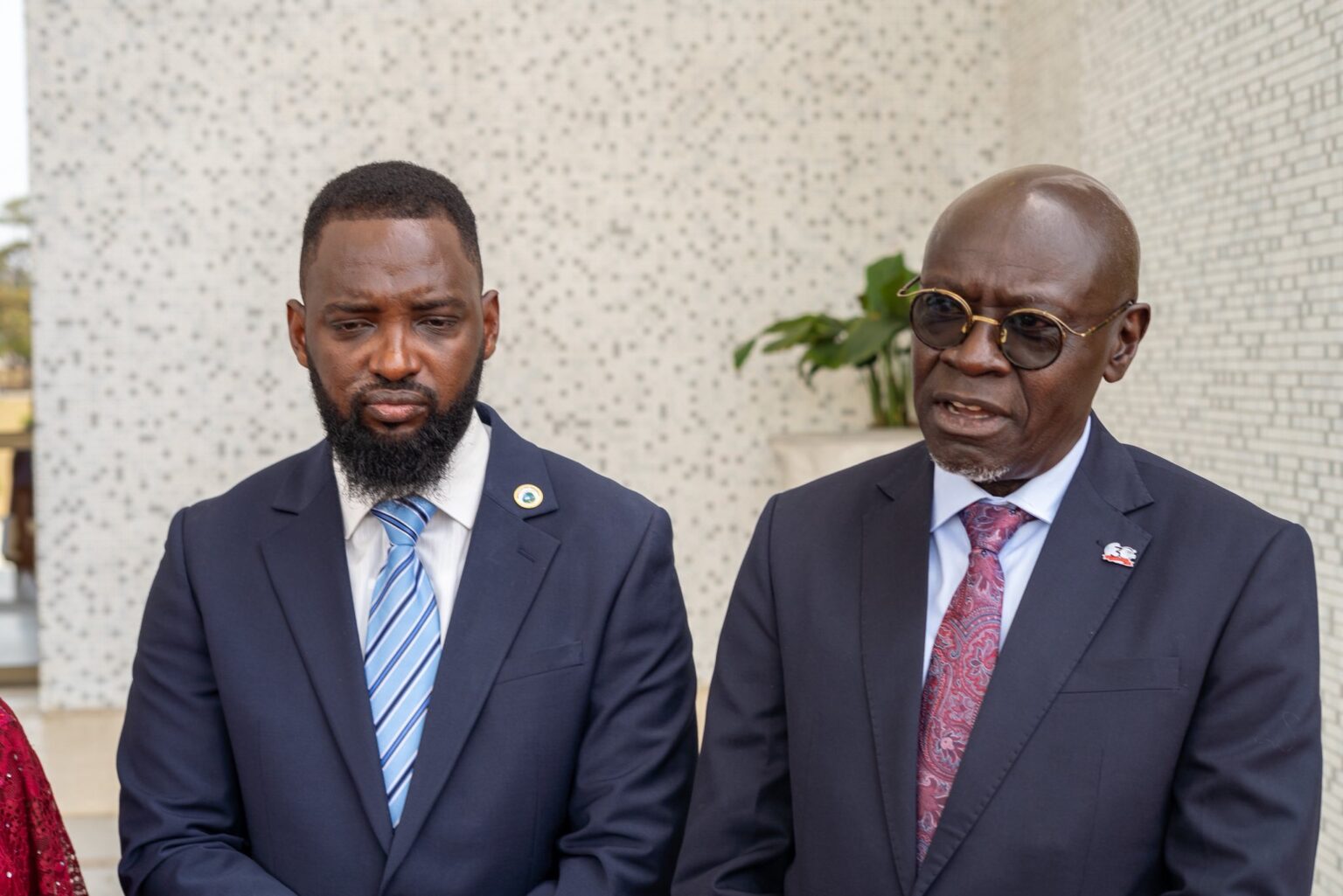
Liberia’s proposal has garnered support from unexpected quarters, but it also faces resistance: | Stakeholder | Position | Potential Challenges | Liberian Government | Leading the charge, framing the proposal as a matter of national sovereignty. President Boakai has positioned Liberia as a moral leader on poverty issues**, leveraging its historical ties to the U.S. And Europe. | Domestic political divisions; risk of backlash from donors if reforms are seen as anti-Western. | | International Financial Institutions (IMF/World Bank) | Cautiously supportive but wary of abandoning conditional aid. The IMF has already signaled openness to debt relief discussions** if Liberia adopts stricter fiscal reforms. | Fear of setting a precedent that undermines their control over aid disbursement. | | China | Historically a key creditor to Liberia, China may see value in supporting a framework that aligns with its Belt and Road Initiative (BRI) principles**—infrastructure-led growth. However, it has not yet endorsed Liberia’s specific demands. | Concerns about competing with Western donors; preference for bilateral deals over multilateral reforms. | | African Union & ECOWAS | Publicly backing Liberia’s call, viewing it as part of a broader African-led development agenda**. The AU’s 2024 Agenda 2063 includes similar calls for economic sovereignty. | Limited capacity to enforce new global standards without Western buy-in. | | Civil Society Groups | Overwhelmingly supportive, arguing that Liberia’s proposal could rebalance power dynamics** in aid relationships. Groups like the Liberia Institute for Policy Analysis (LIPA) have published reports highlighting past aid failures. | Risk of co-optation if the government’s reforms are seen as superficial. | | Western Donors (USA/EU) | Divided. The U.S. State Department has expressed open-mindedness**, citing Liberia’s strategic importance in West Africa. The EU, however, remains skeptical, fearing that unconditional aid could encourage corruption. | Historical reluctance to cede control over aid agendas; concerns about accountability. |
Expert Insight: Dr. Aisha Kamara, an economist at the University of Liberia, notes that “Liberia’s proposal is less about rejecting aid entirely and more about demanding that aid works for Liberians, not the other way around.” She warns, however, that without concrete alternatives, the framework risks becoming another well-intentioned but underfunded initiative.
— ###
Global Precedents: How Liberia’s Push Compares to Other Movements
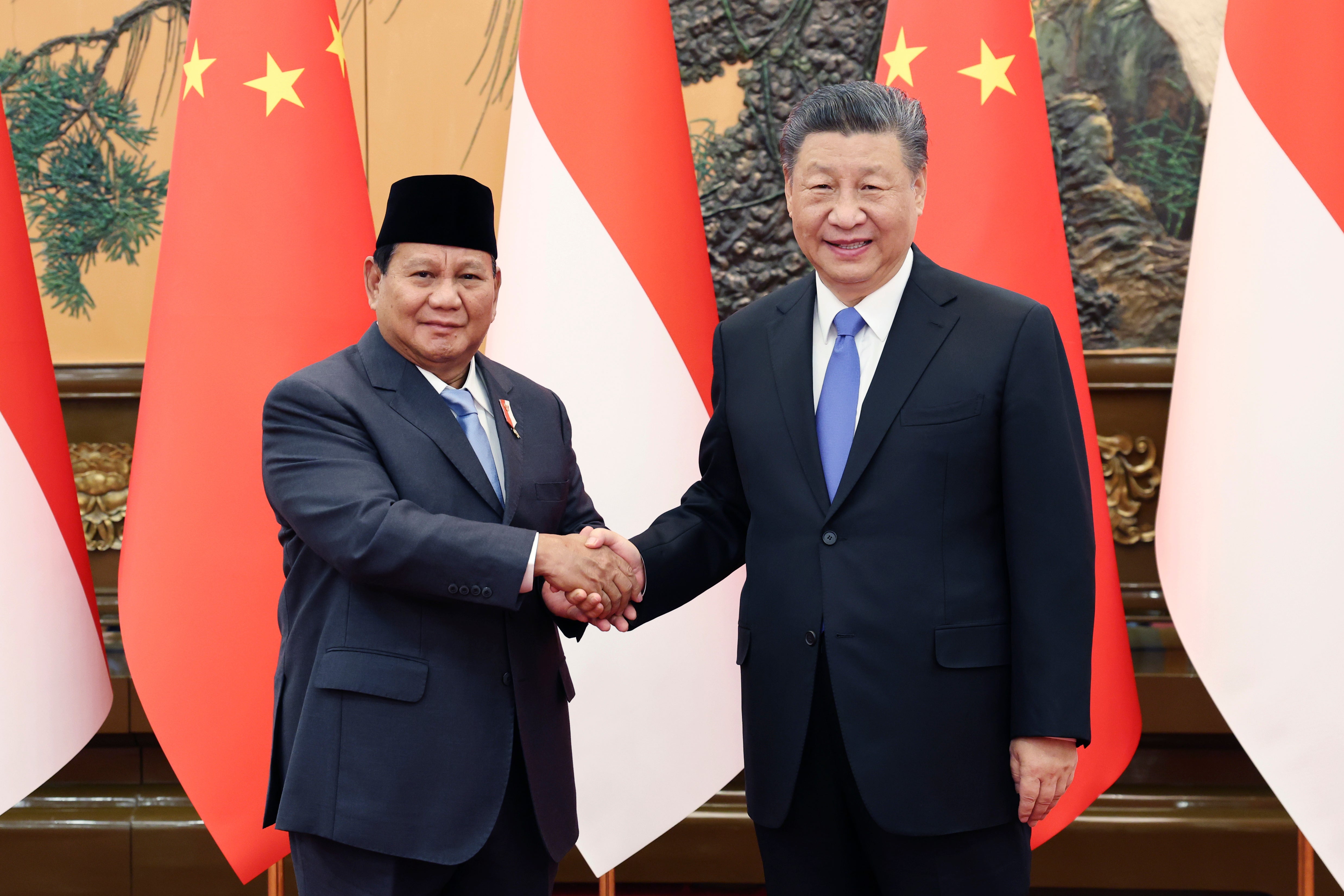
Liberia is not alone in challenging traditional aid models. Several recent developments offer parallels: 1. Indonesia’s Shift Toward China’s Poverty Model While not directly related, Indonesia’s recent efforts to adopt elements of China’s targeted poverty alleviation programs** (such as the “precision poverty” approach) reflect a similar frustration with Western aid. Indonesia’s success in reducing poverty from 11% in 2018 to under 9% in 2025 has led other nations to question whether conditionality-free, technocratic solutions** might work better than structural adjustment. 2. The Bridgetown Initiative (Caribbean) In 2022, Barbados’ Prime Minister Mia Mottley launched the Bridgetown Initiative, calling for a rethink of global financial architecture to better serve slight island states. While focused on climate finance, its core argument—that debt sustainability must prioritize human development**—echoes Liberia’s demands. 3. The African Continental Free Trade Area (AfCFTA) Launched in 2021, the AfCFTA aims to boost intra-African trade and reduce reliance on external markets**. Liberia’s poverty framework could complement this by ensuring that trade benefits trickle down to the poorest populations, rather than enriching elites.
Common Thread: All three movements share a rejection of one-size-fits-all solutions and a demand for economic sovereignty. Liberia’s proposal, however, goes further by explicitly targeting the structural inequalities embedded in aid relationships**.
— ###
What’s Next? Challenges and Potential Outcomes
Liberia’s call for a new poverty framework is ambitious, but its success hinges on several factors: – Will Donors Compromise? The IMF and World Bank have shown limited flexibility** in the past. For example, their 2020 Debt Service Suspension Initiative (DSSI) provided temporary relief but did not address the underlying issues Liberia is raising. A breakthrough would require donors to accept that poverty reduction cannot be tied to political or economic conditions**. – Can Liberia Deliver on Its Own Plan? The government’s track record on corruption and governance is mixed. Skeptics argue that without stronger institutions, even well-intentioned reforms could fail. However, Liberia’s proposal includes transparency measures**, such as publishing aid contracts online—a step that could build trust. – Will Other Nations Follow? If successful, Liberia’s model could inspire similar demands from other fragile states. The Group of 77 (G77)**, a coalition of developing nations, has already expressed interest in exploring Liberia’s ideas at upcoming UN meetings.
Looking Ahead: The next six months will be critical. Liberia is expected to host a high-level donor conference in late 2026 to outline its framework in detail. The outcome will depend on whether Western powers, China, and African partners can agree on a shared vision—or if Liberia’s bold experiment in sovereignty will remain just another unfulfilled promise.
— ###
Frequently Asked Questions
How does Liberia’s proposed framework differ from existing poverty reduction strategies?
Traditional approaches (e.g., Millennium Development Goals, Sustainable Development Goals) rely on voluntary targets set by donor nations. Liberia’s framework demands binding commitments from donors, including debt relief, climate adaptation funding, and unconditional support for basic services. It also shifts decision-making power to recipient nations, a radical departure from past top-down models.
Could Liberia’s plan lead to more corruption?
Critics argue that unconditional aid could worsen corruption, but Liberia’s proposal includes mandatory transparency measures**, such as publishing aid disbursements in real time and requiring independent audits. The government has also pledged to strengthen anti-corruption institutions, though past efforts have had limited success.
Why is climate resilience a priority for Liberia?
Liberia’s economy is heavily dependent on agriculture and fishing, both of which are threatened by climate change. The government estimates that over 60% of the population lives in climate-vulnerable zones, and rising sea levels could displace hundreds of thousands by 2050. The new framework seeks to integrate climate risks into all development planning, ensuring that infrastructure and social programs are resilient to future shocks.
Has any country successfully implemented a similar model?
Rwanda’s post-genocide recovery offers a partial precedent. By prioritizing national ownership** and leveraging targeted international support, Rwanda reduced poverty from 77% in 1994 to 39% in 2020. However, Rwanda’s success was also due to strong leadership and low corruption—a combination Liberia has yet to achieve at scale.
What role will the United States play?
The U.S. Has historically been Liberia’s largest donor, providing over $1 billion in aid since 2003. While the Biden administration has expressed openness to discussing Liberia’s proposal, This proves unlikely to abandon conditionality entirely. Expect negotiations to focus on phased reforms, where some aid becomes unconditional while other programs retain oversight.
Could this framework apply to other countries?
Absolutely. Liberia’s proposal is designed as a model for other fragile states**, particularly those recovering from conflict or facing climate threats. The African Union and UN have already signaled interest in adapting elements of the framework for regional use. However, its success will depend on whether donors are willing to cede control** over aid agendas—a shift that would require major policy changes in Washington, Brussels, and Beijing.
—
Liberia’s call for a new global poverty framework is more than a policy proposal—it’s a challenge to the status quo**. If successful, it could redefine how the world fights poverty, putting recipient nations at the center of solutions rather than the periphery. But if it fails, it risks becoming another well-intentioned but unfulfilled promise in a long history of broken aid pledges.
One thing is clear: the debate over Liberia’s framework will shape the future of development aid for decades to come.
