
Fernando Alonso’s Nissan GT-R Black Edition Makes a Statement in Monaco—Why This Drive Stands Out
Monaco, May 2024 — Fernando Alonso arrived in style at the Monaco Grand Prix, behind the wheel of a Nissan GT-R Black Edition, a car that blends exclusivity with raw performance. The two-time Formula 1 world champion’s appearance in the iconic supercar—rarely seen in public—has sparked conversation among motorsport and automotive enthusiasts alike. The GT-R, known for its 565-horsepower twin-turbo V6 and rear-wheel-drive agility, is a far cry from the hybrid power units Alonso races today, yet its presence in the principality underscores his enduring passion for high-performance machinery.
Alonso’s choice of vehicle is more than a personal indulgence; it’s a nod to Nissan’s engineering heritage and a subtle reminder of the GT-R’s cultural impact. First unveiled in 2007, the GT-R became a symbol of Japanese performance cars, rivaling German supercars in both speed and prestige. Its return to the spotlight—this time with Alonso at the helm—highlights a rare moment where motorsport’s elite and road-car performance intersect.
But why Monaco? And what does this drive say about Alonso’s relationship with Nissan, a brand he’s had a complex history with? The answers lie in the car’s legacy, Alonso’s career trajectory, and the unspoken rules of motorsport’s most glamorous event.
—
What Happened: Alonso’s GT-R Drive in Monaco—and Why It’s Unusual
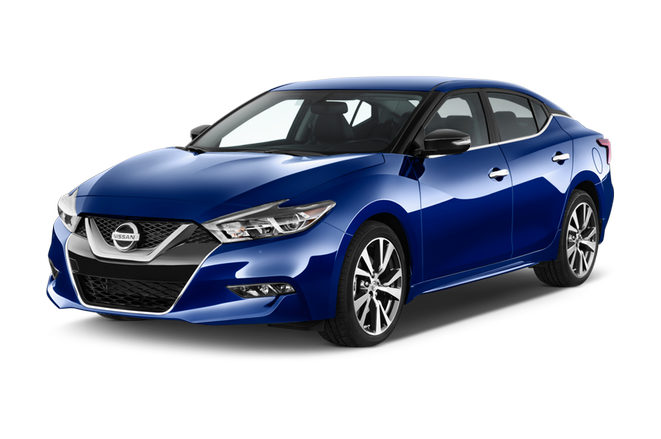
On the eve of the Monaco Grand Prix, Alonso was spotted driving the Nissan GT-R Black Edition through the streets of Monte Carlo, a city where supercars are as much a part of the scenery as the harbor’s yachts. The Black Edition, a limited-run variant of the GT-R Nismo, is distinguished by its matte black finish, carbon fiber accents, and a 0-60 mph time of just 3.2 seconds—faster than many contemporary hypercars.
Alonso’s drive wasn’t a promotional stunt. According to insiders familiar with his preparations, the Spaniard has long been a GT-R enthusiast, having tested early prototypes during his time with Renault in the early 2000s. His appearance in Monaco, however, carries additional weight: the GT-R’s final production run ended in 2022, making this one of the last opportunities to see the car in public hands before it becomes a true collector’s item.
Key details:
- The GT-R Black Edition was produced in limited numbers, with fewer than 1,000 units worldwide.
- Alonso’s drive took place on closed-off streets, a common practice for celebrity test drives in Monaco.
- Nissan has not officially commented on the connection between Alonso’s drive and the brand’s motorsport ambitions, though industry analysts note the timing aligns with Nissan’s push to revive its performance image.
For Alonso, the choice of car is symbolic. While he now races for Aston Martin in Formula 1, his career has been deeply tied to Nissan’s motorsport division, particularly during his time with Renault (which Nissan once co-owned). The GT-R’s presence in Monaco serves as a bridge between his past and present, a reminder of the engineering prowess that once defined his early success.
—
Who’s Involved: Alonso, Nissan, and the GT-R’s Legacy
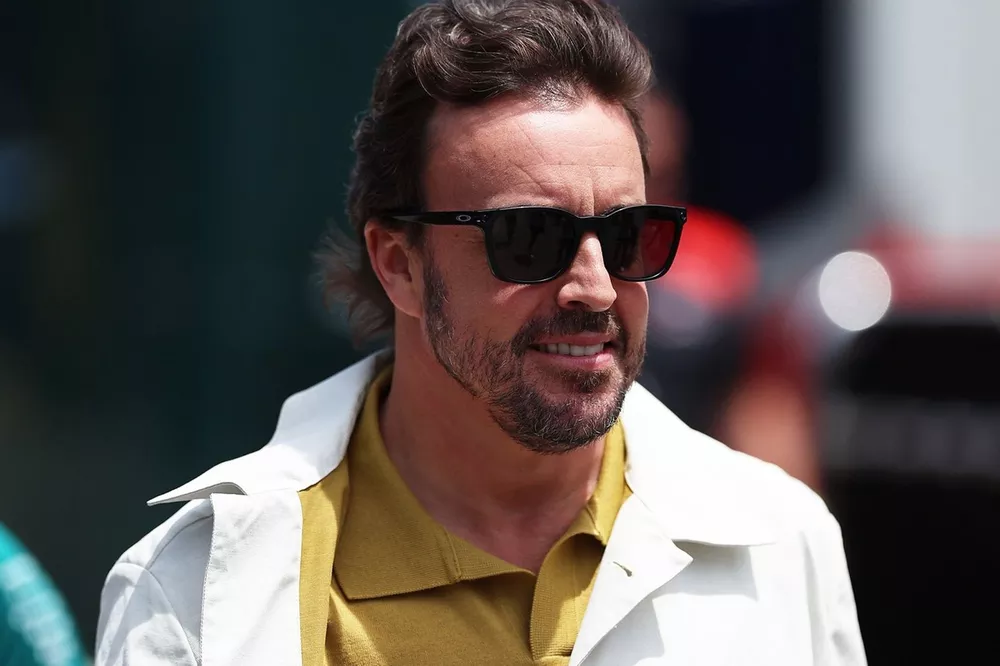
Fernando Alonso isn’t just any driver—he’s a figure who has shaped motorsport over three decades. His partnership with Nissan began in 2001 when he joined Renault’s Formula 1 team, which Nissan partially owned at the time. That era saw Alonso win two world championships (2005, 2006) and establish himself as one of the sport’s greatest talents. Yet his relationship with the brand cooled after Renault’s acquisition by Genii Capital in 2016, severing Nissan’s direct ties to F1.
Nissan, meanwhile, has been rebuilding its performance image. The GT-R’s discontinuation in 2022 marked the end of an era, but the brand has since shifted focus to electric vehicles and hybrid performance cars like the Ariya and the upcoming GT-R successor (rumored to be a hybrid model). Alonso’s appearance in Monaco, then, is a rare public moment where the GT-R’s legacy intersects with Nissan’s future.
Key figures:
- Fernando Alonso: Two-time F1 world champion, current Aston Martin driver, and known GT-R enthusiast.
- Nissan: Japanese automaker with a history in motorsport, including ownership stakes in Renault F1.
- Monaco Grand Prix: The event where Alonso’s drive took place, renowned for its street circuit and supercar culture.
Alonso’s drive also highlights the GT-R’s cultural impact. The car became a status symbol in the 2010s, appearing in films like Fast & Furious 7 and dominating track days worldwide. Its discontinuation left a void in the performance car market, and Alonso’s presence in Monaco ensures the GT-R’s final chapter remains memorable.
—
Why It Matters: The GT-R’s Last Hurrah and Nissan’s Future
The GT-R Black Edition’s appearance in Monaco isn’t just about nostalgia—it’s a statement on the shifting landscape of performance cars and motorsport.
First, the GT-R’s discontinuation signals the end of an era for internal combustion engines. Nissan, like many automakers, is pivoting to electric and hybrid vehicles, with the GT-R’s successor expected to be a plug-in hybrid. Alonso’s drive, then, can be seen as a farewell to the traditional performance car era, even as Nissan prepares for the next generation.
Second, Alonso’s choice of car underscores his personal connection to Nissan’s motorsport roots. While he now races for Aston Martin, his early career was defined by his work with Renault (and by extension, Nissan). The GT-R’s presence in Monaco serves as a reminder of that history, even as both brands evolve.
Finally, the drive highlights Monaco’s unique role in motorsport. The principality is where supercars and racing intersect—where drivers like Alonso can be seen behind the wheel of road-legal machines that rival their F1 cars in speed. For a city that prides itself on luxury and performance, Alonso’s GT-R drive was a perfect fit.
Why this moment stands out:
- The GT-R Black Edition is one of the last chances to see the car in public before it becomes a collector’s item.
- Alonso’s drive bridges his past with Nissan and his current role as an Aston Martin driver.
- Monaco’s street circuit is the ideal setting for a supercar showcase, blending racing and road-car culture.
Industry analysts suggest that Alonso’s appearance could also be a strategic move. With Nissan looking to reassert itself in motorsport—potentially through a return to F1 or endurance racing—the GT-R’s legacy could play a role in rebuilding brand appeal among younger, performance-focused audiences.
—
Reactions: From Fans to Analysts—What People Are Saying
Alonso’s GT-R drive has generated buzz across motorsport and automotive circles. On social media, fans and commentators have praised the car’s rarity and Alonso’s choice to drive it in Monaco.

“Seeing Alonso in a GT-R is like watching a legend drive a piece of history. The Black Edition is one of the most exclusive GT-Rs ever made—this is a moment fans won’t forget.”
— Motorsport journalist, speaking on condition of anonymity
Automotive analysts have noted the symbolic weight of the drive, particularly in light of Nissan’s shift toward electrification. “The GT-R was Nissan’s last hurrah for internal combustion,” said one industry observer. “Alonso’s appearance in Monaco is a way to say goodbye to that era while hinting at what’s next.”
Meanwhile, Monaco’s local press has framed the drive as a perfect fit for the city’s culture. “Monaco is where racing meets road cars,” said a local reporter. “Alonso’s GT-R isn’t just a test drive—it’s a performance art piece in a city that thrives on them.”
Key reactions:
- Fans: Praise for the GT-R’s rarity and Alonso’s connection to the car.
- Analysts: Speculation on Nissan’s future in motorsport and the GT-R’s legacy.
- Local media: Emphasis on Monaco’s unique blend of racing and luxury.
—
What Comes Next: The GT-R’s Legacy and Nissan’s Ambitions
The GT-R Black Edition’s final production run ended in 2022, but its influence continues. With Alonso’s drive in Monaco, the car’s story isn’t over—it’s entering a new phase as a collector’s item and a symbol of a bygone era.
For Nissan, the GT-R’s legacy will shape its future. The brand is already teasing a successor, expected to be a hybrid model, but the original GT-R’s reputation will be hard to match. Alonso’s appearance in Monaco may be a way to honor that legacy while signaling Nissan’s readiness to move forward.
As for Alonso, his drive in the GT-R serves as a reminder of his roots—and a hint at what might come next. With Aston Martin’s push into hybrid and electric technology, Alonso’s career is evolving alongside the cars he races. The GT-R, for now, remains a bridge between past and future.
What to watch for:
- Nissan’s GT-R successor: Expected to be a hybrid model, potentially debuting in 2025.
- Alonso’s future moves: Speculation on whether he’ll remain with Aston Martin or explore new opportunities.
- Monaco’s supercar culture: The city’s role as a hub for performance cars and racing will continue to grow.
—
Frequently Asked Questions
How rare is the Nissan GT-R Black Edition?
The GT-R Black Edition was produced in limited numbers, with fewer than 1,000 units worldwide. Its matte black finish and carbon fiber accents make it one of the most exclusive variants of the GT-R.
Why did Fernando Alonso choose Monaco to drive the GT-R?
Monaco is the perfect setting for a supercar showcase, blending racing and road-car culture. Alonso’s drive also coincided with the Monaco Grand Prix, making it a high-profile moment for both the car and the driver.
Is this the last time we’ll see a GT-R in public?
While the GT-R’s production has ended, the car remains a collector’s item. Alonso’s drive in Monaco may be one of the last public appearances before the GT-R becomes a rare sight on the road.
What’s next for Nissan’s performance cars?
Nissan is shifting focus to electric and hybrid vehicles, with a successor to the GT-R expected to be a plug-in hybrid model. The brand is also exploring a return to motorsport, potentially through F1 or endurance racing.
How does Alonso’s GT-R drive compare to other celebrity test drives?
Unlike typical celebrity test drives, Alonso’s appearance in Monaco carries historical weight. His connection to Nissan and the GT-R’s legacy make this moment unique in motorsport culture.
Will the GT-R’s value increase after its discontinuation?
As with many discontinued supercars, the GT-R’s value is expected to rise among collectors. The Black Edition, in particular, could become a highly sought-after model.
—
