Upcoming NMUG Presentation on the Phone App’s Classic and Unified Views – tidbits.com
The NMUG will host a presentation detailing the functional differences and user applications of the Phone App’s Classic and Unified views, according to tidbits.com. This session is designed to help users determine which interface layout best suits their specific mobile workflow and how the two views manage data presentation differently on small screens.
What is the NMUG Presentation on Classic and Unified Views?
The upcoming event, as reported by tidbits.com, focuses on a technical breakdown of two distinct interface paradigms within a specific mobile application: the Classic view and the Unified view. The NMUG, a user-led group dedicated to software mastery, aims to provide a comparative analysis of these views to reduce user confusion and optimize productivity.
According to the announcement, the presentation will address the architectural differences between how these views display information. While “Classic” views typically adhere to legacy navigation patterns that long-time users recognize, “Unified” views attempt to consolidate multiple data streams or navigation paths into a single, streamlined interface. This shift often mirrors broader trends in mobile UI (User Interface) design, where reducing “taps to task” is the primary goal.
The session is expected to cover several critical areas:
- Visual Hierarchy: How each view prioritizes information on a mobile display.
- Navigation Speed: A comparison of the time required to reach deep-level settings or data points in both views.
- Customization: Which view allows for more user-defined modifications.
- Learning Curve: The transition process for users moving from the Classic layout to the Unified layout.
Comparing Classic and Unified Views in Mobile Applications
To understand the core of the NMUG presentation, it is necessary to define the paradigms of “Classic” and “Unified” views. Based on industry standards and the context provided by tidbits.com, these views represent two different philosophies of information architecture.
The Classic View Paradigm
The Classic view is generally characterized by a hierarchical structure. In this layout, users typically navigate through a series of nested menus. For example, a user might start at a “Home” screen, click into a “Category,” and then select a “Specific Item.”
According to software design principles, the Classic view offers high predictability. Users know exactly where a piece of information lives because the path to it remains constant. However, this often results in “siloed” information, where the user cannot see the relationship between two different categories without navigating back to a common parent menu.
The Unified View Paradigm
The Unified view, by contrast, seeks to break down these silos. Instead of forcing the user to move linearly through a hierarchy, a Unified view often employs dashboards, integrated feeds, or “flat” navigation. This allows users to see a cross-section of data from various categories in one place.
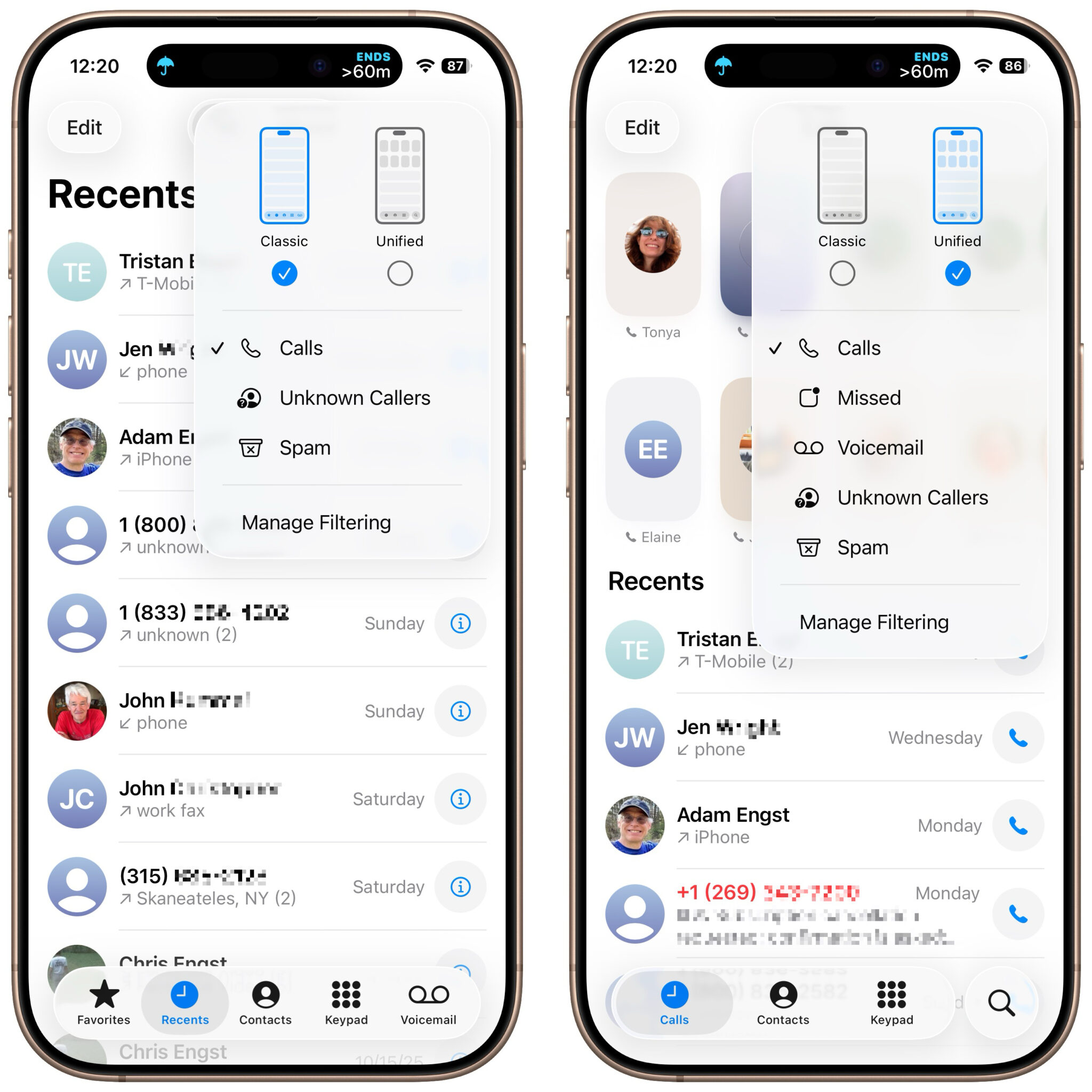
As tidbits.com suggests, the move toward Unified views is often a response to the limitations of mobile hardware. Because screen real estate is limited, the Unified view reduces the need for frequent “back” button usage, instead presenting a curated set of the most relevant information across different modules.
| Feature | Classic View | Unified View |
|---|---|---|
| Navigation | Hierarchical/Nested | Flat/Consolidated |
| Predictability | High (Fixed paths) | Variable (Dynamic content) |
| Speed | Slower (More taps) | Faster (Direct access) |
| Cognitive Load | Lower per screen | Higher per screen |
| Best For | Deep organization | Rapid triage and review |
Why the Distinction Between Views Matters for Users
The decision to offer both Classic and Unified views is rarely arbitrary. According to software development patterns, providing a “Classic” option is a strategy to maintain user retention among “power users” who have developed muscle memory for a specific layout. When a company introduces a “Unified” view, it is typically targeting new users or attempting to modernize the app’s efficiency.
The NMUG presentation is significant because the transition between these views can be jarring. Users who rely on the Classic view may find the Unified view overwhelming due to the increased density of information. Conversely, users who prefer the Unified view may find the Classic view tedious and outdated.
“The challenge in mobile interface design is balancing the need for comprehensive data access with the physical constraints of a handheld device.”
By analyzing these views, the NMUG helps users identify their “user persona.” A “Triage User”—someone who needs to quickly scan and act on a variety of tasks—will likely benefit from the Unified view. An “Architect User”—someone who spends more time organizing and structuring data—may find the Classic view more stable and reliable.
The Role of User Groups like NMUG in Software Adoption
The existence of the NMUG (as referenced by tidbits.com) highlights a critical aspect of the professional software ecosystem: the gap between official documentation and real-world application. While a software developer may provide a manual explaining how to switch to a Unified view, they rarely explain why a user should do so based on their specific professional workflow.
User groups fill this void by providing:
- Peer-to-Peer Validation: Users can see how others in their same industry use the Unified view to solve similar problems.
- Edge-Case Discovery: Community presentations often reveal bugs or “hidden” features that are not mentioned in official release notes.
- Workflow Optimization: Instead of just learning the tool, users learn a “methodology” for using the tool.
This community-driven approach to software education ensures that the transition from Classic to Unified views is based on utility rather than just following a trend in UI design. related explainer on user group dynamics
Potential Implications of the Unified View Shift
The move toward Unified views is not without risk. When an application consolidates its views, it often relies on algorithms or “smart filters” to decide what information is most important to show the user. This introduces a layer of abstraction between the user and their data.
According to UX (User Experience) research, this can lead to “information blindness,” where a user overlooks a critical piece of data because the Unified view filtered it out or buried it under a more “relevant” item. The Classic view avoids this by showing everything in its designated folder or category, regardless of perceived relevance.
The NMUG presentation will likely address these trade-offs. Users will need to consider if the speed of a Unified view justifies the potential loss of granular control. For those managing high-stakes data—such as legal deadlines or medical records—the predictability of the Classic view may remain the superior choice.
Technical Context: The Evolution of Mobile Interface Design
To understand why the Phone App is offering these two views, it is helpful to look at the broader history of mobile OS development. Early mobile apps were essentially “shrunken” versions of desktop software. This led to the “Classic” style of deep nesting, as developers simply ported the desktop folder structure to the phone.
As smartphones evolved, developers realized that “thumb-driven” navigation is fundamentally different from “mouse-driven” navigation. The Unified view is a result of this evolution. It prioritizes the “reach zone”—the area of the screen most easily accessed by a thumb—and minimizes the need to reach for the top-left “back” button, which is a hallmark of Classic hierarchical navigation.
This evolution is seen across many major platforms. For instance, many email clients have moved from a “Folder-based” (Classic) approach to a “Unified Inbox” (Unified) approach. The goal is to reduce the mental friction of switching between different accounts or categories, allowing the user to focus on the action rather than the location of the data.
Common Misconceptions About Classic and Unified Views
There are several common misunderstandings regarding these interface options that the NMUG presentation is likely to correct.
Misconception 1: Unified View is “Newer” and Therefore “Better”
Many users assume that the Unified view is an upgrade and that the Classic view is a legacy feature destined for removal. However, according to software design logic, “better” is subjective. For users with complex organizational systems, the Classic view is often more powerful because it preserves the integrity of the user’s original structure.
Misconception 2: Switching Views Changes the Data
A common fear among users is that switching from Classic to Unified view will rearrange, delete, or merge their actual data. In reality, these views are simply different “lenses” through which the same database is viewed. Changing the view changes the presentation, not the source.
Misconception 3: Unified View is Only for Beginners
While the Unified view is often more intuitive for new users, many power users prefer it for “high-velocity” work. The ability to see a consolidated view of all urgent tasks across ten different projects is a power-user feature, not a simplification for novices.
How to Prepare for the NMUG Presentation
For users planning to attend the session mentioned by tidbits.com, certain preparations can maximize the value of the presentation. The NMUG typically encourages an active approach to learning.
- Audit Current Workflow: Users should note how many “taps” it currently takes to perform their most frequent actions in the Classic view.
- Identify Pain Points: Note instances where the current view feels restrictive or where information feels “hidden” in a sub-menu.
- Test the Unified View: If the app allows, users should attempt to use the Unified view for a set period (e.g., 48 hours) to identify where their muscle memory fails.
By coming to the presentation with specific examples of friction, users can ask the presenters for targeted advice on whether a switch to the Unified view would solve their specific problem or create new ones.
Frequently Asked Questions
What is the main difference between Classic and Unified views?
According to the context of the NMUG presentation, the Classic view uses a hierarchical, nested structure for navigation, while the Unified view consolidates information from multiple sources into a single, flatter interface to increase speed and reduce navigation steps.
Will switching to the Unified view delete my organized folders?
No. As tidbits.com and general software principles indicate, these are different ways of visualizing the same data. Your underlying organization, folders, and tags remain intact regardless of which view you select.
Which view is better for power users?
It depends on the user’s goals. Those who prioritize deep organization and strict hierarchy usually prefer the Classic view. Those who prioritize rapid triage and cross-category visibility typically find the Unified view more effective.
Is the Unified view available on all versions of the app?
Availability depends on the specific version of the Phone App. Users should check for the latest updates to ensure they have access to both view options before attending the NMUG presentation.
Why does the NMUG hold a presentation on this instead of just using a manual?
User groups provide practical, experience-based guidance. While a manual explains the “how,” the NMUG explains the “why” and “when,” helping users apply the software to their specific professional workflows through peer-to-peer learning.
The upcoming session serves as a critical touchpoint for users navigating the tension between traditional organization and modern mobile efficiency. As the software continues to evolve, the ability to toggle between these views allows users to adapt their interface to the task at hand—using the Classic view for planning and the Unified view for execution.
