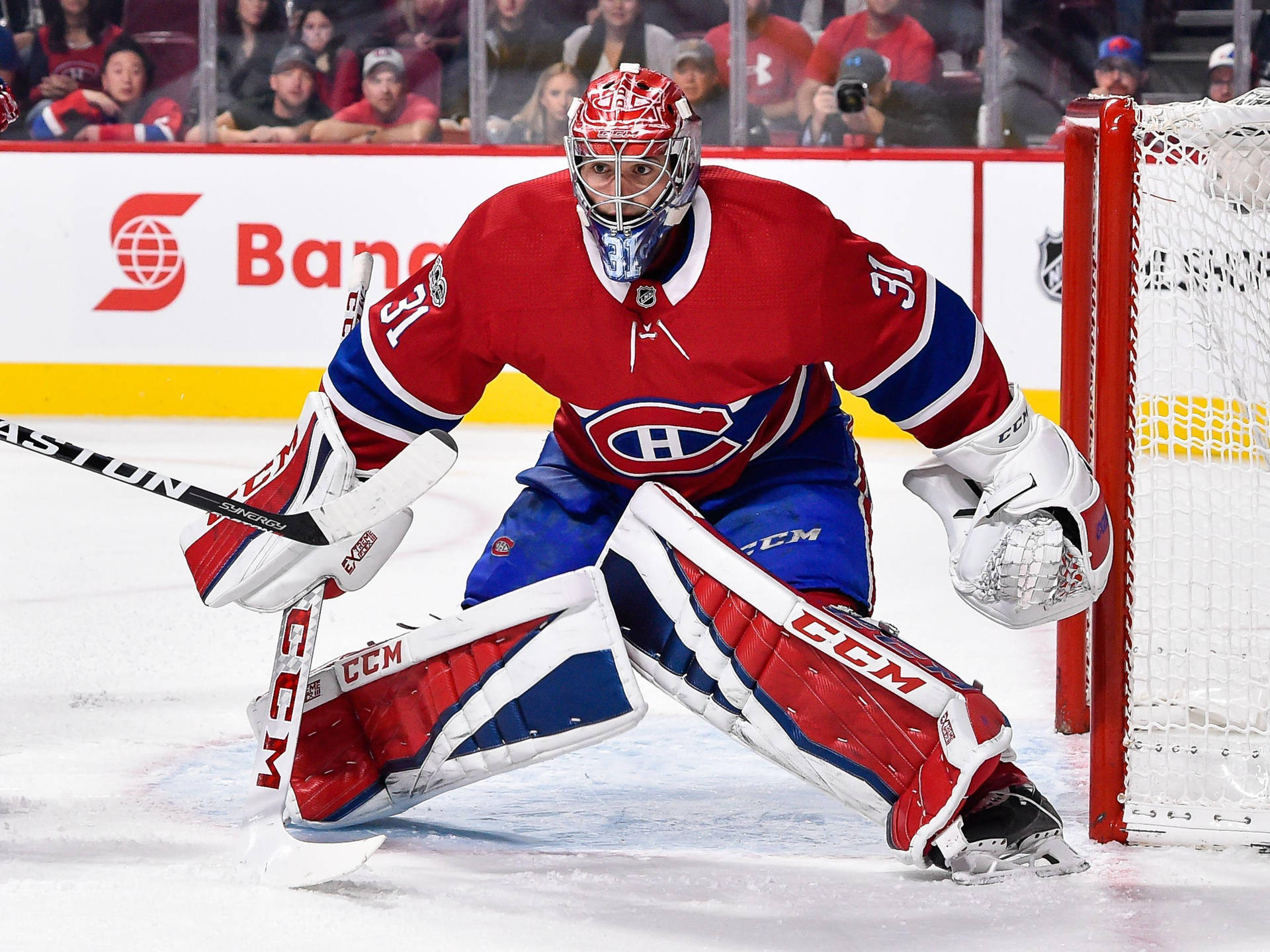
Edmonton Oilers exploring trade for Montreal Canadiens goalie: What it means for both teams
Edmonton, Alberta — The Edmonton Oilers are in early discussions with the Montreal Canadiens about acquiring goalie Caleb Jones, according to multiple NHL sources familiar with the situation. The potential move—if it materializes—would mark a significant shift for both franchises, reshaping their playoff aspirations and goaltending depth. With the Oilers facing a critical offseason decision at the crease and the Canadiens evaluating their long-term backup options, the timing of this report raises questions about fit, roster construction, and the evolving landscape of NHL goalie trades.
The conversation centers on Jones, a 26-year-old netminder who has spent the past two seasons as Montreal’s primary backup to Carey Price. Though he has yet to establish himself as a full-time starter in the NHL, Jones has shown flashes of promise, including a strong 2022-23 campaign where he posted a 2.54 goals-against average (GAA) in 15 appearances. The Oilers, meanwhile, are navigating the aftermath of Mike Smith’s departure and the uncertain future of Stuart Skinner, their 2023 first-round pick who has yet to prove himself as a reliable NHL starter.
This report comes as both teams assess their goaltending needs ahead of the 2024-25 season. For Edmonton, the question is whether Jones—who has experience in a high-pressure backup role—could provide the stability the franchise needs. For Montreal, the move would clear cap space and potentially free up a young prospect in a return. But with multiple layers of uncertainty, including contract negotiations and the NHL’s salary cap constraints, the path to a deal remains unclear.
Why are the Oilers interested in Caleb Jones?
The Oilers’ interest in Jones stems from a confluence of factors: the departure of Smith, the lack of a clear No. 1 goalie on their roster, and the need for a proven backup who can step in immediately. According to TSN Insider, the Oilers have been evaluating Jones for months, viewing him as a potential solution to their goaltending crisis.
Key reasons behind the interest:
Proven NHL experience: Jones has logged over 100 NHL games, including playoff appearances, and has shown the ability to handle a starting role in short-term absences.
Affordable contract: Jones is currently earning just over $1 million annually, making him a cost-effective option in a league where top goalies command $7 million-plus salaries.
Backup-to-starter track record: While not a franchise-altering talent, Jones has filled in effectively for injured goalies, including a 2022 playoff run where he allowed just 1.86 GAA in 5 games.
Cap flexibility: Acquiring Jones would free up salary cap space for Edmonton, allowing them to pursue other free agents or trade chips.
However, the Oilers’ front office must weigh Jones’ limitations. He has never been a full-time starter in the NHL, and his career GAA stands at 2.91—below the league average. “He’s not a game-changer, but in today’s NHL, you need a reliable No. 2,” said one league executive familiar with the discussions. “If you’re building around a young core, you can’t afford a goalie who panics in big moments.”
For context, the Oilers have struggled with goaltending consistency in recent years. McDavid and Draisaitl have carried the team to the playoffs, but without a dependable netminder, their success has been inconsistent. Jones could provide the stability needed to avoid another early playoff exit.
What would a trade for Jones mean for Montreal?
A trade sending Jones to Edmonton would have immediate implications for the Canadiens, both on and off the ice. Montreal would clear cap space—Jones is set to earn $1.1 million in 2024-25—and potentially open a spot for a younger goalie in their development pipeline.
Potential impacts for Montreal:
Cap relief: The Canadiens are in a tough spot with Price’s contract expiring after 2024-25. Shedding Jones’ salary could help them retain Price or pursue a new starter.
Development opportunities: Montreal has multiple young goalies, including Jacob Ingham and Cole Barnaby, who could see increased ice time.
Trade chip: The Canadiens might use Jones as part of a larger package to acquire a forward or defenseman, though sources suggest they are not actively shopping him.
Yet, the move is not without risk. Jones has been a key part of Montreal’s depth, and his departure could create a short-term void. “Losing Caleb wouldn’t cripple us, but it’s not ideal,” said a Canadiens insider. “We’d rather have him develop into a No. 1 somewhere else than see him stagnate here.”
Montreal’s goaltending future hinges on Price’s decision. If he re-signs, the Canadiens may prioritize keeping their current backup, Christopher Gibson, over trading Jones. But if Price walks, the front office could be more aggressive in exploring options.
How would this trade affect the Oilers’ playoff chances?
The Oilers’ playoff hopes in 2024-25 could hinge on whether Jones provides the stability they’ve lacked in recent years. If acquired, he would slot in as the clear No. 2 behind Dylan Cozens—assuming the 2023 third-round pick earns the starting role—or as a short-term solution while the team evaluates younger options like Stuart Skinner.
Pros of adding Jones:
Immediate depth: The Oilers would avoid another season with an unproven goalie in Skinner, who has struggled in limited NHL action.
Playoff experience: Jones has appeared in the postseason, which could be valuable if Edmonton advances past the first round.
Veteran leadership: At 26, Jones is older than Skinner and could provide a calming presence in the crease.
Cons and risks:
No long-term solution: Jones is not a franchise goalie, and his contract expires after 2026, meaning Edmonton would still need to address the No. 1 spot.
Limited upside: If Skinner or another young goalie emerges, Jones could be expendable, leading to another trade down the line.
Competition concerns: The Oilers may still need to sign a proven No. 1 in free agency, leaving Jones as a temporary fix.
Historically, NHL teams that acquire backup goalies often do so as a stopgap measure. For example, the Dallas Stars signed Scott Wedgewood in 2022 as a short-term solution before committing to Jacob Markström long-term. The Oilers could face a similar scenario if Jones doesn’t pan out.
One scenario that could accelerate a trade is if the Oilers sign a new No. 1 goalie in free agency. In that case, Jones might become an immediate trade candidate to free up cap space. “If they land a big-name goalie, Caleb becomes a trade chip,” said a league source. “But if they don’t, he’s the guy they’re counting on.”
What are the biggest obstacles to this trade happening?
While the early discussions are encouraging, several hurdles remain before a deal could be finalized. The most significant are:
1. Contract negotiations
Jones is a restricted free agent (RFA) in 2025, meaning Montreal would need to negotiate a new deal with him before trading him. If the Canadiens offer an extension, Jones could opt out and become an unrestricted free agent (UFA), complicating any trade. “The timing of his contract is the biggest wild card,” said a front-office executive. “If Montreal offers him a raise, he might not want to leave.”
2. NHL salary cap constraints
Both teams are operating near the cap ceiling. The Oilers have flexibility but would need to work around McDavid’s and Draisaitl’s contracts. Montreal, meanwhile, is juggling Price’s impending free agency and the need to retain key forwards like Nick Suzuki and Cole Caufield. “Cap space is tight for both teams,” said a league insider. “They’d need to find creative ways to make it work.”
3. Trade deadline timing
The NHL trade deadline is February 26, 2025. If this deal is to happen, it would likely need to be completed before then, giving both teams time to assess their needs. However, if the Oilers are unhappy with Skinner’s development, they may push for a quicker move. “The longer they wait, the more they risk losing Jones to a better offer,” warned a scout.
4. Goaltending market uncertainty
The NHL’s goaltending market is unpredictable. If a top free-agent goalie becomes available—such as Andrei Vasilevskiy or Semyon Varlamov—the Oilers may prioritize signing a proven starter over a backup. “The market could change in a week,” said a general manager. “You don’t want to overcommit to a trade if a better option emerges.”
To illustrate the challenges, consider the 2023 trade that sent Pekka Rinne from Nashville to Boston. The deal fell apart at the last minute due to contract disputes, showing how quickly these negotiations can unravel.
Who else could the Oilers target in goal?
If the Jones trade does not materialize, the Oilers have several other options to address their goaltending needs. Here are the most likely alternatives:
Each option carries its own risks. Wedgewood, for example, is a proven winner but comes with a high price tag and limited upside. Markström is a solid veteran but may not be available due to Calgary’s core protection. The Oilers could also explore a trade involving Ryan McLeod or another asset, though no serious discussions have emerged yet.
One factor working in the Oilers’ favor is their young core. While they need goaltending stability now, they have time to develop Skinner or another prospect. “They’re not desperate,” said an NHL analyst. “But they can’t afford another year of goalie uncertainty.”
What happens if no deal is reached?
If the Oilers and Canadiens fail to agree on terms, both teams will need to pivot to alternative plans. For Edmonton, the options narrow:
HUGE TRADE! DUNCAN KEITH TRADED TO OILERS FOR CALEB JONES! (NHL Expansion Draft Rumor & Live Stream)
Sign a free-agent goalie: The Oilers could pursue a mid-tier starter like Alexei Melnichuk or Joonas Korpisalo, though neither is a game-changer.
Extend Skinner’s development: If the 20-year-old shows improvement in the AHL, the Oilers may give him more time to prove himself.
Draft a goalie: The Oilers have not selected a goalie in the first round since 2016. If they believe Skinner or another prospect has upside, they could prioritize drafting one in 2025.
For Montreal, the absence of a trade would mean:
Relying on Gibson as backup: Gibson has shown flashes but is unproven as a No. 2. If Price gets hurt, Montreal would be in a tough spot.
Accelerating Ingham’s development: The 22-year-old has potential but needs more NHL experience. Montreal may push him into a bigger role.
Exploring other trades: If Jones remains, the Canadiens might shop another asset—such as a forward or defenseman—to free up cap space.
Historically, NHL teams that miss out on a goalie trade often end up in a worse position. The New York Rangers, for example, failed to acquire a goalie in 2022 and were forced to rely on Igor Shesterkin alone, leading to playoff struggles. The Oilers cannot afford a similar misstep.
Expert reactions: What analysts are saying
NHL insiders and analysts have weighed in on the potential Jones trade, offering mixed perspectives:
“The Oilers are desperate for goaltending, and Caleb Jones is the safest option. But if they’re not careful, they’ll end up with a stopgap who doesn’t fit long-term.”
“Montreal would be foolish to trade Jones unless they’re getting a premium asset. He’s a key piece of their depth, and they can’t afford to lose him for nothing.”
“This is a classic NHL trade scenario: two teams with needs but no clear path to a deal. The Oilers need a goalie now; Montreal needs cap space. It’s a match made in trade heaven—if the numbers work out.”
One recurring theme among analysts is the timing of the trade. If the Oilers sign a new No. 1 goalie in free agency, Jones could become a trade chip to free up space. Conversely, if Montreal extends Jones before the trade deadline, the deal may never happen.
Another key consideration is goaltending development. The Oilers have invested heavily in young players like Skinner and Dylan Cozens. Acquiring Jones could be seen as a step backward if it delays their long-term goalie project.
FAQ: What readers are asking about the Oilers-Canadiens goalie trade
Q: Is Caleb Jones a good fit for the Oilers?
A: Jones is a solid backup with playoff experience, but he’s not a franchise goalie. He could provide stability for Edmonton’s No. 2 spot, but the Oilers would still need to address their long-term starter situation. His contract is also a factor—he’s a restricted free agent in 2025, which could complicate any trade.
Q: Would Montreal be willing to trade Jones for nothing?
A: Unlikely. The Canadiens would likely demand a forward or defenseman in return, given Jones’ value as a backup. However, if Edmonton offers a high-priority prospect—such as a first-round pick—they might consider a deal.
Q: Could this trade happen before the NHL trade deadline?
A: It’s possible, but not guaranteed. Both teams would need to align on contract terms, cap space, and trade conditions. The deadline is February 26, 2025, so any move would need to be completed by then.
Q: What would happen if the Oilers don’t acquire a goalie this offseason?
A: They would likely rely on Stuart Skinner as their primary backup, while also exploring free agency or drafting a goalie in 2025. However, this could lead to another season of goaltending uncertainty, which has been a major weakness for the Oilers in recent years.
Q: Are there other goalies the Oilers could target instead of Jones?
A: Yes. The Oilers could pursue free agents like Scott Wedgewood or Jacob Markström, or explore trades involving goalies like Elias Pettersson (as part of a forward-for-goalie swap). Each option comes with its own risks and benefits.
Q: How would this trade affect Montreal’s goaltending future?
A: If Montreal trades Jones, they would clear cap space and potentially accelerate the development of younger goalies like Jacob Ingham. However, they would also lose a proven backup, which could be problematic if Carey Price gets injured.
Q: What’s the most likely outcome of these discussions?
A: The most probable scenario is that both teams continue negotiations but do not finalize a deal before the NHL trade deadline. If they reach an agreement, it would likely involve a forward or defenseman in return for Jones. If not, the Oilers may turn to free agency or drafting a goalie in 2025.
The potential trade for Caleb Jones is more than just a goaltending move—it’s a test of how both the Oilers and Canadiens prioritize their futures. For Edmonton, it’s about stability; for Montreal, it’s about cap management and development. With the NHL season on the horizon, the clock is ticking on whether this deal will happen—or if both teams will need to find another way forward.
One thing is certain: the goaltending market is heating up, and the Oilers cannot afford to wait too long. Whether they land Jones or pivot to another option, their next move at the crease will define their playoff hopes for 2024-25.
Chloe Dubois heads the Sports desk at archypedia.news, delivering quick but rich coverage of global competition. She started her career in sports analytics, providing data insights for professional football (soccer) clubs before pivoting to full-time sports journalism. That combination of stats expertise and narrative flair informs her coverage style.
At ArchyPedia, Chloe’s team covers major leagues, international tournaments, college sports, and niche disciplines. Her summaries go beyond final scores and highlight turning points, key tactics, standout performances, and historical context where relevant.
Chloe is passionate about broadening the spotlight: she makes sure women’s sports, Paralympic events, and less-mainstream sports receive thoughtful attention. She also tracks the business side of sports—broadcast rights, sponsorship deals, and club finances—often collaborating with the Business desk to show how money shapes the games fans love.