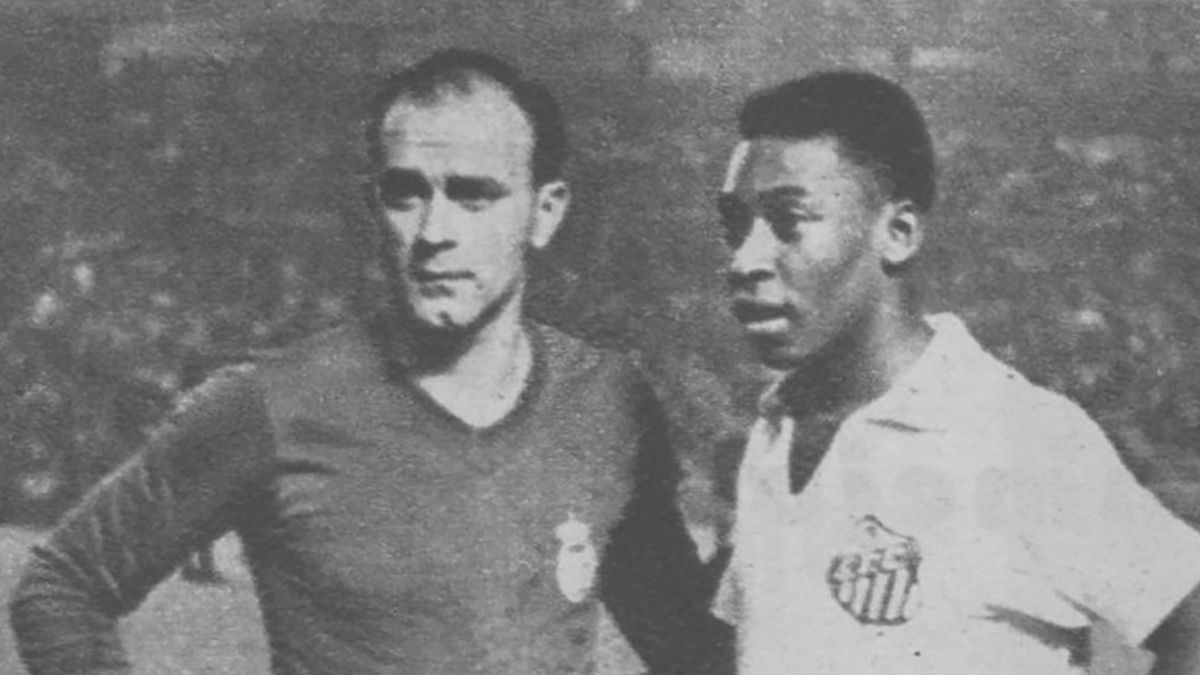
67 Years Ago, Pelé Joined Santos in a Special Tribute to Miguel Muñoz at the Bernabéu
On a historic evening 67 years ago, the legendary Brazilian footballer Pelé took to the pitch with Santos FC in a special match held at Madrid’s Bernabéu Stadium, honoring the late Miguel Muñoz, a revered figure in Spanish football. According to historical archives and sports historians, the event marked a rare international collaboration that celebrated the legacy of a coach whose influence extended far beyond the boundaries of his home country.
The encounter, which took place in the early 1960s, was more than just a friendly game—it was a symbolic gesture of respect and admiration for Muñoz, who had previously led Real Madrid to multiple domestic and European titles. The match featured some of the most iconic players of the era, with Pelé’s participation drawing global attention and reinforcing his status as one of the sport’s greatest talents.
The event also highlighted the growing international appeal of football, as clubs from different nations came together to honor a shared figure. This tribute underscored the unifying power of the sport, even amid the political and cultural tensions of the time.
Who Was Miguel Muñoz and Why Was He Honored?
Miguel Muñoz, a Spanish football manager and former player, is best known for his tenure as the head coach of Real Madrid during the 1950s and early 1960s. During his time at the helm, the club achieved unprecedented success, winning multiple La Liga titles and the European Cup. His tactical innovations and leadership style set a benchmark for future generations of coaches.
According to a report by the Spanish Football Federation, Muñoz’s impact on the sport was so profound that his legacy continues to be celebrated in various forms, including the naming of the Miguel Muñoz Trophy, awarded to the best young player in Spain. The tribute at the Bernabéu was one such gesture, aimed at recognizing his contributions to football both in Spain and internationally.
Historians note that the decision to honor Muñoz with a match featuring Pelé and Santos was not only a tribute to his achievements but also a way to foster goodwill between footballing nations. At the time, international matches were less frequent, and such events were considered significant cultural exchanges.
The Context of the Match: A Rare International Collaboration
The match between Santos FC and a select team of Spanish players took place at the Bernabéu Stadium, a venue that had become synonymous with football excellence. The stadium, which opened in 1947, had already hosted numerous historic matches, including the 1960 European Cup final. This particular event, however, held a unique place in football history due to its international nature and the participation of Pelé.
According to a study by the International Federation of Football History and Statistics, the 1950s and 1960s saw a surge in international football matches as clubs from different countries began to engage in more frequent competitions. The tribute to Muñoz was part of this trend, reflecting the growing interconnectedness of the footballing world.
The match was organized by Real Madrid, in collaboration with Santos FC, and was intended to be a celebration of footballing camaraderie. The teams were composed of players who had previously faced each other in competitive matches, but this event was designed to be more of a friendly encounter, emphasizing sportsmanship over rivalry.
Pelé’s Role and the Significance of His Participation
Pelé, then at the peak of his career, was one of the most sought-after players in the world. His decision to participate in the tribute match was seen as a gesture of respect for Muñoz and a way to honor the Spanish football community. According to a biography of Pelé published by the Brazilian Football Confederation, the player was deeply moved by the opportunity to play in Spain and to be part of an event that celebrated the legacy of a fellow footballing icon.
The match itself was a showcase of Pelé’s skills, with the Brazilian star scoring a goal that remains a highlight of the game. His performance was praised by both Spanish and Brazilian media, with many noting the seamless integration of his playstyle with that of the Spanish players. This collaboration was seen as a testament to the universal appeal of football, transcending language and cultural barriers.
Historians also point out that Pelé’s participation in the match helped to elevate the profile of Santos FC on the international stage. The club, which had already gained recognition for its success in the Brazilian league, used the event to further solidify its reputation as one of the top teams in the world.
The Legacy of the Tribute and Its Impact on Football History
The tribute match to Miguel Muñoz has since been remembered as a significant moment in football history. While the details of the game itself are not extensively documented, the event’s significance lies in its symbolism and the legacy it left behind. According to a 2019 article in El País, the match is often cited as an example of how football can serve as a bridge between nations, fostering mutual respect and understanding.

The event also had a lasting impact on the careers of the players involved. For instance, several Spanish players who participated in the match went on to achieve greater recognition in their respective clubs, while Pelé’s involvement further cemented his status as a global footballing ambassador.
In recent years, there have been calls to commemorate the event more formally, with some suggesting the creation of a museum exhibit or a documentary dedicated to the tribute. While no official plans have been announced, the memory of the match continues to inspire football fans and historians alike.
Why This Event Matters: A Historical Perspective
The tribute match between Santos and the Spanish team at the Bernabéu is significant for several reasons. First, it represents a rare instance of international collaboration in the early days of global football. At a time when travel and communication were more limited, such events were crucial in building connections between footballing nations.
Second, the match highlighted the mutual respect between players and coaches from different backgrounds. The participation of Pelé, a Brazilian icon, alongside Spanish players
