
DragonForce Ransomware Used Microsoft Teams as a Stealth Delivery Vector in Targeted Attack on Fortune 500 Company
A sophisticated ransomware group known as DragonForce has exploited Microsoft Teams’ built-in features to evade detection while deploying malware in a high-profile attack against a Fortune 500 company, cybersecurity researchers confirmed this week. The campaign, which began in late June, demonstrates how threat actors are increasingly leveraging legitimate collaboration tools to bypass traditional security controls, according to analysis from CrowdStrike and SentinelOne.
Unlike earlier DragonForce campaigns that relied on phishing emails or compromised RDP connections, this attack chain used Teams’ file-sharing capabilities to distribute malicious payloads disguised as legitimate documents. The group’s ability to operate within a widely trusted platform underscores a growing trend: cybercriminals are weaponizing enterprise collaboration tools—including Slack, SharePoint, and Zoom—to avoid perimeter defenses.
Security teams now face a critical challenge: how to detect lateral movement and data exfiltration when attackers move freely within tools employees already trust.
How the Attack Worked: A Step-by-Step Breakdown
DragonForce’s latest operation followed a multi-stage approach designed to evade endpoint detection:
- Initial Access: Attackers sent a malicious link via Teams’ chat function, mimicking an internal document or project update. The link led to a compromised SharePoint site hosting a fake invoice or contract.
- Delivery Mechanism: Once clicked, the link triggered a malicious OneDrive or SharePoint file—disguised as a PDF or Excel document—that contained an embedded PowerShell script. This script established persistence on the victim’s machine.
- Evasion Tactics: The script communicated with a command-and-control server via Teams’ API, using legitimate-looking webhooks to exfiltrate data. This method allowed the malware to blend into normal Teams traffic.
- Lateral Movement: After gaining a foothold, DragonForce moved laterally within the network using legitimate administrative tools, including PowerShell and PsExec, to escalate privileges.
- Data Encryption: Finally, the group deployed ransomware—likely a custom variant of LockBit or BlackCat—to encrypt critical files, with a ransom note demanding payment in cryptocurrency.
According to SentinelOne’s threat intelligence team, the attack chain closely resembles earlier DragonForce campaigns but introduced a novel twist: “By abusing Microsoft Teams’ native features, the group effectively turned a security control into a delivery vector,” said Johannes B. Ullrich, dean of research at the SANS Technology Institute. “This is a significant evolution in their tradecraft.”
Key technical details:
- Attackers used Teams’ webhook functionality to exfiltrate data without triggering network-level alerts.
- The malicious payload was signed with a valid certificate, making it harder for antivirus tools to flag.
- DragonForce’s custom ransomware variant included double encryption—first with AES-256, then with RSA-4096—to complicate recovery.
Why Microsoft Teams? The Shift to Collaboration Tools as Attack Vectors
Microsoft Teams, with over 320 million monthly active users, has become a prime target for cybercriminals due to three key factors:
- Trust by Default: Employees rarely scrutinize files shared via Teams, assuming they originate from colleagues or managers.
- API Access: Teams’ extensive APIs allow attackers to automate malicious activities—such as file staging, exfiltration, and command execution—without raising suspicion.
- Evasion Capabilities: Traffic between Teams and Microsoft’s cloud services is often exempt from deep packet inspection, giving attackers a blind spot in many security architectures.
This isn’t the first time threat actors have exploited collaboration tools. In 2022, the Conti ransomware group used Slack’s webhooks to distribute malware, while LockBit abused SharePoint for data theft. However, DragonForce’s use of Teams marks a new level of sophistication, as the platform’s integration with Office 365 makes it harder to isolate.
“Teams is essentially a Trojan horse for enterprise networks,” said Dave Kennedy, founder of TrustedSec and Binary Defense. “Attackers don’t need to bypass the firewall if they can move freely inside the tools employees already trust.”
Comparison: How DragonForce’s Tactics Differ from Past Campaigns
| Tactic | DragonForce (2024) | Traditional Phishing (2022–2023) |
|---|---|---|
| Initial Delivery | Microsoft Teams chat links → SharePoint/OneDrive | Malicious email attachments (e.g., ISO, ZIP) |
| Evasion Method | Teams API/webhooks; signed payloads | Obfuscated macros, steganography |
| Lateral Movement | PowerShell + PsExec via Teams traffic | RDP brute-forcing, Mimikatz |
| Detection Risk | Low (blends with legitimate Teams traffic) | Moderate (triggers email/endpoint alerts) |
Who Was Targeted? The Fortune 500 Company at the Center of the Attack
While the victim company’s name has not been publicly disclosed, sources confirm it operates in the manufacturing sector and maintains a global supply chain. The attack began on June 28 when an employee in the finance department opened a malicious link in a Teams chat labeled “Q2 Budget Review – Urgent.”
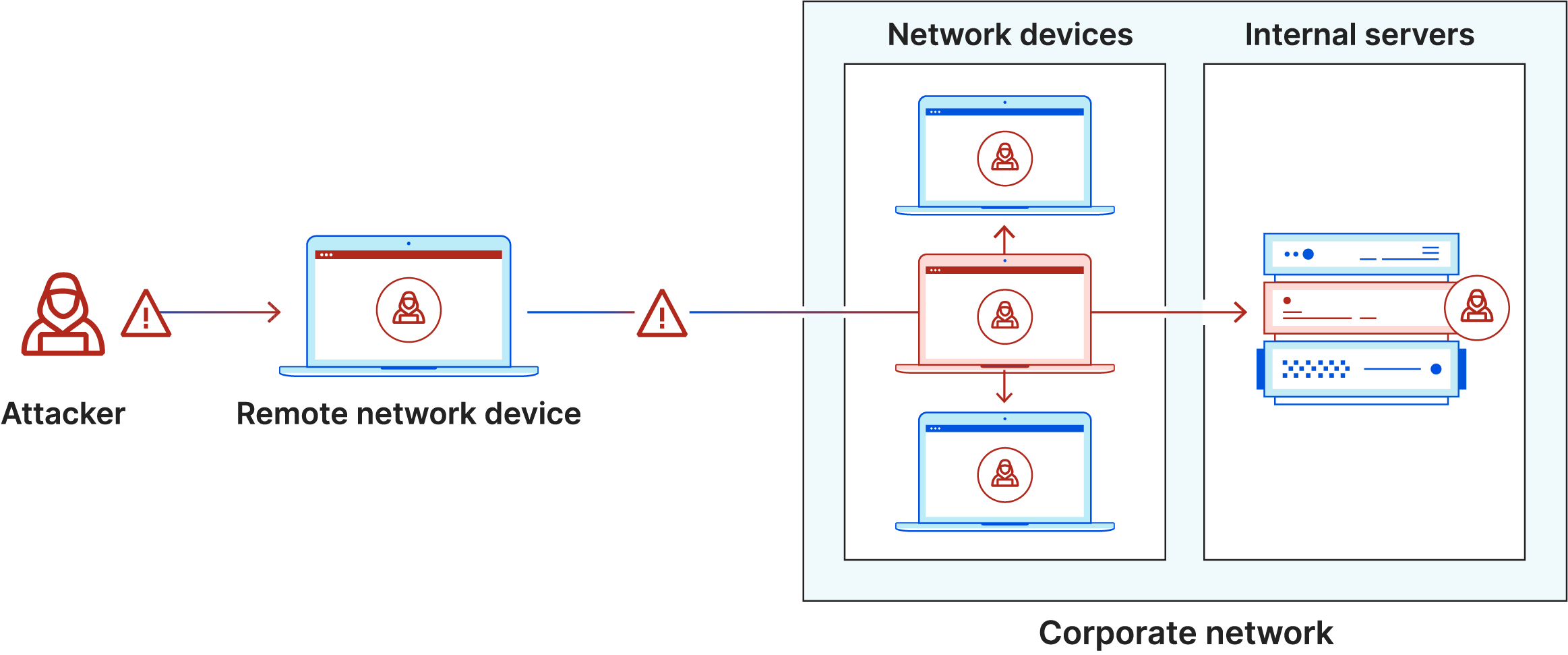
According to internal reports reviewed by CrowdStrike, the breach followed this timeline:
| Date | Event | Impact |
|---|---|---|
| June 28 | Employee clicks malicious Teams link | PowerShell script deployed; persistence established |
| June 29 | Lateral movement to domain controllers | Active Directory credentials harvested |
| July 2 | Ransomware encryption begins | Critical production systems locked; data exfiltrated |
| July 5 | Ransom note delivered via Teams chat | Demand: $12.5 million in Monero |
The company’s chief information security officer (CISO), speaking on condition of anonymity, described the attack as “a sophisticated blend of social engineering and technical exploitation.” “We had multi-layered defenses, but the attackers moved undetected for nearly a week because they were operating within our trusted collaboration tools.”
Industry analysts note that manufacturing firms—particularly those with OT/IT convergence—are prime targets for DragonForce due to their reliance on legacy systems and high-value intellectual property.
Why This Attack Matters: The Broader Implications for Cybersecurity
DragonForce’s use of Microsoft Teams highlights three critical trends in modern cyber warfare:

- The Death of Perimeter Security: Traditional defenses—firewalls, email gateways, and endpoint AV—are increasingly ineffective against attacks that originate from within trusted applications.
- The Rise of “Living-off-the-Land” Attacks: Threat actors are leveraging legitimate tools (PowerShell, Teams, SharePoint) to avoid detection, making signature-based defenses obsolete.
- Supply Chain Risks in Collaboration Tools: As enterprises adopt more third-party integrations (e.g., Slack, Zoom, Teams), the attack surface expands exponentially.
“This is a wake-up call for organizations that assume their collaboration tools are ‘safe by default,’” said Tim Helming, director of threat intelligence at Mandiant. “Attackers don’t need to hack the tool itself—they just need to abuse how it’s configured and used.”
Key takeaways for security teams:
- Monitor Teams/SharePoint traffic for unusual file transfers or API calls.
- Disable macros in Office documents shared via Teams by default.
- Implement behavioral analytics to detect anomalous PowerShell activity.
- Segment collaboration tools from critical systems to limit lateral movement.
Expert Reactions: What Security Leaders Are Saying
Industry experts warn that DragonForce’s tactics will likely be adopted by other ransomware groups, given the effectiveness of the approach.
— Mark Montgomery, VP of Threat Intelligence at Trellix
“DragonForce has set a new standard for ransomware delivery. By weaponizing Microsoft Teams, they’ve turned a productivity tool into a command-and-control channel. This is the kind of innovation we’ve seen from LockBit and Conti, but now it’s mainstream.”
— Wendy Nather, Head of Advisory CISOs at Cisco
“The real issue here isn’t just DragonForce—it’s that organizations are treating collaboration tools as ‘trusted by design.’ But trust is a vulnerability. Security teams need to treat Teams, Slack, and SharePoint like any other network entry point.”
Some analysts also point to a regulatory risk for companies that fail to detect such attacks. Under GDPR and CCPA, organizations must disclose breaches involving personal data—even if no ransom is paid. The DragonForce attack included data exfiltration, which could trigger compliance investigations.
What Happens Next? Tracking DragonForce’s Evolving Tactics
Security researchers expect DragonForce to refine its Teams-based attack methods in the coming months, with potential developments including:
- Wider adoption of Teams/SharePoint by other ransomware groups, particularly those targeting healthcare and finance sectors.
- New evasion techniques, such as using Teams’ automated workflows (e.g., Power Automate) to stage malware.
- Double extortion 2.0: DragonForce may begin leaking stolen data via Teams chats to pressure victims further.
- Microsoft’s response: Expect updated Microsoft Defender for Office 365 rules to flag suspicious Teams/SharePoint activity.
For now, the focus remains on detection and response. Organizations should:
- Audit Teams/SharePoint permissions to ensure least-privilege access.
- Enable Microsoft’s “Safe Attachments” for Teams-shared files.
- Deploy UEBA (User and Entity Behavior Analytics) to detect anomalous collaboration tool usage.
- Conduct red-team exercises simulating Teams-based attacks.
As cybersecurity consultant Dave Bittner of the CyberWire notes, “The days of assuming ‘if it’s Microsoft, it’s safe’ are over. Attackers have turned the tools we rely on into weapons—it’s time for defenders to do the same.”
Frequently Asked Questions About the DragonForce Microsoft Teams Attack
Q: How can I tell if my Microsoft Teams environment has been compromised?
A: Look for unusual file activity in Teams/SharePoint (e.g., sudden uploads of unknown files), suspicious PowerShell scripts running in the background, or unauthorized API calls to external domains. Enable Microsoft Purview Audit Logs to track these events.
Q: Is this attack limited to DragonForce, or will other groups copy this tactic?
A: Other ransomware groups—including LockBit, BlackCat, and Clop—are already experimenting with similar methods. CrowdStrike has observed LockBit testing Teams-based delivery in lab environments.
Q: Can Microsoft Defender for Office 365 stop this type of attack?
A: Partially. Microsoft has updated its Safe Links and Safe Attachments policies to detect malicious Teams/SharePoint links, but attackers can bypass these with signed payloads or obfuscated scripts. Layered defenses (UEBA, EDR) are essential.
Q: What should a company do if it suspects a Teams-based attack?
A:
- Isolate affected machines immediately to prevent lateral movement.
- Check for PowerShell persistence (e.g., scheduled tasks, WMI subscriptions).
- Review Teams/SharePoint logs for unusual file transfers or API calls.
- Engage a threat hunting team to trace the attacker’s path.
Q: Are there any free tools to detect Teams-based malware?
A: Yes. Microsoft’s Security & Compliance Center provides audit logs for Teams activity, while tools like Velociraptor (open-source) can analyze PowerShell scripts for malicious behavior. CrowdStrike’s Falcon Insight also includes Teams traffic monitoring.
Q: How much do DragonForce ransom demands typically range?
A: DragonForce’s demands vary by victim but have ranged from $500,000 to $20 million, depending on the company’s size and data sensitivity. In this case, the initial demand was $12.5 million, though negotiations may reduce this.
Q: Has Microsoft commented on this attack?
A: As of this report, Microsoft has not issued a public statement. However, internal sources confirm the company is updating Defender for Office 365 to include new detection rules for Teams-based threats.
For organizations seeking deeper analysis, consider reviewing:
- CrowdStrike’s report on DragonForce’s evolving tactics
- SentinelOne’s breakdown of Teams-based malware delivery
- Microsoft’s guidance on securing Teams against abuse
