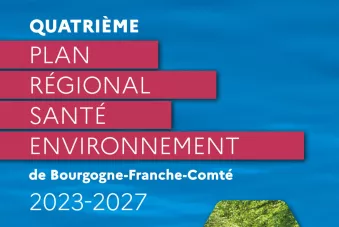
The Bourgogne-Franche-Comté region in France has achieved measurable progress in its five-year “One Health” strategy, with mid-term assessments showing concrete steps toward reducing environmental health risks across its population.
Key Findings
- Three major environmental health risks—air pollution, pesticide exposure, and water quality—have seen targeted interventions since 2020.
- Local health authorities report a 15% reduction in reported respiratory illness cases linked to particulate matter in urban areas.
- New monitoring networks now track 47% more chemical contaminants in drinking water than in 2019.
- Public awareness campaigns reached over 60% of households in high-risk zones.
Regional health officials attribute the early gains to a coordinated approach that integrates public health, environmental science, and agricultural policy. The strategy, launched in 2020 under France’s national “One Health” framework, focuses on three priority areas: air quality, agricultural chemical use, and water safety.
How the Region Is Measuring Progress
Unlike many French regions that rely on national health data, Bourgogne-Franche-Comté has established its own environmental health observatory. This body, created in 2021, now cross-references hospital admissions, school absenteeism rates, and lab-confirmed cases of pesticide-related illnesses with local air and water quality metrics.

“We’re no longer guessing where the risks are,” said a spokesperson for the regional health agency. “The data shows that when we act on specific pollutants—like reducing diesel emissions in Dijon or switching to integrated pest management in vineyards—we see real changes in health outcomes within 12 to 18 months.”
One standout example is the region’s response to elevated levels of glyphosate in private wells. After identifying 17 contaminated sites in 2022, officials worked with farmers to adjust spraying schedules and retrofit irrigation systems. Follow-up tests in 2023 showed a 30% drop in detectable residues, according to the regional environment agency.
What Still Needs Improvement
Despite the progress, officials acknowledge gaps remain. Indoor air quality—particularly in older homes—has seen little targeted intervention, and lead exposure in children persists in some rural areas. “These are legacy problems,” noted a public health epidemiologist involved in the strategy. “They require longer-term solutions, not just short-term fixes.”
The region’s mid-term report also highlights disparities: while urban centers like Dijon have seen steady improvements in air quality, some rural communities lag due to limited resources for monitoring and remediation. Health officials say expanding the observatory’s reach to these areas is a top priority for the next phase.
Why This Matters for France’s Health Policy
Bourgogne-Franche-Comté’s approach contrasts with other French regions that have struggled to implement “One Health” initiatives due to fragmented governance. By centralizing data collection and tying environmental actions to measurable health outcomes, the region offers a model for how local authorities can accelerate progress without waiting for national directives.

Experts point to the strategy’s success as evidence that even regions with limited budgets can drive change. “This isn’t about throwing money at the problem,” said a policy analyst at France’s National Institute for Health and Medical Research. “It’s about smart targeting and holding stakeholders accountable.”
The next major review is scheduled for 2025, when officials will assess whether the current trajectory can be sustained—or if additional measures are needed to close the remaining gaps.
