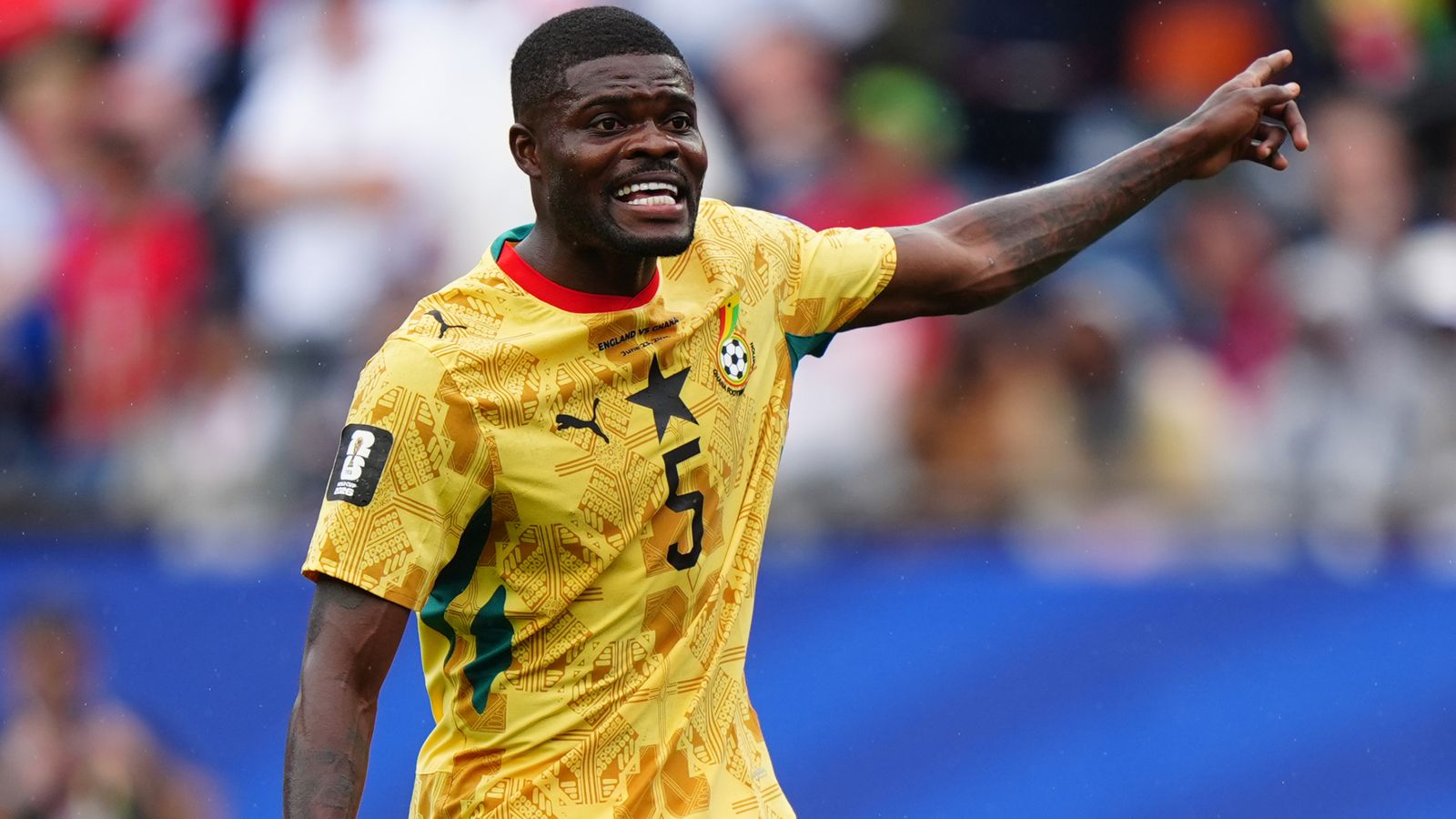
Thomas Partey and Djed Spence: Spurs Full-Back Appears to Snub Handshake with Former Arsenal Midfielder
Djed Spence, a Tottenham Hotspur full-back, appeared to refuse a handshake from Ghana midfielder Thomas Partey during the pre-match ceremonies of an England vs. Ghana fixture. The incident, reported by Sky Sports and The Guardian, occurred as Partey prepared to face the English national team despite previous logistical hurdles regarding his availability.
Did Djed Spence snub Thomas Partey before England v Ghana?
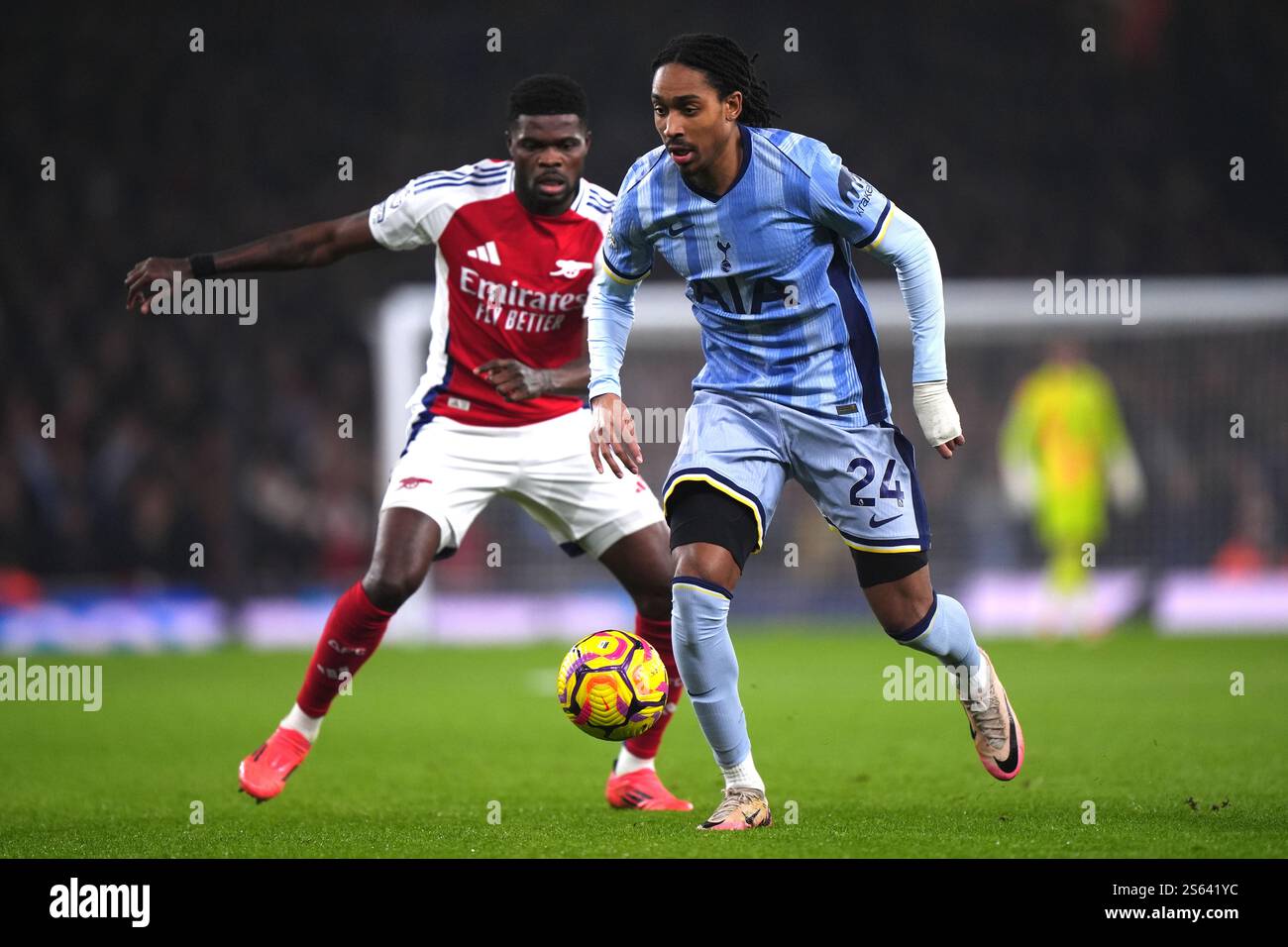
Visual evidence from the pre-match proceedings of the England versus Ghana match indicates that Djed Spence did not reciprocate a handshake offered by Thomas Partey. According to reports from Sky Sports and The Guardian, the Tottenham Hotspur defender appeared to ignore the gesture from the Ghanaian international, who previously spent several seasons playing for North London rivals Arsenal.
The interaction took place during the standard player introductions and greetings that precede international fixtures. While the footage shows Partey extending his hand, Spence continued moving without making contact or acknowledging the gesture. Neither player has issued a public statement regarding the specific nature of the interaction or any personal animosity that may have influenced the moment.
The incident has drawn attention primarily due to the existing sporting friction between Tottenham and Arsenal. Although Partey now represents Ghana on the international stage, his tenure at Arsenal creates a direct link to the fierce rivalry Spence represents at Spurs. This context transforms a potentially missed gesture into a point of contention for fans and media outlets monitoring the North London divide.
- The Action: Thomas Partey extended his hand for a pre-match greeting.
- The Reaction: Djed Spence appeared to bypass the handshake.
- The Context: A clash between a current Spurs player and a former Arsenal player.
- The Sources: Reported as a “snub” by Sky Sports and The Guardian.
Why is Thomas Partey allowed to play for Ghana against England?
Thomas Partey is eligible to represent Ghana in the 2026 World Cup cycle and against opponents like England because he holds Ghanaian nationality and has committed his international career to the Black Stars. According to Sports Illustrated, the regulations governing international eligibility allow players to represent a nation if they possess the required citizenship and have not been “cap-tied” to another senior national team in a competitive match.
Partey’s status is a matter of FIFA eligibility rules. Because he never represented England at the senior competitive level, he remained free to choose Ghana. This allows him to compete in high-profile fixtures, including those leading toward the 2026 World Cup. The BBC confirmed that Partey was “ready to play” for the Ghanaian side, emphasizing his role as a central figure in their midfield strategy against the English squad.
For readers unfamiliar with these regulations, a related explainer on FIFA eligibility rules can provide more detail on how players switch or select national teams. In Partey’s case, the transition was straightforward as he had not committed his senior future to any other federation before joining the Ghana national team.
FIFA Eligibility Summary
| Requirement | Partey’s Status | Impact on England v Ghana |
|---|---|---|
| Nationality | Ghanaian | Eligible to play for Ghana |
| Senior Cap-Tie | None with England | Free to represent Ghana |
| Competitive Match | Represented Ghana | Locked into Ghana for 2026 WC |
What visa issues affected Thomas Partey’s availability?
Before confirming his participation in the match against England, Thomas Partey faced significant administrative hurdles. According to ESPN, visa issues surrounding the player’s travel and documentation were described as being “out of control.” These complications threatened his ability to join the Ghanaian squad in time for the fixture.
Visa disputes for international athletes are common when traveling between jurisdictions with strict entry requirements, often involving work permits or specific athletic visas. In this instance, the “out of control” nature of the paperwork suggested a breakdown in the coordination between the governing bodies or the embassy services responsible for the player’s entry.
Despite these setbacks, ESPN reported that Partey eventually resolved the issues, allowing him to be declared “ready” for the match. The delay added a layer of uncertainty to Ghana’s lineup, as the midfield anchor is considered essential for their tactical setup against a high-pressing England side.
“Ghana’s Thomas Partey ‘ready’ for England, visa issues ‘out of control'” — ESPN
How does the North London rivalry influence this interaction?
The perceived snub between Djed Spence and Thomas Partey cannot be analyzed in isolation from the history of the North London Derby. The rivalry between Tottenham Hotspur and Arsenal is one of the most intense in English football, characterized by a deep-seated cultural and sporting divide.
Djed Spence currently operates within the Tottenham system, while Thomas Partey is a former cornerstone of the Arsenal midfield. In the world of professional football, players often maintain friendships across club lines, but the intensity of the Spurs-Arsenal rivalry frequently manifests in on-field tension and off-field coldness. When a player from one camp appears to ignore a player associated with the other, it is often framed by the media and fans as an extension of this club conflict.
This dynamic is a recurring theme in Premier League football. Similar incidents of “cold shoulders” or refused handshakes have occurred in previous North London Derbies, where the desire to maintain a competitive psychological edge outweighs the standard etiquette of the game. By refusing the handshake, Spence—whether intentionally or accidentally—aligned himself with the competitive spirit of the Tottenham dressing room.
Comparison of Media Framing
Different news outlets focused on different aspects of the Partey-Spence-England narrative. The following table contrasts how the primary sources characterized the events:
| Outlet | Primary Focus | Tone/Characterization |
|---|---|---|
| Sky Sports / The Guardian | Interpersonal tension | Focused on the “snub” and behavioral optics. |
| ESPN | Logistical hurdles | Focused on “out of control” visa complications. |
| BBC / Sports Illustrated | Sporting eligibility | Focused on “readiness” and World Cup qualification rules. |
What are the implications for the England vs. Ghana fixture?
The presence of Thomas Partey in the Ghanaian lineup significantly alters the tactical landscape for England. As a defensive midfielder with high-level Premier League experience, Partey provides Ghana with a level of tactical discipline and ball retention that is difficult to bypass. His ability to disrupt play and initiate attacks from deep makes him the primary target for England’s attacking midfielders.
The psychological aspect of the match, highlighted by the Spence interaction, suggests a high-tension environment. While a missed handshake is a minor event in the broader scope of a 90-minute match, it signals a lack of familiarity or a deliberate attempt to create a divide between the players. This tension often translates into a more physical game, with increased aggression in midfield challenges.
Furthermore, the resolution of Partey’s visa issues ensures that Ghana enters the match with their strongest possible squad. Had the “out of control” administrative errors persisted, Ghana would have been forced to find a replacement for one of Africa’s most influential midfielders, potentially tilting the balance of power even further toward England.
Key Tactical Factors
- Partey’s Role: Acting as the pivot to shield the Ghanaian defense.
- England’s Challenge: Overcoming Partey’s familiarity with the English style of play.
- Psychological Edge: The use of club rivalries to fuel international competitiveness.
- Squad Depth: Ghana’s ability to field their primary star despite travel chaos.
Common misconceptions about player eligibility and international snubs
There are several recurring misunderstandings regarding how players like Thomas Partey operate in the international arena and how “snubs” are interpreted in sports media.
Misconception 1: Players are “forbidden” from playing for other nations if they lived in England.
Some fans believe that spending years in the Premier League or holding a residency permit ties a player to the England national team. This is false. Eligibility is based on nationality, parentage, or a specific period of residency, provided the player has not played a competitive senior match for another nation. Partey’s Ghanaian heritage allowed him to represent the Black Stars regardless of his time at Arsenal.
Misconception 2: A missed handshake always indicates a personal feud.
While the media often labels these moments as “snubs,” they can be the result of timing, noise, or simple lack of awareness during the chaos of a pre-match ceremony. However, in the context of the Spurs-Arsenal rivalry, these moments are amplified. Without a statement from Spence or Partey, the “snub” remains an observation of behavior rather than a confirmed personal conflict.
Misconception 3: Visa issues are simple “paperwork errors.”
When ESPN describes visa issues as “out of control,” it refers to the complex intersection of international law, diplomatic relations, and sports federation coordination. For high-profile athletes, visas often require specific sponsorships or government clearances that can be delayed by bureaucratic inefficiency, not just a missing signature.
Frequently Asked Questions
Why did Djed Spence appear to ignore Thomas Partey?
While no official reason has been given, reports from Sky Sports and The Guardian suggest the interaction was a “snub.” Many analysts point to the intense rivalry between Spence’s club, Tottenham Hotspur, and Partey’s former club, Arsenal, as a likely contributing factor to the tension.
Is Thomas Partey still playing for Arsenal?
The reports refer to Partey as a “former Arsenal midfielder,” indicating his transition away from the North London club. His history with Arsenal is what provides the context for the rivalry with Djed Spence.
Can Thomas Partey play for England in the future?
No. Because Thomas Partey has played competitive matches for the Ghana national team, he is “cap-tied” to Ghana under FIFA regulations. He cannot switch back to England for the 2026 World Cup or any other competition.
What caused the “out of control” visa issues for Partey?
According to ESPN, the issues were administrative and logistical, hindering his ability to travel and join the Ghana squad. The specific diplomatic or clerical cause was not detailed, but the result was a period of uncertainty regarding his availability for the England match.
How does the 2026 World Cup affect these matches?
Matches between teams like England and Ghana often serve as critical preparation or qualification benchmarks. As noted by Sports Illustrated, Partey’s eligibility and presence are vital for Ghana’s aspirations to qualify for and compete in the 2026 tournament.
