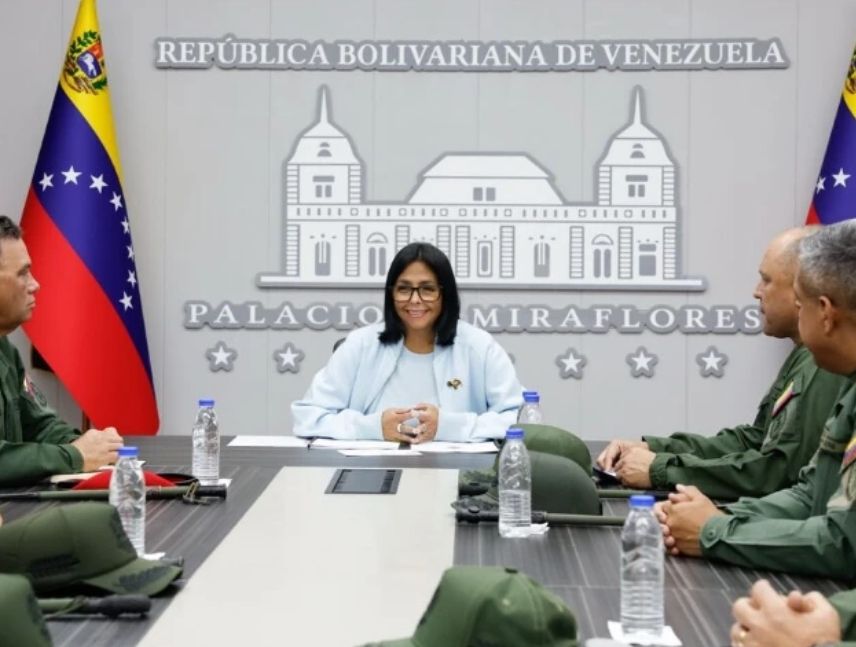
Presidenta (E) Delcy Rodríguez convened with the Alto Mando Militar to assess operational strategies amid escalating tensions in Venezuela’s Bolívar state, according to multiple local media reports. The meeting, reported by outlets including Diario Primicia and LaPatilla.com, focused on evaluating the government’s 100-Day Plan, a framework aimed at addressing security and economic challenges.
What Triggered the Meeting?
The gathering occurred as unrest intensified in the southern mining region of Bolívar, where protests and clashes between security forces and local communities have persisted for weeks. Officials cited concerns over resource distribution and regional instability as key factors driving the high-level discussion. While no official details on the meeting’s outcomes were released, sources close to the administration indicated the session prioritized coordinating military and civilian efforts to stabilize the area.

Context of the 100-Day Plan
The 100-Day Plan, first outlined by Rodríguez’s administration earlier this year, outlines short-term measures to tackle inflation, food shortages, and infrastructure decay. Critics, however, have questioned its feasibility, pointing to ongoing economic volatility and limited international support. The meeting with military leaders suggests a shift toward leveraging state security apparatuses to enforce policy initiatives, a move that has drawn mixed reactions from domestic observers.
Why This Matters for Venezuela’s Political Landscape
The convergence of political and military leadership underscores the administration’s reliance on centralized control amid deepening crises. Analysts note that such high-level coordination often signals a tightening of authority, particularly in regions experiencing civil unrest. For audiences outside Venezuela, the developments highlight the interplay between governance, security, and socio-economic challenges in the country’s ongoing political turmoil.
The next phase of the 100-Day Plan is expected to unfold in the coming weeks, with further updates likely to emerge from official channels. Until then, the focus remains on how the government balances its strategic priorities with the escalating demands of a fractured population.
