How the Belfast Stabbing Was the Spark to a Fuse Loaded with Grievance and Provocation
A stabbing in Belfast triggered widespread civil disorder, leading the Police Service of Northern Ireland (PSNI) to deploy water cannons against crowds. According to reports from the BBC and the Financial Times, the violence reflects deep-seated grievances and social provocations that transformed a criminal act into a catalyst for urban unrest.
What triggered the disorder in Belfast?
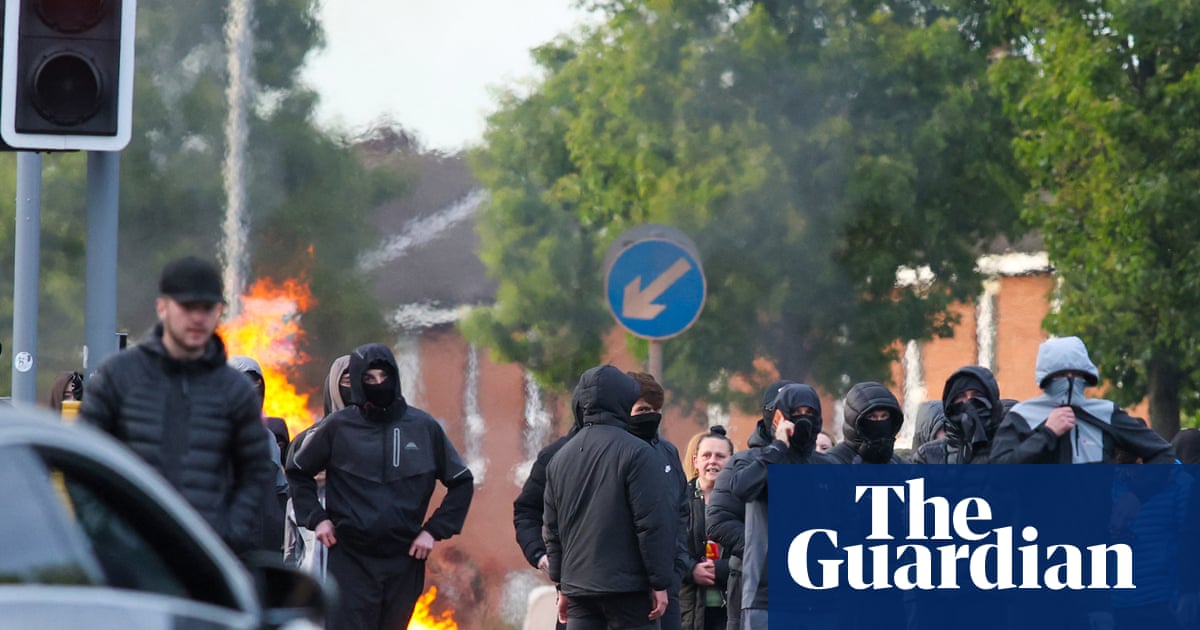
The immediate catalyst for the recent unrest was a knife attack in Belfast. While the stabbing was a criminal incident, it quickly evolved into a broader security crisis. According to the BBC, the aftermath of the attack saw the deployment of water cannons as police struggled to contain escalating disorder. This transition from a localized crime to city-wide volatility suggests the event acted as a trigger for pre-existing tensions.
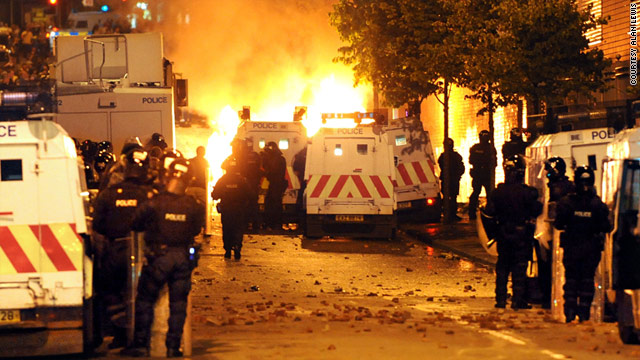
The violence manifested in several high-visibility disruptions. The Belfast Telegraph reported that motorists were urged to avoid specific roundabouts after a lorry was set ablaze, creating a blockade and a focal point for the riots. The PSNI faced direct attacks during these clashes, necessitating the use of specialized riot control equipment to disperse crowds and regain control of the streets.
Key elements of the immediate escalation included:
- Targeted Violence: Direct attacks on PSNI officers during the disorder.
- Infrastructure Damage: The burning of a lorry and the blocking of major traffic arteries.
- Police Response: The use of water cannons to push back crowds and prevent further arson.
Why the stabbing acted as a “spark” for wider riots
The phrase “how the Belfast stabbing was the spark to a fuse loaded with grievance and provocation” highlights that the stabbing itself was not the sole cause of the riots, but rather the trigger. The Financial Times notes that Northern Ireland has, in various contexts, become a breeding ground for riots, suggesting that the environment was already primed for volatility.
This “fuse” consists of long-term social, political, and economic grievances. When a provocative event occurs—such as a violent crime in a sensitive area—it can be co-opted by groups seeking to express these grievances through disorder. The provocation is often not just the crime itself, but the perceived response to it or the identity of those involved, which can ignite sectarian or anti-authority sentiment.
The disorder is rarely about a single incident; it is the manifestation of accumulated tension that finds a sudden, violent outlet.
According to the analysis provided by the Financial Times, the propensity for such riots is linked to a cycle of provocation. In this cycle, a localized event is amplified through social networks, leading to rapid mobilization. The resulting clashes with the PSNI then create new grievances, further loading the “fuse” for the next incident.
The impact on the victim’s family and the community
While some used the stabbing as a reason to riot, the family of the victim viewed the subsequent disorder with contempt. As reported by RTE.ie, the victim’s family expressed that they were “disgusted” by the riots. Their reaction underscores a sharp divide between the actual victims of crime and those who use such crimes as political or social leverage to justify violence.
This contrast highlights a recurring theme in Northern Ireland’s civil unrest: the appropriation of tragedy. The family’s disgust indicates that the rioters’ actions did not provide justice or support for the victim, but instead added further trauma and chaos to an already devastating situation.
The community impact can be summarized as follows:
| Stakeholder | Immediate Impact | Perspective on Disorder |
|---|---|---|
| Victim’s Family | Loss and trauma | Disgusted by the appropriation of the event |
| PSNI | Physical attacks and operational strain | Focused on containment and public safety |
| Local Residents | Traffic disruption and fear | Caught between rioters and police response |
| Rioters | Legal consequences and arrests | Using grievance as a justification for violence |
How the PSNI managed the escalation
The Police Service of Northern Ireland (PSNI) faced a dual challenge: investigating a violent crime while simultaneously managing a riot. The BBC reports that the use of water cannons was a critical tool in dispersing crowds that had become aggressive. This tactical decision is often a last resort, used when physical barriers and standard riot shields are insufficient to prevent the burning of vehicles or attacks on officers.
The Belfast Telegraph highlighted the operational difficulty of the situation, specifically noting the need to redirect motorists away from roundabouts where lorries were being burned. This indicates that the disorder was not just a matter of crowd control, but a logistical crisis affecting the city’s infrastructure.
The PSNI’s strategy typically involves:
- Containment: Isolating the riot zones to prevent the spread of disorder to other neighborhoods.
- Diversion: Managing traffic and pedestrian flow to reduce the number of bystanders and potential recruits for the riot.
- Force Graduation: Moving from verbal warnings to physical barriers, and finally to water cannons or other deterrents.
The broader context of “breeding grounds” for unrest
To understand how the Belfast stabbing was the spark to a fuse loaded with grievance and provocation, one must look at the systemic issues identified by the Financial Times. The description of Northern Ireland as a “breeding ground” for riots suggests that the volatility is structural rather than incidental.
These structural issues often include:
- Socio-economic Deprivation: Areas with high unemployment and poor housing are more susceptible to mobilization for unrest.
- Historical Memory: A legacy of conflict means that current events are often viewed through the lens of past grievances.
- Polarization: The persistence of segregated communities can make it easier for “provocation” to take hold, as narratives are often framed in “us versus them” terms.
When these factors align, a criminal act like a stabbing is no longer seen as an isolated incident of violence. Instead, it is interpreted as a symbol of wider failure, neglect, or targeted aggression, which then justifies a violent response in the eyes of the rioters.
For more information on the systemic nature of these issues, readers may find a related explainer on Northern Ireland’s social geography useful.
Common misconceptions about the Belfast riots
There is often a tendency to view these riots as purely sectarian. However, the evidence suggests a more complex intersection of motives. While sectarianism can be a component, the “grievance” mentioned by sources often includes anti-police sentiment and general social frustration.

Another misconception is that the riots are a direct “protest” against the stabbing. As the reaction of the victim’s family shows, the disorder is often disconnected from the actual needs or wishes of the victims. The violence is less about the specific crime and more about the existing “fuse” of provocation that the crime simply ignited.
Misconception vs. Reality
- Misconception: The riots were a spontaneous expression of grief for the stabbing victim.
- Reality: The victim’s family was “disgusted” by the disorder, suggesting the riots were a separate agenda using the event as a pretext.
- Misconception: The PSNI used water cannons as a first response.
- Reality: Water cannons were deployed after the situation escalated to the burning of vehicles and attacks on officers.
What this event reveals about current stability
The speed with which a single crime could trigger city-wide disorder indicates that the “fuse” remains short. The transition from a knife attack to water cannons in the streets suggests that the mechanisms for peaceful grievance expression are either absent or distrusted in certain communities.
The fact that the Financial Times characterizes the region as a “breeding ground” implies that until the underlying grievances—economic, social, and political—are addressed, the region remains vulnerable to “sparks.” Any event, regardless of its original nature, can be weaponized to trigger unrest if the environment is sufficiently loaded with provocation.
This pattern suggests that security-led responses (like water cannons) can manage the symptoms of the riot, but they do not extinguish the fuse itself. The long-term stability of the area depends on reducing the “breeding ground” conditions that make such escalations possible.
Frequently Asked Questions
Why did a stabbing lead to riots in Belfast?
According to reporting from the BBC and the Financial Times, the stabbing acted as a “spark” for pre-existing grievances. The incident provided a catalyst for people to express deep-seated social and political frustrations through violence and disorder.
What was the police response to the disorder?
The PSNI deployed water cannons to disperse crowds and prevent further attacks. They also worked to redirect traffic away from areas where vehicles, including a lorry, had been set on fire, as reported by the Belfast Telegraph.

How did the victim’s family react to the riots?
As reported by RTE.ie, the victim’s family expressed that they were “disgusted” by the disorder, indicating that the riots were not seen as a helpful or appropriate response to the crime.
Is this part of a larger pattern in Northern Ireland?
Yes. The Financial Times suggests that certain conditions in Northern Ireland have made it a “breeding ground” for riots, where localized provocations can quickly escalate into wider civil unrest due to systemic grievances.
Were there any major disruptions to the city?
Yes, the Belfast Telegraph noted that major roundabouts were affected by the disorder and the burning of a lorry, leading to warnings for motorists to avoid the area.
The persistence of this volatility suggests that the interplay between criminal acts and social grievance remains a critical security challenge. While the immediate disorder was contained through the use of water cannons and police cordons, the underlying provocations that fuel such events continue to exist within the social fabric of the city. Monitoring the intersection of community relations and police tactics will be essential in determining if the “fuse” can be deactivated or if the region remains primed for the next spark.
