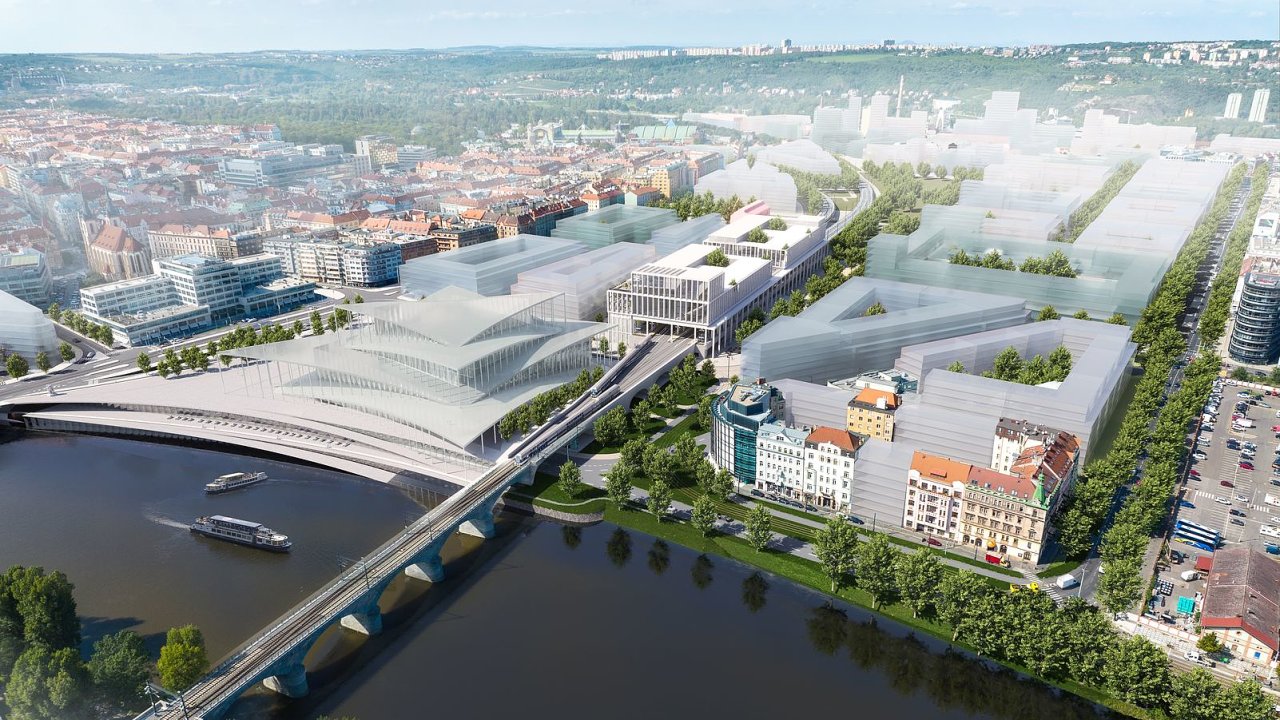
A high-stakes real estate deal in Prague is reshaping the city’s tech ecosystem, with a single plot of land in the Bubny district becoming the centerpiece of a multi-million-dollar partnership between two of Central Europe’s most influential billionaires. The transaction, led by Radovan Vítek, marks a rare convergence of Czech and Slovak capital in a sector where land values and development potential are increasingly tied to tech-driven urban innovation.
The Land That Could Redefine Prague’s Tech Future
The 12-hectare (30-acre) property in Bubny, a district already home to biotech startups and research hubs, is being sold by Vítek to a consortium of investors—including a prominent Slovak billionaire—who plan to transform it into a mixed-use development. While details about the exact tech infrastructure remain under wraps, local media reports suggest the project will prioritize high-speed connectivity, modular office spaces, and smart-city integrations designed to attract both established firms and early-stage ventures.
What makes this deal notable isn’t just the scale of the land or the identities of the buyers, but the implicit bet on Prague’s evolving role as a tech hub. The city has long been a quiet powerhouse in Central Europe, home to companies like Avast and Seznam, but its growth has been constrained by limited large-scale development opportunities. This transaction could change that by creating a single, cohesive space where infrastructure, policy, and capital align to support innovation at scale.
Why This Deal Matters for Central European Tech
For businesses, the implications are threefold:
- Infrastructure as a Competitive Edge: The Bubny site’s proximity to Prague’s existing tech clusters—including the Charles University campus and the newly expanded Prague Tech Park—positions it as a potential magnet for firms seeking both talent and cutting-edge facilities. Early reports indicate plans for fiber-optic backbones, AI-driven energy management systems, and even experimental 6G testbeds, though no official technical specifications have been released.
- A Test Case for Cross-Border Collaboration: The involvement of Slovak capital signals a deepening integration between Czech and Slovak markets, which could accelerate shared investments in shared infrastructure. This mirrors trends seen in other regions, where cross-border tech ecosystems (e.g., the Benelux region or the Nordic countries) have thrived by pooling resources.
- Regulatory and Political Signals: The deal’s timing—amidst ongoing debates about Prague’s tech visa policies and subsidies for R&D—suggests that local governments are quietly endorsing large-scale private-sector-led development. Whether this translates into broader policy shifts remains to be seen, but the transaction sets a precedent for how public-private partnerships could shape the city’s future.
The Human Factor: Who Stands to Gain?
The buyers’ identities, while not fully disclosed, reflect a broader trend: tech-driven real estate is increasingly being shaped by non-traditional investors. Radovan Vítek, a name synonymous with Prague’s property boom, has positioned himself as a bridge between old-economy assets and new-economy demand. His decision to sell—rather than develop the land himself—hints at a strategic pivot: leveraging his reputation to attract higher-value tenants and partners.
For the Slovak billionaire involved, the move aligns with a regional strategy of diversifying investments beyond traditional sectors like energy and manufacturing. By anchoring a development in Prague, the investor gains access to a city with a lower cost of living than Vienna or Berlin, a growing pool of tech talent, and a business-friendly regulatory environment.
What’s Next for Bubny—and Prague’s Tech Scene?
While the exact timeline for construction and occupancy is unclear, industry observers expect the first phase of development to focus on pre-leasing office spaces to high-profile tenants—likely a mix of local startups and multinational corporations eyeing Prague as a regional headquarters. The presence of smart infrastructure could also attract specialized firms in fields like cybersecurity, fintech, and AI, which require robust digital backends.
One open question is whether the development will include residential components, a common feature in European tech hubs like Berlin’s Markthalle Neun or Amsterdam’s Science Park. If so, it could address Prague’s chronic housing shortage while further integrating tech workers into the city’s fabric.
The deal also raises broader questions about Prague’s ability to sustain its growth. With land prices rising and competition for talent intensifying, the success of this project will serve as a litmus test for whether the city can balance its historic charm with the demands of a modern, tech-driven economy.
