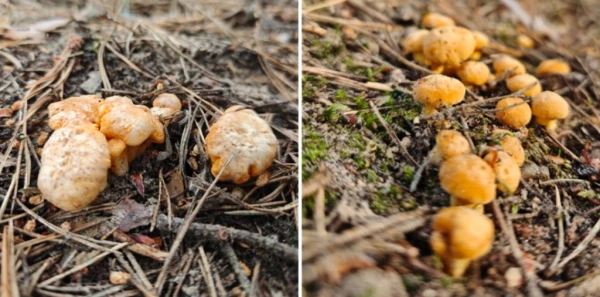
Is it time or too early? – The first chanterelles have appeared in Latvian forests
Early foragers in Latvia have reported the first sightings of chanterelles in the country’s forests, sparking debate over whether the season has begun ahead of schedule. The fungi, prized for their earthy flavor and culinary value, were first spotted in the northern regions of the country in late April, according to local mushroom-hunting groups. This early emergence has raised questions about climate patterns and the timing of traditional foraging activities.
What Happened and Where?
The initial reports of chanterelles (Cantharellus cibarius) came from the Daugavpils and Rēzekne districts, where foragers noted the mushrooms growing in deciduous woodlands. These regions, known for their dense birch and oak forests, typically see the first edible fungi of the season in late May or early June. However, this year’s appearance was observed as early as April 28, prompting discussions among mycologists and local communities.
“We’ve never seen chanterelles this early,” said Jānis Ozols, a member of the Latvian Mycological Society. “The conditions this spring have been unusually warm, which might explain the accelerated growth. But it’s still too soon to say if this is a trend or an anomaly.”
Climate Conditions and Fungal Growth
Weather data from the Latvian Environment, Geological and Meteorological Service (LIGMS) shows that temperatures in April 2024 were 3–4 degrees Celsius above the historical average. This warmth, combined with consistent rainfall, created ideal conditions for fungal spores to germinate. However, the exact cause of the early emergence remains under investigation.
Dr. Inese Kalniņa, a climate scientist at the University of Latvia, noted that while the temperature spike is notable, it does not necessarily indicate a long-term shift in seasonal patterns. “This is a short-term fluctuation,” she said. “We need to monitor the next few weeks to determine if this is an isolated event or part of a larger trend.”
Who Is Involved and What Are the Implications?
The early appearance of chanterelles has immediate implications for both amateur foragers and commercial mushroom pickers. In Latvia, wild mushrooms are a significant part of the local cuisine and economy, with many families relying on seasonal foraging for income. The premature arrival of the fungi could affect supply chains and pricing, according to industry analysts.
“If this trend continues, it could disrupt the timing of mushroom festivals and markets,” said Anna Zariņa, a representative of the Latvian Farmers’ Association. “We’re advising foragers to be cautious, as early mushrooms may not be as flavorful or abundant as those that appear later in the season.”
Reactions from Local Communities
Villages in the Latgale region, a traditional hub for mushroom foraging, have seen a surge in activity. Some residents expressed excitement about the early harvest, while others warned of the risks of over-picking. “We’ve seen this happen before,” said Mārtiņš Berzins, a lifelong forager from Rēzekne. “If you take too many early mushrooms, you might end up with nothing later.”
The Latvian Mycological Society has issued guidelines for foragers, emphasizing the importance of sustainability. “Chanterelles are a valuable resource, and we need to ensure they’re not overharvested,” said Ozols. “If you take only what you need and leave the rest, the forest will continue to provide for future seasons.”
Why This Matters: Climate, Culture, and Economy
The early emergence of chanterelles is part of a broader pattern of shifting seasons linked to climate change. Across Europe, similar reports of early mushroom growth have been documented, raising concerns about the long-term impact on ecosystems and traditional practices. In Latvia, where foraging is deeply rooted in cultural heritage, these changes could have far-reaching consequences.
Historically, the chanterelle season in Latvia has aligned with the end of spring and the beginning of summer. However, the 2024 reports suggest a potential shift in this timeline. This could affect not only foragers but also the tourism industry, which relies on mushroom-related activities such as guided foraging tours and local festivals.
Comparisons to Past Seasons
Comparing 2024 to previous years provides some context. In 2023, the first chanterelles were reported in early June, while 2022 saw a delayed emergence due to colder temperatures. The 2024 season appears to be an outlier, but it is too early to determine if this is a new normal.
| Year | First Chanterelle Sighting | Average April Temperature (°C) |
|---|---|---|
| 2022 | June 5 | 8.2 |
| 2023 | May 28 | 9.1 |
| 2024 | April 28 | 12.3 |
The table above highlights the correlation between warmer temperatures and earlier mushroom growth. While the data is limited to three years, it suggests a possible trend that warrants further study.
What to Watch For Next
Experts are urging foragers and researchers to monitor the next few weeks for additional sightings and changes in growth patterns. The Latvian Mycological Society has launched a public reporting initiative, encouraging individuals to submit photos and locations of chanterelles via an online portal.
“This is an opportunity for citizen science,” said Kalniņa. “By gathering data from across the country, we can better understand how climate change is affecting local ecosystems.”
