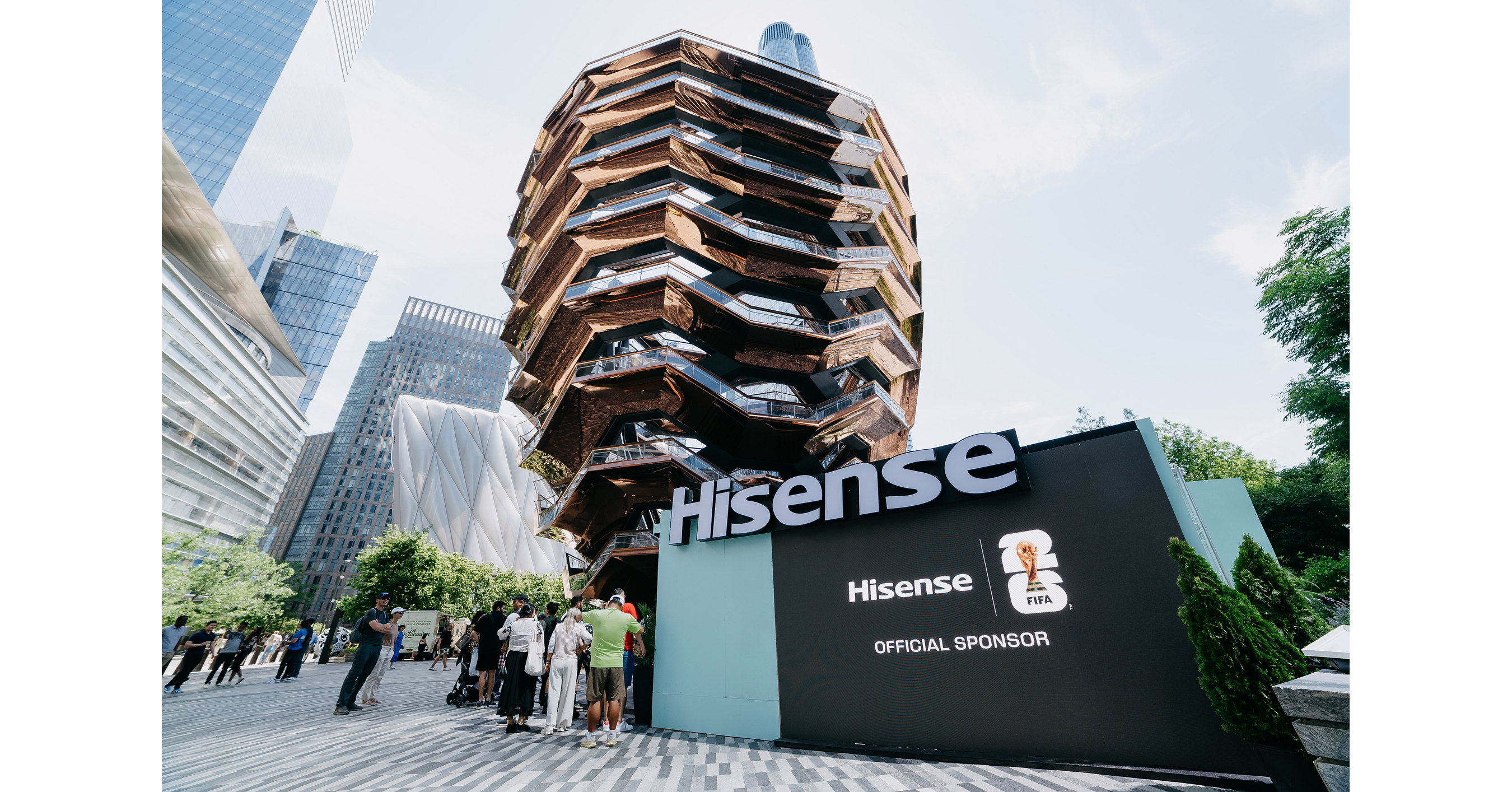
Hisense Unveils RGB-Themed Experience at FIFA World Cup 2026™ Landmark
Hisense has launched an RGB-themed pop-up event at a new landmark for the FIFA World Cup 2026™, according to a PR Newswire report. The installation utilizes high-intensity red, green, and blue lighting to merge the brand’s display technology with the visual identity of the upcoming tournament, signaling a strategic expansion of Hisense’s partnership with FIFA.
What is the Hisense RGB-themed pop-up event lights up the new landmark of FIFA World Cup 2026™ – PR Newswire announcement?
The event serves as a physical manifestation of the partnership between Hisense and the FIFA World Cup 2026™. According to reports from PR Newswire, the pop-up installation is centered around an “RGB” theme, referring to the red, green, and blue additive color model that forms the basis of all digital display technology. By lighting up a new landmark associated with the 2026 tournament, Hisense is positioning its brand at the intersection of sports entertainment and visual innovation.
The installation is designed to be an experiential marketing hub. Rather than relying on traditional static signage, the pop-up uses dynamic lighting and interactive elements to draw foot traffic. This approach allows the company to showcase its capabilities in color reproduction and brightness—key selling points for its line of Mini-LED and Laser TVs—within a high-visibility public space.
Key elements of the event include:
- Chromatic Integration: Use of RGB lighting to mirror the energy and diversity of the global football community.
- Landmark Activation: Transforming a structural site into a visual beacon to generate social media traction and physical engagement.
- Brand Alignment: Linking the technical precision of Hisense screens with the precision and spectacle of professional football.
How does RGB technology relate to Hisense’s product strategy?
The choice of an RGB theme is not merely aesthetic. RGB (Red, Green, Blue) is the fundamental technical standard for the screens Hisense manufactures. By centering a World Cup landmark event on these colors, the company creates a direct mental link between the event’s vibrancy and the performance of its hardware.
In the context of sports broadcasting, color accuracy and contrast are critical. Football fans require displays that can render the deep green of a pitch and the vivid colors of team jerseys without bleeding or distortion. Hisense utilizes this event to emphasize its commitment to these standards. The pop-up acts as a large-scale demonstration of how light and color can be manipulated to create an immersive atmosphere, mirroring the experience the company aims to deliver in home living rooms.
“The use of RGB lighting at the landmark serves as a bridge between the physical world of the stadium and the digital world of the screen,” according to analysis of the brand’s marketing trajectory.
The technical focus of the event aligns with several Hisense product pillars:
- Mini-LED Technology: Which allows for tighter control over light zones, effectively managing the “RGB” output for deeper blacks and brighter highlights.
- Quantum Dot Color: A technology that enhances the purity of red and green light to produce a wider color gamut.
- High Dynamic Range (HDR): Ensuring that the brightness levels seen at the pop-up event are replicable on consumer-grade televisions.
The strategic importance of the FIFA World Cup 2026™ partnership
The 2026 FIFA World Cup™ represents a significant shift in the scale of the tournament. For the first time, the event will be hosted across three nations—the United States, Canada, and Mexico—and will feature an expanded field of 48 teams. This geographical spread provides a massive opportunity for sponsors like Hisense to execute localized, high-impact activations across multiple cities.
By activating a landmark early in the cycle, Hisense is securing “mindshare” long before the first whistle blows. The partnership is not just about logo placement on a backdrop; it is about integrating the brand into the infrastructure of the fan experience. This “landmark” strategy ensures that the brand is associated with the physical journey of the fans.
| Feature | 2022 World Cup Context | 2026 World Cup Context |
|---|---|---|
| Host Geography | Single Nation (Qatar) | Three Nations (USA, Canada, Mexico) |
| Team Count | 32 Teams | 48 Teams |
| Marketing Reach | Centralized Hubs | Distributed Urban Landmarks |
| Fan Engagement | Stadium-centric | City-wide experiential pop-ups |
The expanded nature of the 2026 tournament requires a more flexible marketing approach. A single centralized fan zone is no longer sufficient. The use of pop-up events at various landmarks allows Hisense to capture different demographics across North America, tailoring the experience to the specific urban environment while maintaining a consistent global brand identity.
Why pop-up events are replacing traditional sports advertising
The shift toward RGB-themed pop-ups reflects a broader trend in the technology sector known as “experiential marketing.” Traditional television commercials and billboards are increasingly ignored by younger audiences who prefer interactive, “Instagrammable” moments. By creating a light-based landmark, Hisense encourages fans to take photos and share them on social media, effectively turning the audience into a secondary marketing force.
This strategy addresses several challenges in modern advertising:
- Ad Avoidance: Users skip commercials, but they seek out visually stunning physical installations.
- Brand Recall: A physical interaction with a brand’s “colors” at a landmark creates a stronger sensory memory than a 30-second digital ad.
- Contextual Relevance: Placing the technology in the context of the World Cup links the product (TVs) to the activity (watching football).
Comparing this to previous sponsorship cycles, brands have moved from being “silent partners” to “active curators” of the fan experience. Hisense is not simply paying for the right to use the FIFA logo; it is creating a destination that adds value to the city’s landscape during the tournament build-up.
Potential impact on the consumer electronics market
The visibility provided by the FIFA World Cup 2026™ allows Hisense to challenge established incumbents in the North American and global display markets. By associating its RGB technology with the world’s most-watched sporting event, the company aims to elevate its perception from a value-driven brand to a premium technology leader.
Industry analysts suggest that the success of these activations will be measured by “brand lift”—the increase in consumer awareness and preference following the event. If Hisense can successfully link the “wow factor” of the RGB landmark to the quality of its home theater products, it stands to gain significant market share during the lead-up to the tournament, as fans typically upgrade their televisions in preparation for major sporting events.
The ripple effect of this marketing push may include:
- Increased Retail Traffic: Direct correlation between pop-up engagement and showroom visits.
- Competitive Pressure: Forcing other electronics sponsors to move beyond static sponsorships into more aggressive experiential installations.
- Technological Validation: Using a global stage to prove that their RGB and LED implementations can handle the scale of a public landmark.
Common misconceptions about sponsorship activations
A common misconception is that these pop-up events are merely “vanity projects” with little impact on actual sales. However, in the technology sector, these installations serve as a “proof of concept.” When a consumer sees a massive, vibrant RGB installation at a landmark, it serves as a subconscious testimonial to the brand’s ability to produce high-quality light and color.
Another misunderstanding is that the “RGB” theme is a new trend. RGB lighting has been a staple of gaming peripherals for a decade. Hisense is strategically migrating this “gamer” aesthetic—which denotes high performance and customization—into the broader sports and home cinema market. This bridges the gap between the hardcore tech enthusiast and the casual sports fan.
Finally, some critics argue that such events are temporary and therefore forgettable. To counter this, Hisense integrates digital components into the physical pop-up, allowing users to engage with the brand via their smartphones, thereby extending the physical experience into a long-term digital relationship.
Evaluating the logistical challenges of multi-nation landmarks
Executing a cohesive RGB-themed campaign across the United States, Canada, and Mexico presents significant logistical hurdles. Each country has different regulations regarding public installations, power grids, and lighting ordinances. The “landmark” approach requires Hisense to navigate various municipal codes while ensuring the visual output remains consistent.
The technical requirements for such an event are substantial:
- Power Management: High-intensity RGB lighting requires significant energy infrastructure to maintain brightness without flickering.
- Weatherproofing: Installations must withstand diverse North American climates, from Canadian cold to Mexican heat.
- Synchronization: Ensuring that the lighting patterns at one landmark can be synchronized with others to create a unified brand “heartbeat” across the continent.
These challenges are precisely why the company focuses on the “technology” aspect of the event. Solving these logistical problems is, in itself, a demonstration of the engineering capabilities that Hisense applies to its consumer electronics.
Quick Reference: Event Overview
| Category | Detail |
|---|---|
| Primary Theme | RGB (Red, Green, Blue) Lighting |
| Core Objective | Brand awareness for FIFA World Cup 2026™ |
| Technology Link | Display color accuracy and Mini-LED performance |
| Marketing Style | Experiential Pop-up / Landmark Activation |
| Target Audience | Global football fans and tech consumers |
Frequently Asked Questions
What is the purpose of the Hisense RGB pop-up event?
The event is designed to celebrate Hisense’s partnership with the FIFA World Cup 2026™ by using vibrant RGB lighting to create a visual landmark. It aims to showcase the brand’s expertise in display technology and color reproduction to a global audience of football fans.
Why is it called an “RGB-themed” event?
RGB stands for Red, Green, and Blue, the primary colors used in digital screens. By using this theme, Hisense links the physical lighting of the event to the technical foundation of its televisions and monitors, emphasizing color purity and brightness.

Where can these pop-up events be found?
While specific locations vary, these activations are tied to new landmarks associated with the FIFA World Cup 2026™. Because the tournament is hosted across the US, Canada, and Mexico, these installations are strategically placed in high-traffic urban areas and tournament-related sites.
How does this event benefit the FIFA World Cup 2026™?
The partnership provides the tournament with high-tech visual installations that enhance the atmosphere of host cities. It adds a modern, technological layer to the fan experience, helping to build excitement and engagement leading up to the event.
Will this event feature actual Hisense products?
Yes, these pop-ups typically serve as showrooms where the brand can demonstrate its latest Mini-LED and Laser TV technology in a real-world, high-energy environment, allowing fans to see the “RGB” quality in person.
As the countdown to 2026 continues, the integration of technology and sports marketing will likely intensify. The RGB landmark event sets a precedent for how sponsors can move beyond traditional advertising to create permanent or semi-permanent visual legacies in host cities. For Hisense, the goal is clear: ensure that when fans think of the colors of the World Cup, they think of the screens that display them.
