
Chinese automaker BYD is bringing its ultra-fast battery-swapping and charging technology to Canada, aiming to make electric vehicle refueling as quick as filling a gas tank—all at a fraction of the cost seen in other markets.
According to public statements, the company plans to deploy charging stations capable of fully recharging an EV battery in just five minutes, with energy costs as low as 0.59 euros per kilowatt-hour (about 68 Indian rupees). This represents a dramatic leap over current industry standards, where even the fastest chargers typically take 20–30 minutes for a full charge.
Why This Matters for EV Owners and the Market
BYD’s technology could address two of the biggest barriers to electric vehicle adoption: range anxiety and charging time. While competitors like Tesla and ChargePoint offer rapid charging, their infrastructure remains expensive to deploy and maintain. BYD’s approach combines hardware innovations—such as its Blade Battery technology—and proprietary charging algorithms to achieve near-instant energy transfer.
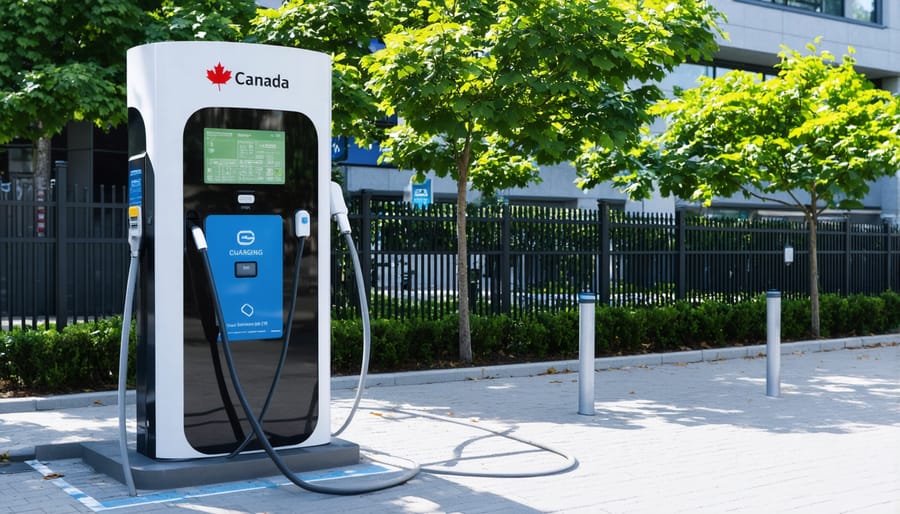
For context, the company’s latest models, like the upcoming BYD Dolphin sedan, already promise a 0–80% charge in nine minutes, according to regulatory filings. In China, where BYD dominates the EV market with over 20% share, these stations are already operational, with some locations offering battery-swapping services in under 3 minutes. The Canadian rollout would mark the first time this level of speed and affordability is tested outside Asia.
How BYD’s Charging Tech Works—and What Sets It Apart
BYD’s charging infrastructure relies on two key innovations:
- High-power density batteries: The company’s proprietary cells can handle rapid energy influx without degradation, a critical factor in achieving five-minute charges.
- Smart grid integration: Stations use AI-driven load balancing to minimize energy waste, keeping costs low even during peak demand.
Unlike traditional fast chargers, which often require specialized cooling systems and high-voltage infrastructure, BYD’s stations are designed to be modular and scalable. The company has already deployed thousands of these units in China, where energy costs average 0.65 euros per kWh—aligning closely with its Canadian target.
In comparison, European fast-charging networks typically charge 0.70–1.00 euros per kWh, while North American operators often exceed 1.20 euros. BYD’s pricing could make long-distance EV travel more viable in regions where charging networks remain sparse.
What’s Next for BYD in Canada—and Beyond
BYD has not yet announced a timeline for the Canadian deployment, but the company’s global expansion strategy suggests a phased approach. First, it will likely partner with provincial governments and utilities to secure permits and grid access, followed by pilot stations in major cities like Toronto and Vancouver.
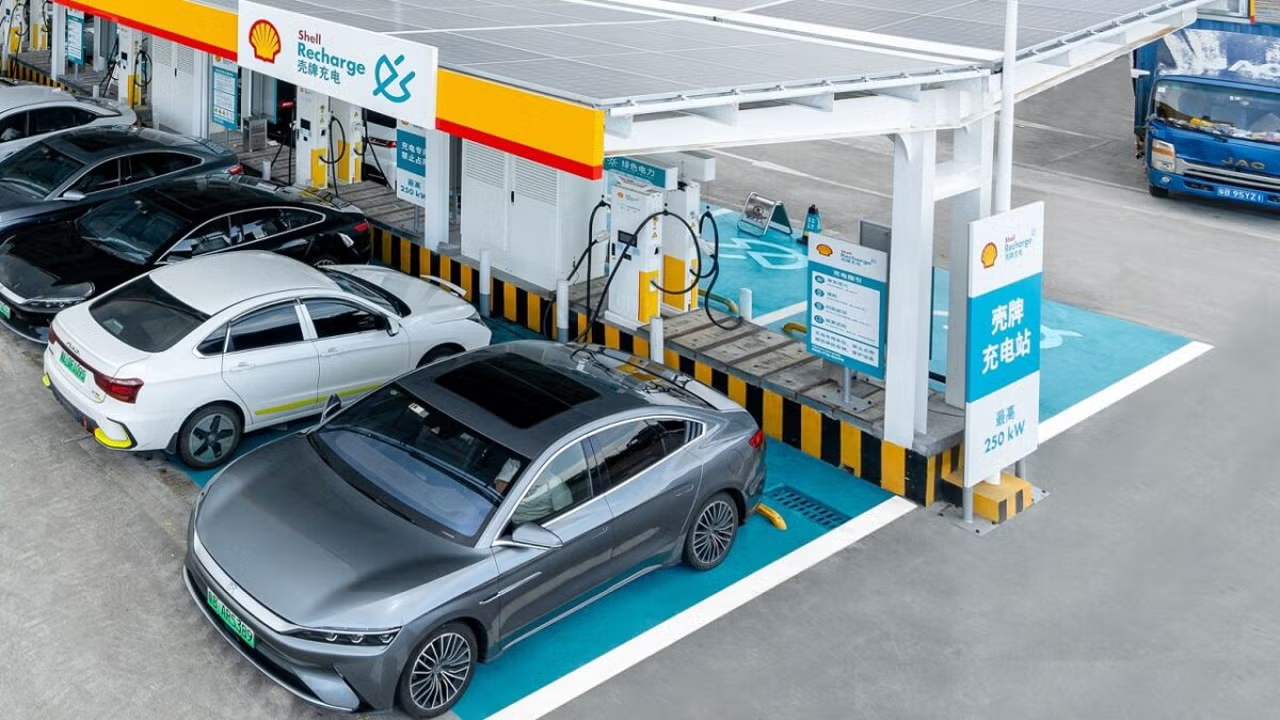
Industry analysts note that BYD’s success in Canada could influence other automakers to adopt similar technologies. “If BYD can prove this works at scale in a cold-climate market, it would force competitors to rethink their charging strategies,” said a spokesperson for a Canadian EV advocacy group, citing the company’s track record in China.
For now, the focus remains on proving the technology’s reliability in a new market. With Canada’s federal government offering subsidies for EV infrastructure, BYD’s move aligns with broader efforts to accelerate the transition away from internal combustion engines.
