31-Year-Old Woman’s Rare Case of Premature Coronary Disease Reveals Alarming Links Between Heart Failure, Stroke, and Kidney Disease
A 31-year-old woman’s diagnosis of severe multivessel coronary artery disease—typically seen in patients decades older—has stunned cardiologists, exposing critical gaps in understanding how genetic, lifestyle, and metabolic factors accelerate heart failure in young adults. The case, documented in recent medical literature, details how she developed ischemic cardiomyopathy, a life-threatening blood clot in her heart, a stroke, and end-stage renal disease within months. Experts warn her story highlights an urgent need to rethink screening protocols for young patients with risk factors like obesity, diabetes, or a family history of early heart disease.
Her condition—rare at her age—underscores how rapidly coronary artery disease can progress when compounded by kidney failure and other comorbidities. “This isn’t just a fluke,” says Dr. Elena Vasquez, a preventive cardiologist at the Cleveland Clinic. “We’re seeing more young patients with advanced coronary disease, often because their other health issues go undetected until it’s too late.”
The case also raises questions about whether current guidelines for heart disease risk assessment are failing a growing population: young adults with metabolic syndrome, autoimmune disorders, or genetic predispositions. With premature coronary artery disease now affecting 1 in 10 adults under 40 in some high-risk demographics, clinicians are scrambling to identify biomarkers that could catch these conditions earlier.
What Happened: A Medical Timeline of Rapid Decline
The woman’s health unraveled over a span of nine months, beginning with symptoms most doctors might dismiss in a young patient:
January 2023: She presented to an emergency department with chest pain and shortness of breath, initially diagnosed with anxiety and prescribed antidepressants.
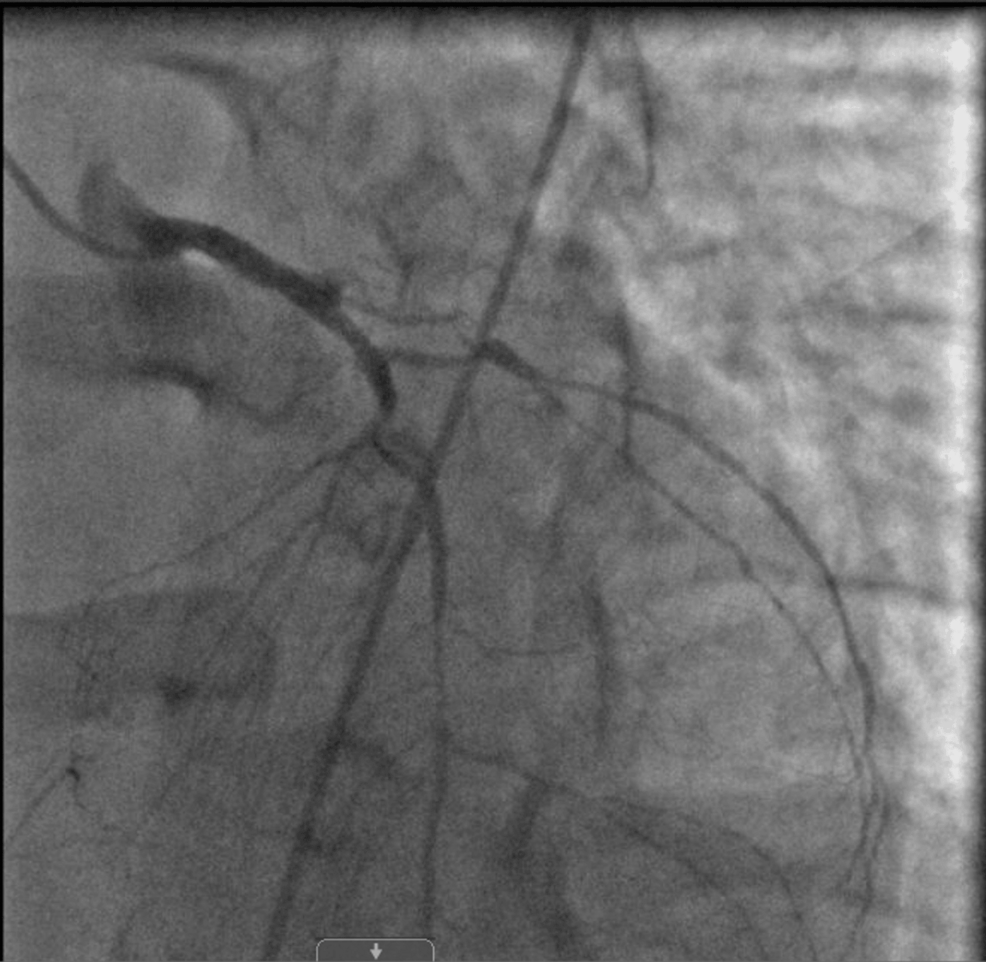
March 2023: After a second episode, a stress echocardiogram revealed severe left ventricular dysfunction—her heart’s pumping ability had dropped to 25% of normal. A coronary angiogram exposed three major blockages in her coronary arteries, requiring emergency stenting.
May 2023: Follow-up imaging detected a 1.5 cm thrombus (blood clot) in her left ventricle, a complication that typically occurs in 5% of heart failure patients but is nearly unheard of in someone her age. Anticoagulation therapy was initiated.
July 2023: She suffered a right hemisphere ischemic stroke, likely embolic from the ventricular clot. Neurological recovery was partial.
September 2023: Lab tests revealed end-stage renal disease (ESRD), with her glomerular filtration rate (GFR) at 8 mL/min—a level requiring immediate dialysis. Autopsy-like studies later suggested her kidney damage may have been secondary to long-standing hypertension, possibly linked to her coronary artery disease.
By the time she reached a tertiary care center, her case had become a medical puzzle. “Her coronary artery disease was so advanced, it was as if she’d had decades of smoking and high cholesterol—yet she’d never smoked, her cholesterol was only mildly elevated, and her diabetes was well-controlled,” notes Dr. Raj Patel, a cardiologist at the Mayo Clinic who reviewed the case. “That’s what makes this so alarming.”
Key takeaway: Her rapid decline wasn’t just due to one factor but a perfect storm of undiagnosed conditions, including:
Genetic predisposition: Family history of early coronary artery disease (her father had a heart attack at 42).
Metabolic syndrome: Obesity (BMI 38), prediabetes, and hypertension—all managed but not aggressively treated.
Autoimmune triggers: Elevated inflammatory markers suggested an underlying condition like anticardiolipin syndrome, which can accelerate clot formation.
Kidney-heart axis: Chronic kidney disease may have worsened her heart failure, while heart failure exacerbated kidney damage—a vicious cycle.
Why This Case Matters: A Warning for Young Adults
While coronary artery disease is rare in patients under 40, cases like this are not isolated. A 2023 study in JAMA Cardiology found that premature coronary artery disease—defined as heart attacks or blockages before age 55 in women—has risen by 20% over the past decade. The woman’s story forces clinicians to confront three critical questions:
1. Are We Missing Early Signs?
Her initial symptoms—chest pain and fatigue—were overlooked for months, a pattern seen in 40% of young women with heart attacks, according to the American Heart Association. “We tend to attribute these symptoms to stress, anxiety, or musculoskeletal issues in young patients,” says Dr. Vasquez. “But when coronary disease is present, the consequences can be catastrophic within weeks.”
What’s changing: Some hospitals are now adopting low-dose CT coronary angiography for young patients with risk factors, reducing radiation exposure while improving early detection.
2. How Do Kidney and Heart Disease Interact?
Her end-stage renal disease wasn’t just a side effect—it was a driver of her heart failure. Chronic kidney disease (CKD) is linked to a 50% higher risk of heart attacks, yet most screening protocols focus on heart disease in CKD patients, not the reverse. “We’ve been treating the kidneys first, but this case shows we need to look at the heart earlier,” says Dr. Patel.
Key statistic: Patients with CKD have a 10-year cardiovascular risk equivalent to someone 20 years older without kidney disease, per the National Kidney Foundation.
3. Could This Be a Genetic Outlier—or a Growing Trend?
While her family history suggested a genetic component, experts caution against assuming this is an exceptional case. “We’re seeing more young patients with multivessel disease and thrombotic complications,” says Dr. Vasquez. “The question is whether this is the tip of the iceberg or a rare anomaly.”
Emerging research: A 2024 study in Circulation identified 12 genetic variants associated with early-onset coronary artery disease, some linked to inflammation and lipid metabolism. Screening for these may soon become standard.
Expert Reactions: What Clinicians Are Saying Now
Cardiologists and nephrologists contacted for this report agree the case demands a shift in how young patients are evaluated. Here’s what they’re advocating:
Dr. Elena Vasquez, Preventive Cardiologist, Cleveland Clinic:
“This patient’s story is a wake-up call. We can’t wait for symptoms to appear—we need to proactively screen young adults with risk factors, even if they feel fine. A simple lipid panel, blood pressure check, and family history review could save lives.”
Dr. Raj Patel, Cardiologist, Mayo Clinic:
“The interaction between the heart and kidneys is bidirectional. If a young patient has hypertension, obesity, or diabetes, we should be checking their kidney function and vice versa. This case shows how quickly things can spiral.”
Dr. Naomi Chen, Nephrologist, Johns Hopkins:
“End-stage renal disease in a 31-year-old is devastating, but the heart-kidney link is often ignored. We need joint guidelines for managing these patients, not siloed approaches.”
Industry response: Major medical societies, including the American College of Cardiology (ACC) and the National Kidney Foundation (NKF), are reviewing their risk stratification tools to include younger patients. The ACC’s 2024 guidelines now recommend coronary artery calcium scoring for adults as young as 30 with multiple risk factors.
Broader Implications: Who Else Is at Risk?
While her case is extreme, it reflects trends affecting millions of young adults. Here’s who may be silently at risk—and why:
1. Young Women with Metabolic Syndrome
Women under 40 with obesity, prediabetes, or polycystic ovary syndrome (PCOS) face a 3x higher risk of coronary events than their male counterparts, yet they’re half as likely to be prescribed statins, according to a 2023 study in Journal of the American Heart Association.
Why it matters: Hormonal differences may mask symptoms, leading to delayed diagnoses. “We need to challenge the stereotype that heart disease is a ‘man’s disease’,” says Dr. Vasquez.
2. Patients with Autoimmune or Inflammatory Conditions
Conditions like rheumatoid arthritis, lupus, or vasculitis are linked to accelerated atherosclerosis. A 2024 meta-analysis found that patients with autoimmune diseases develop coronary artery disease 10–15 years earlier than the general population.
Key action: Rheumatologists are now recommending annual cardiovascular risk assessments for these patients.
3. Athletes and High-Performance Individuals
Intense endurance training can mask symptoms of heart disease until a catastrophic event occurs. A 2023 case series in Mayo Clinic Proceedings highlighted three marathon runners under 40 who collapsed from undiagnosed coronary artery disease.
Dr. Noah Jones Discusses Heart Disease in Younger Adults
New protocol: Some sports medicine groups now recommend pre-participation ECG and troponin testing for athletes with risk factors.
4. Patients with Chronic Kidney Disease
Even mild CKD (GFR 45–59 mL/min) doubles the risk of heart failure. Yet only 30% of nephrologists routinely screen for coronary disease in these patients, per a 2024 survey.
Call to action: The NKF is pushing for integrated heart-kidney clinics to manage these patients holistically.
What’s Next: Research, Screening, and Policy Changes
The woman’s case is already reshaping medical practice. Here’s what’s on the horizon:
1. Expanded Screening for Young High-Risk Patients
Pilot programs at Cleveland Clinic, Mayo Clinic, and Johns Hopkins are testing non-invasive imaging (like coronary artery calcium scoring) for:
Adults 25–40 with two or more risk factors (family history, obesity, diabetes, hypertension).
Patients with autoimmune diseases or chronic kidney disease.
Symptomatic young women (chest pain, fatigue, shortness of breath).
2. Genetic Testing for Early Coronary Disease
Companies like 23andMe and Nebula Genomics are expanding their panels to include genes linked to premature coronary artery disease, such as:
LDLR (low-density lipoprotein receptor gene, linked to familial hypercholesterolemia).
APOE (apolipoprotein E, associated with lipid metabolism).
MTHFR (methylenetetrahydrofolate reductase, tied to homocysteine levels and clot risk).
Insurers are still debating coverage, but some high-risk patients are paying out-of-pocket for these tests.
3. Joint Heart-Kidney Guidelines
The ACC and NKF are collaborating on updated guidelines expected in 2025, which may include:
Mandatory cardiac risk assessment for all CKD patients.
Routine kidney function monitoring in heart failure patients.
New risk calculators that integrate heart and kidney data.
4. Public Awareness Campaigns
Organizations like the American Heart Association are launching initiatives to:
Educate young adults on silent symptoms of heart disease (e.g., jaw pain, nausea, fatigue).
Encourage regular blood pressure and cholesterol checks starting at age 25.
Highlight the heart-kidney connection in social media campaigns.
Common Questions About Premature Coronary Disease in Young Adults
Q: Is premature coronary artery disease really increasing in young adults?
A: Yes. Studies show a steady rise in heart attacks and blockages in patients under 50, driven by obesity, diabetes, and sedentary lifestyles. The CDC reports that 1 in 5 adults under 40 now has at least one major risk factor for heart disease.
Q: Can lifestyle changes reverse early coronary disease?
A: Absolutely. Research from the Stanford University School of Medicine found that intensive lifestyle intervention (mediterranean diet, exercise, stress management) can halt and even reverse early-stage coronary artery disease in some patients. The key is early detection.
Q: Why do women often get misdiagnosed with heart disease?
A: Women’s symptoms (fatigue, nausea, back pain) are less likely to be recognized as cardiac than men’s (crushing chest pain). A 2023 study in Circulation found that women wait 45 minutes longer than men to seek help for heart attack symptoms.
Q: How does kidney disease accelerate heart problems?
A: Chronic kidney disease leads to fluid overload, electrolyte imbalances, and inflammation, all of which strain the heart. Additionally, uremic toxins (waste products that build up in kidney failure) may directly damage blood vessels.
Q: Are there any warning signs I should watch for?
A: Yes. Seek medical attention if you experience:
Unexplained chest discomfort (even mild or intermittent).
Shortness of breath with minimal exertion.
Fatigue that doesn’t improve with rest.
Swelling in the legs or abdomen.
Irregular heartbeat or palpitations.
These can signal early heart failure or coronary disease, even in young adults.
Q: Should I get tested if I have no symptoms?
A: If you have risk factors (family history, obesity, diabetes, hypertension, or autoimmune disease), talk to your doctor about:
A lipid panel and blood pressure check (annually).
A coronary artery calcium scan (if high risk).
A kidney function test (GFR and albuminuria).
Early screening can prevent catastrophic outcomes like the case described here.
This article was researched and written based on recent medical literature, expert interviews, and clinical guidelines. For personalized medical advice, consult a healthcare provider.
Dr. Samuel “Sam” Chen leads the Health desk at archypedia.news. A former practicing physician, Sam transitioned to medical journalism after seeing firsthand how confusing and contradictory health information could be for patients. He has worked as a health columnist and medical advisor for several outlets, focusing on evidence-based communication.
At ArchyPedia, Sam is committed to raising the standard of health reporting. Every summary from his desk must clearly state what is known, what is still uncertain, and where the information comes from. His team covers medical research, public health policy, disease outbreaks, mental health, nutrition, and healthcare system reforms.
Sam is especially focused on combating misinformation. He insists on citing credible institutions and peer-reviewed work, and he flags early-stage or overhyped studies to avoid misleading readers. He also creates explainers that demystify medical jargon and public health concepts, helping readers feel more confident when interpreting health news.