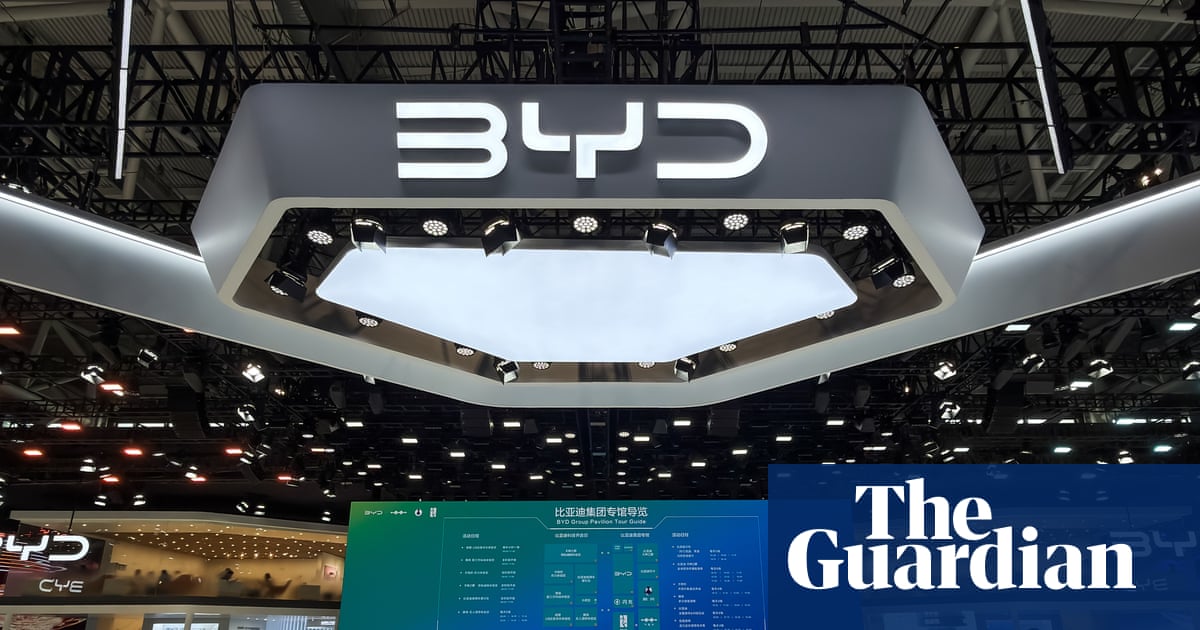
China’s BYD Aims to Be World’s Biggest Car Firm Within Five Years
BYD Chairman Wang Chuanfu has stated that the Chinese automaker intends to become the world’s largest car manufacturer by scale within five years. This ambition arrives as the company navigates a 33% decline in share value over the past year, leading Wang to publicly urge investors to remain patient during this expansion phase.
Why does BYD believe it can become the world’s largest automaker?
The drive toward global dominance rests on a strategy of aggressive scaling and vertical integration. According to company statements, BYD is focusing on “scale” as the primary metric for its ascent. By controlling the production of its own batteries and semiconductors, the firm reduces reliance on external suppliers, a move that allows it to undercut competitors on price while maintaining production speed.
Wang Chuanfu’s confidence stems from the company’s ability to pivot rapidly between different powertrain technologies. Unlike some competitors that focused solely on battery electric vehicles (BEVs), BYD maintains a massive footprint in plug-in hybrid electric vehicles (PHEVs). This dual-track approach allows the firm to capture market share in regions where charging infrastructure remains underdeveloped.
- Vertical Integration: BYD produces its own “Blade Battery,” reducing costs and supply chain volatility.
- Diverse Portfolio: The lineup ranges from budget-friendly city cars to high-end luxury EVs.
- Global Expansion: The company is aggressively entering markets in Southeast Asia, Latin America, and Europe.
How has the stock market reacted to BYD’s growth strategy?
Investors have shown significant volatility despite the company’s growth in volume. Financial data indicates that BYD shares have fallen 33% over the last 12 months. This decline suggests a tension between the company’s long-term industrial goals and the short-term expectations of shareholders.
Market analysts attribute this slide to several factors, including an intensifying price war within the Chinese domestic market. As BYD lowers prices to capture more customers and drive the “scale” Wang Chuanfu desires, profit margins per vehicle often shrink. This creates a paradox where the company sells more cars but faces pressure on its bottom line, leading to the stock price dip noted in recent financial reports.
“The chairman has urged investor patience,” according to reports on the company’s internal communications, signaling that the firm views the current stock decline as a temporary byproduct of a larger, more aggressive growth trajectory.
What are the primary obstacles to BYD’s five-year goal?
Achieving the title of the world’s largest car firm requires more than just production capacity; it requires navigating a complex web of geopolitical and economic hurdles. The most immediate threat is the rise of protectionist trade policies in Western markets.
The European Union and the United States have both scrutinized Chinese EV subsidies. The implementation of higher tariffs on Chinese-made vehicles could stifle BYD’s ability to export its low-cost models, which are central to its scaling strategy. If BYD cannot move its volume into these high-value markets, it may struggle to surpass established giants like Toyota or Volkswagen.
Additionally, the company faces the challenge of brand perception. While BYD is a household name in China, it lacks the legacy prestige of European or American brands. Transitioning from a “value” brand to a global leader requires significant investment in marketing and after-sales service infrastructure across multiple continents.
| Challenge Category | Specific Obstacle | Potential Impact |
|---|---|---|
| Geopolitical | EU/US Import Tariffs | Increased retail prices, lower competitiveness in West |
| Financial | Domestic Price Wars | Compressed profit margins and stock volatility |
| Brand | Market Recognition | Slower adoption in premium global segments |
| Infrastructure | Global Service Networks | Higher operational costs for overseas expansion |
How does BYD’s approach differ from other EV leaders?
BYD’s path to the top differs fundamentally from the strategy employed by Tesla. While Tesla focused on a top-down approach—starting with a luxury Roadster to fund more affordable models—BYD expanded from the bottom up and the middle out simultaneously.
BYD leverages its history as a battery manufacturer. This origin allows them to treat the battery not as a component to be bought, but as the core product around which the car is built. This “battery-first” philosophy enables faster iterations of energy density and safety features, such as the aforementioned Blade Battery, which is designed to resist thermal runaway during punctures.
Furthermore, BYD’s willingness to maintain a massive hybrid fleet serves as a hedge against the fluctuating pace of global EV adoption. By selling both PHEVs and BEVs, they avoid the “all-or-nothing” risk that pure-play EV firms face when consumer demand for full electrification slows down.
For a deeper dive into how this impacts the broader industry, see our related explainer on EV supply chain vertical integration.
What is the significance of “scale” in the automotive industry?
When Wang Chuanfu mentions becoming the largest “by scale,” he is referring to production volume and market penetration. In the automotive world, scale is the ultimate weapon for two reasons: cost reduction and ecosystem control.
First, the “economies of scale” allow a manufacturer to spread fixed costs—such as R&D and factory tooling—over millions of units. This lowers the cost per vehicle, allowing BYD to trigger price cuts that force smaller competitors out of the market. Second, scale grants the company immense leverage over its remaining third-party suppliers, further driving down costs.
However, scale without profitability can be a liability. The 33% drop in stock price reflects a fear that BYD may be chasing volume at the expense of financial health. If the company scales too quickly without establishing sustainable margins in overseas markets, it risks a “bubble” scenario where growth is fueled by subsidies or unsustainable discounting.
How will global competition respond to BYD’s ambitions?
Legacy automakers are not standing still. Companies like Toyota and Volkswagen are currently restructuring their software and battery divisions to compete with the speed of Chinese firms. Toyota, in particular, has doubled down on a multi-pathway strategy—combining hybrids, hydrogen, and BEVs—which mirrors BYD’s own diversified approach.
The competition is shifting from a battle of “engine specs” to a battle of “software and ecosystems.” BYD is investing heavily in intelligent cockpits and autonomous driving features to ensure that its cars are seen as tech products rather than just transportation. This shift is essential if they hope to capture the younger, tech-savvy demographic in Europe and Southeast Asia.
We are seeing a convergence of strategies: the Chinese firms are learning the branding and quality control of the West, while Western firms are trying to mimic the supply chain efficiency and speed of the East.
Frequently Asked Questions
Will BYD actually become the world’s biggest car company?
Chairman Wang Chuanfu believes it is possible within five years. Whether this happens depends on the company’s ability to expand into Europe and Asia without facing insurmountable tariffs or trade barriers.

Why did BYD’s stock price drop 33%?
The decline is largely attributed to an aggressive price war in the Chinese EV market, which has pressured profit margins, and general market volatility regarding the sustainability of rapid growth.
What makes BYD different from Tesla?
Unlike Tesla, BYD is vertically integrated into battery production and offers both fully electric and plug-in hybrid vehicles, allowing it to target a wider range of consumers and infrastructure levels.
What is the “Blade Battery”?
The Blade Battery is a proprietary LFP (lithium iron phosphate) battery developed by BYD. It is designed for higher safety (reducing fire risk) and better space efficiency within the vehicle chassis.
Where is BYD expanding its operations?
The company is focusing heavily on Southeast Asia, Latin America, and Europe to diversify its revenue streams away from the saturated Chinese domestic market.
As BYD pushes toward its five-year goal, the industry will be watching two key metrics: the company’s ability to stabilize its share price and its success in establishing manufacturing plants on foreign soil to bypass import tariffs. The outcome will likely determine if the center of the automotive world permanently shifts toward Shenzhen.
