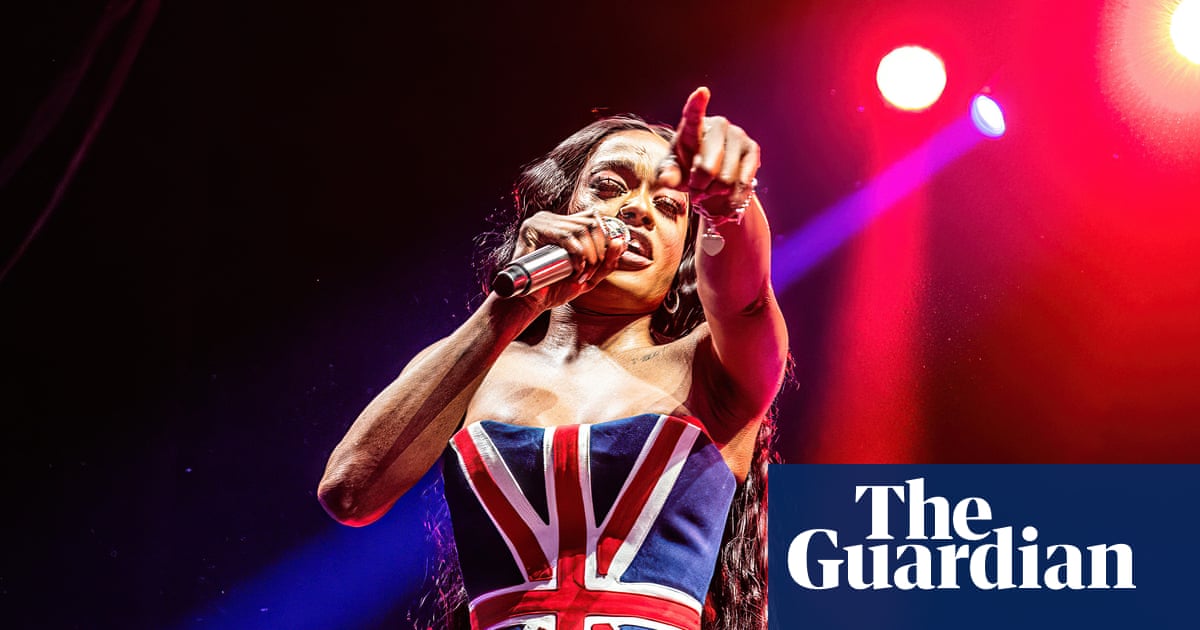
Badenoch-supporting US rapper Azealia Banks to attend Spectator summer party in London: A Collision of Culture and Politics
In a move that exemplifies the increasingly fluid and unpredictable nature of modern political alliances, the US rapper Azealia Banks is set to attend the prestigious Spectator summer party in London. The event, long a staple of the British right-wing social calendar, serves as a high-profile networking hub for politicians, journalists, and intellectuals. However, the invitation of Banks—a figure known as much for her provocative public persona as her musical talent—signals a strategic shift in how political movements are attempting to bridge the gap between traditional establishment circles and the “anti-woke” cultural vanguard.
The presence of a Badenoch-supporting US rapper Azealia Banks to attend Spectator summer party in London is not merely a social curiosity; It’s a reflection of a broader transatlantic alignment. Banks has become a vocal admirer of Kemi Badenoch, the prominent Conservative politician and advocate for a rigorous, meritocratic approach to governance. This intersection of American celebrity culture and British Toryism highlights a growing trend where figures from the arts and entertainment sectors are finding common ground with right-leaning politicians over shared grievances regarding identity politics and social orthodoxy.
The Spectator Summer Party: More Than Just a Social Gathering
To understand the significance of this attendance, one must first understand the venue. The Spectator summer party is not a typical gala; it is a concentrated ecosystem of influence. For decades, it has functioned as a space where the editorial direction of one of the UK’s oldest magazines meets the legislative ambitions of the Conservative Party. It is a place where policy is whispered, alliances are forged, and the “mood” of the British right is gauged.
Traditionally, the guest list has been dominated by hereditary peers, seasoned MPs, and heavyweight columnists. The inclusion of a controversial American rapper represents a departure from this archetype. It suggests that the hosts and the political figures attending are increasingly open to “outsider” energy—specifically the kind of unfiltered, confrontational style that Azealia Banks embodies. By bringing Banks into this environment, the event transforms from a closed-loop establishment party into a crossroads of the global “culture war.”
The Strategic Value of “Outsider” Endorsements
For the British right, particularly those aligned with the Badenoch wing of the party, the appeal of figures like Banks lies in their perceived authenticity. In an era where traditional political communication is often viewed as sanitized or overly cautious, the raw and often volatile nature of Banks’ public discourse is seen by some as a refreshing antidote to “political correctness.”
- Cultural Reach: Access to a younger, more digitally native audience that typically views the Conservative Party as antiquated.
- Ideological Synergy: A shared rejection of what they term “wokeism” or the perceived excesses of progressive social engineering.
- Disruption: Using high-profile, polarizing figures to dominate the news cycle and shift the conversation away from traditional policy debates toward cultural identity.
The Kemi Badenoch Connection: A Shared Philosophy
The core of this story is the relationship between Azealia Banks and Kemi Badenoch. Badenoch has carved out a distinct niche within the UK political landscape, positioning herself as a fearless combatant against “identity politics.” Her rhetoric emphasizes individual agency, national sovereignty, and a rejection of the systemic narratives often championed by the left.
Banks, who has spent years navigating the fringes of the music industry and the depths of social media controversy, has found a kindred spirit in Badenoch. The rapper’s support for the politician is rooted in a mutual belief that the current cultural climate suppresses honest discourse in favor of performative inclusivity. To Banks, Badenoch represents a form of intellectual courage—a willingness to say the “unsayable” in the face of intense public scrutiny.
“The alignment between a provocative artist and a disruptive politician is rarely about specific policy white papers; it is about a shared aesthetic of defiance.”
Analyzing the Appeal of the “Anti-Woke” Narrative
The attraction for Banks is likely tied to her own experiences with “cancel culture.” Having been banned from multiple platforms and frequently embroiled in public feuds, she views the “anti-woke” movement not as a conservative political project, but as a liberation movement for free speech. When she supports Badenoch, she is supporting a political framework that validates her own rebellious posture against the perceived hegemony of progressive norms.
For Badenoch, the support of a figure like Banks provides a layer of “street credibility” or cultural edge. It demonstrates that her brand of conservatism is not just for the boardroom or the village green, but has resonance with diverse, urban, and artistic populations who feel alienated by the modern left.
Azealia Banks: From Music to Political Commentary
Azealia Banks first entered the global consciousness as a critically acclaimed rapper with a sophisticated blend of house music and hip-hop. However, her trajectory shifted as she became a polarizing figure on social media. Over the last several years, Banks has transitioned from being a music artist who happens to have opinions to a cultural commentator who uses music as a backdrop for her ideological battles.
Her political evolution has been non-linear. While not a traditional conservative in the fiscal or social sense of the 1950s, she has aligned herself with the “New Right” or the “Dissident Right.” This movement is characterized by a focus on free expression, a skepticism of institutional narratives, and a penchant for challenging social taboos.
The Role of Social Media in Political Alignment
The relationship between Banks and the UK right was largely fostered in the digital ether. Social media allows for the creation of “echo chambers” where figures from vastly different backgrounds—a New York rapper and a British Cabinet minister—can find common ground through shared hashtags and viral clips. This digital intimacy bypasses traditional media gatekeepers, allowing a Badenoch-supporting US rapper Azealia Banks to attend Spectator summer party in London as a natural progression of an online relationship.
| Dimension | Traditional Toryism | The “Badenoch/Banks” Alignment |
|---|---|---|
| Communication Style | Reserved, diplomatic, formal | Direct, confrontational, unfiltered |
| Primary Focus | Institutional stability, fiscal policy | Cultural identity, free speech, anti-wokeism |
| Target Demographic | Rural voters, business elite | Cultural dissidents, “anti-establishment” youth |
| View on Social Norms | Preservation of tradition | Deconstruction of “progressive orthodoxy” |
The Transatlantic Nexus of the Right
This event is a micro-example of a macro-trend: the globalization of the right-wing cultural movement. There is an increasing fluidity between the American “MAGA” style of politics and the “National Conservative” movement in the UK. Both are characterized by a shift away from neoliberalism and toward a more populist, culture-focused approach.
By inviting Azealia Banks, the Spectator and its associated political circle are acknowledging that the battle for the future of the right is being fought on the terrain of culture, not just economics. The goal is to create a “big tent” that includes not only the traditionalist but also the provocateur, the rebel, and the artist.
Potential Friction Points
Despite the synergy, this alliance is not without its tensions. The British establishment, even the right-wing side, still values a certain level of decorum. Banks’ history of erratic public outbursts could potentially clash with the more structured environment of a London political party. There is an inherent risk that the “outsider” energy that makes her attractive to the movement could also make her a liability if her spontaneity targets the wrong people within the venue.
critics argue that this is a “performance” of rebellion. They suggest that the right is merely using Banks as a prop to signal their “edginess” without actually committing to the systemic changes that a truly outsider-led movement would require. related explainer on the rise of national conservatism
Wider Implications for the UK Political Landscape
The attendance of Azealia Banks at such a high-profile event suggests that the Conservative Party—or at least the faction surrounding Kemi Badenoch—is preparing for a future where political identity is defined by cultural loyalty rather than party loyalty. This is a shift toward “personality politics,” where the charisma and conviction of an individual outweigh the platform of the party.
The Impact on Public Perception
For the general public, this pairing may seem surreal. However, in the context of the current political climate, it is a logical extension of the “culture war” strategy. By associating with a figure like Banks, the Badenoch wing of the party is signaling that it is not afraid of controversy and that it is willing to embrace the “unconventional” to fight the perceived battle against progressivism.
This strategy can be highly effective in mobilizing a base that feels silenced. When people see a rapper—who has been marginalized by the mainstream media—being welcomed into the halls of power by a politician they admire, it creates a powerful narrative of redemption and alliance. It suggests that there is a place for the “forgotten” or the “cancelled” within the new right-wing order.
Comparisons to Past Political Alliances
Historically, politicians have always sought the endorsement of celebrities, but the nature of these endorsements has changed. In the past, a celebrity might endorse a candidate based on a shared policy goal (e.g., environmentalism or civil rights). Today, the endorsement is often based on a shared vibe or a shared enemy. The Banks-Badenoch connection is less about a specific legislative agenda and more about a shared opposition to a specific cultural zeitgeist.
Common Misconceptions About This Alliance
There are several ways this story is often oversimplified. To get a clear picture, it is necessary to correct a few common misconceptions:
- Misconception: Banks has suddenly become a “traditional” conservative.
Correction: Banks is not advocating for a return to 1950s social values. Her alignment is with the disruptive side of the right—the part that enjoys breaking rules and challenging the status quo. - Misconception: This is a formal political appointment.
Correction: This is a social and cultural association. While it carries political weight, it is not a formal advisory role; it is a signal of ideological kinship. - Misconception: The Spectator party is a government-sanctioned event.
Correction: While many government officials attend, it is a private event hosted by a magazine. It represents the intellectual and social right, not necessarily the official position of the UK government.
The Future of Cultural-Political Partnerships
As we move further into a decade defined by polarization, You can expect more of these “odd couple” pairings. The barrier between the entertainment industry and the political sphere has effectively collapsed. We are entering an era of the “Influencer Politician” and the “Political Artist.”
The presence of a Badenoch-supporting US rapper Azealia Banks to attend Spectator summer party in London is a harbinger of a world where political legitimacy is derived from digital engagement and cultural impact rather than institutional pedigree. Whether this leads to a more inclusive political discourse or simply a more volatile one remains to be seen.
Observers should watch for how this interaction is leveraged in future campaigns. If the “Badenoch model” of attracting cultural dissidents proves successful, it could become the blueprint for right-wing parties across Europe and North America, shifting the focus from policy-driven campaigning to identity-driven cultural warfare.
Key Takeaways from the Event
- Cross-Pollination: The merging of US “anti-woke” celebrity culture with UK right-wing politics.
- Brand Alignment: Kemi Badenoch’s positioning as a fearless fighter against identity politics attracting unconventional allies.
- Venue Significance: The Spectator party acting as a bridge between the establishment and the cultural fringe.
- Strategic Shift: A move toward “vibe-based” political alliances over policy-based ones.
Frequently Asked Questions
Why is Azealia Banks supporting Kemi Badenoch?
Azealia Banks has expressed admiration for Kemi Badenoch’s outspoken stance against “woke” culture and identity politics. Banks, who has faced significant backlash and “cancellation” in her own career, views Badenoch’s approach as a defense of free speech and a rejection of modern social orthodoxies.
What is the Spectator summer party?
The Spectator summer party is an annual high-society gathering in London hosted by The Spectator magazine. It is attended by a wide array of figures from the British right, including politicians, journalists, and intellectuals, and is known for being a key networking event for the Conservative establishment.
Is this a sign of a new trend in the Conservative Party?
Yes. It suggests that a segment of the party, particularly those aligned with Kemi Badenoch, is seeking to broaden its appeal by embracing “anti-establishment” cultural figures. This is part of a larger strategy to attract voters who are disillusioned with both the left and the traditional, “stuffy” image of the right.
Does Azealia Banks have a formal role in UK politics?
No, Azealia Banks does not hold any formal political office or official advisory role. Her involvement is that of a cultural supporter and an ideological ally, using her platform to amplify certain political viewpoints.
How does this fit into the broader “culture war”?
This alliance is a textbook example of the “culture war,” where the primary battleground is not legislation, but cultural symbols, language, and identity. By bringing a provocative American artist into a bastion of British conservatism, the movement is signaling its willingness to disrupt traditional norms to defeat a common ideological opponent.
