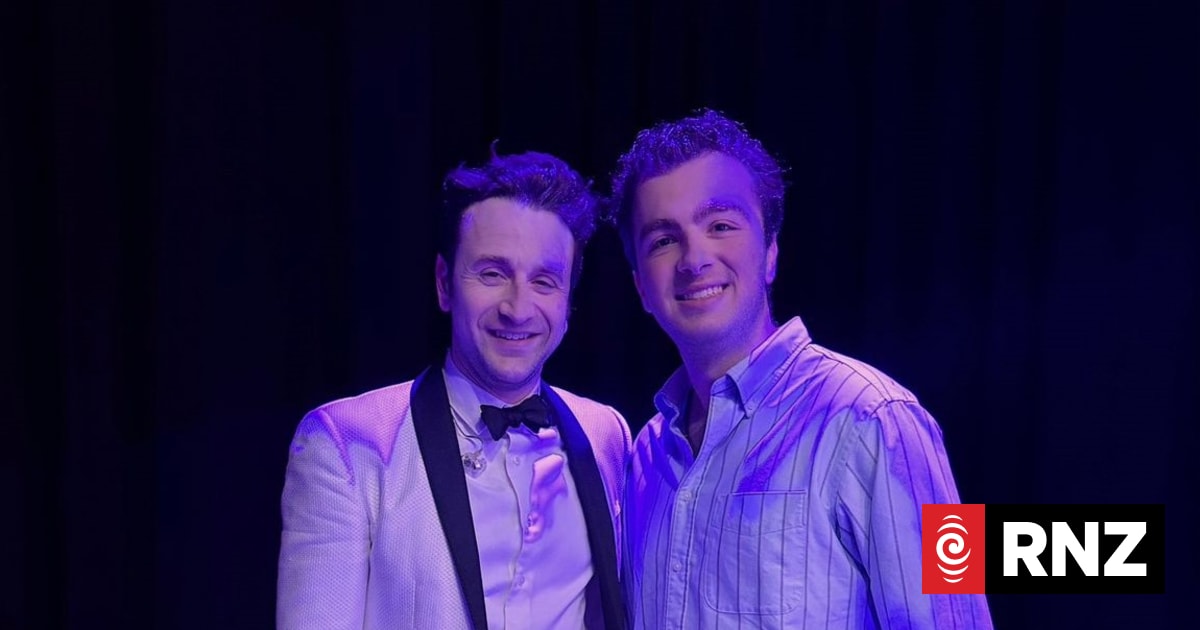
Audience member called on to stage to finish La La Land performance – RNZ: A Rare Musical Rescue in Sydney
In a moment that blurred the line between professional performance and spontaneous community action, a live orchestral rendition of the La La Land soundtrack in Sydney took an unexpected turn. When a critical member of the ensemble became unable to continue due to illness, the production faced a potential collapse. However, the evening was saved by an unlikely hero: a skilled keyboardist sitting among the spectators who was called on stage to ensure the show could go on.
This event, which has since garnered international attention, highlights the precarious nature of live performance and the extraordinary circumstances that occasionally arise when professional preparation meets an unforeseen crisis. The incident serves as a compelling example of the “show must go on” ethos, transforming a potential disappointment for ticket-holders into a memorable, feel-good narrative of musical rescue.
The Incident: A Crisis Mid-Performance
The event unfolded during a scheduled orchestral performance of the music from the critically acclaimed film La La Land. As the audience gathered in Sydney to experience the sweeping melodies and jazz-influenced compositions of the score, the production hit a sudden roadblock. One of the key musicians—the keyboard player—fell ill during the event, leaving a significant void in the orchestral arrangement.
In an orchestral setting, particularly one featuring the eclectic blend of jazz and classical music found in La La Land, the keyboard is not merely an accompaniment; it often drives the harmonic structure and rhythmic pace of the piece. The sudden absence of this role threatened to halt the performance entirely, as the remaining musicians could not simply “play around” the missing parts without a significant loss in musical integrity.
Faced with the possibility of canceling the remainder of the show, the production team made a daring decision. They turned to the crowd, asking if there was a capable pianist or keyboardist in the house. This plea for help was answered by an audience member who possessed the necessary skills to step into the spotlight. This individual transitioned from a passive observer to an active participant, ascending the stage to fill the gap left by the ailing musician.
| Event Detail | Description |
|---|---|
| Performance | La La Land Orchestral Concert |
| Location | Sydney, Australia |
| The Crisis | Keyboard player fell ill during the show |
| The Solution | Audience member (keyboardist) called to stage |
| Outcome | Performance successfully completed |
The Musical Significance of the Keyboard in ‘La La Land’
To understand why the loss of a keyboardist was so critical to this specific performance, one must look at the composition of the La La Land score. The film is a love letter to the golden age of Hollywood musicals, heavily blending traditional orchestral swells with the improvisational spirit of jazz.
The keyboard—and specifically the piano—serves as the emotional and structural anchor of the soundtrack. From the intimate, melancholic solos to the upbeat, syncopated rhythms of the jazz club scenes, the keyboard provides the essential bridge between the percussion and the string sections. Without a proficient player, the music would lose its signature “swing” and harmonic depth, making the substitution a necessity rather than a luxury.
The Technical Challenge of Stepping In
For the audience member who stepped forward, the challenge was twofold. First, there was the technical requirement of playing complex arrangements without the benefit of a full rehearsal with the orchestra. Second, there was the psychological pressure of performing in front of a large crowd under emergency conditions.
- Sight-Reading: The substitute likely had to rely on high-level sight-reading skills or an intimate familiarity with the film’s score.
- Synchronization: Coordinating with a conductor and a full orchestra requires precise timing, especially when stepping in mid-stream.
- Adaptability: Every orchestral setup is different; the musician had to quickly adapt to the instrument and the acoustics of the stage.
The Logistics of Live Performance and Emergency Substitutions
In most professional orchestral settings, there are protocols in place to handle musician absences. This usually involves “substitutes” or “understudies”—professional musicians who are briefed on the repertoire and can be called in on short notice.
However, the timing of this particular illness created a unique vacuum. When a musician falls ill during a performance, there is no time to call a substitute from home. The production is left with three primary options:
- Pause the Show: This disrupts the momentum and may lead to audience dissatisfaction.
- Modify the Arrangement: This involves rearranging the music on the fly so other instruments cover the keyboard parts, which is often impossible for complex jazz pieces.
- Seek Immediate Local Help: This is the highest-risk, highest-reward option, as it relies on the hope that a qualified professional happens to be in the audience.
The decision to call on an audience member is a rare occurrence in the world of professional orchestral music, which typically prizes rigorous control and predictability. That this occurred suggests both a desperate need and a high level of trust in the musicianship of the person who stepped forward.
For more information on how live events manage risks, you might find a related explainer on event contingency planning useful.
The Psychology of the ‘Hero’ Audience Member
There is a profound psychological shift that occurs when a spectator is asked to become a performer. This transition from the “safe” zone of the audience to the “exposed” zone of the stage creates a narrative of bravery and altruism that resonates deeply with observers.
The audience’s reaction to such an event is typically one of immediate support. The tension of the “crisis” (the sick musician) is replaced by the excitement of the “rescue” (the fan stepping in). This creates a collective emotional experience that often surpasses the quality of a standard, flawless performance. The crowd is no longer just listening to music; they are witnessing a human drama unfold in real-time.
“The magic of live performance lies in its unpredictability. When a fan steps in to save a show, the music becomes secondary to the act of community and mutual support.”
Why This Story Went Viral Globally
The news that an audience member was called on stage to finish the La La Land performance quickly spread across international platforms. The appeal of the story lies in several key storytelling tropes:
1. The “Unsung Hero” Narrative
People are naturally drawn to stories where an ordinary person possesses an extraordinary skill and uses it to help others. The image of a fan stepping out of the darkness of the theater and into the spotlight is a powerful visual metaphor for competence and courage.
2. The Contrast of High Art and Spontaneity
Orchestral concerts are often viewed as formal, rigid and somewhat distant. The intrusion of a spontaneous, “unplanned” element breaks this formality, making the art form feel more accessible and human.
3. The “Feel-Good” Factor
In a news cycle often dominated by conflict, a story about a successful rescue and a shared positive experience provides a necessary emotional reprieve. The resolution is clean: a problem arose, a solution was found, and the music continued.
Common Misconceptions About Emergency Substitutions
While the story is heartwarming, it is important to clarify some misconceptions about how these situations work in the professional music industry.
Misconception: This is a common practice.
In reality, calling an audience member to play a professional orchestral part is extremely rare. Professional unions and contracts usually dictate who can perform on stage. This was an emergency measure, not a standard operating procedure.
Misconception: The substitute was likely an amateur.
To successfully finish a La La Land performance with an orchestra, the individual would need to be a highly proficient musician—likely a professional or a particularly advanced student of music. An amateur would struggle to maintain the tempo and harmonic complexity required for a live orchestral setting.
Misconception: The original musician was simply “nervous.”
The reports indicate the musician fell ill. In the high-pressure environment of live performance, sudden health issues (ranging from respiratory problems to sudden fainting or severe nausea) can occur, necessitating immediate replacement to avoid a total shutdown of the event.
Comparing the ‘Fan Rescue’ to Other Live Performance Anomalies
While the Sydney La La Land incident is unique in its orchestral context, it mirrors other famous “fan-on-stage” moments in music history. Often, pop or rock stars will bring a fan on stage to sing a chorus. However, there is a fundamental difference between a “guest appearance” and a “technical rescue.”
In a guest appearance, the professional remains in control, and the fan is there for entertainment. In a technical rescue, the professional is absent, and the fan becomes the primary engine of the performance. The stakes are significantly higher because the success of the entire production rests on the substitute’s shoulders.
This incident aligns more closely with rare moments in jazz history, where “sitting in” is a tradition. However, doing so in a formal orchestral setting for a film score adds a layer of complexity and formality that makes the Sydney event particularly noteworthy.
Key Takeaways from the Event
- Resilience in Art: The incident proves that the spirit of live performance is about adaptability and the drive to deliver the experience to the audience regardless of obstacles.
- The Value of Skill: It highlights how specialized skills (like professional-level keyboard playing) can be an invaluable asset in unexpected situations.
- Community Connection: The event transformed a professional transaction (tickets for a show) into a community experience, strengthening the bond between the performers and the public.
Frequently Asked Questions
Who was the audience member that saved the La La Land performance?
While the specific identity of the individual has been the subject of much interest, the primary reports focus on their role as a skilled keyboardist and fan who stepped in to assist when the original musician fell ill.
Where did the La La Land orchestral concert take place?
The performance took place in Sydney, Australia.
Why couldn’t the orchestra just play without the keyboardist?
The La La Land score relies heavily on the keyboard for its jazz elements and harmonic structure. Removing the keyboard would have left significant gaps in the music, fundamentally altering the compositions and potentially ruining the performance for the audience.
Was the original musician replaced for the whole show?
The reports indicate that the audience member was called on to finish the performance, suggesting the illness occurred partway through the event.
Is it common for orchestras to ask the audience for help?
No, it is extremely rare. Most professional orchestras have strict protocols and substitute lists. This was an emergency response to a sudden health crisis during a live show.
For those interested in the intersection of music and unexpected events, you may also enjoy our analysis of the evolution of live orchestral experiences.
