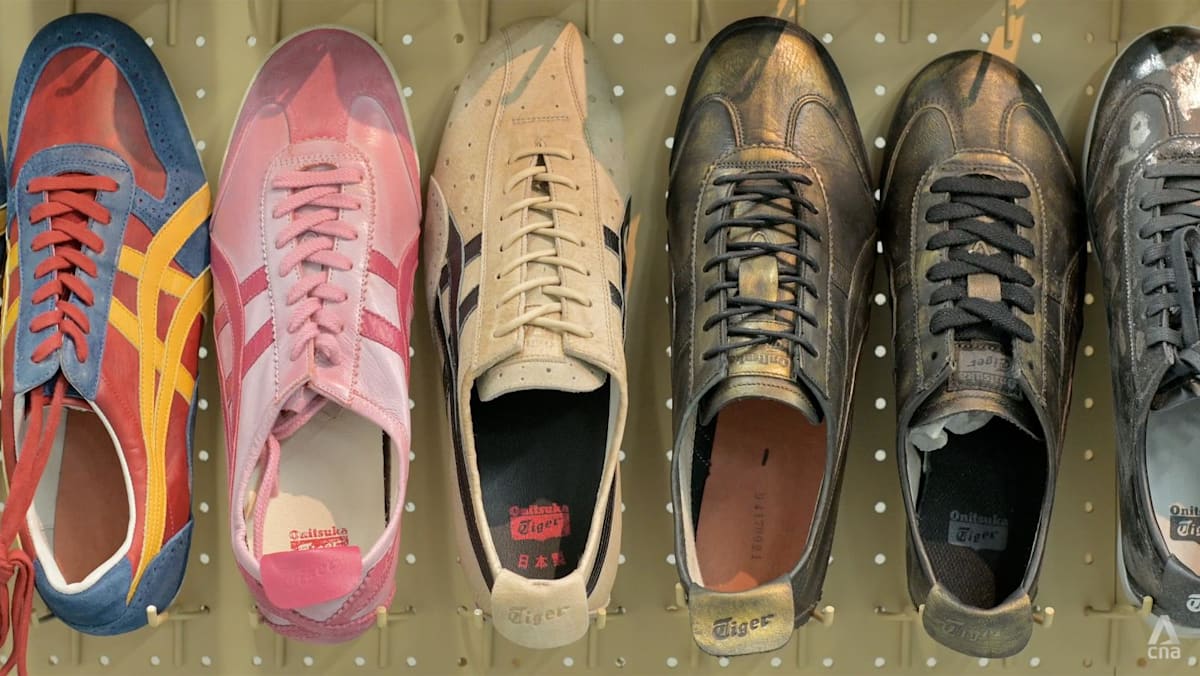
The Onitsuka Tiger Story: Asics to Spin Off Brand With Deep Roots in Nike’s Origin
Asics is spinning off its Onitsuka Tiger sneaker business into a standalone company, according to reports from Bloomberg, The Business Times, and Marketing-Interactive. The Japanese sportswear giant is separating the trendy lifestyle brand from its core performance athletic division to accelerate growth and sharpen its focus on the luxury fashion market.
Why is Asics spinning off Onitsuka Tiger?
Asics is moving to decouple Onitsuka Tiger to allow the brand to operate with greater agility and a distinct corporate identity. According to Bloomberg, the move comes as Onitsuka Tiger has evolved from a performance shoe provider into a “trendy” lifestyle brand. By creating a standalone business, Asics can tailor the brand’s management, marketing, and distribution to suit high-end fashion consumers rather than athletes.
The strategic shift recognizes a fundamental difference in consumer behavior. Asics focuses on “performance” — shoes designed for running, stability, and athletic achievement. Onitsuka Tiger, conversely, targets “lifestyle” — consumers who buy sneakers for aesthetics, heritage, and status. Marketing-Interactive notes that this separation allows Onitsuka Tiger to pursue its own growth trajectory without being tethered to the operational requirements of a mass-market athletic company.
Industry analysts suggest this move mirrors a broader trend in the footwear industry where “heritage” lines are separated from “technical” lines to protect brand equity. When a brand is perceived as too “sporty,” it can struggle to enter the luxury space; when it is too “fashion-forward,” it may lose credibility with serious athletes.
How did an octopus-inspired sole define the brand’s early innovation?
The foundations of the Onitsuka Tiger story lie in the post-war vision of its founder, Kihachiro Onitsuka. Onitsuka sought to provide Japanese youth with quality footwear that could promote health and sportsmanship. According to brand history and archival records, the early technical breakthroughs of the company were driven by a desire for superior grip and durability.
One of the most distinct early innovations involved the development of soles inspired by the suction and grip of an octopus. This biological inspiration led to tread patterns that offered unprecedented traction on various surfaces, a critical requirement for the basketball and running shoes of the era. This commitment to “functional design” established the brand’s reputation for quality long before it became a fashion icon.
This era of innovation focused on several key pillars:
- Traction: Utilizing nature-inspired patterns to prevent slipping during athletic pivots.
- Durability: Implementing rubber compounds that could withstand the rigors of outdoor courts.
- Anatomical Fit: Designing shoes that mirrored the natural shape of the foot to reduce injury.
What is the historical link between Onitsuka Tiger and Nike?
The connection between Onitsuka Tiger and Nike is one of the most significant relationships in the history of global commerce. According to historical accounts of Nike’s founding, Phil Knight, a middle-distance runner at the University of Oregon, did not start by manufacturing shoes. Instead, he started as a distributor.

In the early 1960s, Knight founded Blue Ribbon Sports (BRS). His primary business model was importing high-quality, low-cost Japanese running shoes to the United States. Onitsuka Tiger was the primary supplier for BRS. Knight recognized that Onitsuka’s shoes were technically competitive with the dominant German brands of the time, such as Adidas, but were priced more attractively for the American market.
For several years, Blue Ribbon Sports essentially functioned as the American arm of Onitsuka Tiger. However, the relationship eventually soured due to disagreements over quality control and profit sharing. This friction led Knight and his partner, Bill Bowerman, to develop their own footwear. In 1971, Blue Ribbon Sports rebranded as Nike, and the “Swoosh” replaced the Tiger stripes as the dominant symbol of American running culture.
The transition from distributor to competitor created a lasting legacy. While Nike went on to dominate the global athletic market, Onitsuka Tiger maintained its prestige through a commitment to its Japanese heritage and a pivot toward the “retro-cool” aesthetic that defines the brand today.
How has Onitsuka Tiger transitioned from sports gear to luxury fashion?
The transformation of Onitsuka Tiger from a technical athletic brand to a fashion staple was not accidental. It was the result of a strategic pivot toward “heritage” marketing. While Asics continued to innovate in the realm of GEL technology and professional marathons, Onitsuka Tiger began leaning into its archival designs.
The Mexico 66, originally designed for the 1968 Olympic Games, became the catalyst for this shift. Rather than updating the shoe with modern performance materials, the brand maintained the slim profile and classic stripes. This appealed to a burgeoning global interest in “terrace culture” and minimalist fashion.
According to reports from The Business Times, the brand’s current appeal is rooted in several factors:
| Driver of Growth | Impact on Brand Perception |
|---|---|
| Retro Aesthetics | Positions the brand as a “timeless” choice rather than a passing trend. |
| Japanese Craftsmanship | Leverages the global reputation for Japanese quality and precision (Monozukuri). |
| Celebrity/Film Endorsements | Increased visibility in cinema and street-style fashion hubs like Tokyo and Paris. |
| Niche Positioning | Avoids direct competition with the “chunkier” sneaker trends of Nike and Adidas. |
What are the implications of the Asics spin-off for the footwear market?
The decision to spin off Onitsuka Tiger suggests that Asics believes the brand has reached a valuation and market position where it can thrive independently. In the short term, this allows Asics to streamline its corporate reporting and focus its capital expenditures on performance technology.

For Onitsuka Tiger, the spin-off provides the freedom to pursue luxury partnerships and high-fashion collaborations without needing approval from a parent company focused on athletic performance. This is a critical distinction; luxury brands operate on scarcity and exclusivity, while athletic brands operate on scale and accessibility.
This move also signals a potential change in how the brand will be priced. As a standalone entity focused on the “trendy” and “lifestyle” segments, Onitsuka Tiger may move further upmarket, increasing price points to align with luxury fashion houses rather than sporting goods stores.
Related explainer on the evolution of luxury streetwear trends may provide further context on why heritage brands are currently outperforming technical brands in urban markets.
Addressing common misconceptions about the brand
There are several frequent misunderstandings regarding the relationship between Asics and Onitsuka Tiger. The most common is the belief that they are two entirely different companies. In reality, “ASICS” is an acronym for Anima Sana In Corpore Sano (A Sound Mind in a Sound Body), and the company was formed through the merger of Onitsuka and other entities. Onitsuka Tiger is the original soul of the company.
Another misconception is that the brand’s success is purely based on nostalgia. While the “retro” look is a major draw, the brand continues to integrate modern comfort technologies into its lifestyle silhouettes. The “octopus-inspired” philosophy of functional grip has evolved into modern ergonomics, ensuring the shoes remain wearable for long periods despite their slim profile.
Finally, some believe the Nike split was a hostile takeover. In truth, it was a natural business evolution. Phil Knight’s experience distributing Onitsuka Tiger shoes provided him with the market intelligence and logistics network necessary to build Nike. Without the blueprint provided by Onitsuka Tiger, the trajectory of Nike might have been entirely different.
Comparing the strategic directions of Asics and Onitsuka Tiger
To understand why a spin-off is necessary, one must look at the divergent goals of the two entities. Asics and Onitsuka Tiger are essentially chasing two different types of customers.
“The separation allows for a distinct brand identity where one focuses on the science of the run and the other focuses on the art of the walk.”
Asics is currently investing heavily in data-driven footwear, utilizing 3D foot scanning and carbon-plate technology to shave seconds off marathon times. Their goal is optimization. Onitsuka Tiger, however, is investing in leather quality, color palettes, and silhouette preservation. Their goal is expression.
By operating under one corporate umbrella, these two conflicting goals often competed for the same marketing budget and executive attention. The spin-off resolves this tension, allowing each brand to speak its own language to its own audience.
Frequently Asked Questions
Is Onitsuka Tiger still owned by Asics?
Asics is in the process of spinning off Onitsuka Tiger into a standalone business. While the transition involves a structural separation to allow the brand to operate independently, the move is designed to optimize the growth of both entities by separating performance athletics from lifestyle fashion.
What is the connection between Onitsuka Tiger and Nike?
Nike co-founder Phil Knight originally started Blue Ribbon Sports as a distributor for Onitsuka Tiger shoes in the United States. After a period of successful partnership, Knight eventually launched his own brand, Nike, using the market knowledge gained while selling Onitsuka Tiger products.
What makes Onitsuka Tiger shoes different from Asics shoes?
Asics shoes are primarily designed for athletic performance, focusing on cushioning, support, and technical innovation for sports. Onitsuka Tiger shoes are lifestyle and fashion-oriented, focusing on heritage designs, slim profiles, and a “retro” aesthetic.
Why is the brand called “Tiger”?
The tiger symbol was adopted early in the brand’s history to represent strength, agility, and speed. This imagery helped the brand stand out in the competitive athletic market of the mid-20th century and remains a core part of its visual identity today.
Where can I find the “octopus-inspired” soles?
The octopus-inspired grip was a foundational innovation in the brand’s early technical shoes. While modern shoes use advanced rubber compounds, the philosophy of high-traction, nature-inspired grip continues to influence the brand’s approach to sole design across various models.
As the footwear industry continues to fragment into “performance” and “lifestyle” categories, the spin-off of Onitsuka Tiger serves as a case study in brand preservation. By isolating its heritage assets from its technical operations, Asics is attempting to capture the highest possible value from a brand that has successfully traveled from the Olympic tracks of 1968 to the fashion runways of the 21st century.
