
Elon Musk’s Go-To Hacker Launches A $100 Million AI Cyber Agent
A security researcher frequently consulted by Elon Musk has launched an AI-driven cyber agent valued at $100 million, according to reporting by Forbes. The tool leverages autonomous artificial intelligence to perform complex cybersecurity tasks, marking a significant shift toward the automation of both offensive and defensive digital operations.
What is the $100 Million AI Cyber Agent?
The new AI cyber agent is an autonomous software entity designed to operate independently of constant human oversight to identify, analyze, and exploit vulnerabilities in digital infrastructure. Unlike traditional security software that relies on pre-defined signatures or human-led scripts, this agent utilizes large language models (LLMs) and reasoning loops to adapt its strategy in real-time based on the defenses it encounters, according to Forbes.
Industry analysts note that the $100 million valuation reflects the growing demand for “agentic AI”—systems that do not just generate text or images but actually execute multi-step workflows. In the context of cybersecurity, this means the agent can potentially conduct a full penetration test, from initial reconnaissance to final exploitation, without a human operator directing every click.
- Autonomous Reasoning: The agent can determine the next best step in a cyberattack or defense sequence.
- Rapid Iteration: It can write and rewrite exploit code in seconds to bypass updated security patches.
- Scalability: A single agent can monitor thousands of endpoints simultaneously, a task that would require a massive team of human analysts.
Who is the “Go-To Hacker” Behind the Project?
The developer is described as a high-level security expert who has maintained a close professional relationship with Elon Musk, often serving as a trusted advisor for the security integrity of Musk’s various ventures. While the specific identity is tied to the Forbes report, the individual is known in the “red teaming” community—professionals hired to legally attack systems to find weaknesses before malicious actors do.
This relationship is not uncommon in the upper tiers of Silicon Valley. Musk, through Tesla, SpaceX, and X (formerly Twitter), has historically utilized bug bounty programs and private consultants to harden his platforms. By employing elite hackers, Musk ensures that his infrastructure is tested against the most current “zero-day” exploits—vulnerabilities unknown to the software vendor.
The transition from consultant to founder of a $100 million AI venture suggests a belief that the future of security is not human-led, but human-supervised. The developer’s experience with Musk’s high-stakes environments likely provided the blueprint for an agent capable of handling the complexity of modern enterprise networks.
How Does an AI Cyber Agent Differ from Traditional Security Software?
To understand why this launch is significant, it is necessary to distinguish between traditional cybersecurity tools and autonomous AI agents. Most current security tools are reactive; they look for known patterns of attack. An AI agent is proactive and generative.
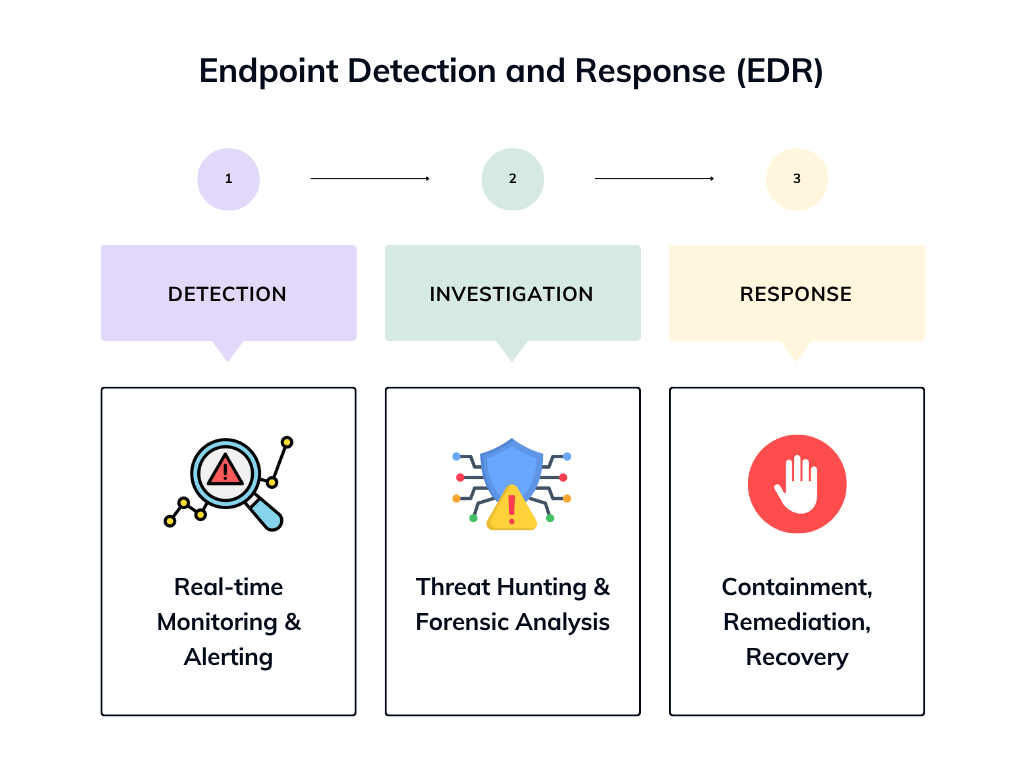
Traditional tools like Firewalls or Endpoint Detection and Response (EDR) systems act as digital fences. They alert a human when a fence is jumped. An AI cyber agent, however, acts more like a digital operative. It doesn’t just alert the user to a hole in the fence; it analyzes the hole, determines if it can be used to enter the building, and then attempts the entry to prove the risk.
| Feature | Traditional Security Software | AI Cyber Agent |
|---|---|---|
| Operation Mode | Pattern-based / Reactive | Reasoning-based / Proactive |
| Human Input | High (Requires constant tuning) | Low (Set goals, agent executes) |
| Adaptability | Low (Requires updates/patches) | High (Learns and adapts in real-time) |
| Speed of Execution | Fast (but limited to known rules) | Near-Instant (generates new paths) |
This shift represents a move toward agentic AI, where the AI is given a goal (e.g., “Find a way into the payroll server”) rather than a set of instructions (e.g., “Scan port 80 for these three vulnerabilities”).
Why the $100 Million Valuation Matters for the AI Industry
A $100 million valuation for a specialized AI security tool indicates a massive appetite among venture capitalists for “vertical AI.” While general-purpose models like GPT-4 or Claude are powerful, they are often restricted by “guardrails” that prevent them from performing hacking tasks. A specialized agent designed specifically for cyber operations bypasses these general constraints to provide raw utility to security professionals.
The valuation also signals a shift in how the market views the “arms race” between attackers and defenders. For years, the advantage sat with the attacker, who only needed to find one hole while the defender had to plug every single one. The introduction of a $100 million AI agent suggests that defenders may finally have a tool that can match the speed and creativity of a human hacker at scale.
Furthermore, this development places pressure on legacy cybersecurity firms. Companies that rely on subscription-based “managed services” (where humans do the work) may find their business models obsolete if a single AI agent can perform the work of a 20-person Security Operations Center (SOC).
The Implications for Global Cybersecurity and Autonomous Warfare
The launch of an autonomous cyber agent introduces a “dual-use” dilemma. While the tool is marketed for security and defense, the same technology could be utilized by state-sponsored actors or criminal syndicates to automate the discovery of vulnerabilities in critical infrastructure, such as power grids or financial systems.
According to cybersecurity experts, the primary risk is the “democratization of elite hacking.” Previously, only a handful of highly skilled individuals could execute a sophisticated multi-stage attack. An AI agent lowers the barrier to entry, allowing less-skilled actors to deploy high-level exploits provided the agent is available to them.
The Risk of “Recursive Hacking”
A specific concern among researchers is the possibility of recursive hacking, where an AI agent finds a vulnerability, writes a patch to fix it, and then immediately finds a new vulnerability created by that very patch. This could lead to a cycle of rapid-fire digital evolution that happens too quickly for human administrators to track.

Strategic Impact on National Security
On a geopolitical level, the emergence of these agents suggests a move toward autonomous cyber warfare. If two opposing AI agents are deployed against each other, the “battle” could be decided in milliseconds, potentially triggering automated responses in physical infrastructure before a human commander even realizes an attack has begun.
Common Misconceptions About AI Cyber Agents
There is a tendency to view AI agents through the lens of science fiction, leading to several common misunderstandings about what this $100 million tool actually does.
Misconception 1: The AI is “sentient” or “conscious.”
The agent is not conscious. It is a highly sophisticated probabilistic engine. It doesn’t “want” to hack a system; it is optimizing for a goal based on a massive dataset of previous hacks and coding patterns. It is math, not motivation.
Misconception 2: It can hack any system instantly.
No tool is omnipotent. AI agents are still limited by the quality of their training data and the physical constraints of the network. “Air-gapped” systems (computers not connected to the internet) remain largely immune to these agents unless a human physically introduces the software via a USB drive.
Misconception 3: This replaces the need for human security experts.
The agent replaces the drudgery of security—the scanning and the repetitive testing. However, it still requires a human to define the goals, interpret the high-level results, and make the final decision on how to remediate a risk. The human moves from being the “worker” to being the “architect.”
Key Milestones in the Evolution of AI Security
The path to a $100 million autonomous agent was not immediate. It is the result of several converging technological leaps over the last decade.
- 2010s: Scripted Automation. Security tools used “playbooks”—if X happens, do Y. This was rigid and easily bypassed by creative hackers.
- 2020-2022: ML-Based Detection. Machine learning began identifying “anomalous behavior” (e.g., a user logging in from Russia at 3 AM), but it couldn’t fix the problem or attack back.
- 2023: LLM Integration. The arrival of models like GPT-4 allowed security tools to “read” code and suggest fixes in plain English.
- 2024: Agentic Shift. The current era, where AI is given “agency” to execute the fixes or the attacks it suggests, leading to the launch of tools like the one reported by Forbes.
What to Watch for in the AI Security Market
As this AI agent enters the market, several indicators will determine if it becomes the industry standard or a niche luxury tool. First, the “false positive” rate will be critical. If an autonomous agent accidentally crashes a production server while trying to “test” it, the $100 million valuation could evaporate quickly.
Second, the regulatory response will be pivotal. Governments may move to classify autonomous cyber agents as “dual-use technologies,” similar to how certain encryption software or chemical precursors are regulated. This could limit who can buy the software and where it can be deployed.
Finally, the reaction from other AI labs will be telling. If OpenAI, Google, or Anthropic develop their own integrated “security agents” within their existing ecosystems, the standalone $100 million agent will have to compete on specialization and “unfiltered” capability—essentially offering the power that the big tech companies are too afraid to release to the public.
Frequently Asked Questions
Is the AI cyber agent legal to use?
The legality depends entirely on the target. Using such a tool on systems you own or have explicit written permission to test (as in professional penetration testing) is legal. Using it against third-party systems without authorization is a violation of the Computer Fraud and Abuse Act (CFAA) in the U.S. and similar laws globally.
Why is the tool valued at $100 million?
The valuation is based on the potential to disrupt the multi-billion dollar cybersecurity services market. By automating the work of high-priced security consultants, the tool offers a scalable product that can be sold as a subscription, providing far higher margins than human-led consulting.
Can this AI agent be stopped by other AI?
Yes. This creates a “defender’s AI” vs. “attacker’s AI” dynamic. Security companies are already building AI agents designed specifically to detect the “fingerprints” of other AI agents, such as the specific way an LLM writes code or the rhythm of its network requests.
Does this mean Elon Musk is funding the project?
The reports indicate the developer is a “go-to hacker” for Musk, but they do not explicitly state that Musk is the primary financier. The $100 million valuation typically comes from venture capital firms or private investors based on the projected value of the technology.
How does this affect the average person’s online security?
In the short term, it may increase the frequency of highly sophisticated phishing and social engineering attacks. In the long term, however, it could lead to “self-healing” software that automatically finds and fixes its own bugs before a human ever knows they existed.
