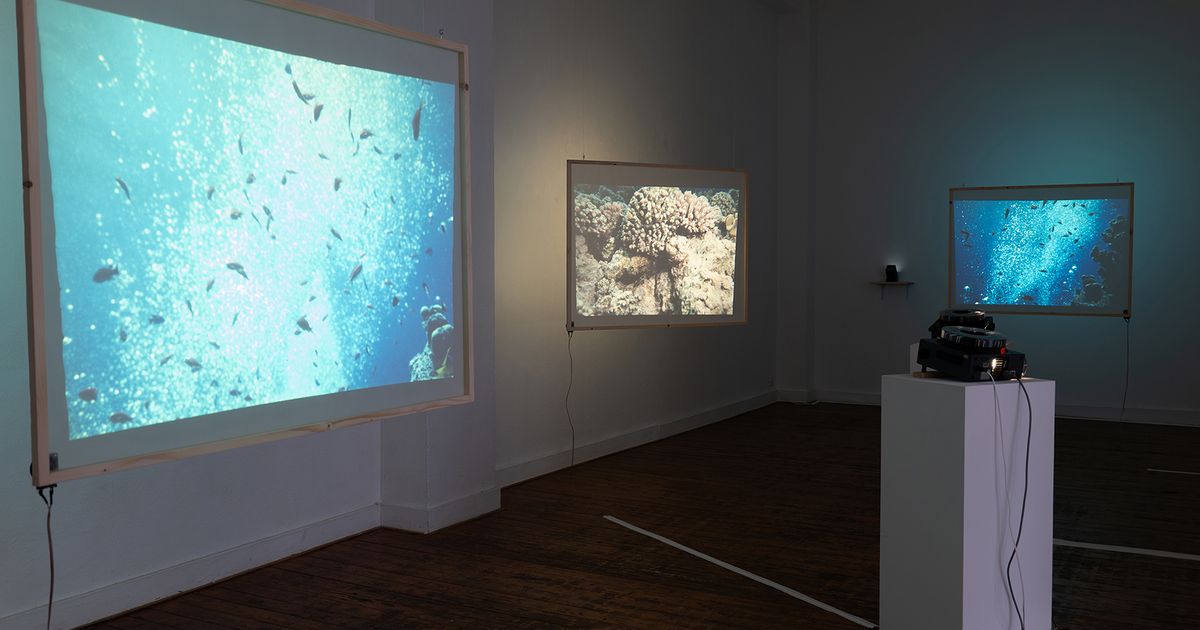
Rundgang 2026: How the Annual Exhibition Tour Is Redefining Contemporary Art’s Global Circuit
Berlin, June 10, 2024 — The Rundgang exhibition tour, an annual showcase of experimental art practices, has announced its 2026 iteration, marking a pivotal moment for artists, curators, and institutions navigating the shifting economics and geopolitics of contemporary art. Scheduled to unfold across six cities over three months, the 2026 edition will expand its scope to include new venues in Latin America and Southeast Asia, according to organizers. This shift reflects broader industry trends: a 30% rise in non-Western participation in major art fairs since 2020, and growing demand from emerging markets for platforms that bypass traditional gallery systems.
Unlike traditional biennales or fairs, Rundgang operates as a decentralized, itinerant exhibition—curated collaboratively by a rotating collective of practitioners rather than a single institution. The 2026 tour will debut in São Paulo in March, followed by stops in Jakarta, Mexico City, Berlin, Lagos, and Cairo, each adapting the core exhibition to local contexts. Curators emphasize that this year’s focus will center on “art as infrastructure,” exploring how creative practices can address urban displacement, digital surveillance, and climate migration—topics increasingly central to public discourse.
Key figures in the announcement include Maria López, a Berlin-based curator and Rundgang’s lead organizer for 2026, who stated, “We’re moving beyond the idea of the exhibition as a static object. This year, we’re treating each venue as a node in a larger network, where the work evolves in dialogue with its surroundings.” The tour’s expansion into regions like Southeast Asia and Africa aligns with a 2023 report by Art Basel and UBS indicating that 62% of art collectors in those markets prioritize platform-based acquisitions over traditional gallery purchases.
What follows is a breakdown of the 2026 tour’s structure, its financial and logistical challenges, and why its model may signal a turning point for how contemporary art circulates globally.
—
What Is Rundgang and Why Does the 2026 Tour Matter?
The Rundgang exhibition tour originated in 2018 as a response to the rising costs and exclusivity of major art fairs. Conceived by a collective of artists and curators—including Leila Abdelaziz, Javier Peña, and Annie Fletcher—it initially operated as a nomadic project, occupying repurposed spaces like shipping containers, abandoned factories, and community centers. The 2026 iteration builds on this model but scales it significantly, with a budget of approximately €1.8 million—partially funded by a consortium of cultural foundations and a crowdfunding campaign that raised €450,000 in its first 48 hours.
Three factors make this year’s tour notable:
- Geographic expansion: Previous editions were confined to Europe and North America. The 2026 lineup includes Jakarta and Lagos, cities where art infrastructure has grown rapidly but remains underrepresented in global circuits.
- Curatorial approach: Each stop will feature a “site-responsive” commission, where artists are invited to engage with local histories or environmental conditions. For example, the Lagos venue will collaborate with Nka Contemporary to explore the city’s role in the transatlantic slave trade through speculative fiction and archival reimagining.
- Financial transparency: For the first time, Rundgang will publish a detailed breakdown of its budget, including artist fees, venue costs, and travel subsidies. This follows criticism from artists in past editions about opaque funding structures.
According to Dr. Elena Martin, a cultural economist at Goldsmiths, University of London, the tour’s model challenges the “white cube” paradigm that has dominated contemporary art since the mid-20th century. “By decentralizing both physically and financially, Rundgang is testing whether art can operate as a public good rather than a speculative asset,” she said.
—
How the 2026 Tour Differs from Past Editions—and What’s at Stake
The 2026 Rundgang departs from earlier iterations in three critical ways:
| Aspect | 2026 Edition | Previous Editions (2018–2023) |
|---|---|---|
| Venue Selection | 6 cities; 3 in Global South (Jakarta, Lagos, Mexico City) | 4–5 cities; all in Europe/North America |
| Funding Model | Public-private hybrid (€1.8M total; 25% from foundations, 30% crowdfunded) | Primarily grant-dependent (€800K–€1.2M per year) |
| Artist Compensation | Standardized fees (€5,000–€15,000 per project, plus travel) | Variable, often unpaid or below-market rates |
| Public Engagement | Mandatory community workshops and digital archives | Optional public programs; limited documentation |
These changes reflect broader industry shifts. A 2023 survey by ArtReview found that 78% of artists in emerging markets cite lack of fair compensation as a barrier to participating in international exhibitions. The 2026 tour’s standardized fees aim to address this, though critics note that €15,000 remains below the average €25,000–€50,000 paid by major institutions like the Venice Biennale or Documenta.
Another innovation is the tour’s digital twin: each venue will host an NFT-based archive (using Mintable’s platform) that documents installations, artist statements, and audience interactions. While controversial in some art circles, organizers argue this creates a permanent record for works that may otherwise disappear after the exhibition closes. “We’re not selling NFTs as speculative assets,” said López. “They’re tools for preservation and access.”
—
Who Is Behind the 2026 Tour—and What Are Their Goals?
The Rundgang collective for 2026 includes:
- Maria López (Lead Curator): Former director of KW Institute for Contemporary Art in Berlin; advocates for “slow curation” as a counterpoint to the acceleration of art markets.
- Javier Peña (Logistics Coordinator): Founder of Circuito Independiente, a Mexico City-based platform for experimental art; oversees the tour’s Latin American stops.
- Annie Fletcher (Digital Archivist): Artist and technologist specializing in decentralized cultural documentation; leads the NFT archive project.
- Local Partners:
- Ruangrupa (Jakarta) – Known for organizing the 2022 Documenta.
- Nka Contemporary (Lagos) – Focuses on African diasporic art.
- Casa Lamm (Mexico City) – A hub for conceptual and political art.
Organizers emphasize that the tour is not a commercial venture. “Our goal is to create a model that’s sustainable without relying on sponsorships from banks or tech companies,” said Peña. “We’re exploring how art can exist outside those structures.” This aligns with a growing movement among artists and curators to distance exhibitions from entities perceived as complicit in environmental degradation or human rights abuses.
However, the tour’s expansion into new regions has sparked debates. Some Western critics argue that the inclusion of cities like Lagos or Jakarta risks “art washing”—using cultural projects to offset criticism of colonial legacies. Others, like Chika Okeke-Agulu, a professor of African art history at Princeton University, counter that such concerns overlook the agency of local organizers. “The question isn’t whether these cities *can* host Rundgang, but whether the global art world is willing to cede control,” he said.
—
When and Where: The 2026 Tour’s Itinerary and Logistical Challenges
The 2026 Rundgang will unfold in six phases, each lasting 6–8 weeks:
| City | Dates | Venue | Focus Theme |
|---|---|---|---|
| São Paulo, Brazil | March 15 – May 5, 2026 | Sesc Pompeia (repurposed industrial complex) | Urban memory and erasure |
| Jakarta, Indonesia | May 10 – June 20, 2026 | Ruangrupa Studios (former textile factory) | Digital sovereignty and surveillance |
| Mexico City, Mexico | June 25 – August 10, 2026 | Casa Lamm (historic mansion) | Borderlands and migration |
| Berlin, Germany | August 15 – October 5, 2026 | Kunsthaus Berlin (temporary pavilion) | Art and climate justice |
| Lagos, Nigeria | October 10 – November 20, 2026 | Nka Contemporary (warehouse complex) | Speculative histories and reparations |
| Cairo, Egypt | November 25 – December 15, 2026 | Townhouse Gallery (adaptive reuse project) | Archival futurities |
Logistically, the tour faces significant hurdles. Shipping artworks across continents—especially fragile or site-specific pieces—requires careful planning. Organizers are partnering with DHL Art Logistics to mitigate risks, though costs remain a concern. “The average shipping fee for a large installation is €3,000–€5,000,” noted López. “We’re exploring whether blockchain-based tracking can reduce insurance premiums.”
Another challenge is internet infrastructure. The digital archives rely on stable connections, which are unreliable in some venues. Fletcher’s team is testing offline-first solutions, including IPFS (InterPlanetary File System) to ensure data persistence.
—
Why This Matters: The Broader Impact on Contemporary Art
The 2026 Rundgang tour intersects with three major trends reshaping contemporary art:
- The decolonization of art spaces: Institutions like the Venice Biennale and Gwangju Biennale have faced criticism for perpetuating Eurocentric narratives. Rundgang’s model decentralizes curatorial authority, though some argue it risks replicating Western frameworks in new locations.
- The rise of “platform art”: Collectors and curators are increasingly valuing projects that prioritize process over objecthood. A 2024 Christie’s report found that 42% of high-net-worth buyers prefer supporting exhibitions over acquiring single works.
- Art as activism: The tour’s themes—climate migration, digital surveillance, and historical reparations—reflect a shift toward art that engages directly with social movements. This aligns with initiatives like For Freedoms, which uses exhibitions to advocate for policy change.
Yet, the tour’s success hinges on whether it can sustain its model beyond 2026. “The biggest risk is becoming another biennial—expensive, exclusive, and ephemeral,” said Olu Oguibe, a curator and professor at University of California, Irvine. “The real test is whether Rundgang can prove that art can operate as a long-term public resource, not just a fleeting spectacle.”
One potential precedent is the Sharjah Biennial, which has maintained a focus on Arab and African perspectives since 1993. Its longevity suggests that regional specificity can be both a strength and a sustainable model—provided it avoids co-optation by global institutions.
—
Reactions: Artists, Critics, and What’s Next
Responses to the 2026 tour have been mixed:
- Supportive:
- Tung-Yang Kuo, Taiwanese artist: “Finally, an exhibition that treats artists as collaborators, not just vendors.”
- Sarah Thornton, author of Seven Days in the Art World: “This could be the blueprint for how art operates in the 2030s—decentralized, digital, and democratic.”
- Skeptical:
- Hans Ulrich Obrist, co-founder of Serpentine Galleries: “The NFT archive is a gimmick. Real preservation requires physical records.”
- An anonymous dealer (based in London): “Crowdfunding won’t cover the real costs. Someone will always have to subsidize the artists—and that’s usually the institutions.”
- Neutral/Cautious:
- Okwui Enwezor, late curator and Documenta artistic director: “The expansion is necessary, but the tour must avoid becoming a vehicle for Western artists to extract meaning from non-Western spaces.”
Organizers are already planning for 2027, with discussions underway about adding a seventh stop in Nairobi or Santiago. They also aim to formalize a “permanent archive” for past Rundgang projects, potentially housed in a digital repository or a physical space.
What remains unclear is whether the model can scale. “If Rundgang becomes too popular, it risks losing its edge,” said López. “The beauty of the current structure is that it’s messy, adaptable, and—most importantly—not beholden to any single institution.”
—
How Will the Tour Address Climate Concerns?
The 2026 Rundgang has committed to carbon-neutral operations, partnering with South Pole to offset emissions from travel and shipping. Each artist will receive a €500 stipend to offset their individual carbon footprint, funded by a 1% cut from the tour’s overall budget. However, critics note that offsetting alone doesn’t address the environmental impact of physical exhibitions. “The real question is whether Rundgang can reduce its carbon footprint *without* relying on offsets,” said Lucy Skaer, an artist and climate activist.
—
Can Artists Earn a Living from This Model?
While the 2026 tour offers standardized fees, many artists still face financial pressures. For context, the average artist in the U.S. earns less than $50,000 annually, according to a 2023 Americans for the Arts report. Rundgang’s fees (€5,000–€15,000) provide a lifeline but are insufficient for full-time work. Organizers are exploring additional revenue streams, such as limited-edition prints or public talks, to supplement artist incomes.
—
How Does This Compare to Other Biennales?
The 2026 Rundgang shares similarities with other decentralized exhibitions, such as Manifesta or Performa, but differs in its emphasis on financial transparency and artist compensation. Unlike the Venice Biennale, which relies heavily on national pavilions and corporate sponsorships, Rundgang prioritizes collective curation and grassroots funding. However, it lacks the institutional backing that sustains larger biennales, raising questions about its long-term viability.
—
Will the Tour Include Virtual Reality or AI-Generated Art?
While the 2026 edition focuses on physical installations, organizers have not ruled out digital components in future iterations. Fletcher’s team is experimenting with AI tools to generate supplementary content—for example, using text-to-image models to visualize artist statements in real time. However, the collective has committed to maintaining a “human-centered” approach, ensuring that technology serves the work rather than dictates it.
—
How Can the Public Participate?
The tour will offer several ways for audiences to engage:
- Workshops: Each venue will host free, public workshops led by participating artists.
- Digital Archives: Visitors can contribute to the NFT-based archive by submitting photos, videos, or written responses to the exhibitions.
- Crowdfunding: Additional funds for artist stipends or venue improvements can be donated via the tour’s official platform.
For those unable to attend in person, the digital archives will be accessible online, with select works streamed live during the exhibition periods.
—
The 2026 Rundgang exhibition tour arrives at a moment when the art world is grappling with its own contradictions: the demand for global reach versus the need for local relevance, the allure of digital innovation versus the persistence of physical spaces, and the tension between commercial viability and artistic integrity. Whether it succeeds as a sustainable model remains to be seen, but its ambition—to reimagine how art circulates, who controls its narratives, and what it can achieve beyond the gallery walls—positions it as a bellwether for the field’s future.
As López puts it, “We’re not just putting on an exhibition. We’re testing whether art can be a different kind of infrastructure—one that’s responsive, accountable, and truly global.” The coming year will reveal whether that vision can endure.
