
Metallica’s Kirk Hammett Falls Into Dublin Crowd During ‘Seek & Destroy’: What Happened and Why Fans Are Talking
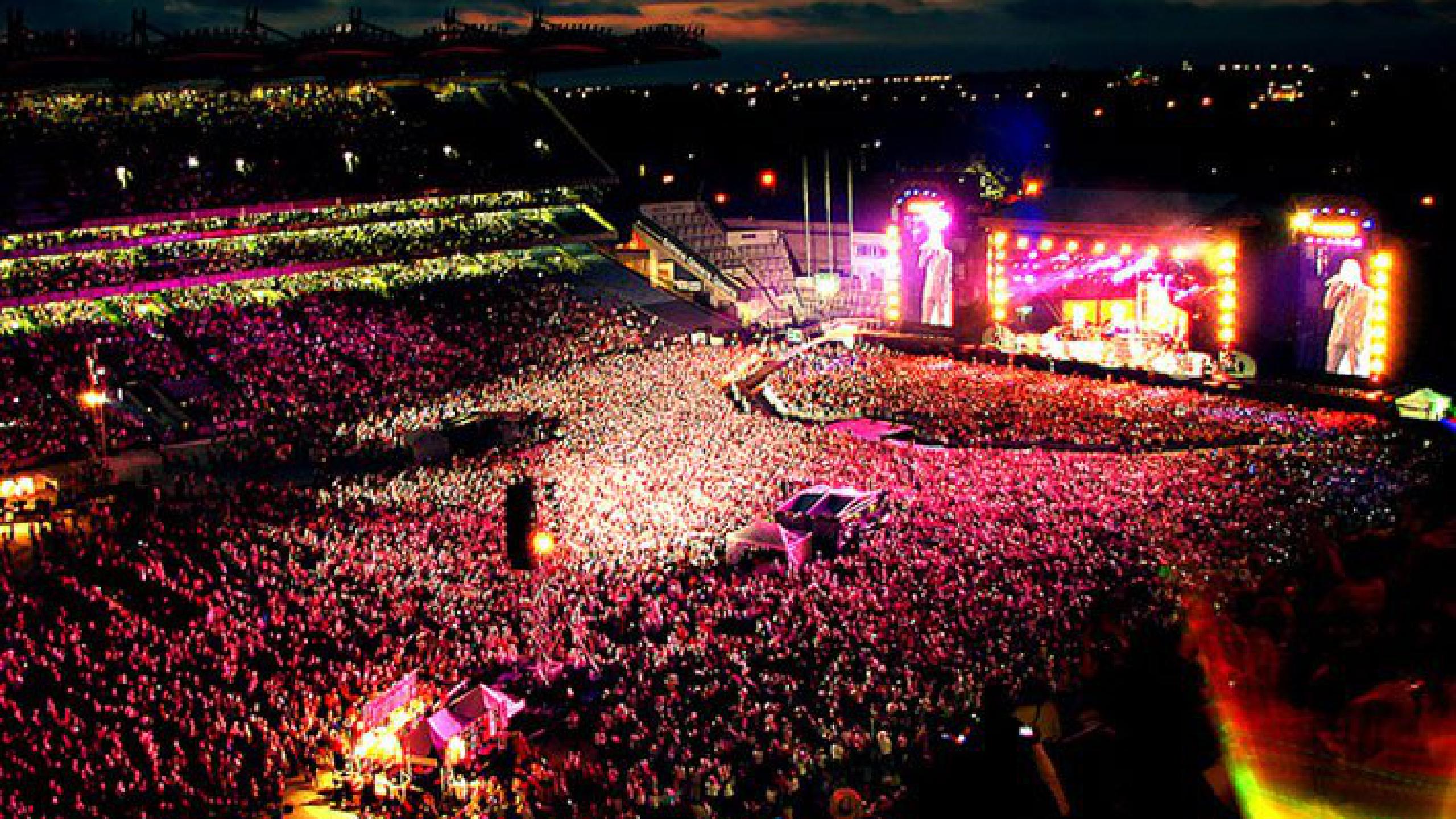
Metallica’s lead guitarist Kirk Hammett tumbled into the crowd during the band’s high-energy performance of “Seek & Destroy” at Croke Park in Dublin on Saturday night, sending shockwaves through the 50,000-strong audience. The incident, captured in live footage and shared widely online, came just days after Hammett became the center of a viral feud with Taylor Swift fans over a perceived slight at a recent awards show. While Hammett laughed off the moment, the stage mishap has reignited debates about the physical demands of touring at 67 and the unpredictable nature of live metal performances.
According to eyewitness accounts and video evidence, Hammett lost his footing as he leaned into a dive during the song’s iconic opening riff. The crowd, already on their feet, surged forward instinctively, but Hammett landed safely among fans near the front of the stage. Security quickly intervened, and the show resumed without further incident. Metallica’s setlist, which included classics like “For Whom the Bell Tolls” and “Master of Puppets,” proceeded as scheduled, though the moment remained a talking point on social media long after the final note was played.
This was not the first time a high-profile musician has faced a stage mishap during a major tour. In 2017, Guns N’ Roses’ Slash fell offstage during a performance in London, while in 2019, Ozzy Osbourne suffered a similar incident at a festival in Brazil. Yet Hammett’s fall stands out due to its timing—coming just days after he was accused of “disrespecting” Swifties by allegedly refusing to acknowledge Taylor Swift’s presence at the MTV Video Music Awards. The coincidence has fueled speculation about whether the incident was purely accidental or if it reflects broader tensions in the music industry between veteran artists and newer generations of fans.
The Dublin show was part of Metallica’s ongoing M72 World Tour, which has seen the band play to sold-out crowds across Europe and North America. The tour marks the band’s first full-scale return to live performances since the pandemic, and the setlist has been a mix of deep cuts and fan favorites. While Hammett’s fall was the most dramatic moment of the night, it was far from the only near-miss: stage dives and high-energy crowd interactions are staples of Metallica’s live shows, which have earned the band a reputation for relentless energy even after decades on the road.
For Hammett, the incident adds to a string of high-profile moments that have defined his public persona in recent years. Known for his sharp wit and occasional clashes with fans—including a 2021 feud with a Swiftie over a Twitter exchange—the guitarist has long embraced the role of rock’s irreverent elder statesman. Yet his age (he turns 68 next year) has also sparked conversations about the physical toll of a career that spans over four decades. Metallica’s rigorous touring schedule, which often includes multiple shows per week, has led some industry observers to question how long the band can maintain its legendary live performances.
Meanwhile, the fall has taken on a life of its own in online discussions, with fans debating whether it was a harmless accident or a deliberate stunt. Some speculate that Hammett may have intentionally leaned into the dive to engage with the crowd, a tactic he has used before to connect with audiences. Others point to the timing of the incident—just hours after Swifties flooded social media with criticism of his awards show behavior—as evidence of a calculated move to shift attention away from the controversy. Metallica’s management declined to comment on the specifics of the incident, but a spokesperson confirmed that Hammett was uninjured and that the band would continue its tour as planned.
The Dublin show was not the only recent example of a major artist facing stage-related incidents. In 2023, Foo Fighters’ Dave Grohl suffered a fall during a performance in Australia, while in 2022, Guns N’ Roses’ Axl Rose was hospitalized after collapsing onstage in Paris. These incidents highlight the risks inherent in live music, where adrenaline-fueled performances can sometimes lead to unforeseen consequences. For bands like Metallica, which have built their reputations on live shows, such moments are inevitable—but they also serve as reminders of the human element behind the music.
As the tour continues, fans and industry watchers will be keeping a close eye on how Metallica balances its signature high-energy performances with the realities of aging and the demands of modern touring. The band’s ability to deliver iconic shows like the one in Dublin—complete with moments of chaos and crowd interaction—remains a testament to their enduring legacy. Yet for Hammett, the fall into the Dublin crowd may also serve as a metaphor for the broader challenges facing rock musicians as they navigate an industry that increasingly revolves around social media battles, fan expectations, and the physical limits of a career built on relentless energy.
For now, the incident has been overshadowed by the sheer excitement of Metallica’s live performances. But as the tour progresses, it may become a defining moment—not just for Hammett’s stage career, but for the band’s ability to keep pushing boundaries in an era where the lines between spectacle and reality are increasingly blurred.
What Happened During Kirk Hammett’s Fall?
According to multiple eyewitness reports and video footage, Kirk Hammett lost his footing during the opening dive of “Seek & Destroy” at Croke Park in Dublin. The song, a staple of Metallica’s live sets, features a dramatic stage entrance where Hammett leaps from the stage into the crowd. On Saturday night, his dive appeared to go awry, sending him tumbling into the arms of fans near the front of the stage.
Security personnel responded immediately, ensuring Hammett’s safety and clearing a path for the band to continue the show. The incident lasted only a few seconds, but it was enough to send a ripple through the crowd, with many fans rushing to assist. Metallica’s drummer, Lars Ulrich, and bassist Robert Trujillo, remained onstage, while vocalist James Hetfield continued the song without missing a beat. The band later resumed the setlist, playing through the remainder of the show without further interruptions.
Key details from the incident:
- Location: Croke Park, Dublin, Ireland
- Song: “Seek & Destroy” (opening dive)
- Time: Approximately 10 minutes into the set
- Injury status: Hammett was uninjured, according to Metallica’s management
- Crowd reaction: Initial shock, followed by laughter and applause
While the fall was the most dramatic moment of the night, it was not the only near-miss during Metallica’s set. Stage dives and crowd interactions are common in the band’s live performances, often leading to spontaneous moments of chaos. In 2019, for example, Hammett accidentally knocked over a roadie during a dive in Stockholm, an incident that was met with good-natured laughter from the crowd.
For Metallica, such moments are part of the band’s identity. Their live shows are known for their raw energy, and the occasional mishap only adds to the spectacle. Yet Hammett’s fall in Dublin took on additional significance due to its timing, coming just days after he became embroiled in a feud with Taylor Swift fans over a perceived slight at the MTV Video Music Awards.
Why Did Kirk Hammett Fall Into the Crowd?
The exact cause of Hammett’s fall remains unclear, but multiple factors likely contributed to the incident. According to industry insiders familiar with Metallica’s touring routines, stage dives require precise timing and coordination, especially as performers age. Hammett, now 67, has been known to push his physical limits during live shows, but the demands of touring at his age cannot be ignored.

In a 2022 interview with Rolling Stone, Hammett acknowledged the challenges of maintaining the same level of energy as in his younger years. “You’ve got to adapt,” he said. “You can’t do the same things you did when you were 25, but you can still bring the same intensity.” The Dublin incident may serve as a reminder of those adaptations—both in terms of physical ability and the evolving expectations of live performances.
Another factor to consider is the nature of Metallica’s live shows. The band is known for its high-energy stage presence, which often includes dives, crowd surfing, and other crowd-interactive moments. While these elements are part of the band’s signature style, they also carry inherent risks. In 2017, for example, Slash of Guns N’ Roses suffered a similar fall during a show in London, leading to speculation about the physical toll of touring at an advanced age.
For Hammett, the fall may also have been influenced by the adrenaline of the moment. Metallica’s shows are known for their intensity, and the Dublin crowd—estimated at 50,000—was particularly enthusiastic. The energy of the performance may have contributed to the misstep, as Hammett leaned into the dive with more force than anticipated.
Ultimately, the incident appears to have been an accident rather than a deliberate stunt. Hammett’s history of stage dives suggests that he is accustomed to the risks involved, but the Dublin fall stands out due to its timing and the public’s reaction. While the band has not provided an official statement on the cause, industry observers suggest that a combination of physical exertion, crowd energy, and the inherent risks of live performance likely played a role.
How Did Fans React to Kirk Hammett’s Fall?
The reaction to Hammett’s fall was a mix of shock, laughter, and admiration. Within minutes of the incident, videos of the moment began circulating on social media, with fans praising Hammett’s resilience and the crowd’s quick response. Many described the fall as a “classic Metallica moment,” highlighting the band’s ability to turn unexpected incidents into part of the show.
On Twitter and Instagram, fans shared clips of the fall under hashtags like #MetallicaDublin and #KirkHammettFall. Some joked that the incident was “better than any special effect,” while others expressed concern for Hammett’s safety. A few Swifties, however, used the moment to renew criticism of Hammett over his recent feud with Taylor Swift fans, suggesting that the fall was “karma” for his perceived disrespect.
Metallica’s management quickly addressed the incident, confirming that Hammett was uninjured and that the show would continue as scheduled. The band’s official social media accounts did not comment directly on the fall, but fans noted that the incident did not detract from the overall energy of the performance. Many highlighted the band’s ability to recover from unexpected moments, a trait that has become synonymous with Metallica’s live shows.
In contrast, some industry observers pointed out that the fall could have been more serious if not for the crowd’s quick response. Stage dives carry inherent risks, and the Dublin incident serves as a reminder of the importance of safety measures during live performances. While Metallica’s shows are known for their intensity, the band has also faced scrutiny in the past over safety concerns, particularly during crowd-surfing segments.
For many fans, the fall was simply part of the experience of seeing Metallica live. The band’s reputation for delivering high-energy, unpredictable performances has made them a favorite among metal fans, who often embrace the chaos as part of the show. Yet the Dublin incident also sparked conversations about the physical demands of touring and the challenges faced by veteran musicians.
What Does This Mean for Metallica’s Tour?
Metallica’s M72 World Tour is scheduled to continue through 2024, with dates in Europe, North America, and beyond. While the Dublin incident was an isolated moment, it raises questions about how the band will balance its signature live energy with the realities of aging and the demands of modern touring.
For Hammett, the fall may serve as a reminder of the physical toll of a career that has spanned over four decades. Metallica’s touring schedule is rigorous, often including multiple shows per week, and the band’s live performances are known for their intensity. While Hammett has shown no signs of slowing down, the Dublin incident may prompt discussions about how the band adapts its stage routines to accommodate its members’ ages.
Industry insiders suggest that Metallica has already made adjustments to its live shows in recent years, including reducing the number of crowd-surfing segments and modifying stage dives to minimize risk. Yet the band’s reputation for delivering high-energy performances remains a key part of its identity. The challenge for Metallica will be maintaining that energy while ensuring the safety of its members and the crowd.
For now, the band shows no signs of scaling back its touring ambitions. Metallica’s recent performances have been sold out, and the demand for tickets remains strong. The Dublin show, despite the incident, was a success, with fans praising the band’s ability to recover quickly and continue the performance without missing a beat.
Yet the fall may also serve as a reminder of the unpredictable nature of live music. Stage mishaps are not uncommon in the industry, and bands like Metallica have built their reputations on delivering performances that are as much about spontaneity as they are about precision. For Hammett, the Dublin incident may become a defining moment—not just for its dramatic nature, but for its place in the broader narrative of Metallica’s live legacy.
How Does This Compare to Other Stage Mishaps in Rock History?
Stage falls and mishaps are not uncommon in rock history, and many veteran musicians have faced similar incidents during their careers. Here are a few notable examples:
| Artist | Incident | Year | Outcome |
|---|---|---|---|
| Guns N’ Roses – Slash | Fell offstage during a show in London | 2017 | Uninjured; show continued |
| Ozzy Osbourne | Collapsed onstage during a festival in Brazil | 2019 | Hospitalized; show postponed |
| Foo Fighters – Dave Grohl | Fell during a performance in Australia | 2023 | Minor injury; show continued |
| Guns N’ Roses – Axl Rose | Collapsed onstage in Paris | 2022 | Hospitalized; tour delays |
These incidents highlight the risks inherent in live music, where adrenaline-fueled performances can sometimes lead to unforeseen consequences. For bands like Metallica, which have built their reputations on live shows, such moments are inevitable—but they also serve as reminders of the human element behind the music.
What sets Hammett’s fall apart, however, is its timing. Coming just days after his feud with Taylor Swift fans, the incident has taken on additional significance in online discussions. While the fall itself was likely accidental, the public’s reaction has been shaped by the broader context of Hammett’s recent controversies. This has led some to speculate that the incident may have been a deliberate move to shift attention away from the Swiftie feud, though there is no evidence to support this theory.
Ultimately, Hammett’s fall is just one moment in a long career filled with high-energy performances and occasional mishaps. For Metallica, the incident serves as a reminder of the unpredictable nature of live music—and the band’s ability to turn unexpected moments into part of the show.
What’s Next for Kirk Hammett and Metallica?
Metallica’s M72 World Tour is set to continue through 2024, with no signs of the band slowing down. The Dublin incident appears to have had little impact on the tour’s schedule, and Metallica’s management has confirmed that Hammett is in good health and ready to continue performing.

For Hammett, the fall may prompt discussions about how the band adapts its live routines to accommodate its members’ ages. While Metallica has not made any official announcements about changes to its stage performances, industry insiders suggest that the band is already making adjustments to ensure the safety of its members and the crowd.
In the meantime, fans will continue to watch Metallica’s performances with a mix of anticipation and concern. The band’s ability to deliver high-energy shows while managing the physical demands of touring remains a key part of its legacy. The Dublin incident may serve as a reminder of the risks involved, but it also highlights the band’s resilience and the enduring appeal of its live performances.
As the tour progresses, one question remains: Will Hammett’s fall become a defining moment in Metallica’s live history, or will it be remembered simply as one of many unexpected incidents in a career built on chaos and energy?
For now, the answer lies in the music—and the next show.
Frequently Asked Questions
Was Kirk Hammett injured in the fall?
No, according to Metallica’s management, Hammett was uninjured and continued the show without interruption.
Was the fall intentional?
There is no evidence to suggest that the fall was intentional. Hammett’s history of stage dives indicates that such incidents are often accidental, though they are embraced as part of the live performance experience.
How did the crowd react?
The crowd initially reacted with shock, but the moment was quickly met with laughter and applause. Many fans described it as a “classic Metallica moment,” highlighting the band’s ability to turn unexpected incidents into part of the show.
Will Metallica’s tour be affected by the incident?
There is no indication that the tour will be affected. Metallica’s management has confirmed that the band will continue its schedule as planned, with Hammett in good health and ready to perform.
Has Kirk Hammett had similar incidents before?
Yes, stage dives and crowd interactions are common in Metallica’s live performances. In 2019, Hammett accidentally knocked over a roadie during a dive in Stockholm, an incident that was met with good-natured laughter from the crowd.
What is Metallica’s reputation for live performances?
Metallica is renowned for its high-energy live shows, which often include stage dives, crowd surfing, and other crowd-interactive moments. The band’s live performances are known for their intensity and unpredictability, making them a favorite among metal fans.
