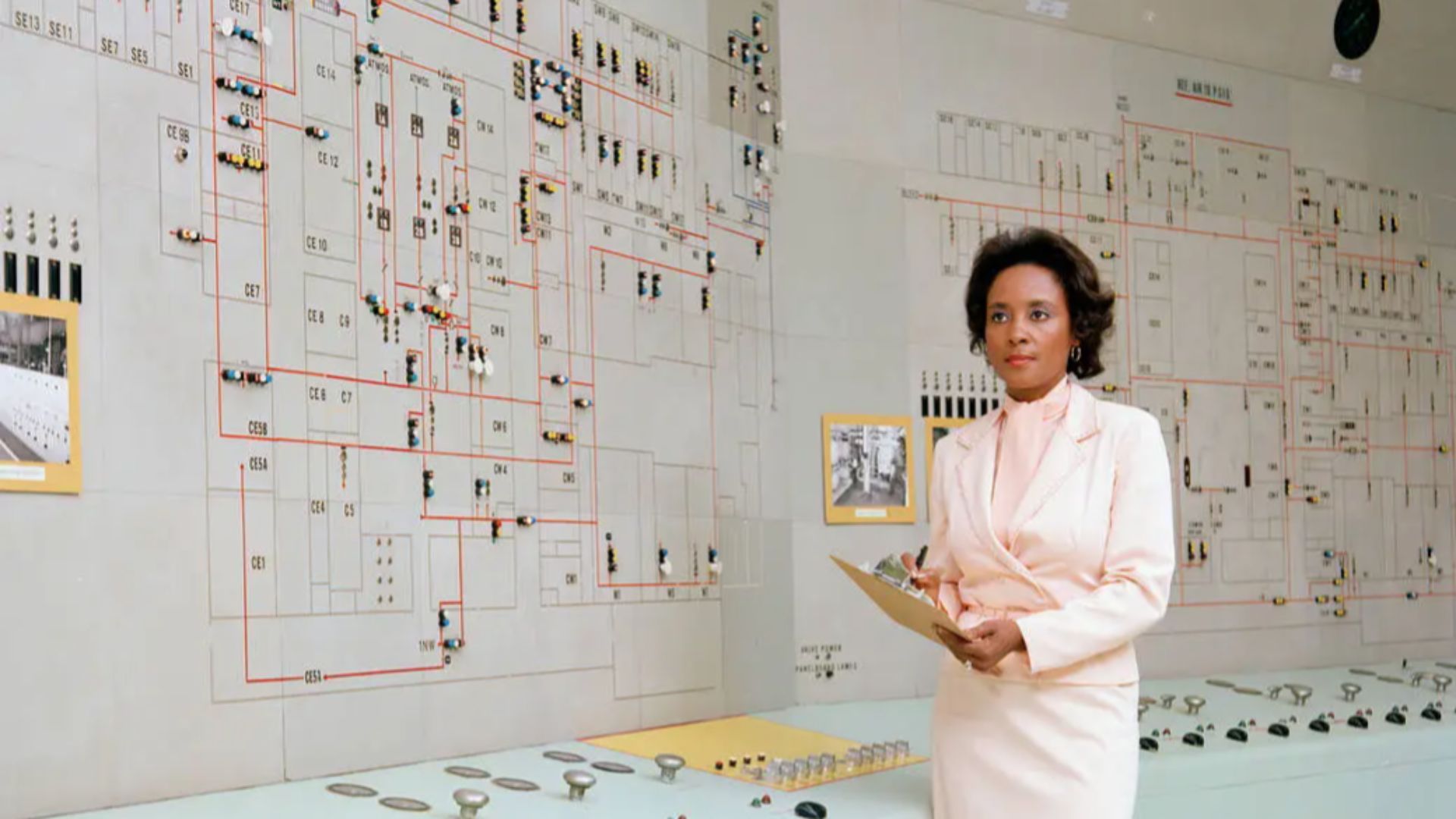
Annie Easley, a Hero of NASA Photo of the Day for June 19, 2026 – Space
NASA designated computer scientist Annie Easley as its Photo of the Day for June 19, 2026, to honor her contributions to rocket propulsion and her legacy as a trailblazer for women of color in aerospace. The agency highlighted Easley’s work on the Centaur rocket stage, which enabled the launch of interplanetary probes.
The selection of Easley for the June 19 date coincides with Juneteenth, a federal holiday commemorating the end of slavery in the United States. According to NASA agency records, the “Photo of the Day” series serves to surface the contributions of scientists and engineers whose work was fundamental to the agency’s success but often remained out of the public spotlight during their active service.
Why NASA Featured Annie Easley on June 19
NASA’s decision to feature Annie Easley on June 19 focuses on the intersection of scientific achievement and social progress. Easley spent decades at the NASA Lewis Research Center (now the Glenn Research Center), where she worked on the development of energy-efficient rocket engines. Agency historians state that her career represents the overcoming of systemic barriers in mid-century American science.
Easley entered the workforce during an era of institutional segregation. According to biographical records from the NASA archives, she faced significant gender and racial discrimination throughout her tenure. By highlighting her image and achievements on Juneteenth, the agency connects the struggle for civil rights with the pursuit of scientific discovery.
The agency’s communication team noted that Easley’s presence in the “Photo of the Day” archive is part of a broader effort to document the “human computers” and engineers who provided the mathematical foundation for the Space Race. This effort aims to provide a more accurate historical record of the diverse workforce that powered the Apollo and Voyager missions.
The Technical Legacy of Annie Easley
Annie Easley’s primary technical contribution involved the Centaur rocket stage. Centaur was the first upper stage to use liquid hydrogen and liquid oxygen as propellants. According to NASA technical documentation, this combination provided a much higher specific impulse than traditional fuels, allowing payloads to reach higher velocities and escape Earth’s gravity for deep-space missions.
Easley’s role focused on the complex calculations required to manage these volatile fuels. She developed and refined the computer code used to simulate the rocket’s performance. Her work ensured that the Centaur stage could reliably ignite and maintain stability in the vacuum of space. Without these precise calculations, the agency could not have launched the Surveyor probes to the Moon or the Pioneer and Voyager probes to the outer planets.
Key Technical Contributions
- Centaur Stage Optimization: Refined the mathematical models for liquid hydrogen propulsion systems.
- Computer Programming: Transitioned from manual calculations to early digital computing, writing code that simulated rocket trajectories.
- Energy Efficiency: Researched ways to reduce fuel consumption while increasing thrust, a critical factor for long-duration space flight.
- Interplanetary Capability: Provided the computational verification necessary for probes to leave Earth’s orbit and enter interplanetary trajectories.
The complexity of the Centaur project was immense. Liquid hydrogen is extremely cold and difficult to store, requiring advanced insulation and precise pressure management. NASA records indicate that Easley’s work in simulating these conditions helped prevent catastrophic failures during the early testing phases of the program.
Overcoming Systemic Barriers at NASA
Easley’s career began in an environment where African American women were often relegated to lower-tier roles despite possessing advanced degrees. She earned a degree in mathematics from Alabama State College in 1955, but her early professional years were marked by the constraints of Jim Crow-era policies.
According to historical accounts of the Lewis Research Center, Easley encountered segregated facilities and limited promotional opportunities. Agency archives show that she often had to fight for the right to be included in technical meetings and for her contributions to be credited in official reports. Despite these obstacles, she maintained a trajectory of upward mobility based on the undeniable accuracy of her mathematical work.
“I didn’t let the discrimination stop me. I just kept doing my job and doing it well,” Easley stated in interviews recorded by the NASA history office.
Her persistence led to her becoming one of the few women of her era to hold a high-level position in rocket propulsion. She eventually transitioned from a “computer” (a human performing calculations) to a computer scientist, mastering the early FORTRAN language and other programming tools that redefined how NASA approached aerospace engineering.
Timeline of Annie Easley’s Career Milestones
| Year/Period | Milestone | Impact |
|---|---|---|
| 1955 | Graduated from Alabama State College | Acquired the mathematical foundation for her career in STEM. |
| 1957-1958 | Early Career Roles | Worked as an insurance mathematician and teacher before entering government service. |
| 1958 | Joined NASA Lewis Research Center | Began contributing to early rocket propulsion research. |
| 1960s | Centaur Rocket Development | Developed code and calculations for liquid hydrogen propulsion. |
| 1970s-1980s | Senior Technical Roles | Advanced into leadership roles in computer science and engineering. |
| 1980 | Retirement from NASA | Left a legacy of computational excellence and paved the way for future scientists. |
The Broader Impact on Modern Space Exploration
The work Annie Easley performed in the 1960s remains relevant to current NASA missions. The principles of liquid hydrogen propulsion she helped refine are still utilized in heavy-lift launch vehicles. According to current NASA propulsion specialists, the shift toward high-efficiency fuels is what makes the Artemis missions to the Moon and eventual human missions to Mars feasible.

Beyond the hardware, Easley’s legacy informs the agency’s current diversity and inclusion initiatives. By recognizing her as a “hero” in the Photo of the Day series, NASA is acknowledging a historical gap in its storytelling. This recognition is intended to encourage a more diverse generation of students to enter STEM fields by showing that the foundations of space exploration were built by people of all backgrounds.
The agency has integrated Easley’s story into educational outreach programs. According to NASA’s STEM engagement documents, her biography is used to illustrate the importance of resilience and mathematical precision. This approach transforms a historical figure into a contemporary model for students facing similar systemic challenges in science and technology.
Comparison of Propulsion Systems
To understand the significance of Easley’s work, it is necessary to compare the Centaur’s technology with the systems that preceded it. Traditional rockets used kerosene (RP-1) and liquid oxygen. While powerful, these were less efficient for deep-space travel.
- Kerosene-based Systems: High thrust for lift-off, but lower efficiency (lower specific impulse). Better for getting off the ground.
- Liquid Hydrogen Systems (Centaur): Lower thrust but significantly higher efficiency. Essential for “pushing” a spacecraft out of Earth’s orbit toward other planets.
Easley’s calculations were the bridge between these two technologies, ensuring that the transition from the heavy lift-off stage to the efficient upper stage happened without failure.
Correcting the Historical Record
For decades, the narrative of the Space Race focused heavily on a small group of white male astronauts and flight directors. While the “Hidden Figures” of NASA—including Katherine Johnson, Dorothy Vaughan, and Mary Jackson—have received increased recognition in recent years, Annie Easley’s contributions were often overlooked due to the specialized, behind-the-scenes nature of rocket propulsion code.
Historical analysis shows that while the “human computers” at Langley were vital for orbital mechanics, the engineers at the Lewis Research Center, like Easley, were vital for the actual machinery of the rockets. According to archives from the National Space Center, the distinction between these roles often led to an uneven distribution of fame. The 2026 Photo of the Day feature corrects this by centering the propulsion engineer’s role in the success of the agency.
Common misconceptions suggest that these women were merely “calculators.” However, NASA records demonstrate that Easley was an innovator. She did not just perform existing math; she developed new ways to apply that math to the emerging field of digital computing. She was an architect of the software that governed the hardware of space travel.
The Significance of the June 19 Date
The alignment of Easley’s feature with Juneteenth is a deliberate choice by NASA’s communications office. Juneteenth commemorates the day in 1865 when the last enslaved people in Galveston, Texas, were informed of their freedom. By placing a Black female scientist at the center of the agency’s public face on this day, NASA links the concept of liberation with the concept of intellectual exploration.
Agency representatives have stated that the “Photo of the Day” is not merely a gallery of images but a tool for historical reclamation. By selecting Easley for June 19, the agency highlights how the freedom celebrated on Juneteenth eventually allowed individuals like Easley to access higher education and contribute to the most ambitious project in human history.
This thematic link serves two purposes: it honors the specific achievements of Annie Easley and it acknowledges the systemic struggle that defined the lives of African Americans in the 20th century. It frames scientific achievement not as an isolated event, but as a victory over social adversity.
For more information on NASA’s historical figures, you may find a related explainer on the role of human computers useful in understanding the broader context of the era.
Frequently Asked Questions
Who was Annie Easley?
Annie Easley was an African American computer scientist and rocket scientist who worked for NASA. She is best known for her work on the Centaur rocket stage, where she developed the code and mathematical models for liquid hydrogen propulsion.
What is the Centaur rocket stage?
The Centaur is a high-energy upper stage rocket that uses a mixture of liquid hydrogen and liquid oxygen. It was designed to propel spacecraft out of Earth’s orbit and into deep space, enabling missions to the Moon and other planets.

Why is Annie Easley considered a hero of NASA?
Easley is recognized as a hero because of her technical brilliance in rocket propulsion and her resilience in the face of racial and gender discrimination. Her work was fundamental to the success of NASA’s early interplanetary missions.
What is the significance of the June 19, 2026, date?
June 19 is Juneteenth, a U.S. federal holiday. NASA chose this date to feature Easley to honor the intersection of African American history and scientific achievement, highlighting her role as a trailblazer for women of color in STEM.
How did Annie Easley’s work impact modern space travel?
Her research into liquid hydrogen propulsion and the development of simulation software provided the foundation for modern heavy-lift rockets. These technologies are still used today for missions involving the Artemis program and deep-space exploration.
The recognition of Annie Easley continues to inspire new generations of engineers. As NASA looks toward the Moon and Mars, the agency continues to rely on the computational rigor and propulsion theories that Easley helped establish during the dawn of the Space Age. Her legacy remains embedded in every rocket that leaves Earth’s atmosphere, serving as a reminder that the path to the stars is paved by those who break barriers on the ground.
