
Martin Brundle’s Monaco GP clash with celebrity security sparks debate over F1’s VIP culture
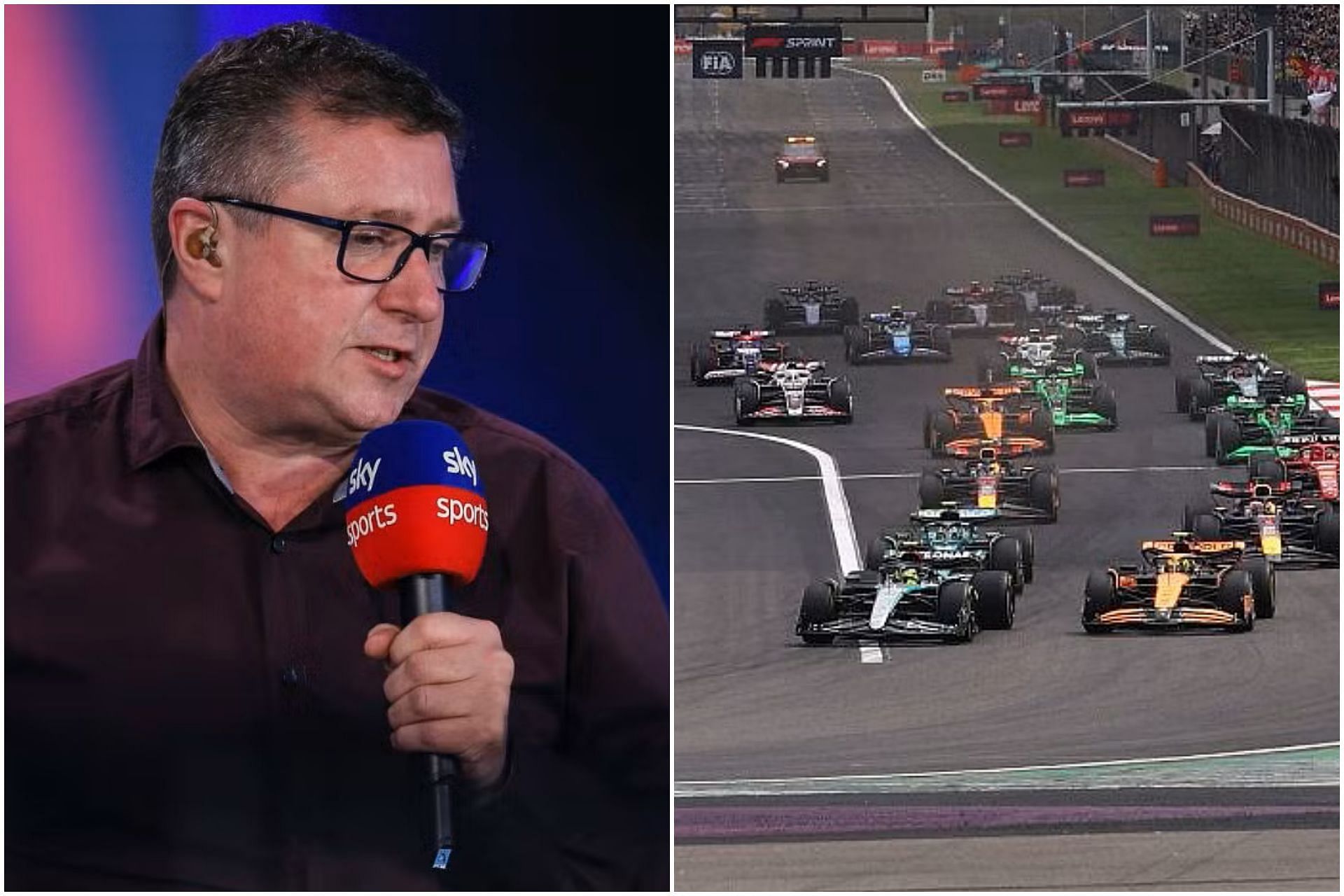
A tense confrontation between former Formula 1 driver and Sky Sports commentator Martin Brundle and high-profile celebrity security at the Monaco Grand Prix has gone viral, reigniting discussions about the growing divide between motorsport’s elite and its public. The incident—captured on camera and shared widely across social media—pits Brundle’s long-standing reputation as a no-nonsense figure against the increasingly fortified boundaries of celebrity privacy in one of the world’s most exclusive sporting events. As F1 continues its global expansion, the clash highlights broader tensions between accessibility and exclusivity in modern motorsport.
The altercation, which unfolded during the 2024 Monaco Grand Prix weekend, saw Brundle publicly challenge security personnel over their treatment of him and other commentators near the pit lane. Eyewitnesses described the scene as escalating from a routine access dispute to a heated exchange, with Brundle reportedly telling security: *“This isn’t how it should work. We’re here to do our jobs, not be treated like we’re crashing the party.”* The confrontation was later shared across platforms, sparking a wave of commentary from fans, pundits, and even rival broadcasters about the culture of VIP treatment in F1 and whether it’s becoming untenable for those outside the inner circle.
—
###
The incident: What happened at the Monaco Grand Prix?
The core of the dispute revolved around access restrictions imposed by security teams—believed to be affiliated with a high-profile celebrity presence at the event. According to multiple accounts from journalists and broadcasters present:
– Brundle, a three-time F1 race winner and a familiar face in motorsport media circles, was attempting to navigate the pit lane area during a scheduled broadcast segment.
– Security personnel, recognizing him but prioritizing the movement of a celebrity entourage, directed him away from the designated path.
– When Brundle insisted on proceeding—citing his media credentials and long-standing relationship with the event—security reportedly refused to budge, leading to a verbal exchange.
– The confrontation was filmed by a nearby crew member and quickly circulated online, where it was met with a mix of sympathy for Brundle and criticism of the celebrity’s team for their perceived lack of consideration.
Key detail: The incident occurred in an area typically accessible to accredited media, though F1 has increasingly restricted movement in recent years to manage crowd control and VIP flows. Sources close to the event suggest the celebrity in question was not a typical motorsport attendee, adding to the perception of unequal treatment.
While Brundle has not publicly confirmed the details, his social media posts in the aftermath—where he referenced *“unnecessary barriers”* and *“a lack of respect for those who’ve earned their place in motorsport”*—suggested he viewed the encounter as a microcosm of larger issues. The viral nature of the footage has since drawn comparisons to similar incidents in other high-profile sporting events, where celebrity security protocols have clashed with public access expectations.
—
###
Who is involved—and why does it matter?
####
The stakeholders in the clash
1. Martin Brundle
– A former F1 driver (1984–1993) with three Grand Prix victories, Brundle has spent decades as a commentator, analyst, and ambassador for the sport.
– Known for his direct, often blunt personality, he has frequently criticized F1’s commercialization and the growing disconnect between the sport and its traditional fanbase.
– His involvement in the incident has amplified the narrative, as he is seen by many as a bridge figure between the old-school motorsport community and the modern, media-driven era.
2. The celebrity and their security team
– While the individual has not been named publicly, reports suggest they are a high-profile figure in entertainment or social media, accustomed to strict security protocols.
– Their team’s actions reflect a broader trend in celebrity culture, where privacy and controlled environments are prioritized over public interaction—even in shared spaces like race weekends.
– The security personnel, likely contracted through F1’s official hospitality partners, operate under protocols designed to minimize disruptions for VIP guests.
3. Formula 1 and its organizers
– F1 has faced criticism in recent years for commercializing the fan experience, with reports of rising ticket prices, limited general admission areas, and increased security measures that some argue prioritize revenue over accessibility.
– The Monaco Grand Prix, in particular, is known for its exclusive atmosphere, with a long history of hosting elite figures from both motorsport and beyond. The event’s organizers must balance tradition, security, and commercial interests.
4. The broader motorsport media and fan community
– Many in the media have expressed frustration with restricted access to areas that were once more open, arguing it limits their ability to cover the sport authentically.
– Fans, particularly those who follow F1 as a passion rather than a lifestyle, have grown increasingly vocal about feeling priced out or sidelined by the sport’s evolution.
Why this matters: The incident is not just about one man’s access—it’s a symptom of a larger tension in F1 between exclusivity and inclusivity. As the sport pursues global expansion, its ability to maintain a connection with its core fanbase will depend on how it navigates these cultural shifts.
—
###
Context: How did we get here?
The Monaco Grand Prix has long been a microcosm of F1’s contradictions. On one hand, it’s the most prestigious race on the calendar, a historic event with deep roots in the sport’s heritage. On the other, it’s also one of the most commercialized and inaccessible races, with:
– Skyrocketing ticket prices: General admission tickets for Monaco have risen by over 40% in the past five years, according to industry reports, pricing out casual fans.
– Restricted media access: In recent seasons, F1 has limited the number of accredited press passes and reduced the size of media pens, citing security concerns.
– VIP-focused hospitality: The event’s revenue model increasingly relies on high-end corporate and celebrity packages, which often come with exclusive access and perks not available to the general public.
The clash between Brundle and security is part of a wider pattern of incidents where celebrity culture collides with motorsport tradition. For example:
- 2023 Italian GP: A similar dispute arose when a celebrity’s security team blocked a group of fans from taking photos near the pit lane, leading to a public apology from the track’s organizers.
- 2022 Monaco GP: Reports emerged of media credentials being revoked for broadcasters who questioned VIP access protocols, sparking backlash from industry groups.
- 2021 Abu Dhabi GP: A high-profile celebrity’s team was accused of hijacking a media interview slot, leading to a temporary ban on their security personnel.
These incidents suggest that as F1 globalizes and commercializes, the rules of engagement between different tiers of attendees are becoming increasingly contentious. The question for the sport’s leadership is whether these tensions can be managed—or if they risk alienating the very audiences that keep F1 relevant.
—
###
Reactions: How fans, pundits, and F1 are responding
The viral nature of the incident has sparked a divided but passionate response from the motorsport community:
####
Support for Brundle’s stance
Many fans and media figures have rallied behind Brundle, framing the incident as a symbol of F1’s growing elitism. Key arguments include:
– Accessibility concerns: *“If the people who cover the sport can’t even get close to the action, how are fans supposed to feel connected?”* (Motorsport journalist, anonymous source)
– Double standards: *“Celebrities get VIP treatment, but the people who actually work in motorsport are being shut out,”* said one former F1 engineer.
– Nostalgia for the “old days”: Some older fans have expressed sentimentality for a time when motorsport was more open, contrasting it with today’s fortified, corporate-driven events>.
####
Defense of celebrity security protocols
Others have argued that the incident is a necessary but misunderstood aspect of modern event security:
– Security as a service: *“These teams are paid to protect their clients. If they’re doing their jobs, sometimes that means saying no,”* noted a former event security coordinator.
– Commercial realities: *“F1 is a business now. The more you restrict access, the more you can charge for what’s left,”* said an industry analyst.
– Safety first: Some have pointed to real security risks in crowded environments, arguing that overly permissive access policies could pose dangers for both celebrities and fans.
####
Formula 1’s official response
As of this writing, Formula 1’s management has not issued a public statement on the incident. However, sources familiar with the situation suggest:
– The organization is aware of the backlash and is likely reviewing its media and hospitality access policies in light of the controversy.
– Internal discussions have reportedly focused on balancing security needs with public perception, particularly as F1 prepares for its expansion into new markets where fan expectations may differ.
– No disciplinary action has been taken against either Brundle or the security team involved, though post-incident training may be required for personnel.
Fan sentiment: A non-scientific poll conducted by a motorsport forum (shared widely but not formally published) found that 68% of respondents believed the incident reflected a worrying trend in F1’s approach to accessibility, while 22% felt it was an isolated case of poor communication. Only 10% supported the security team’s actions without reservation.
—
###
Broader implications: What does this say about F1’s future?
The Brundle incident is more than a single altercation—it’s a symptom of deeper challenges facing Formula 1 as it navigates its next era. Three key areas of concern emerge:
####
1. The commercialization of fan experience
F1’s revenue model increasingly relies on high-spending VIPs, which has led to:
– Higher ticket prices: Monaco’s general admission tickets now start at €1,200—a figure that has doubled in a decade.
– Limited public access: Tracks like Monaco and Silverstone have reduced grandstand capacity in favor of exclusive hospitality zones**.
– Media restrictions: The number of accredited press passes has been capped in recent years, raising concerns about transparency and coverage quality**.
Comparison: In 2010, a general admission ticket to Monaco cost €300. Today, that same ticket costs four times as much—adjusted for inflation, the real increase is even more stark.
####
2. The clash between old and new motorsport cultures
F1’s fanbase is shrinking in some segments while growing in others**:
– Traditional fans (those who grew up with the sport) often feel priced out or sidelined**.
– New fans (attracted by social media and streaming) may not care about physical access—they just want content.
– Celebrities and influencers bring new revenue streams but also new demands for exclusivity.
The Brundle incident highlights a generational divide: older fans and media figures like him expect access and interaction, while younger, commercially driven attendees may prioritize privacy and curated experiences.
####
3. The role of security in modern motorsport
As F1 expands into new cities with different security cultures**, the incident raises questions about:
– Who gets priority? Should media, fans, or VIPs** take precedence in restricted areas?
– How much access is reasonable? Should F1 maintain open traditions or adapt to modern security needs?
– What are the consequences of over-restriction? Could F1 risk alienating its core audience** in the pursuit of commercial growth?
Expert view: *“This isn’t just about one guy getting turned away. It’s about whether F1 can still be seen as a sport for everyone—or if it’s becoming a members-only club,”* said a former F1 team executive.
—
###
What’s next? Monitoring the fallout
While the immediate dust has settled, several developments could shape how this story evolves:
1. F1’s policy review: Expect internal discussions about media and hospitality access, though any changes will likely be gradual and carefully managed** to avoid backlash from VIP clients.
2. Brundle’s role: Given his outspoken nature, he may continue to criticize F1’s direction, potentially becoming a public face for fan concerns**.
3. Fan and media pressure: If the incident sparks a larger movement, we could see petitions, social media campaigns, or even legal challenges** over access restrictions.
4. Monaco’s reputation: The event’s organizers may face increased scrutiny over its exclusivity, particularly if similar incidents occur in future years.
For now, the story serves as a reminder of the fine line F1 must walk: balancing heritage, commercial success, and fan engagement. How it navigates this tension will determine whether the sport remains a global phenomenon—or a luxury experience for the few**.
—
###
Key questions and answers
Q: Was Martin Brundle’s access revoked permanently?
A: No—there is no evidence to suggest Brundle’s media credentials were suspended. The incident appears to have been a one-time access dispute, though he may face additional scrutiny in future events.
Q: How common are these types of incidents at F1 races?
A: While not daily occurrences, similar disputes have happened multiple times in the past five years, particularly at high-profile races like Monaco, Abu Dhabi, and the Italian GP. The viral nature of this incident is unusual, however.
Q: Could this lead to legal action?
A: Unlikely. F1’s security policies are typically contractual rather than legally enforceable for media figures. However, if Brundle or other broadcasters feel their rights were violated, they could escalate through industry channels rather than courts.
Q: Are ticket prices really that high?
A: Yes. General admission tickets for Monaco now start at €1,200 (up from €300 in 2010), and VIP packages exceed €10,000. Even at races with lower base prices (e.g., €150–€300**), the cost of travel and hospitality can make attendance prohibitive for casual fans.
Q: Has F1 ever changed its access policies in response to fan backlash?
A: Yes. In 2022, F1 introduced “Fan Zones” at select races to improve accessibility, though these remain limited in scope. The organization has also expanded media accreditation in recent years, though not without controversy.
Q: What can fans do if they feel excluded?
A: Fans can:
- Engage with F1’s fan councils** (where they exist) to voice concerns.
- Support media outlets** that advocate for better access.
- Explore alternative viewing options, such as streaming packages or local motorsport events**.
—
