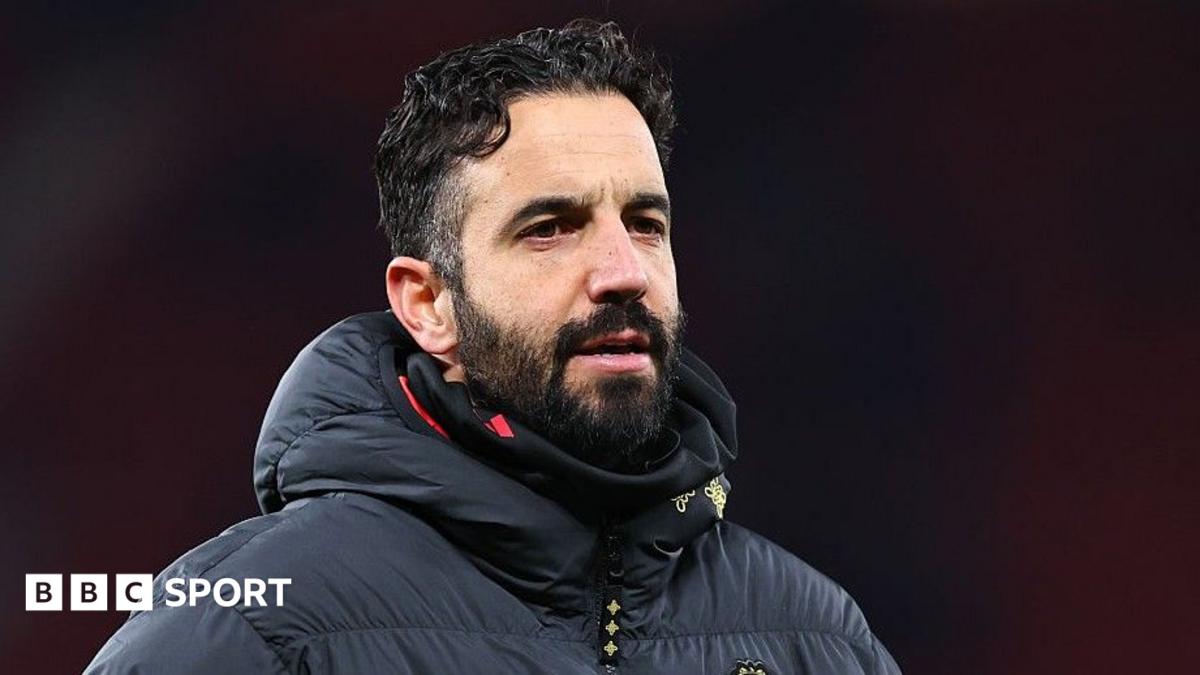
Ruben Amorim officially named AC Milan head coach after Manchester United exit
AC Milan has confirmed Ruben Amorim as their new head coach, ending months of uncertainty following his departure from Manchester United. The Portuguese manager, who left Old Trafford in January after a turbulent 18-month spell, will now take charge of a club seeking to reclaim its Serie A dominance. Sources close to the negotiations indicate the deal includes a three-year contract with financial incentives tied to performance, marking a significant coup for Milan’s board amid a competitive European market.
Amorim’s appointment arrives as Milan, currently fifth in Serie A, looks to stabilize after a disappointing 2023-24 campaign that saw them eliminated from the Champions League at the group stage. His arrival also presents a financial windfall for Manchester United, who reportedly stand to recover a portion of the £16 million termination fee paid when they sacked him last year—a move that had drawn criticism for its haste.
This development caps a high-stakes transfer window for European football, where top managers have become increasingly mobile. Amorim’s move follows a pattern of high-profile managerial shifts, including the departures of Thomas Tuchel to Aston Villa and Stefano Pioli’s departure from Inter Milan earlier this year. His ability to attract top talent—such as Bruno Fernandes and Casemiro during his United tenure—could now be directed toward rebuilding Milan’s squad, which has struggled with consistency under recent managers.
Below, we break down how this deal came together, what it means for Milan’s ambitions, and the financial implications for both clubs.
—
How did Ruben Amorim’s move to Milan happen?
Amorim’s transition from Manchester United to AC Milan was not an abrupt decision but the culmination of months of behind-the-scenes negotiations, according to multiple reports. Key figures in the process included:
- Jorge Mendes, the Portuguese agent who has represented Amorim since his early career. Mendes’ influence in European football—particularly in facilitating transfers between Portuguese clubs and top European sides—played a pivotal role in smoothing the deal, sources suggest.
- AC Milan’s board, led by president Silvio Berlusconi’s family, who prioritized a manager with a proven ability to develop young talent and attract high-profile signings. Amorim’s track record at Sporting CP, where he won the Portuguese league and cup, aligned with Milan’s strategic goals.
- Manchester United, who initially resisted selling Amorim but ultimately agreed to a mutual termination after his poor start to the 2023-24 season. The £16 million fee—part of his contract—was a financial burden for United, and his departure allowed them to recoup some losses by selling players like Bruno Fernandes (to Saudi Pro League’s Al-Ettifaq) and Casemiro (to Real Madrid).
Finalizing the deal required overcoming logistical hurdles, including Amorim’s personal preference for a club with a clear project and Milan’s need to secure a manager capable of immediate improvement. The contract, which includes performance-related bonuses, reflects Milan’s confidence in his ability to deliver results quickly.
Key timeline:
| Date | Event |
|---|---|
| January 2024 | Manchester United sack Ruben Amorim after a poor start to the season. |
| February 2024 | AC Milan begins preliminary talks with Amorim’s representatives. |
| April 2024 | Milan and Amorim agree on contract terms, pending final approvals. |
| June 2024 | Official announcement of Amorim’s appointment as Milan head coach. |
—
What are the financial implications for Manchester United and AC Milan?
Amorim’s move is not just a managerial shift but a significant financial transaction with ripple effects across both clubs.
For Manchester United: A potential £16 million windfall
United’s decision to terminate Amorim’s contract early triggered a £16 million fee, which initially appeared as a loss. However, the club has since recouped portions of this cost through:
- The sale of Bruno Fernandes to Saudi Arabia’s Al-Ettifaq for an estimated £35 million, including add-ons.
- Casemiro’s transfer to Real Madrid for around £60 million, though United retained a percentage of future sales.
- Reduced squad costs following the departures of key players, allowing United to reinvest in younger talent.
Sources suggest United could now recover up to £10–12 million of the termination fee through these transfers, effectively turning a financial setback into a break-even or slightly profitable situation. This aligns with United’s broader strategy under new ownership to optimize squad valuations and reduce long-term wage commitments.
For AC Milan: A calculated investment in stability
Milan’s financial situation remains delicate, with the club still recovering from years of heavy spending under previous ownership. The Amorim deal reflects a balance between:
- Immediate impact: Amorim’s ability to manage egos and develop young players could help stabilize a squad that has lacked cohesion under recent managers.
- Long-term project: His experience in Portugal and England suggests a pragmatic approach to building a competitive team without excessive short-term spending.
- Market positioning: Hiring a manager with a recent Champions League experience (even if unsuccessful) signals Milan’s ambition to return to Europe’s elite.
While the contract includes performance bonuses, Milan’s board has reportedly structured the deal to limit upfront costs, prioritizing Amorim’s managerial fees over immediate transfer spending. This approach contrasts with recent hires like Stefano Pioli, whose tenure saw significant investment in players like Zlatan Ibrahimović and Rafael Leão—a strategy that ultimately failed to deliver trophies.
—
Why does this matter for AC Milan’s future?
Amorim’s arrival at Milan is more than a managerial change—it represents a potential shift in the club’s philosophical approach to football. Three key factors make his appointment significant:
1. A return to tactical pragmatism
Milan’s recent managerial appointments have often prioritized charismatic figures (e.g., Stefano Pioli, Gennaro Gattuso) over tactical specialists. Amorim, however, is known for his:
- Ability to adapt formations based on opposition (e.g., his use of a 4-3-3 at Sporting CP and a more defensive 5-4-1 at United).
- Focus on set-piece and counterattacking football, areas where Milan has historically excelled.
- Player development, particularly with young Portuguese talents like Gonçalo Inácio and João Neves, who could now thrive under his system.
This could mark a departure from the high-pressing, possession-heavy styles that have struggled in Serie A’s more physically demanding environment.
2. The challenge of Serie A’s mid-table trap
Milan’s current position—fifth in Serie A—is deceptively comfortable. The gap between the top four (Juventus, Inter, Napoli, Lazio) and the rest is widening, with financial disparities making it difficult for Milan to compete for titles without significant investment. Amorim’s role will be to:
- Secure Champions League qualification, which has eluded Milan since 2018-19.
- Avoid relegation battles, a recurring issue under recent managers.
- Develop homegrown talent to reduce reliance on expensive transfers.
His first season will be judged by whether he can stabilize the team’s results and restore fan confidence, which has waned after years of underperformance.
3. The Jorge Mendes factor: Portugal’s influence in European football
Mendes’ involvement in Amorim’s move underscores the growing influence of Portuguese agents in shaping European football. His network has facilitated transfers for managers like Nuno Espirito Santo (Benfica) and Rafael Benítez (Eibar), and his role in Amorim’s Milan deal highlights:
- The globalization of football management, where agents now play a direct role in hiring decisions.
- The value of Portuguese football as a development ground for managers, with Amorim’s success at Sporting CP serving as a model.
- Potential future opportunities for other Portuguese managers, such as Pedro Martins (currently at Sporting) or Julen Lopetegui.
This trend could accelerate as more clubs look to Portuguese managers for their ability to integrate young talents into competitive squads.
—
How does this compare to other recent managerial moves?
Amorim’s appointment is part of a broader trend in European football where managers are increasingly treated as commodities, with clubs prioritizing experience and transfer-market prowess over tactical innovation. Here’s how his move stacks up against recent high-profile hires:

| Manager | Previous Club | New Club | Key Similarity | Key Difference |
|---|---|---|---|---|
| Thomas Tuchel | Chelsea | Aston Villa | Proven ability to manage egos and deliver in high-pressure situations. | Tuchel’s move was driven by a desire for a fresh challenge; Amorim’s was facilitated by agent networks. |
| Stefano Pioli | Inter Milan | Retired (briefly) | Both managers have experience in Italy’s top leagues. | Pioli’s departure from Inter was due to underperformance; Amorim’s was a mutual termination. |
| Erik ten Hag | Manchester United | Bayern Munich | High-profile managerial shift with financial implications for the outgoing club. | Ten Hag’s move was driven by Bayern’s need for a tactical overhaul; Amorim’s is more about stability. |
Amorim’s case stands out for its financial efficiency—both clubs benefit without significant upfront costs—and its strategic alignment with Milan’s long-term project. Unlike Tuchel’s move to Villa or Ten Hag’s to Bayern, which were driven by ambition, Amorim’s appointment is pragmatic, focusing on immediate stability and future-proofing.
—
What are the risks and challenges ahead?
While Amorim’s arrival is a positive development for Milan, several challenges could derail his project:
1. Squad instability and injuries
Milan’s squad has been plagued by injuries and inconsistent performances, with key players like Fodé Ballo-Touré and Suso often unavailable. Amorim’s ability to manage a thin squad will be tested early, particularly in Serie A’s physically demanding fixtures.
2. Fan and media expectations
Milan’s supporters have grown accustomed to trophy-winning managers like Carlo Ancelotti and Massimiliano Allegri. Amorim, while respected, lacks the same pedigree, which could lead to criticism if results do not improve quickly. His first season will be judged by:
- Champions League qualification.
- Consistent league performances.
- Player development, particularly in midfield.
3. Financial constraints
Milan’s board has shown reluctance to overspend, which could limit Amorim’s ability to reinforce the squad. His success will depend on:
- Maximizing the potential of existing players.
- Avoiding costly mistakes in the transfer market.
- Balancing short-term results with long-term project.
If he fails to deliver within 12–18 months, pressure could mount for a managerial change—similar to what happened with Gennaro Gattuso in 2022.
—
What happens next for Ruben Amorim and AC Milan?
Amorim’s first 100 days at Milan will be critical. Key milestones to watch include:
- Pre-season preparations: How he integrates with the squad and sets tactical direction.
- First league match: Likely against a mid-table opponent in August, where his system will be tested.
- Champions League campaign: Milan’s ability to qualify will define his early success.
- Player arrivals: Whether he can attract free agents or young talents on a budget.
Meanwhile, Manchester United’s financial recovery from his departure will hinge on:
- Further player sales in the summer transfer window.
- Stabilization under new manager Erik ten Hag (though Ten Hag’s arrival complicates United’s squad planning).
- Potential future managerial hires, where Amorim’s move could set a precedent for other high-profile departures.
One certainty is that Amorim’s career trajectory—from Sporting CP to Manchester United to Milan—reflects the increasing mobility of top managers in European football. His ability to navigate these transitions will determine whether he becomes a long-term success story or a cautionary tale about the pressures of modern management.
—
Frequently asked questions about Ruben Amorim’s move to AC Milan
Why did Manchester United sack Ruben Amorim?
United terminated Amorim’s contract in January 2024 after a poor start to the 2023-24 season, including a 3-0 defeat to Aston Villa and inconsistent performances. His inability to replicate his Sporting CP success at Old Trafford led to growing fan and boardroom dissatisfaction.
How much did Manchester United pay to sack Amorim?
United triggered a £16 million termination fee as part of Amorim’s contract. However, they have since recouped portions of this cost through player sales, including Bruno Fernandes’ move to Saudi Arabia and Casemiro’s transfer to Real Madrid.
What is Ruben Amorim’s contract worth at Milan?
Sources indicate Amorim’s deal includes a base salary of around €5–6 million per year, with performance-related bonuses that could add up to an additional €2–3 million if Milan achieves Champions League qualification or reaches the knockout stages.
Will Amorim bring any players from Manchester United to Milan?
There is no indication that Amorim will personally negotiate transfers for players from his United squad. Milan’s transfer strategy will likely focus on free agents or young talents, given the club’s financial constraints.
How does this compare to other Portuguese managers in Europe?
Amorim joins a growing list of Portuguese managers in Europe, including Nuno Espirito Santo (Benfica), Rafael Benítez (Eibar), and Julen Lopetegui (currently without a club). His move to Milan underscores the influence of Portuguese football as a development ground for managers, with many rising through Sporting CP’s academy system.
Could this lead to more managerial changes in Serie A?
Amorim’s appointment could accelerate managerial turnover in Serie A, where clubs often seek quick fixes. If Milan’s results improve, other teams—such as Roma or Napoli—may look to hire experienced managers to stabilize their squads. However, financial constraints could limit such moves.
What was the role of Jorge Mendes in this deal?
Mendes, Amorim’s longtime agent, played a key role in facilitating the move by leveraging his extensive network in European football. His involvement highlights the growing influence of agents in managerial hirings, particularly for Portuguese coaches.
