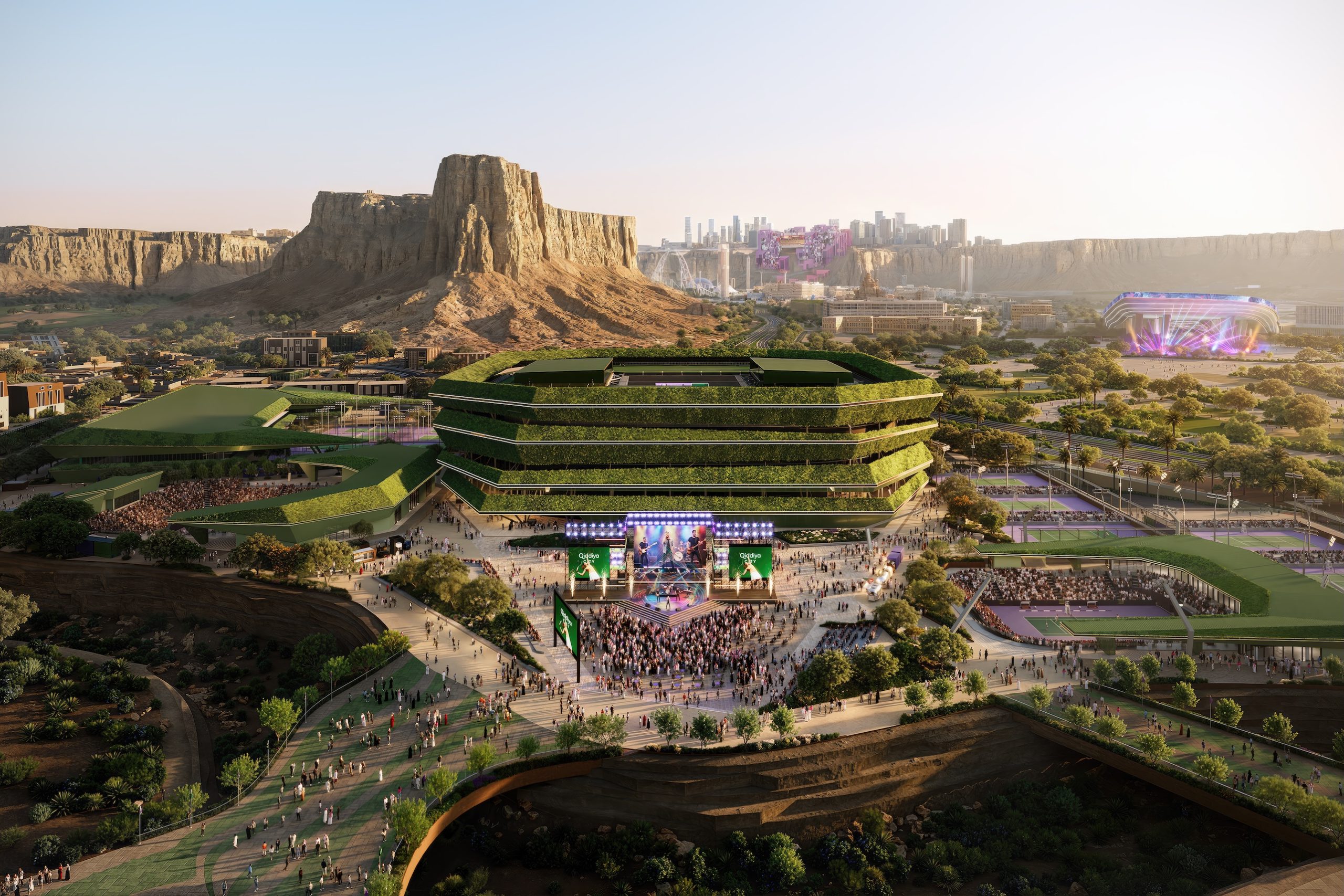
Qiddiya Investment Company Announces the National Tennis Centre, Saudi Arabia’s Future Home of International Tennis – Populous
Qiddiya Investment Company has partnered with global architecture firm Populous to develop the National Tennis Centre in Saudi Arabia. This facility is designed to serve as the Kingdom’s primary hub for international tennis, integrating professional-grade courts and athlete infrastructure within the broader Qiddiya entertainment city development.
What is the National Tennis Centre in Qiddiya?
The National Tennis Centre is a strategic infrastructure project announced by the Qiddiya Investment Company. According to official project details, the facility is intended to function as the future home of international tennis within Saudi Arabia. The project is being designed by Populous, a firm known for specializing in large-scale sports and entertainment venues.
The centre is not merely a collection of courts but a comprehensive ecosystem for the sport. It aims to provide a venue capable of hosting high-level international tournaments while simultaneously fostering local talent. By placing the centre within Qiddiya—a massive “giga-project” focused on entertainment, sports, and the arts—the Saudi government intends to create a destination that attracts both professional athletes and global spectators.
Key objectives of the facility include:
- Establishing a permanent home for professional tennis in the region.
- Providing state-of-the-art training facilities for Saudi nationals.
- Creating a venue that meets the rigorous standards of the ATP and WTA tours.
- Integrating tennis into the broader tourism and leisure offerings of the Qiddiya city.
How does the National Tennis Centre’s design compare to global standards?
The design of the National Tennis Centre has drawn contrasting reactions from international media, highlighting a divide between the project’s official ambitions and external critiques. While the Qiddiya Investment Company positions the centre as a forward-looking leap for the sport, some observers see it as an attempt to replicate existing prestige.
World Tennis Magazine characterized the plans for the new centre as “impressive,” focusing on the scale and the intent to bring world-class tennis infrastructure to the Middle East. From this perspective, the project is viewed as a legitimate expansion of the sport’s global footprint.

In contrast, The Telegraph described the project as “Wimbledon in the desert,” suggesting that the design “rips off” the home of tennis. This critique implies that rather than innovating a new architectural language for tennis in the Gulf, the project seeks to borrow the aesthetic and prestige associated with the All England Lawn Tennis and Croquet Club.
| Source | Characterization of Project | Primary Focus |
|---|---|---|
| Qiddiya Investment Company | Future Home of International Tennis | Infrastructure and Global Ambition |
| World Tennis Magazine | Impressive New Centre | Growth of the Sport |
| The Telegraph | “Wimbledon in the desert” / “Rip off” | Architectural Originality and Prestige |
The tension between these viewpoints centers on whether the National Tennis Centre is an original contribution to sports architecture or a strategic attempt to manufacture “instant heritage” by mimicking the world’s most famous tennis venue.
Why is the Qiddiya Investment Company building a tennis hub?
The development of the National Tennis Centre is a component of Saudi Arabia’s Vision 2030. This national strategy seeks to diversify the Saudi economy away from oil dependence by investing heavily in tourism, entertainment, and sports. The Qiddiya Investment Company is the entity tasked with delivering the city of Qiddiya, which is designed to be a global destination for leisure.
Tennis fits into this strategy for several reasons. First, the sport carries a specific global prestige and an affluent demographic that aligns with the Kingdom’s goal of attracting high-net-worth tourists. Second, the investment in sports infrastructure is part of a broader trend in the region to host major international events, similar to the investments seen in golf (LIV Golf) and football (the Saudi Pro League).
By building a dedicated National Tennis Centre, Saudi Arabia is positioning itself to potentially host Grand Slam-level events or high-ranking ATP and WTA tournaments. This requires more than just a court; it requires the hospitality, transport, and athlete-support infrastructure that Populous is tasked with designing.
The project is expected to provide a centralized location for:
- High-performance training for the next generation of Saudi players.
- Administrative headquarters for tennis governance within the Kingdom.
- A commercial hub for tennis-related retail and sponsorship.
Who is Populous and what is their role in the project?
Populous is the architectural firm appointed to lead the design of the National Tennis Centre. The firm is one of the most prominent names in global sports architecture, having designed venues such as the Tottenham Hotspur Stadium and various Olympic facilities.
The role of Populous in this project extends beyond the aesthetics of the stadium. They are responsible for the technical requirements of a modern tennis facility, which include:
- Player Flow: Designing the movement of athletes from locker rooms to courts to minimize distractions and maximize efficiency.
- Spectator Experience: Optimizing sightlines and integrating luxury hospitality suites to attract corporate sponsors.
- Climate Control: Addressing the extreme heat of the Saudi desert to ensure that courts remain playable and spectators remain comfortable.
- Scalability: Creating a layout that can handle the surge of crowds during a major international tournament while remaining functional for daily training.
The involvement of Populous signals that the Qiddiya Investment Company is prioritizing “proven” expertise. By hiring a firm with a track record of delivering massive sports hubs, the Kingdom is attempting to mitigate the risks associated with such a large-scale build.
What are the potential impacts on professional tennis?
The establishment of a “future home of international tennis” in Saudi Arabia could shift the geography of the professional tour. Historically, the Middle East has hosted key events in Dubai and Doha. A National Tennis Centre in Qiddiya would provide a new, potentially larger anchor for the region.
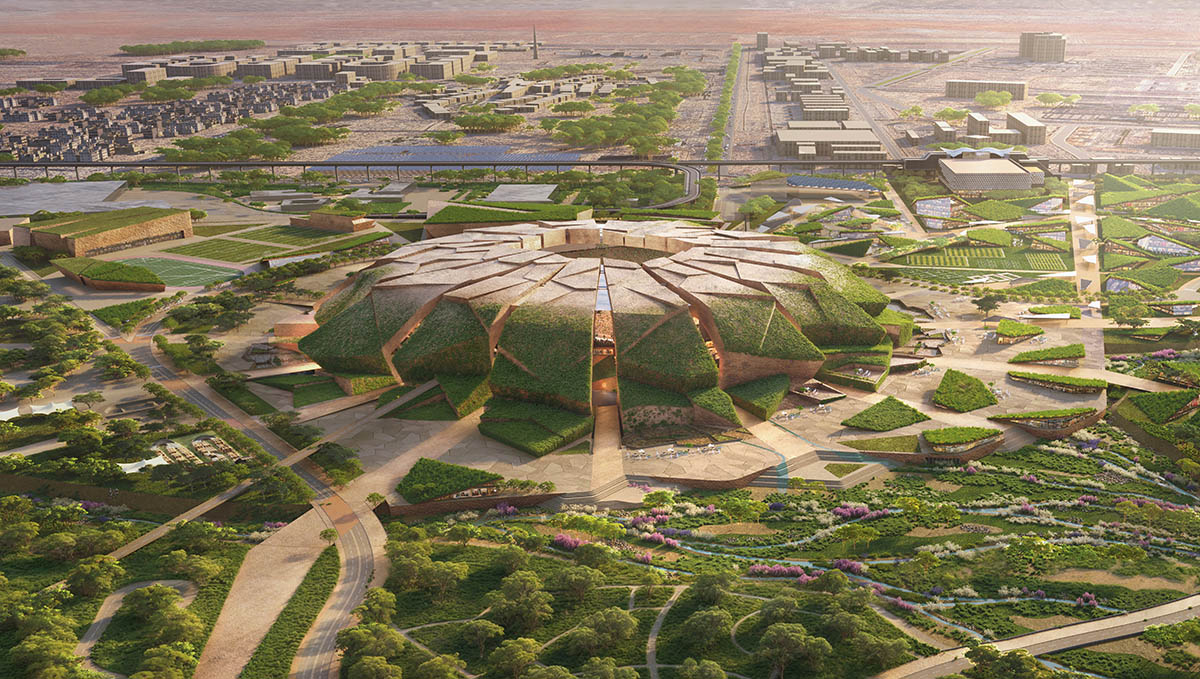
Industry analysts suggest that such an investment could lead to several outcomes:
Shift in Tournament Scheduling
The ATP and WTA tours are constantly evaluating their calendars. A facility of the scale proposed by Qiddiya could incentivize the tour to move more events to Saudi Arabia or create new, high-prize-money tournaments that attract the top 10 players in the world.
Talent Development in the Middle East
While the focus is often on hosting stars, the “National” aspect of the centre suggests a push for domestic growth. By providing world-class courts and coaching infrastructure, the facility could accelerate the development of Saudi players, potentially producing the region’s first top-tier international competitors.
The “Sportswashing” Debate
The investment in tennis does not exist in a vacuum. As seen in the reporting by The Telegraph, international investments by Saudi Arabia in sports are often viewed through a critical lens. The term “sportswashing”—using sports to improve a global reputation—is frequently applied to these projects. The National Tennis Centre will likely be a focal point for this debate, as the tennis world weighs the benefit of new infrastructure against the political context of the funding.
For more on how sports investments are reshaping the region, see this related explainer on Vision 2030 sports infrastructure.
Common misconceptions about the Qiddiya Tennis project
There are several points of confusion regarding the National Tennis Centre that require clarification based on the available reports.
Misconception 1: The centre is just a few courts.
Contrary to the idea that this is a simple club, the project is described as a “National Centre.” This implies a comprehensive hub including training academies, administrative offices, and tournament-grade stadiums designed for international crowds.
Misconception 2: It is a direct copy of Wimbledon.
While The Telegraph uses the phrase “rips off,” the official plans from Qiddiya and Populous describe a facility tailored for the future of international tennis. Whether the final aesthetic mimics Wimbledon or innovates is a matter of architectural debate, but the functional goal is to create a modern hub, not a museum of British tennis.
Misconception 3: It is already operational.
The project is currently in the announcement and design phase. As part of the larger Qiddiya development, it will take years to reach full completion and begin hosting international events.
FAQ: Saudi Arabia’s National Tennis Centre
Who is designing the National Tennis Centre in Saudi Arabia?
The facility is being designed by Populous, a global architecture firm specializing in sports and entertainment venues, in partnership with the Qiddiya Investment Company.
Where will the National Tennis Centre be located?
The centre will be located within Qiddiya, a massive entertainment and sports city currently under development in Saudi Arabia.
Is the National Tennis Centre intended for professional use?
Yes. According to the Qiddiya Investment Company, the facility is intended to be the “future home of international tennis,” meaning it is designed to meet the standards required to host professional ATP and WTA events.
What is the purpose of the project?
The project aims to establish Saudi Arabia as a global destination for tennis, provide high-performance training for local athletes, and support the economic diversification goals of Vision 2030.
How has the international media reacted to the announcement?
Reactions have been mixed. World Tennis Magazine described the plans as “impressive,” while The Telegraph criticized the design as being too similar to Wimbledon, referring to it as “Wimbledon in the desert.”
The development of the National Tennis Centre represents a significant bet on the growth of tennis in the Middle East. By combining the architectural expertise of Populous with the financial backing of the Qiddiya Investment Company, Saudi Arabia is attempting to build a legacy in a sport traditionally dominated by Western and East Asian hubs. The success of the project will depend not only on the completion of the physical structures but on the ability to attract the world’s top players and the sanctioning of major tournaments by international governing bodies.
