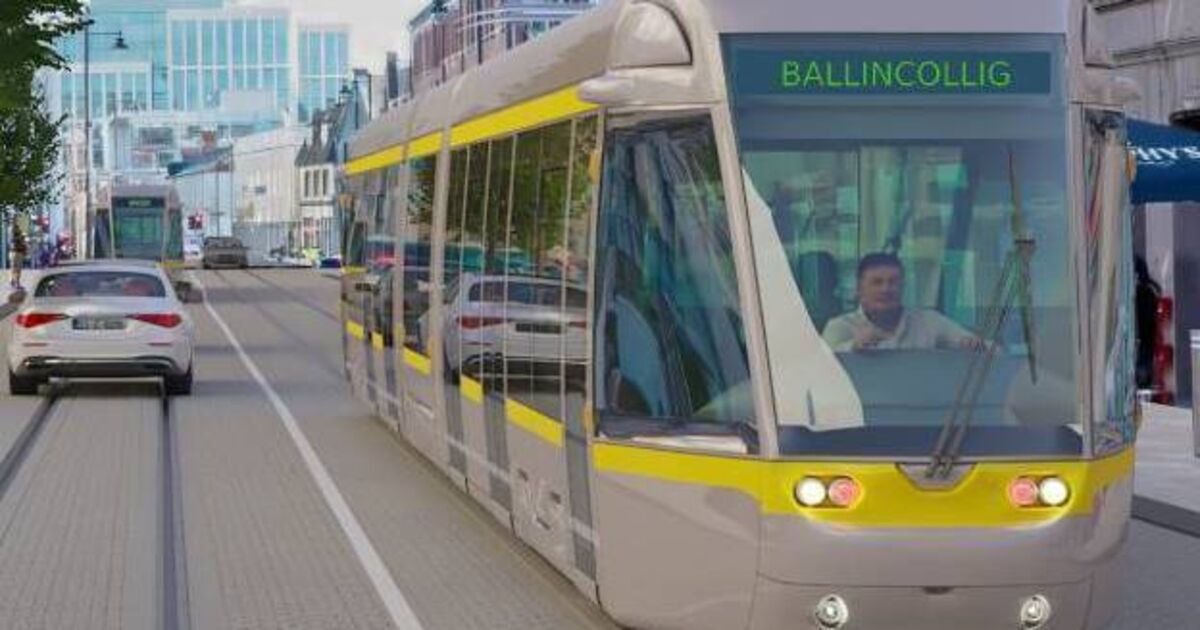
Luas Cork: Highfield Rugby Club Vows to Oppose Proposed Route – A Deep Dive into the Transit Conflict
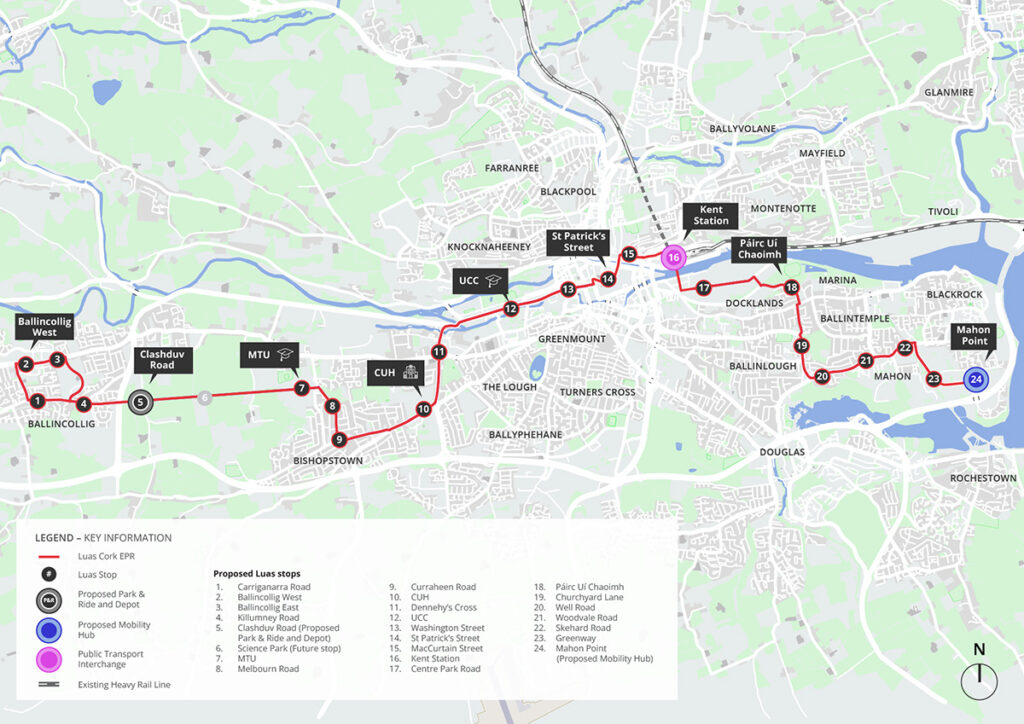
The ambitious vision to bring a light rail system to the second city of the Republic is hitting a significant roadblock. In a move that highlights the tension between urban modernization and the preservation of community assets, the Highfield Rugby Club has formally signaled its intent to oppose the current proposed route for the Luas Cork project. This confrontation brings into sharp focus the complex challenge of carving a high-capacity transit corridor through a densely populated city where sports clubs, residential areas, and heritage sites are inextricably linked.
While the government views the Luas Cork expansion as a critical pillar for the city’s economic growth and climate goals, local stakeholders like Highfield Rugby Club argue that the proposed trajectory threatens the viability of their facilities and the continuity of their community service. The standoff has already reached the highest levels of government, with the Transport Minister intervening to suggest that financial and infrastructural compensation must be at the heart of any resolution.
The Core of the Conflict: Why Highfield Rugby Club is Opposing the Route
The opposition from Highfield Rugby Club is not merely a matter of convenience but a question of existential survival for the club. In urban planning, the “path of least resistance” often leads planners toward open green spaces—such as sports pitches—which are perceived as easier to acquire or modify than residential blocks or commercial hubs. However, for a community-based sports organization, these pitches are irreplaceable assets.
The club’s concerns center on several critical points:
- Loss of Playing Surface: Any encroachment of the light rail tracks onto club land reduces the number of available pitches, potentially limiting the number of teams the club can support.
- Fragmentation of Facilities: If the Luas route bisects the club’s property, it creates a physical barrier that complicates movement between changing rooms, clubhouses, and training areas.
- Noise and Environmental Disruption: The introduction of frequent light rail traffic brings noise and vibration, which can impact the experience for athletes and neighboring residents.
- Access and Parking: Infrastructure projects of this scale often necessitate the removal of existing parking or the redirection of access roads, which could hinder the club’s ability to host matches and events.
The struggle facing Highfield Rugby Club is a microcosm of the larger battle facing many European cities: how to implement 21st-century transit solutions without erasing the grassroots community spaces that give a city its soul.
Understanding the Luas Cork Vision and Its Necessity
To understand why the government is pushing forward despite local opposition, one must look at the broader transport crisis facing Cork. The city has long struggled with congestion, a fragmented bus network, and a lack of high-capacity transit that can move thousands of people efficiently from the suburbs to the city center.
The Strategic Goals of the Cork Light Rail
The proposed Luas system is designed to achieve several key objectives:

- Decarbonization: Shifting commuters from private cars to electric light rail is essential for Ireland to meet its national and EU carbon emission targets.
- Economic Stimulation: Improved connectivity typically leads to increased property values and business investment along the transit corridor.
- Urban Regeneration: The project provides an opportunity to redesign streetscapes, improve pedestrian crossings, and create more walkable urban environments.
- Reliability: Unlike buses, which are subject to the same traffic congestion as cars, a segregated light rail system offers predictable travel times.
For planners, the proposed route is often the result of rigorous technical analysis involving gradients, soil stability, and existing utility networks. When a route is proposed that impacts a sports club, it is usually because the alternatives—such as demolishing historic buildings or displacing dozens of families—are deemed even more disruptive.
The Role of Government: Compensation and Mitigation
Recognizing the volatility of the situation, the Transport Minister has stepped in to emphasize that the state cannot simply seize land without ensuring the long-term viability of the affected organizations. The call for compensation for sports clubs impacted by the Cork Luas is a strategic attempt to move the conversation from “stop the project” to “how do we make this work for everyone.”
What Does “Compensation” Actually Look Like?
Compensation in large-scale infrastructure projects is rarely just a cash payment. For a sports club, money alone cannot replace a grass pitch in a city where land is scarce. Potential mitigation strategies include:
| Compensation Type | Description | Potential Impact |
|---|---|---|
| Land Swap | The state provides an alternative piece of land of equal or greater value and utility. | High – preserves the club’s operational capacity. |
| Facility Upgrades | Funding for new clubhouses, synthetic pitches, or improved lighting to maximize existing space. | Medium – improves quality but doesn’t replace lost area. |
| Financial Indemnity | Direct payments for the loss of land and disruption during construction. | Low – money doesn’t create new land in a crowded city. |
| Integrated Design | Designing the Luas route to go under or over the land, or integrating club access into the station design. | Medium – reduces disruption but increases project cost. |
The Minister’s stance suggests that the government is open to a “partnership” model rather than a purely adversarial one. However, for Highfield Rugby Club, the priority remains the protection of their current footprint, as relocating a club involves not just moving grass, but moving a community of players and supporters.
The Broader Context: Urban Planning vs. Community Identity
The conflict surrounding Luas Cork: Highfield Rugby Club vows to oppose proposed route is an example of a classic urban planning dilemma. On one side is the “utilitarian” perspective—the greatest good for the greatest number of people. On the other is the “communitarian” perspective—the protection of specific, high-value social hubs that provide health, social, and psychological benefits to a local population.
The Social Value of Amateur Sports Clubs
In Ireland, GAA and rugby clubs are more than just places to play a game; they are social anchors. They provide:
- Youth development and mentorship.
- Physical health initiatives for all ages.
- A sense of belonging and local identity.
- Volunteer-led community organization.
When a transit project threatens such a space, it is seen not as a loss of “real estate,” but as a loss of “social capital.” This is why the opposition is often so fierce and why the government’s promise of compensation is seen as a necessary peace offering.

Comparing Cork to Other Light Rail Projects
This is not the first time light rail projects have clashed with community spaces. In Dublin, the expansion of the Luas lines required significant negotiations with landowners and local businesses. In many European cities, such as Vienna or Amsterdam, the approach is often more integrated, where transit hubs are built into community centers, creating multi-use spaces. Cork has the opportunity to learn from these models, potentially turning a transit stop into a gateway for the sports club, thereby increasing its visibility and accessibility.
Legal Frameworks and the Path to Resolution
If negotiations between Highfield Rugby Club and the transport authorities fail, the process typically moves toward a Compulsory Purchase Order (CPO). A CPO allows the state to acquire land without the owner’s consent, provided it is in the public interest and fair compensation is paid.
The CPO Process and Its Risks
The CPO process is often a long and litigious journey. It involves:
- Public Consultation: Where stakeholders can lodge formal objections.
- Oral Hearings: Where an independent inspector hears evidence from both the planners and the objectors.
- Ministerial Decision: The final sign-off on whether the land must be acquired.
For the government, a prolonged CPO battle is a nightmare scenario, as it can delay the entire Luas project by years and inflate costs. For the club, the CPO is a last-resort battle to prove that the proposed route is not the only viable option and that the social cost outweighs the transit benefit.
To avoid this, many experts suggest a related explainer on urban mediation, where independent mediators help the state and the community find a “middle way”—perhaps a slight diversion of the track or a creative engineering solution that preserves the pitches.
Common Misconceptions Regarding the Luas Route
In the heat of public debate, several misconceptions often emerge. It is important to clarify these to ensure a factual discussion:
- Misconception: “The route is already set in stone.”
Reality: Until the final statutory orders are signed, routes are subject to change based on technical feasibility and public objection. - Misconception: “Compensation means the club gets rich.”
Reality: Compensation is designed to make the party “whole” again. In the case of a sports club, this means ensuring they can still function at the same level, not providing a windfall profit. - Misconception: “Opposing the Luas is opposing progress.”
Reality: Opposing a specific route is not the same as opposing the concept of light rail. Many objectors support the Luas but believe the planning is flawed.
Key Stakeholders and Their Positions
The resolution of this conflict will depend on the alignment of several key players:
- Highfield Rugby Club: Seeking to protect their land and ensure the future of their sporting facilities.
- Department of Transport: Seeking to deliver a functioning light rail system on time and within budget while minimizing political fallout.
- Cork City Council: Balancing the need for city-wide transit improvement with the need to maintain local community satisfaction.
- The General Public: Divided between those who desperately want faster commutes and those who fear the loss of green spaces.
Frequently Asked Questions
What is the main reason Highfield Rugby Club opposes the Luas Cork route?
The club is primarily concerned about the loss of playing pitches and the potential fragmentation of their facilities, which could threaten their ability to operate and serve the community.
Will the government force the club to give up its land?
The government has the power to use Compulsory Purchase Orders (CPOs) if the project is deemed in the public interest. However, the Transport Minister has indicated a preference for compensation and agreement over forced acquisition.
What kind of compensation is being discussed for sports clubs?
Compensation could include direct financial payments, the provision of alternative land (land swaps), or funding for facility upgrades to make better use of the remaining space.
How will the Luas Cork project benefit the city overall?
The project aims to reduce traffic congestion, lower carbon emissions, improve reliability for commuters, and stimulate economic growth along the transit corridors.
Can the Luas route be changed to avoid the rugby club?
Technically, yes, but it depends on whether an alternative route is feasible without causing even greater disruption to other residents or increasing costs to an unsustainable level.
The Road Ahead for Cork’s Transit Future
The standoff between Highfield Rugby Club and the planners of the Luas Cork project is a pivotal moment for the city. It serves as a test of whether Cork can modernize its infrastructure without sacrificing the grassroots organizations that define its social fabric. The Transport Minister’s emphasis on compensation is a step toward a compromise, but the success of this approach will depend on the specifics of the offer and the willingness of both sides to negotiate in good faith.
As the project moves into the next phase of planning and public consultation, the eyes of the city will be on the negotiations. If a solution is found for Highfield, it could provide a blueprint for how other affected clubs and landowners are handled. If it descends into a legal war of attrition, it may signal a much longer and more expensive road to a connected Cork. The ultimate goal remains a city that is both mobile and mindful of its heritage—a balance that is easier to describe than to achieve on a map.
