
The Mexican peso’s exchange rate against the U.S. Dollar has been in freefall this week, but the root cause isn’t inflation, trade policy, or even domestic economic mismanagement—it’s a geopolitical flashpoint half a world away. Tensions between the U.S. And Iran have sent global currency markets into a tailspin, and Mexico’s currency is feeling the ripple effects more acutely than most. As of Monday, June 1, 2026, the peso was trading at 17.35 per dollar, a sharp decline from recent months, with analysts warning that the volatility could persist until a diplomatic resolution emerges.
Why the peso is collapsing—and what it reveals about financial markets’ new fragility

The peso’s recent slide isn’t isolated. Across Latin America, currencies are under pressure as investors flee riskier assets in favor of the dollar, a trend exacerbated by the U.S.-Iran standoff. But Mexico’s currency has been particularly sensitive to external shocks, partly due to its deep economic ties with the U.S. And its reliance on dollar-denominated trade. The latest data from Mexico’s central bank shows the peso has depreciated by nearly 8% over the past month alone, with no immediate signs of stabilization.
Key Points
- The peso weakened to 17.35 per dollar on June 1, 2026, its lowest point in five months, according to local financial reports.
- Market uncertainty stems from escalating tensions between the U.S. And Iran, with no clear path to a peace agreement.
- Mexico’s currency has historically been volatile due to its trade dependence on the U.S., making it vulnerable to geopolitical disruptions.
- Economists warn that without a resolution, the peso could face further depreciation, impacting imports, inflation, and consumer spending.
- Previous fluctuations in 2025 were linked to U.S. Labor market data, but the current downturn is driven by geopolitical risk rather than domestic factors.
How geopolitical risk cascades into currency markets
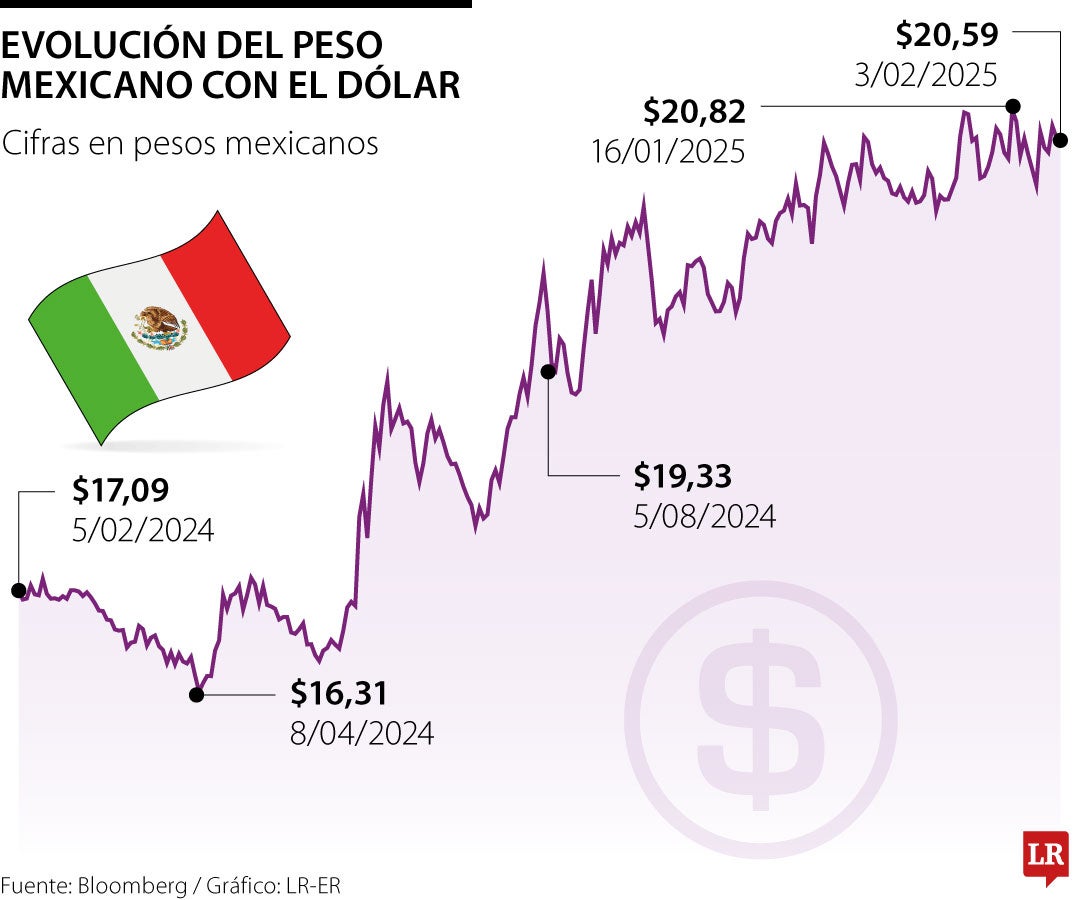
Currency markets have always been sensitive to geopolitics, but the modern financial ecosystem—with its instantaneous trading, algorithmic arbitrage, and interconnected banking systems—has amplified the effect. When tensions between the U.S. And Iran flared in late May, traders began pulling capital out of emerging markets, including Mexico. The peso, which had shown signs of recovery in May, reversed course almost overnight.
“The peso’s reaction is a classic example of how risk aversion in global markets can disproportionately affect smaller economies,” said a financial analyst in Mexico City, speaking on condition of anonymity. “Investors are fleeing anything that isn’t a U.S. Treasury bond or the Swiss franc, and Mexico doesn’t have the same safety nets as larger economies.”
The situation is further complicated by Mexico’s export-driven economy. Nearly 80% of its trade is with the U.S., meaning any disruption—whether from tariffs, supply chain bottlenecks, or currency instability—has a direct impact on local businesses. The peso’s decline makes imports more expensive, from machinery to consumer goods, which could fuel inflationary pressures.
A look back: How Mexico’s currency has reacted to past shocks
This isn’t the first time the peso has been tested by external forces. In 2025, the currency faced volatility due to U.S. Labor market reports, which influenced Federal Reserve policy expectations. However, those fluctuations were tied to domestic economic data rather than geopolitical uncertainty. The current downturn is different—it’s a direct response to the lack of progress in U.S.-Iran negotiations, which has sent shockwaves through oil markets and investor confidence.
In May, the peso had actually appreciated slightly against the dollar, a rare bright spot in an otherwise challenging year. But by late May, as reports of military posturing between the U.S. And Iran surfaced, traders began repositioning portfolios. The result? A sharp reversal that erased May’s gains and pushed the peso back toward levels not seen since early 2025.

What’s next for the peso—and global markets?
Without a clear resolution to the U.S.-Iran standoff, the peso’s decline could continue. Central banks in emerging markets often intervene to stabilize currencies, but Mexico’s Banco de México has so far avoided aggressive intervention, preferring to let market forces play out. If tensions persist, economists predict the peso could test 18 per dollar within weeks.
For now, businesses and consumers in Mexico are bracing for higher costs. Importers are locking in exchange rates where possible, while retailers are adjusting pricing strategies. Meanwhile, investors are watching closely—any signs of de-escalation between the U.S. And Iran could trigger a rapid rebound. Until then, the peso remains hostage to a conflict thousands of miles away, a stark reminder of how deeply interconnected global financial systems have become.
