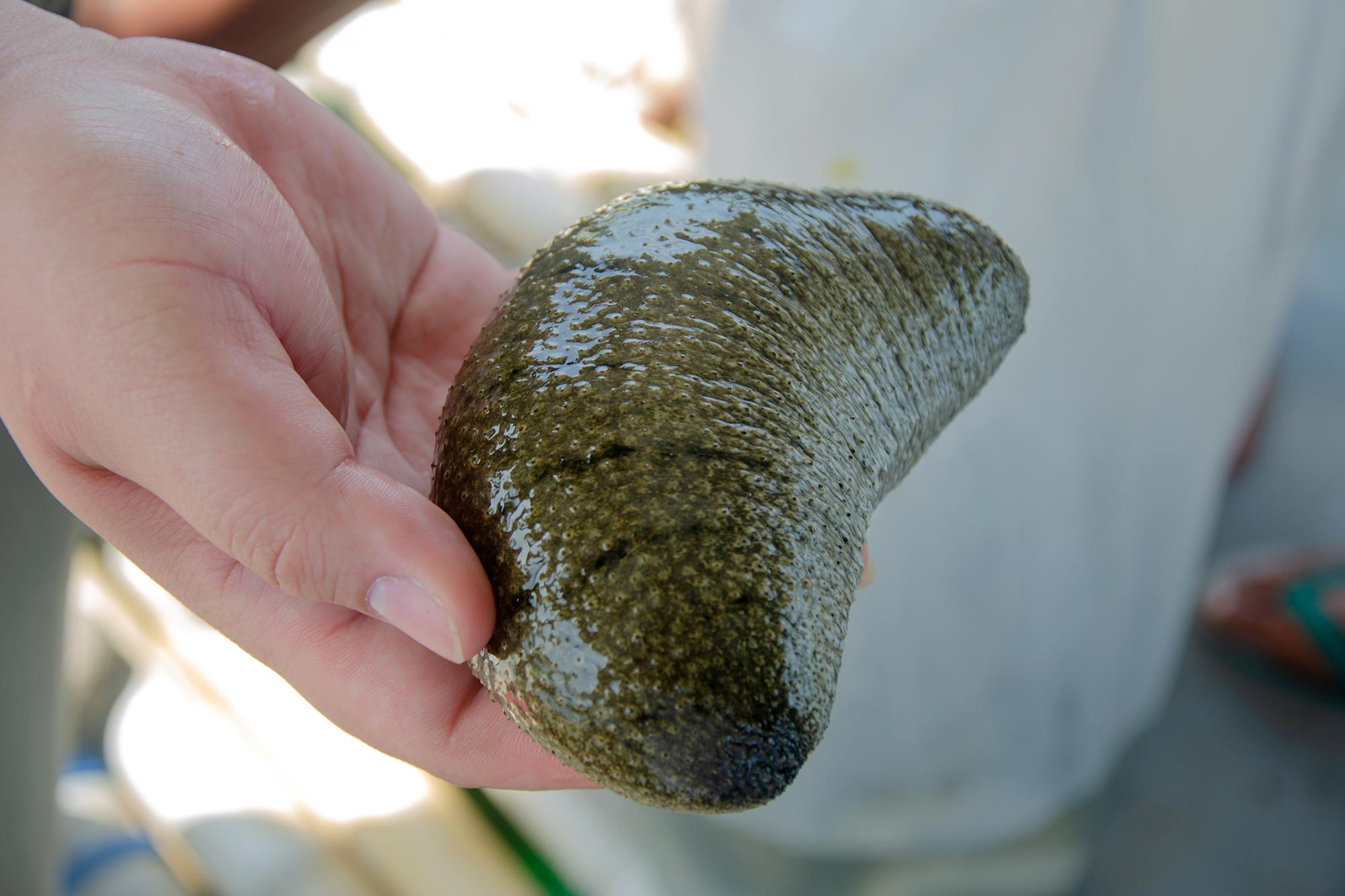
This “Zombie” Sea Creature Keeps Growing After Being Cut Apart – SciTechDaily
Sea cucumber tissue can continue to function and grow even after being severed from the animal’s main body, a phenomenon described by SciTechDaily as “zombie” behavior. This ability to maintain cellular activity and growth without a central nervous system or circulatory support challenges traditional biological definitions of what it means to be alive, according to reports from Yahoo.
What is the “Zombie” phenomenon in sea cucumbers?
The “zombie” phenomenon refers to the ability of certain sea cucumber tissues to survive and continue growing after they have been physically lopped off from the primary organism. While many animals can regenerate lost limbs, the sea cucumber exhibits a more extreme version of this trait where the discarded tissue does not simply die or decompose, but persists in a living state. The Toronto Star characterizes this as “zombie flesh” that refuses to perish despite being detached from the host.
This biological anomaly differs from standard regeneration. In typical regeneration, a creature grows a new limb to replace a lost one. In the case of these sea cucumbers, the tissue that was removed continues to exhibit life-sustaining processes independently. BBC Wildlife Magazine illustrates this by asking readers to imagine a human leg that, after being amputated, “hopped off to lead a life of its own as a zombie.”
Key characteristics of this phenomenon include:
- Independent Survival: Tissue remains viable without a connection to the animal’s heart or brain.
- Continued Growth: The detached sections do not just survive; they continue to grow.
- Cellular Persistence: The flesh resists the typical process of necrosis (cell death) that follows severe trauma in most species.
How does sea cucumber tissue survive without a body?
The survival of detached sea cucumber tissue points to a highly decentralized biological structure. Unlike mammals, which rely on a centralized brain and a heart to pump oxygenated blood to every cell, sea cucumbers belong to the phylum Echinodermata. These creatures possess a decentralized nervous system and a water vascular system that distributes nutrients and signals across their bodies.
According to reports from Yahoo, this discovery suggests a “redefinition of what it means to be alive.” Because the tissue continues to grow and function without a central command center, it indicates that the “instructions” for life and growth are embedded deeply within the individual cells or small clusters of cells, rather than being managed by a primary organ.
This cellular autonomy allows the “zombie” flesh to avoid the immediate systemic failure that usually occurs when a piece of an animal is removed. In most organisms, the lack of blood flow leads to rapid oxygen deprivation and death. The sea cucumber’s tissue, however, appears to maintain metabolic activity through alternative means, allowing it to persist on the ocean floor.
Comparing media perspectives on “Zombie” sea creatures
Different news outlets have framed this discovery through various lenses, ranging from the scientific to the sensational. While the core fact—that detached tissue survives—remains constant, the narrative focus varies.
| Source | Primary Framing | Core Analogy/Description |
|---|---|---|
| SciTechDaily | Technological/Scientific | “Zombie” sea creature that keeps growing. |
| Yahoo | Philosophical/Biological | A “redefinition” of the meaning of life. |
| Toronto Star | Visceral/Descriptive | “Zombie flesh” that doesn’t die when lopped off. |
| BBC Wildlife Magazine | Comparative/Relatable | An amputated leg leading a life of its own. |
| Wodne Sprawy | Existential/Curiosity | The concept of an “Immortal sea cucumber.” |
The Toronto Star and SciTechDaily focus on the “zombie” aspect of the flesh, emphasizing the shock of tissue that refuses to die. In contrast, Yahoo elevates the discovery to a conceptual level, suggesting that this ability forces scientists to rethink the fundamental boundaries between living organisms and dead matter. Wodne Sprawy takes the most extreme position, questioning if the creature could be considered “immortal” due to its extraordinary regenerative and survival capabilities.
Why this discovery matters for biological science
The ability of sea cucumber tissue to survive independently has implications that extend beyond marine biology. Researchers are interested in how these cells maintain their viability and how they trigger growth without systemic signals. If the mechanisms allowing “zombie” flesh to survive can be understood, it could lead to breakthroughs in several fields.
“Imagine if you had a leg amputated that then hopped off to lead a life of its own as a zombie?” — BBC Wildlife Magazine
This analogy highlights the gap between human biology and that of the sea cucumber. For humans, cellular survival is strictly dependent on a complex network of organs. The sea cucumber proves that life can be sustained in a far more modular fashion. This modularity is a key area of study for those researching regenerative medicine and tissue engineering.
Potential implications for regenerative medicine
The study of “zombie” tissue may provide insights into how to keep human tissues alive outside the body for longer periods. Current organ transplants rely on cold storage and chemical preservatives to slow down cell death. Understanding how sea cucumber tissue naturally resists necrosis could lead to new ways of preserving human organs or developing lab-grown tissues that are more resilient.

Understanding cellular autonomy
The discovery challenges the “top-down” model of biological control. In most animals, the brain and endocrine system dictate cell behavior. The sea cucumber demonstrates a “bottom-up” approach, where the cells themselves possess enough information and energy to continue growing and functioning independently. This suggests a level of genetic and cellular programming that is far more robust than that found in vertebrates.
Common misconceptions about sea cucumber “immortality”
The term “immortal,” as used by Wodne Sprawy, often leads to misunderstandings about the nature of the sea cucumber’s survival. It is important to distinguish between biological immortality and the “zombie” tissue effect.
- Misconception: The sea cucumber cannot be killed. In reality, sea cucumbers can be killed by predators, disease, or extreme environmental changes. Their “immortality” refers to their regenerative capacity, not an invulnerability to death.
- Misconception: The detached tissue becomes a new, complete animal. While the tissue grows and survives, the reports do not suggest that a small piece of “zombie flesh” can spontaneously grow a new brain, gut, and complete set of organs to become a fully functioning independent sea cucumber. It is the survival of the tissue, not necessarily the creation of a new individual.
- Misconception: This is a common trait among all sea creatures. While some echinoderms (like starfish) can regenerate limbs, the specific “zombie” persistence of detached tissue described by SciTechDaily is a specialized and rare trait.
The “zombie” label is a descriptive tool used by journalists to convey the strangeness of the phenomenon, rather than a clinical term. The tissue is not “undead” in the cinematic sense; it is living tissue that has decoupled from its primary source of support.
The role of the water vascular system in survival
To understand how a sea cucumber can have “zombie flesh,” one must look at its unique anatomy. Sea cucumbers lack a traditional circulatory system. Instead, they use a water vascular system—a network of hydraulic canals that move water throughout the body.
This system serves multiple purposes:
- Locomotion: It powers the tube feet used for movement.
- Respiration: It helps in the exchange of oxygen.
- Nutrient Transport: It moves basic nutrients to various parts of the body.
Because this system is so distributed, a piece of tissue cut from the body may still contain enough “hydraulic” infrastructure and localized nutrient stores to maintain basic metabolic functions. This architectural difference is why a piece of a sea cucumber can survive while a piece of a human would not.
For those interested in how other marine life handles extreme survival, a related explainer on extremophiles may provide further context on how ocean creatures adapt to hostile environments.
Frequently Asked Questions
What makes the sea cucumber a “zombie” creature?
According to SciTechDaily and the Toronto Star, it is called a “zombie” because its tissue can continue to live and grow even after being cut away from the main body of the animal, defying the usual process of cell death.
Can a piece of sea cucumber tissue grow into a whole new animal?
The reports emphasize that the tissue “refuses to die” and “keeps growing,” but they do not claim that a small fragment can regenerate into a complete, independent organism. The focus is on the survival of the tissue itself rather than asexual reproduction.
Is this discovery a “redefinition of life”?
Yahoo reports that some view this as a redefinition of life because it shows that complex tissue can maintain growth and biological functions without the support of a central nervous system or a heart, challenging the idea that life requires a centralized control system.
Are all sea cucumbers capable of this?
The reports focus on specific observations of “zombie” flesh, suggesting this is a fascinating discovery within the species rather than a universal trait of every single sea cucumber in the ocean.
How does this differ from normal regeneration?
Normal regeneration is the process of an organism regrowing a lost part. The “zombie” phenomenon is the ability of the lost part itself to remain alive and grow independently of the original organism.
