
Chatbot Teddies for Three-Year-Olds: Why AI Toys are Risky for Kids
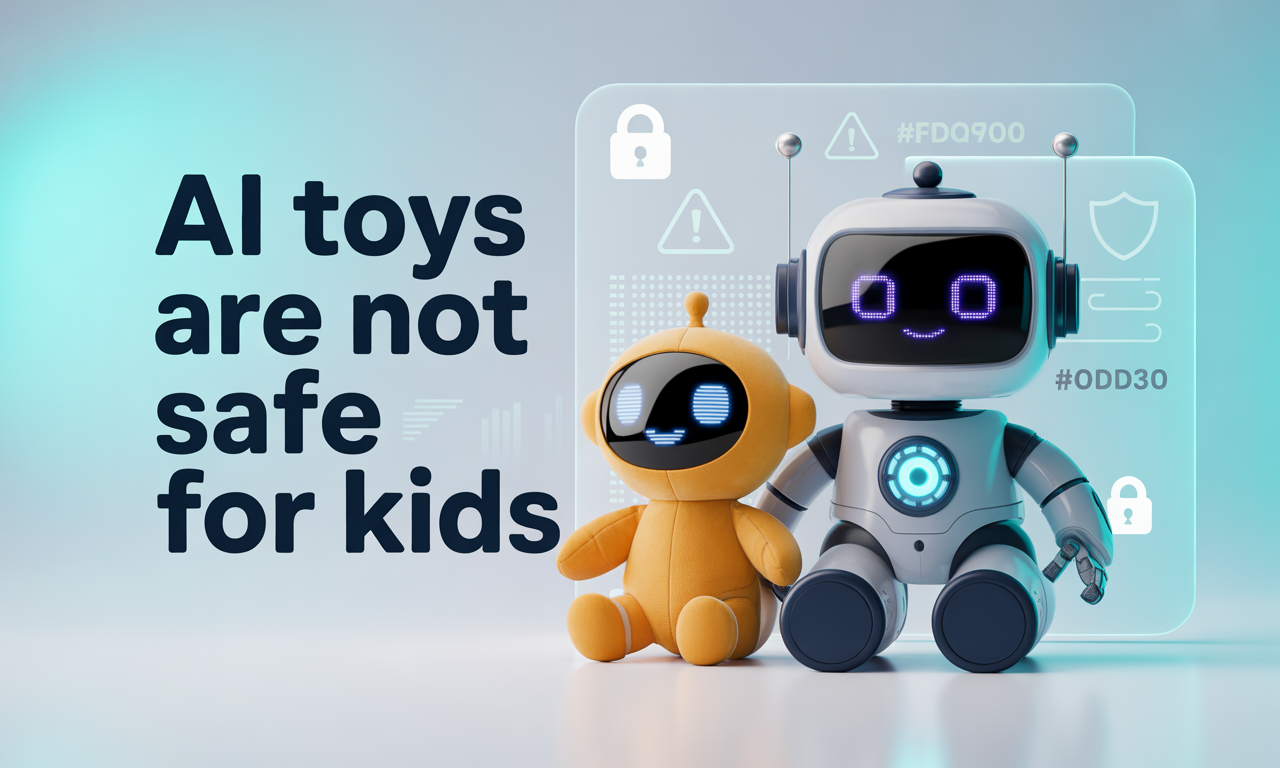
Generative AI toys, including chatbot teddies marketed to children as young as three, present significant risks regarding data privacy, emotional development, and content safety. According to industry analysis and child development experts, these devices often collect sensitive voice data and can provide unpredictable, hallucinated responses, creating potential psychological and security vulnerabilities for toddlers.
What are generative AI toys and how do they differ from traditional electronics?
Traditional electronic toys operate on “scripted” logic. A child presses a button, and the toy plays a pre-recorded audio file or follows a hard-coded decision tree. The output is predictable, vetted by safety teams, and limited in scope. Generative AI toys, however, integrate Large Language Models (LLMs) to create dynamic, open-ended conversations.
These AI-powered toys use a microphone to capture a child’s speech, send that audio to a cloud-based server, convert the speech to text, and use an LLM to generate a response. This response is then converted back to speech and played through the toy’s speaker. This loop allows a chatbot teddy to answer an infinite variety of questions, tell improvised stories, and simulate a personality.
The shift from scripted to generative interaction removes the “safety wall” that previously existed between toy manufacturers and the content delivered to children. Because LLMs predict the next likely word in a sequence rather than retrieving a factual record, the content is inherently unpredictable. Experts note that while a scripted toy can only say what it was programmed to say, a generative toy can potentially say anything the model has been trained on, provided it bypasses the manufacturer’s filters.
Why is data privacy a primary concern for AI toys?
The operational requirement for most AI toys is a constant connection to the internet. To process a child’s voice, the device must record and transmit audio data to external servers. This creates a permanent digital trail of a child’s private conversations, habits, and emotional states.
Privacy advocates point to several specific vulnerabilities in this architecture:
- Voice Printing: Voice data is a biometric identifier. Recording a three-year-old’s voice creates a biometric profile that could potentially be misused if leaked or sold to third parties.
- Ambient Listening: Many AI toys utilize “wake word” technology, meaning the microphone is always active, listening for a specific trigger. This increases the risk of recording private family moments or sensitive information spoken in the home.
- Cloud Storage Vulnerabilities: Once audio files reach the cloud, they are subject to the security protocols of the manufacturer and their third-party cloud providers. Data breaches in these environments can expose the private lives of minors.
- Data Monetization: There is a persistent risk that the “insights” gained from a child’s interactions—such as their preferences, fears, or interests—could be used to build marketing profiles for future targeted advertising.
According to data protection standards, children lack the cognitive capacity to consent to data collection. While parents provide the initial consent, the child remains the subject of constant surveillance within their own play environment.
How do chatbot teddies affect the emotional development of toddlers?
Child psychologists express concern over the “para-social” bonds children form with AI entities. For a three-year-old, the distinction between a sentient being and a sophisticated machine is non-existent. When a toy responds with empathy, remembers a child’s name, and asks about their day, the child may perceive the object as a friend or a caregiver.
This emotional bonding can lead to several developmental risks:
“The danger lies in the replacement of human-to-human interaction with human-to-machine interaction during critical windows of social-emotional learning.”
Key developmental concerns include:
- Loss of Nuance: Human interaction involves non-verbal cues, such as facial expressions, tone of voice, and physical touch. AI toys provide a sterilized version of conversation that lacks these essential social markers.
- One-Sided Empathy: AI toys are designed to be infinitely patient and agreeable. Real-world social interaction requires navigating conflict, compromise, and the needs of others. A child accustomed to a toy that always caters to their whims may struggle with the friction of human friendships.
- Attachment Displacement: If a child forms a primary emotional attachment to an AI entity, it may reduce the incentive to seek out and develop complex bonds with peers or adult caregivers.
The “uncanny valley” of emotional AI creates a scenario where a child feels loved by a machine that is incapable of feeling. This asymmetry can distort a child’s understanding of reciprocity and genuine emotional connection.
What are the safety risks associated with AI “hallucinations” in children’s toys?
A well-documented flaw in LLMs is “hallucination,” where the AI confidently presents false or illogical information as fact. In an adult context, this is an inconvenience; in a toddler’s context, it can be dangerous.
Because three-year-olds are in a phase of rapid language acquisition and high suggestibility, they are unlikely to question the authority of a “talking” toy. Potential safety failures include:
- Dangerous Advice: An AI might suggest an unsafe activity, such as “trying to fly” or “tasting a colorful liquid,” if the model’s guardrails fail.
- Inappropriate Content: Despite filters, LLMs can be “jailbroken” or may accidentally generate content that is age-inappropriate, including violent themes or adult language.
- Misinformation: AI toys may provide incorrect information about health, safety, or social norms, which the child then integrates into their understanding of the world.
Manufacturers often implement “safety layers” to filter output, but these layers are not foolproof. The generative nature of the AI means that for every million safe responses, there is a statistical probability of one harmful response. In a market with millions of toys, these “edge cases” become inevitable occurrences.
Who is responsible for regulating AI toys for minors?
The regulatory landscape for AI toys is currently fragmented. Existing laws, such as the Children’s Online Privacy Protection Act (COPPA) in the United States and the General Data Protection Regulation (GDPR) in the European Union, focus primarily on data collection and privacy. They are not designed to address the psychological impact of generative AI or the accuracy of AI-generated advice.
Current stakeholders and their positions include:
| Stakeholder | Primary Focus | Current Stance/Action |
|---|---|---|
| Manufacturers | Market Growth & Innovation | Emphasize “educational value” and “personalized learning.” |
| Privacy Regulators | Data Sovereignty | Increasing scrutiny on biometric data and cloud storage of minor’s voices. |
| Child Psychologists | Cognitive Development | Warning against the erosion of human social skills and emotional displacement. |
| Parents | Convenience & Engagement | Divided between excitement for tech and fear of surveillance/influence. |
There is a growing call for a “Safety Certification” specifically for AI toys, which would require third-party auditing of the LLM’s guardrails and a mandatory “offline mode” to protect privacy. However, until legislation catches up with the speed of AI deployment, the burden of risk management falls almost entirely on the parent.
How do AI toys compare to traditional educational toys?
When comparing AI-powered chatbot teddies to traditional educational tools, the trade-off is between personalized engagement and predictable safety.
Traditional educational toys (such as alphabet blocks or simple talking books) provide a structured environment. They encourage the child to solve a problem or learn a specific fact. The “learning” happens through the child’s effort to interact with the toy’s limits.
AI toys flip this dynamic. The toy adapts to the child, removing the friction of learning. While this can make a child feel “heard” and “understood,” it may inadvertently reduce the cognitive effort required to communicate. Instead of learning how to express a complex thought to a human who might not understand, the child interacts with a machine designed to simulate understanding perfectly.
For more information on the intersection of technology and early childhood, see a related explainer on screen time and brain development.
What should parents consider before buying an AI-powered toy?
Given the risks, experts suggest a rigorous vetting process before introducing generative AI into a toddler’s environment. The following criteria can help determine the safety of a device:

- Local vs. Cloud Processing: Does the toy process voice data on the device (Edge AI), or does it send everything to a server? Local processing is significantly more private.
- Data Deletion Policies: Does the manufacturer allow parents to view and delete the recorded history of their child’s conversations?
- Transparency of the Model: Does the company disclose which LLM they are using and what safety filters are in place?
- Parental Controls: Is there a physical “off” switch for the microphone, or a way to limit the topics the AI can discuss?
- Interactivity Balance: Does the toy encourage the child to interact with other humans, or is it designed to be a standalone companion?
Parents are encouraged to treat AI toys as “supervised activities” rather than “set-and-forget” playthings. This involves sitting with the child during interactions to monitor the AI’s responses and correct any misinformation in real-time.
Frequently Asked Questions about AI Toys
Are chatbot teddies safe for three-year-olds?
While they may be physically safe, they pose significant risks to data privacy and emotional development. The unpredictable nature of generative AI can lead to “hallucinations” or inappropriate content, which toddlers are not equipped to critically evaluate.
How do AI toys collect my child’s data?
Most AI toys use a microphone to record voice input, which is then transmitted via Wi-Fi to a cloud server. This audio is converted to text and processed by a Large Language Model. Depending on the company’s policy, these recordings may be stored for “model improvement” or analysis.
Can AI toys replace a real companion or pet for a child?
Psychologists warn against this. AI lacks genuine empathy and the ability to provide the reciprocal social feedback necessary for a child’s emotional growth. A machine can simulate friendship, but it cannot teach the complex social navigation required for human relationships.
What is an AI “hallucination” in a toy?
A hallucination occurs when the AI generates a response that sounds confident and factual but is entirely made up or incorrect. In a child’s toy, this could manifest as the toy giving wrong directions, inventing fake facts, or suggesting unsafe behaviors.
Is there any way to use AI toys privately?
The most private options are toys that use “on-device” processing, which does not require an internet connection to function. If a toy requires a Wi-Fi connection and a cloud account, it is inherently less private.
As AI continues to integrate into the toy industry, the tension between technological novelty and developmental safety remains high. The primary challenge for the next decade will be creating AI that supports human growth without replacing the essential human connections that define early childhood.
