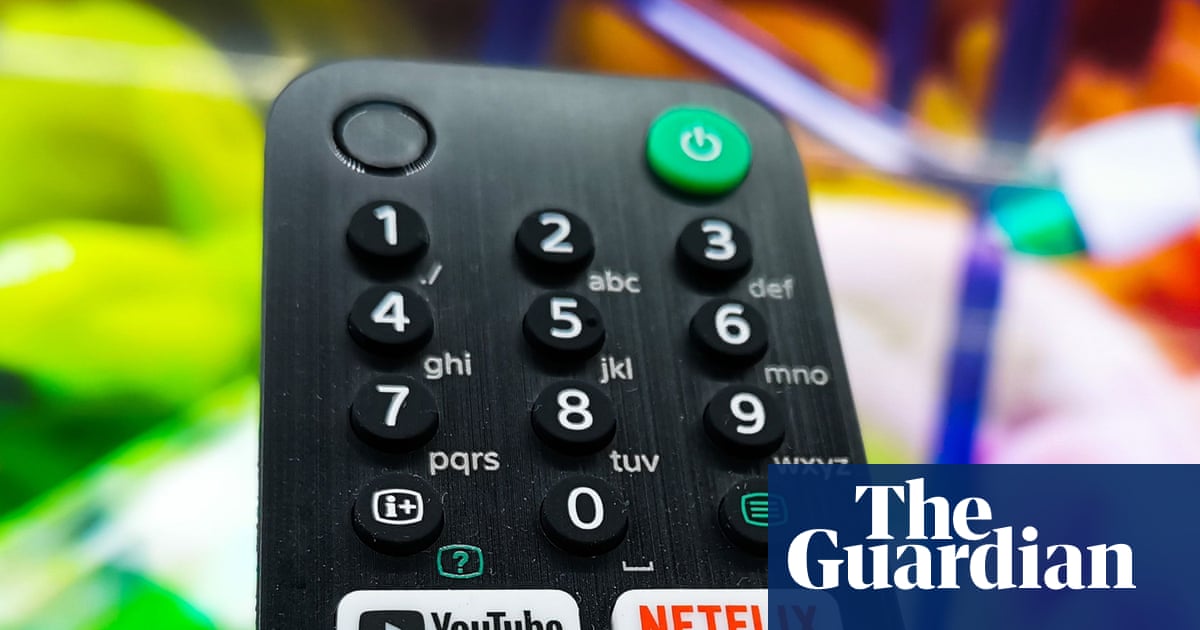
YouTube Overtakes Netflix in Average Daily Viewing Around the World: The Shift in Global Attention
The landscape of global entertainment has reached a pivotal tipping point. For years, the “streaming wars” were framed as a battle between traditional cable and the rise of subscription-based giants like Netflix. However, a more profound shift has occurred, moving away from high-production cinematic series toward the democratized, sprawling ecosystem of user-generated content. Recent data and industry analysis, including reports that YouTube overtakes Netflix in average daily viewing around the world – The Guardian, signal a fundamental change in how the human brain consumes media in the digital age.
This transition is not merely about which app has more users, but about the nature of time. While Netflix remains a powerhouse for prestige storytelling and “binge-watching,” YouTube has successfully integrated itself into the fabric of daily utility. From educational tutorials and news updates to short-form entertainment and long-form podcasts, YouTube has evolved from a video-sharing site into the world’s primary television screen, capturing more average daily minutes per user than the world’s leading paid streaming service.
The Anatomy of the Shift: Why Daily Viewing Habits are Changing
To understand why YouTube has surpassed Netflix in daily engagement, one must look at the difference between Appointment Viewing and Ambient Consumption. Netflix typically requires a specific mindset: the user decides to sit down and invest 45 to 60 minutes in a narrative. YouTube, conversely, fits into the “interstitial” moments of a person’s day—the morning commute, a lunch break, or the background noise while performing household chores.
Several key drivers have accelerated this trend:
- The Frictionless Entry Point: YouTube is free. While Netflix has introduced ad-supported tiers, the psychological barrier to opening a free app is significantly lower than entering a paid ecosystem.
- Content Diversity: Netflix provides a curated library of professional content. YouTube provides a near-infinite library of everything. A user might go to YouTube for a 10-minute cooking video, a 2-hour deep dive into a political event, and a 15-second comedy sketch, all in one session.
- The Algorithm of Habit: YouTube’s recommendation engine is designed for perpetual discovery. While Netflix suggests what you might like based on previous shows, YouTube suggests content that keeps you in a loop of continuous discovery, often leading users down “rabbit holes” that extend viewing time far beyond the original intent.
“The battle is no longer about who has the best original series; It’s about who owns the most minutes of a user’s waking day. The shift toward user-generated content represents a move toward a more personalized, fragmented, and immediate form of entertainment.”
The ‘Shorts’ Effect and the Battle for Micro-Attention
A significant catalyst in the surge of YouTube’s daily viewing time is the integration of YouTube Shorts. In response to the meteoric rise of TikTok, Google pivoted YouTube toward vertical, short-form video. This move fundamentally altered the platform’s engagement metrics.
Short-form content leverages a high-frequency dopamine loop. By providing a constant stream of rapid-fire information and entertainment, YouTube has managed to capture the “micro-moments” of the day that Netflix cannot touch. You cannot “binge-watch” a 15-second clip in the same way you binge a season of Stranger Things, but you can watch 100 clips in an hour without realizing the time has passed.
The Convergence of Social Media and Television
YouTube now occupies a hybrid space. It is simultaneously a social network, a search engine, and a television network. This convergence means that for many users—particularly Gen Z and Alpha—YouTube is the primary source of information. When a major global event occurs, users are more likely to search for a YouTube livestream or a creator’s commentary than they are to wait for a curated documentary or a news broadcast.
This shift is further supported by the proliferation of Connected TV (CTV). YouTube is now one of the most-watched apps on living room televisions, effectively replacing the traditional “linear” TV experience. While Netflix is also a CTV leader, YouTube’s ability to offer live streams and a constant flow of new, free content makes it a more frequent daily destination for households.
Comparing the Models: SVOD vs. AVOD
The competition between these two giants is essentially a clash of business models: Subscription Video on Demand (SVOD) versus Advertising-based Video on Demand (AVOD).
| Feature | Netflix (SVOD Focus) | YouTube (AVOD Focus) |
|---|---|---|
| Cost to User | Monthly Subscription Fee | Free (with optional Premium) |
| Content Source | Studio-produced / Licensed | User-Generated / Professional |
| Viewing Intent | Immersive Storytelling | Utility, Entertainment, Learning |
| Revenue Driver | Subscriber Growth/Retention | Ad Impressions / Partnerships |
| Engagement Style | Binge-watching (Long sessions) | Continuous flow (High frequency) |
Netflix’s model relies on the “hit” factor. They need a Squid Game or a Wednesday to drive new sign-ups and prevent churn. YouTube’s model relies on volume and variety. They do not need a single “hit” because they host millions of small hits every single day across every conceivable niche.
Global Market Dynamics and the Digital Divide
The fact that YouTube overtakes Netflix in average daily viewing around the world is heavily influenced by global economic disparities. In developed markets, the subscription model is sustainable. However, in emerging economies across Southeast Asia, Africa, and Latin America, a monthly subscription fee is a luxury.
In these regions, YouTube is not just an entertainment app; it is the primary gateway to the internet. It serves as a school, a newsroom, and a cinema. The low barrier to entry allows YouTube to scale its daily viewing hours exponentially in markets where Netflix struggles to penetrate due to pricing and payment infrastructure.
the localization of content on YouTube is organic. While Netflix must spend millions to produce local-language originals to attract regional audiences, YouTube’s creators do this for free, producing content in every dialect and language known to man, thereby ensuring a deeper, more authentic connection with local users.
Implications for the Future of Media Consumption
The rise of YouTube over Netflix suggests several long-term trends that will reshape the media industry:
1. The Erosion of the “Prestige” Monopoly
For a decade, “prestige TV” was the gold standard of culture. However, we are seeing a democratization of influence. A YouTuber with a high-quality production setup and a loyal audience can now command as much attention—and sometimes more—than a traditional Hollywood showrunner. This represents shifting where advertising budgets are allocated, moving away from 30-second TV spots toward integrated creator sponsorships.
2. The Rise of “Utility Entertainment”
We are moving toward an era of “utility entertainment,” where the line between learning something and being entertained is blurred. YouTube’s dominance is rooted in its ability to provide value (how to fix a sink, how to code in Python) alongside leisure. Netflix, which is purely leisure, lacks this “essential” quality that drives daily habit formation.
3. The Response from Streaming Giants
Netflix is not standing still. The introduction of an ad-supported tier is a direct acknowledgment that the AVOD model (which YouTube perfected) is more scalable and accessible. Netflix’s foray into gaming and its efforts to incorporate more “snackable” content are attempts to capture the fragmented attention spans that YouTube currently dominates.
For more on how this affects the broader industry, you might find a related explainer on the evolution of the attention economy useful.
Common Misconceptions About Viewing Data
When headlines state that one platform “overtakes” another in viewing time, it is easy to misinterpret the data. It is crucial to clarify a few points to avoid oversimplification:
- Viewing Time $neq$ Revenue: More minutes watched does not automatically mean more profit. Netflix’s per-user revenue (ARPU) is generally much higher than YouTube’s average user revenue because of the subscription model.
- Active vs. Passive Viewing: A significant portion of YouTube viewing is passive (background noise or auto-play). Netflix viewing is typically more active and focused, which is highly valued by certain types of advertisers.
- Content Quality vs. Content Quantity: The shift is not necessarily a statement on the quality of the content, but on the accessibility and frequency of the consumption.
The Psychological Driver: The Infinite Scroll and the Comfort of the Familiar
Beyond the business models, there is a psychological component to this shift. The “infinite scroll” and “autoplay” features create a state of flow that makes it difficult for users to disengage. In contrast, Netflix’s episodic structure provides natural stopping points. While “binging” is a powerful force, the constant, seamless transition from one video to another on YouTube creates a more addictive loop.
the relationship between a viewer and a YouTube creator is often more “parasocial” than the relationship between a viewer and a scripted character. Users feel a personal connection to creators, leading to a sense of loyalty that encourages them to return daily to check for updates, much like checking a social media feed.
Frequently Asked Questions
Does YouTube’s lead in viewing time mean Netflix is failing?
No. Netflix remains the dominant force in high-budget, scripted storytelling and maintains a massive global subscriber base. The “overtaking” refers to average daily viewing time, not necessarily financial health or cultural influence in the realm of cinema and prestige television.
Why is YouTube more popular in emerging markets than Netflix?
The primary reason is cost. YouTube is free and supported by ads, making it accessible to anyone with a smartphone and an internet connection. Netflix requires a paid subscription, which can be prohibitively expensive in many parts of the world.
How do YouTube Shorts impact the daily viewing statistics?
Shorts have significantly increased the frequency of app opens. Because they are short and fast-paced, users consume them in small bursts throughout the day, which adds up to a higher total of average daily minutes compared to the occasional long-form session on Netflix.
Will Netflix introduce more short-form content to compete?
While Netflix has experimented with shorter formats and “trailers” that act as content, their core brand is built on immersive, long-form storytelling. However, they are diversifying into gaming and live events to increase the time users spend within their ecosystem.
Is the “attention economy” a zero-sum game?
Largely, yes. There are only 24 hours in a day. When users spend more time on YouTube, TikTok, or Instagram, that time is inevitably taken away from other activities, including traditional television and subscription streaming services.
The current trajectory suggests that the future of media is not a single “winner,” but a fragmentation of time. We are seeing a world where “TV” is no longer a device in the living room, but a collection of habits spread across various platforms. The fact that YouTube overtakes Netflix in average daily viewing around the world – The Guardian is a symptom of this broader evolution: the triumph of the accessible, the diverse, and the immediate over the curated and the exclusive.
As platforms continue to blur the lines between social media and streaming, the winners will be those who can integrate themselves most seamlessly into the mundane gaps of a user’s day. For YouTube, the goal is to be the default destination for every curiosity, every boredom, and every need for information. For Netflix, the challenge is to remain the destination for the stories that truly matter, even as the window of human attention continues to shrink.
