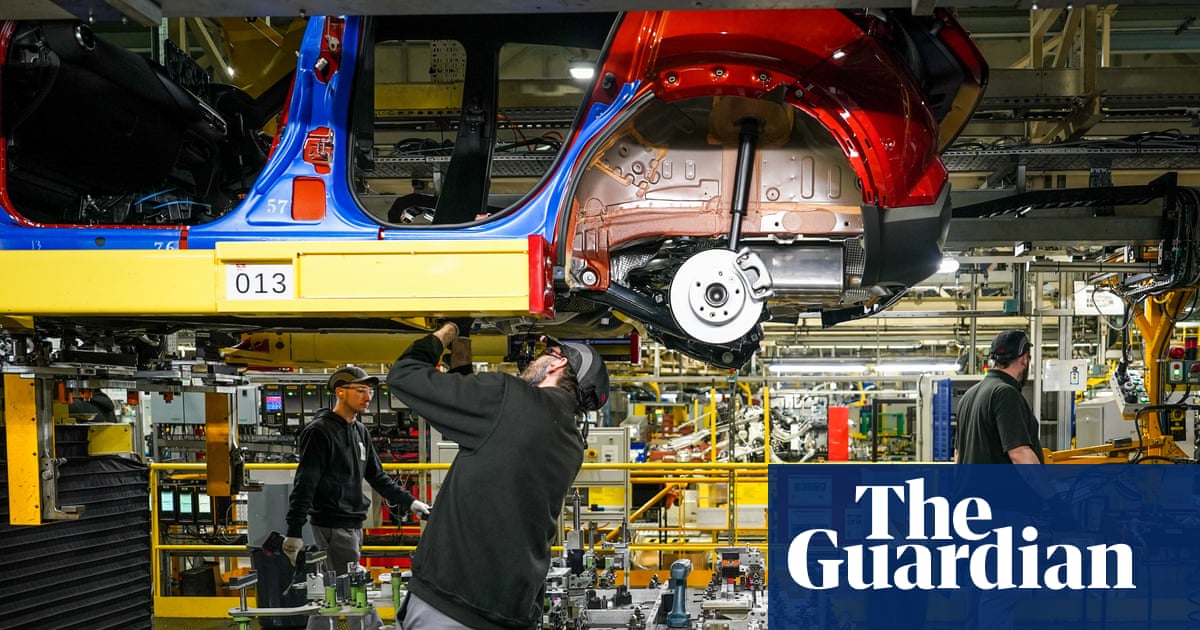
Nissan maps out deal to build cars for China’s Chery at its Sunderland plant – The Guardian
In a move that signals a seismic shift in the global automotive landscape, Nissan is exploring a strategic partnership to manufacture vehicles for the Chinese automotive giant Chery at its massive production facility in Sunderland. This development, which has gained significant traction following reports that Nissan maps out deal to build cars for China’s Chery at its Sunderland plant – The Guardian and other major financial outlets, represents more than just a capacity-sharing agreement; it is a calculated response to the volatile intersection of trade politics, the electric vehicle (EV) transition, and the necessity of industrial survival.
For the Sunderland plant—long a crown jewel of UK manufacturing—the prospect of producing Chinese-designed vehicles offers a critical lifeline. For Chery, it provides a “backdoor” into the European market, allowing the company to bypass mounting tariffs and geopolitical friction by establishing a local manufacturing footprint. As the industry pivots away from internal combustion engines, this alliance highlights a new era of “co-opetition,” where traditional rivals and cross-continental competitors collaborate to mitigate the immense costs of the EV revolution.
The Mechanics of the Nissan-Chery Partnership
At its core, the arrangement is framed as a feasibility study and a strategic roadmap. Nissan and Chery International UK are examining the operational viability of utilizing the Sunderland facility to assemble passenger vehicles designed by the Chinese firm. While the specifics of the vehicle models remain confidential, the intent is clear: leverage Nissan’s world-class manufacturing infrastructure to accelerate Chery’s entry into the UK and broader European markets.
Here’s not a merger or a joint venture in the traditional sense, but rather a move toward contract manufacturing. In this model, Nissan acts as the producer, utilizing its workforce and assembly lines to build cars to Chery’s specifications. This allows Chery to avoid the multi-billion dollar investment required to build a greenfield factory from scratch, while Nissan generates new revenue streams from underutilized capacity.
Key Objectives of the Deal
- Capacity Optimization: Ensuring the Sunderland plant operates at maximum efficiency despite fluctuations in Nissan’s own model demand.
- Market Entry: Providing Chery with a “Made in UK” label, which can be a powerful marketing tool and a regulatory shield.
- Risk Mitigation: Spreading the financial burden of factory upkeep and technological upgrades across two different corporate entities.
- EV Acceleration: Sharing insights and potentially integrating supply chains to speed up the production of affordable electric mobility.
Why Sunderland? The Strategic Importance of the Plant
The Sunderland plant is not merely a factory; it is a vital economic engine for the North East of England. For decades, it has been one of the most productive automotive plants in Europe. However, the transition to electric vehicles has placed immense pressure on traditional plants. The capital expenditure required to retool lines for EVs is staggering, and the demand for traditional petrol and diesel cars is waning.
By opening its doors to Chery, Nissan is effectively diversifying the plant’s portfolio. If Nissan’s own EV rollout faces delays or if market demand shifts, the plant remains viable because it is producing vehicles for another brand. This ensures job security for thousands of workers and maintains the UK’s status as a hub for automotive excellence.
“The ability to pivot a manufacturing site from a single-brand facility to a multi-brand hub is the future of industrial resilience. It transforms a fixed cost into a flexible asset.”
To understand the scale of the operation, consider the following breakdown of the plant’s strategic value:
| Strategic Factor | Impact on Nissan | Impact on Chery |
|---|---|---|
| Infrastructure | Monetizes existing assembly lines | Immediate access to high-tech production |
| Labor Force | Protects and sustains skilled jobs | Access to experienced UK automotive engineers |
| Logistics | Optimizes supply chain networks | Reduced shipping costs and lead times |
| Regulatory | Strengthens ties with UK government | Avoids high import tariffs on Chinese cars |
The Geopolitical Chessboard: Tariffs and Trade
The timing of this deal is far from accidental. The European Union and the UK have been increasingly wary of the flood of low-cost Chinese electric vehicles entering their markets. With accusations of unfair state subsidies in China, the EU has already implemented provisional tariffs on Chinese EVs, and the UK is under similar pressure to protect its domestic industry.
For a company like Chery, shipping cars from China to Europe is becoming an expensive and politically risky venture. By manufacturing in Sunderland, Chery effectively transforms its vehicles from “Chinese imports” to “UK-made products.” This shift is a masterstroke in regulatory navigation, as it allows the company to potentially bypass tariffs and comply with “Rules of Origin” requirements that are essential for tariff-free trade within certain agreements.
The “Trojan Horse” Debate
Some critics argue that allowing Chinese firms to utilize Western plants is a “Trojan Horse” strategy, allowing foreign competitors to embed themselves in the local economy while undermining domestic brands. However, proponents argue that the alternative is worse: the total collapse of local plants as they fail to compete with the sheer scale and speed of Chinese EV production. In this light, the Nissan-Chery deal is not a surrender, but a strategic adaptation.
For further context, you may find a related explainer on EU-China trade tariffs useful to understand the broader economic pressures at play.
Operational Challenges and Implementation
While the strategic logic is sound, the operational execution of building Chery cars in a Nissan plant is fraught with complexity. Automakers typically design their factories around specific platforms. Integrating a completely different set of blueprints, parts, and quality control standards requires a massive synchronization effort.
Technical Integration Hurdles
- Platform Compatibility: Chery’s chassis and drivetrain designs must be adaptable to Nissan’s robotic assembly sequences.
- Supply Chain Synchronization: Integrating Chinese component suppliers with the existing UK-based supply network to ensure just-in-time delivery.
- Quality Assurance: Aligning Chery’s quality benchmarks with Nissan’s rigorous “Kaizen” philosophy of continuous improvement.
- Workforce Training: Retraining staff to handle the specific assembly requirements of a brand they have never worked with before.
This is why the current phase is described as “mapping out” or “studying” the deal. The two companies must determine if the cost of retooling the lines outweighs the projected profits from the increased volume. If the study proves successful, it could serve as a blueprint for other legacy automakers struggling to keep their plants full during the EV transition.
Comparative Analysis: A New Industry Trend?
The Nissan-Chery arrangement is not an isolated incident. We are seeing a broader trend of Western OEMs (Original Equipment Manufacturers) partnering with Chinese EV specialists. For example, Stellantis has entered into agreements with Leapmotor to bring Chinese EV technology to the European market.
This represents a fundamental shift in the power dynamics of the auto industry. For a century, the flow of technology moved from the West (Detroit, Wolfsburg, Toyota City) to the East. Now, the flow is reversing. Chinese firms have achieved a lead in battery technology and software integration that Western firms are struggling to match. By partnering, Western firms get access to fast-tracked EV tech, while Chinese firms get the brand legitimacy and physical infrastructure of the West.
The following table compares the traditional manufacturing model with this new collaborative approach:
| Feature | Traditional OEM Model | Collaborative/Contract Model |
|---|---|---|
| Capital Investment | High (Build own plants) | Shared or Lease-based |
| Time to Market | Sluggish (Years of construction) | Fast (Utilize existing lines) |
| Risk Profile | High (Asset heavy) | Lower (Asset light) |
| Tech Sourcing | Internal R&D | Cross-border technology exchange |
Implications for the UK Automotive Sector
The potential for Chery to utilize the Sunderland plant has wider implications for the UK’s industrial strategy. The government has been keen to position the UK as a leader in “green” manufacturing. A deal that keeps a major plant open and introduces new, competitive EV models to the market aligns with these goals.
However, it also raises questions about the long-term sovereignty of the UK’s automotive intellectual property. If the most efficient plants in the country are primarily building foreign-designed cars, does the UK lose its ability to innovate independently? This is a tension that policymakers will have to manage carefully.
From a consumer perspective, this deal could be a win. Chery is known for offering high-spec vehicles at competitive prices. Local production in Sunderland would likely reduce costs and improve after-sales service, making high-quality EVs more accessible to the average UK driver.
Common Misconceptions About the Deal
As news of this partnership spreads, several misconceptions have emerged. It is significant to clarify these points to provide a balanced view of the situation.
Misconception 1: Nissan is being bought by Chery.
There is no evidence of an acquisition. This is a manufacturing and strategic partnership. Nissan remains an independent entity, and Chery is simply using Nissan’s capacity as a service provider.
Misconception 2: This will lead to immediate job losses.
On the contrary, this deal is designed to save jobs. By filling the plant with more vehicles, Nissan reduces the risk of layoffs that might occur if their own sales dip or if the transition to EVs is slower than expected.
Misconception 3: The cars will be exactly the same as those sold in China.
Automobiles are rarely “one size fits all.” Vehicles produced in Sunderland will likely be modified to meet UK and European safety standards, charging infrastructure, and consumer preferences, potentially utilizing a mix of Chery design and Nissan manufacturing expertise.
Frequently Asked Questions
What exactly is the deal between Nissan and Chery?
Nissan is currently studying a deal to act as a contract manufacturer for Chery International UK. This would involve using Nissan’s Sunderland plant to build Chery-branded passenger vehicles for the UK and European markets.
Why is Nissan building cars for a competitor?
It is a strategic move to maximize the utilization of the Sunderland plant. By producing vehicles for Chery, Nissan can generate additional revenue, secure jobs, and share the high costs of maintaining a modern automotive facility during the shift to electric vehicles.
Will this affect the price of cars for consumers?
Potentially. Local production usually reduces shipping costs and avoids import tariffs, which could make Chery vehicles more competitively priced in the UK compared to those imported directly from China.
Does this mean the Sunderland plant is in trouble?
Not necessarily. Rather than a sign of failure, this is a sign of adaptation. The automotive industry is undergoing its biggest change in 100 years; diversifying production is a proactive way to ensure the plant’s long-term viability.
How does this deal help Chery enter the European market?
It allows Chery to bypass the high costs of building its own factories and, more importantly, helps them navigate geopolitical trade barriers and tariffs by producing their cars within the UK.
Looking Toward the Future of Manufacturing
The trajectory of the Nissan-Chery discussions suggests a future where the “brand” of a car and the “place” it is built are increasingly decoupled. We are moving toward a world of “manufacturing-as-a-service,” where the most efficient plants—regardless of who owns them—will be leased out to whoever has the best designs and the highest demand.
As we watch the developments in Sunderland, the key will be the execution. If Nissan can successfully integrate Chery’s models without compromising its own production quality, it will have created a powerful new business model for the 21st century. The world will be watching to see if this partnership results in a new wave of affordable, locally-made EVs or if the complexities of cross-continental collaboration prove too great to overcome.
For those interested in how this fits into the wider shift of the industry, a related explainer on the future of contract manufacturing provides deeper insight into how other sectors are adopting similar flexible models.
