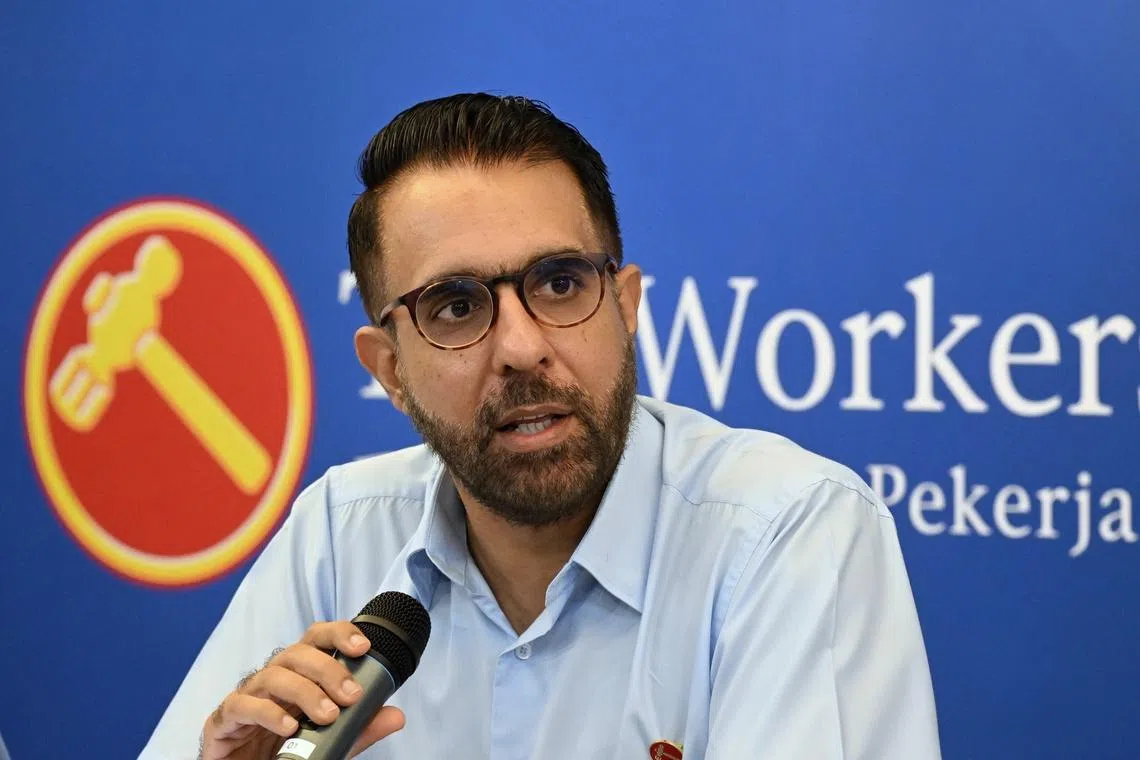
Workers’ Party Cadres to Vote on Pritam Singh’s Leadership: What’s at Stake in the June 28 Secret Ballot?
The Workers’ Party (WP) is poised to hold a high-stakes internal vote on June 28, where its senior members will secretly determine whether Pritam Singh remains party chief. The decision comes amid growing speculation about internal divisions, leadership challenges, and the future direction of Singapore’s oldest opposition party. With the vote set to be conducted behind closed doors, the outcome could reshape the WP’s political trajectory—and potentially influence the country’s political landscape ahead of the next general election.
This is not merely a routine leadership review. The vote follows months of quiet maneuvering, public criticism of Singh’s leadership style, and a rare open call for change from within the party’s ranks. For observers, the June 28 meeting represents a pivotal moment: a test of unity, a referendum on the WP’s strategy, and a potential turning point for Singapore’s opposition movement.
What led to this unprecedented vote? Who stands to gain or lose? And what could the results mean for the WP’s ability to challenge the ruling People’s Action Party (PAP)? Below, we break down the key details, the political context, and the wider implications of this internal power struggle.
— ### Why Is the WP Holding a Leadership Vote Now? The decision to convene a special cadres conference on June 28 marks the first time in recent memory that the WP has openly considered removing its leader through a formal vote. While leadership reviews are not uncommon in political parties, the WP’s process is typically more consultative than confrontational. This time, however, the stakes are higher. #### The Trigger: A Growing Leadership Crisis Singh, who took over as WP secretary-general in 2021, has faced mounting pressure over the past year. Critics—both within and outside the party—have pointed to several issues: – Strategic Missteps: The WP’s performance in the 2020 general election, where it lost ground despite strong grassroots support, led to soul-searching about its electoral strategy. Some members argue that Singh’s leadership has failed to adapt to shifting political realities. – Internal Divisions: Reports of factionalism within the party have surfaced, with disagreements over policy priorities, campaign tactics, and even the party’s long-term vision. A leaked internal memo (later confirmed by sources) suggested that some cadres were dissatisfied with Singh’s handling of the party’s direction. – Public Criticism: High-profile WP members, including former candidates and activists, have publicly questioned Singh’s leadership in interviews and social media. While the party has maintained a facade of unity, the tension has become harder to ignore. #### The Secret Ballot: How the Vote Will Work Unlike previous leadership reviews, where decisions were made through consensus or behind-the-scenes negotiations, this vote will be conducted as a secret ballot among WP cadres. Key details include: – Who Can Vote? Only senior party members (cadres) with at least five years of membership are eligible to participate. Estimates suggest around 150–200 cadres will cast ballots. – What’s on the Ballot? The exact question remains unconfirmed, but sources indicate it will likely ask whether Singh should continue as secretary-general. Some speculate there may also be a motion to replace him, though no official challenger has emerged. – How Will the Vote Be Conducted? The meeting will be held in a private setting, with ballots cast anonymously to ensure confidentiality. Results are expected to be announced shortly after the vote.
This is the first overt challenge to Pritam Singh’s leadership in the WP’s history. If successful, it would send a clear message that the party’s membership is no longer willing to tolerate internal divisions or perceived failures in strategy.
Cadre Meeting Below
— Political analyst based in Singapore
— ### Who Is Involved—and What Are Their Positions? The June 28 vote is not just about Pritam Singh’s future; it’s a clash of visions for the WP’s future. Below are the key stakeholders and their likely interests: #### 1. Pritam Singh: The Incumbent Under Fire – Background: A former lawyer and long-time WP member, Singh was seen as a unifying figure when he took over in 2021. He is known for his pragmatic approach and efforts to modernize the party’s image. – Current Position: Singh has defended his leadership, arguing that the WP needs stability during a critical period. He has emphasized the party’s need to maintain unity ahead of the next general election. – Challenges: Critics accuse him of being too cautious, particularly in his handling of the party’s electoral strategy. Some believe he has failed to capitalize on the WP’s grassroots support, especially among younger voters. #### 2. The Dissident Faction: Who Wants Change? While no official challenger has stepped forward, reports suggest a coalition of mid-level cadres and former candidates are pushing for Singh’s removal. Their concerns include: – Electoral Performance: The WP’s losses in Aljunied GRC and Hougang in 2020 were seen as a wake-up call. Some argue that Singh’s leadership has not adequately addressed the party’s structural weaknesses. – Policy Direction: We find disagreements over whether the WP should focus more on economic issues (e.g., housing, wages) or social justice (e.g., workers’ rights, racial equality). – Leadership Style: Some cadres reportedly feel that Singh’s decision-making process is too centralized, stifling debate and innovation. #### 3. The Neutral Bloc: Those Waiting to See Not all WP members are openly siding with either camp. A significant portion of the party’s rank-and-file appears to be waiting to see how the vote plays out before committing to a side. Their concerns include: – Fear of Infighting: Some worry that a leadership challenge could destabilize the party ahead of the next election. – Loyalty to Singh: Many cadres have worked closely with Singh for years and may hesitate to vote against him unless they see a clear alternative. – Uncertainty About Alternatives: With no formal challenger announced, some may abstain or vote to retain Singh by default. #### 4. External Observers: How the PAP and Media Are Watching – The PAP’s Perspective: While the ruling party has largely avoided commenting on the WP’s internal affairs, officials are likely monitoring the situation closely. A weakened WP could be seen as an opportunity for the PAP to consolidate its dominance. – Media and Public Reaction: The vote has already sparked debate in Singapore’s political circles. Pro-opposition outlets have framed it as a test of democratic accountability, while pro-government voices may downplay its significance. — ### What Led to This Moment? A Timeline of Key Events The road to June 28 has been marked by quiet tensions and occasional public spats. Below are the major milestones that brought the WP to this crossroads: | Date | Event | Significance | 2020 | WP loses seats in Aljunied GRC and Hougang in GE2020 | First major electoral setback under Singh’s leadership; signals internal doubts. | | 2021 (May) | Pritam Singh officially becomes WP secretary-general | Seen as a unifying figure, but early signs of dissatisfaction emerge. | | 2022 (Q3) | Reports of internal divisions surface in local media | First public hints of factionalism; some cadres reportedly unhappy with strategy.| | 2023 (Jan) | Former WP candidate criticizes Singh’s leadership in a public interview | Rare open challenge; suggests growing discontent. | | 2023 (May)| Leaked internal memo circulates, calling for leadership review | Confirms existence of a formal dissenting group within the party. | | 2023 (Jun 28) | Special cadres conference scheduled; secret ballot on Singh’s leadership | First formal vote on leadership in WP history; outcome could redefine the party. | — ### Why Does This Vote Matter? The Bigger Picture The June 28 vote is more than an internal party affair—it has broader implications for Singapore’s political landscape. #### 1. A Test of Democratic Accountability Singapore’s political system is dominated by the PAP, which has governed uninterrupted since independence. The WP, as the main opposition party, operates under significant constraints, including legal restrictions on campaigning and limited access to state resources. – Symbolic Value: If the WP’s cadres vote to remove Singh, it would send a strong message that opposition parties can hold their leaders accountable—even in a system where dissent is often suppressed. – Precedent for Other Parties: Should the WP succeed in ousting its leader, it could embolden other opposition groups (e.g., Singapore Democratic Party, Reform Party) to push for similar reforms. #### 2. The WP’s Electoral Future The party’s ability to challenge the PAP hinges on its internal cohesion. Key questions include: – Will a Leadership Change Energize the Party? Some believe that a new leader could bring fresh ideas and re-energize the WP’s grassroots support. – Could It Backfire? Others warn that a contentious leadership battle could lead to further divisions, weakening the WP’s electoral prospects in the short term. #### 3. The Impact on Singapore’s Political Climate – Public Perception: How the vote plays out could influence voter confidence in the WP. If seen as a messy internal power struggle, it might deter supporters. – Government Response: The PAP may use the situation to argue that opposition parties are too divided to govern effectively—a common narrative in Singapore’s political discourse. — ### What Happens Next? Possible Outcomes and Their Consequences The June 28 vote could unfold in several ways, each with different implications: #### Scenario 1: Singh Retains Leadership (Narrow or Wide Margin) – Immediate Effect: Singh remains in power, but the party may face continued internal unrest. – Long-Term Impact: – If the vote is close, it could signal that Singh’s position is precarious, leading to further instability. – If he wins decisively, it may deter further challenges—but could also reinforce perceptions of a lack of accountability. #### Scenario 2: Singh Is Removed (By a Clear Majority) – Immediate Effect: The WP would enter a transition period, with a new leader likely emerging within weeks. – Long-Term Impact: – A fresh start could rejuvenate the party, but the process of selecting a successor could itself be contentious. – The new leader would face immense pressure to deliver electoral success quickly. #### Scenario 3: A Tie or Deadlock (Unlikely but Possible) – Immediate Effect: The party would need to clarify its rules for resolving ties, potentially leading to further delays. – Long-Term Impact: Prolonged uncertainty could weaken the WP’s ability to campaign effectively ahead of the next election. — ### Common Misconceptions and Clarifications As the WP’s leadership crisis unfolds, several myths and oversimplifications have emerged. Here’s what Try to know: #### Myth 1: “This is just a power grab by a few disgruntled members.” – Reality: While factionalism plays a role, the call for a leadership review appears to be backed by a broader group of cadres who believe the party needs a change in direction. The fact that this is happening through a formal vote—not a coup—suggests a degree of institutional support. #### Myth 2: “The WP is about to collapse because of this internal fight.” – Reality: The WP remains a well-organized party with strong grassroots support. While internal divisions are real, they are not unprecedented in opposition politics. The key question is whether this vote will lead to lasting unity or further fragmentation. #### Myth 3: “The PAP is behind this challenge to weaken the WP.” – Reality: There is no credible evidence that the PAP is directly involved in the WP’s internal affairs. However, the government may well be monitoring the situation closely, ready to exploit any perceived weaknesses in the opposition. #### Myth 4: “If Singh is removed, the WP will automatically win more seats in the next election.” – Reality: Leadership changes do not guarantee electoral success. The WP’s performance depends on a range of factors, including its policy platform, campaign strategy, and the broader political climate. A new leader could bring fresh energy—but without strong policies and execution, results may not improve. — ### What to Watch for in the Coming Weeks The June 28 vote is just the beginning. Here’s what could unfold next: – Announcement of Results: The WP is expected to release the outcome of the secret ballot shortly after the meeting. If Singh is removed, the party will need to quickly name an interim leader and begin a transition process. – Reactions from Key Figures: Statements from Singh (if he loses), potential successors, and other senior cadres will provide clues about the party’s next steps. – Media and Public Debate: The vote will likely dominate Singapore’s political discourse, with analysts and commentators weighing in on its implications. – Impact on Upcoming By-Elections: If the WP faces any by-elections in the near future, the leadership situation could influence its campaign strategy. — ### Key Questions and Answers #### 1. What is the Workers’ Party, and why is it significant in Singapore? The Workers’ Party (WP) is Singapore’s oldest opposition party, founded in 1957. It has historically focused on workers’ rights, housing issues, and social justice. While it has never formed a government, it has won seats in Parliament and played a key role in holding the ruling People’s Action Party (PAP) accountable on issues like healthcare, transport, and inequality. #### 2. How often does the WP hold leadership votes? Leadership reviews in the WP are rare and typically occur only when there is a significant crisis or when a leader’s term ends. Pritam Singh was elected in 2021 without a formal vote, as he was seen as a consensus candidate. This June 28 vote represents an unprecedented challenge to his leadership. #### 3. Can Pritam Singh be removed if he loses the vote? Yes. If the majority of WP cadres vote against him, Singh would be expected to step down as secretary-general. The party would then enter a transition period to elect a new leader, likely within a few weeks. #### 4. Who are the potential successors to Pritam Singh? No official challenger has been named, but speculation has focused on a few senior WP members, including: – Jamie Yeo: A former candidate known for his grassroots work and progressive stance on social issues. – Low Thia Khiang: A veteran politician and former WP secretary-general, though he is now in his 70s and may not seek a return to the top role. – Other Mid-Level Cadres: Several younger members with strong local connections could emerge as alternatives. #### 5. How might this vote affect the next general election? The outcome could have several effects: – If Singh Wins: The WP may continue with its current strategy, but internal tensions could persist, potentially hurting morale and campaign efforts. – If Singh Loses: A new leader could bring fresh ideas and re-energize supporters, but the transition period could create uncertainty. The WP might shift its focus to address the concerns that led to Singh’s removal. #### 6. What happens if the vote is too close to call? The WP’s constitution would likely require a runoff or a clarification vote. In such cases, the party may seek to broker a compromise or extend Singh’s term temporarily while addressing the underlying issues. —
The Workers’ Party’s June 28 leadership vote is more than a routine internal review—it’s a defining moment for Singapore’s opposition. Whether Pritam Singh remains in power or steps aside, the outcome will shape the WP’s future and send a message about the limits of leadership accountability in the city-state’s political system. For now, all eyes are on the secret ballot, and the results could echo far beyond the party’s headquarters.
[FULL] Parliament debate on Pritam Singh’s suitability as Leader of the Opposition
For updates on this developing story, stay tuned for further analysis and reaction in the coming days.
Anya Petrova leads the News desk at archypedia.news, overseeing coverage of U.S. current events, politics, and major domestic stories. With a degree in political science and a decade-long career as a national correspondent, Anya has reported on presidential campaigns, Supreme Court decisions, nationwide protests, and key pieces of legislation.
Her reporting style is defined by clarity and restraint. At ArchyPedia, Anya’s mission is to separate fact from noise. She pushes her team to focus on what a development actually does—how it changes policy, affects communities, or shifts the political landscape—rather than on punditry or spin.
Anya is adept at turning long press conferences, court filings, and policy documents into sharp, neutral summaries. She often collaborates with the Health and Business desks when national policy decisions intersect with healthcare, labor, or economic trends. To her, good news editing means readers walk away informed, not overwhelmed.